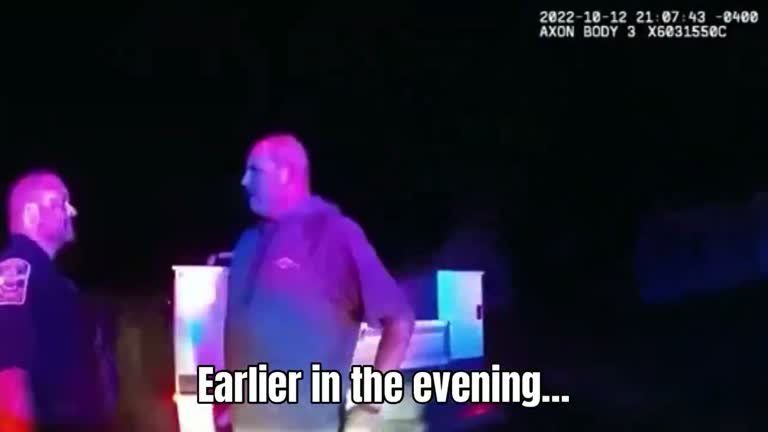
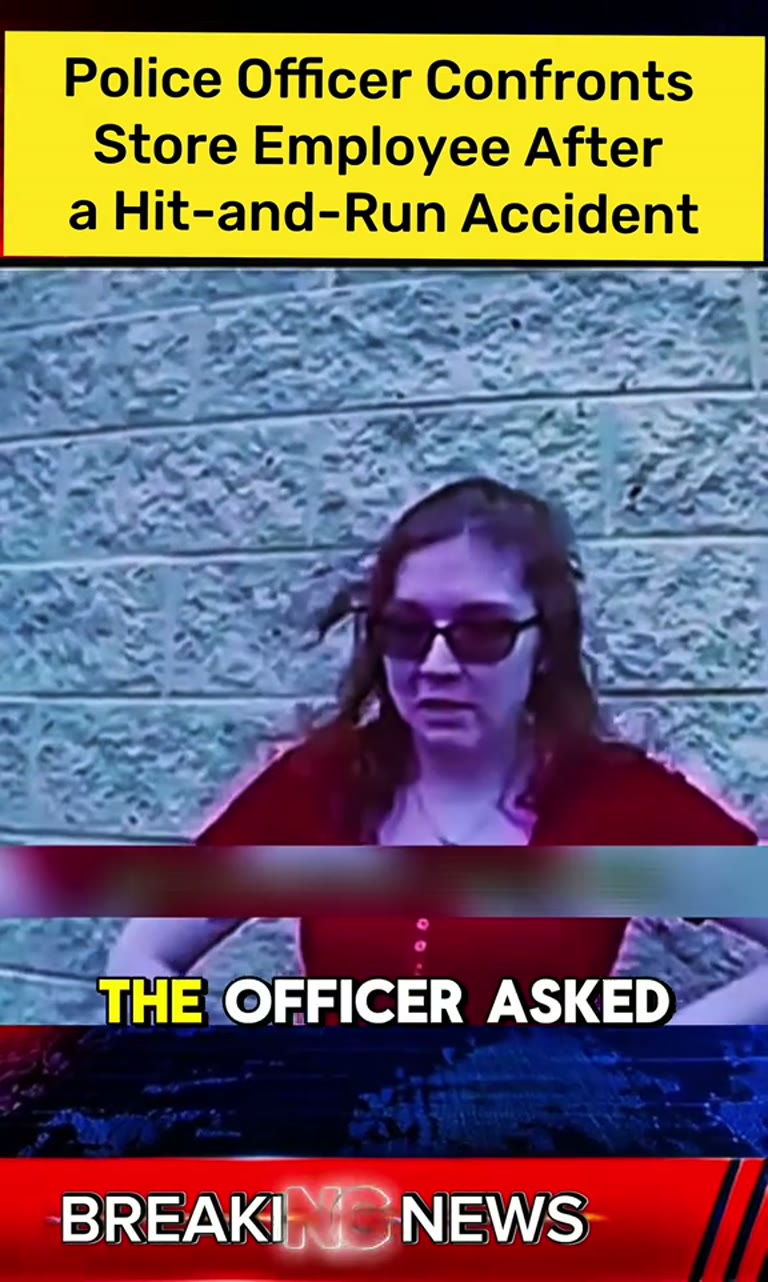
A routine shift at a retail store turned into a tense legal confrontation when a police officer arrived to question an employee about a hit-and-run crash. The woman insisted she had done nothing wrong, claiming the other vehicle was undamaged while her own car was badly wrecked. What followed was a delicate balancing act between an ongoing police investigation and the stark reality of missing a work shift.

Overview of the incident and the key facts
- A police officer confronted a store employee at her workplace following a reported hit-and-run crash in Allsip, Illinois.
- The woman claimed the other vehicle had no damage, while her own car was badly damaged, and that she waited 20 minutes at the scene before leaving.
- The officer revealed that the woman's parents had already been spoken to, and that the damage on her car matched the other driver's account of the collision.
- The woman admitted she never called the police because she could not miss her work shift, and confirmed she had liability insurance coverage.
- The officer allowed her to finish her shift but instructed her to go to the police station afterwards to address the pending charge.
The quiet hum of an ordinary retail shift was shattered when a police officer walked through the doors, not to shop, but to investigate a hit-and-run crash that had occurred earlier in the day. According to the officer, the incident began when police received a report of a collision in Allsip, Illinois, and the trail led directly to the woman's workplace. The officer found her near the entrance of the store and wasted no time in explaining the gravity of the situation: another vehicle had been involved in a collision with her car, and she had allegedly left the scene without reporting it.
The woman, however, was far from ready to accept blame. She insisted she had done nothing wrong, offering a version of events that painted a very different picture of the crash. She claimed the other vehicle had sustained no damage whatsoever, while her own car was left badly damaged—a detail that, in her mind, shifted the fault entirely onto the other driver. Yet the officer was not there to arbitrate a roadside debate; he was there to piece together a sequence of events that had already been reported by the other party.
As the conversation moved to the side of the building for privacy, the officer revealed a crucial detail: he had already spoken with the woman's parents at their home. This was not a casual inquiry; the investigation was already in motion. The woman pointed to a man nearby whom she believed was suspicious, but the officer pressed on, steering the conversation back to the facts of the collision. It was a moment of decision, and the tension was palpable.
The officer explained that the collision happened while the woman was making a left turn, and that the other driver had also reported the accident. He added that the damage to the side of the woman's vehicle matched the other driver's account—a forensic detail that undermined her claim of innocence. The woman, however, had her own explanation: she said she slammed on the brakes, but the other driver kept moving forward. She claimed she parked her vehicle and waited for 20 minutes, but no one came. It was a story of patience and frustration, but one that the officer had already heard challenged by the physical evidence.
The insurance question and the legal tightrope
When the officer asked about her insurance, the woman confirmed that she had liability coverage. This single admission opened a window into the complex financial and legal machinery that governs road collisions. In the United Kingdom, liability insurance is a legal requirement for all drivers, covering damage or injury caused to third parties. In the United States, the rules vary by state, but Illinois—where the incident reportedly took place—mandates liability coverage for bodily injury and property damage. The woman's confirmation that she had liability coverage meant that, in theory, the other driver's repairs could be claimed against her policy.
However, the hit-and-run element changes everything. Leaving the scene of an accident without exchanging details or reporting it is a serious offence in both the UK and the US. In the UK, failing to stop after a collision can lead to a fine, penalty points, or even imprisonment, and it can invalidate an insurance claim if the policyholder is found to have breached the terms. In Illinois, leaving the scene of an accident involving property damage is a misdemeanour, and if injury is involved, it can escalate to a felony. The woman's admission that she never called the police because she could not miss her work shift is unlikely to be accepted as a legal defence.
From an insurance perspective, the key question is whether the woman's liability policy will respond to the other driver's claim. If the other driver files a claim, the woman's insurer will typically investigate the incident, assess the damage, and determine liability. If the woman is found to have left the scene without a valid reason, her insurer may still cover the third-party claim—because liability insurance is designed to protect the other party—but she could face consequences such as a higher premium, a cancelled policy, or a requirement to repay the insurer. In the UK, the Motor Insurers' Bureau (MIB) can step in when an uninsured or untraced driver causes damage, but the process is lengthy and not guaranteed.
The woman's claim that her mother moved the car because she was too upset to drive adds another layer of complexity. If the mother moved the vehicle without reporting the incident, she could also be liable for failing to stop. Insurance policies typically require the policyholder to cooperate with the insurer's investigation, and any attempt to conceal or alter the facts can lead to a declined claim. The officer's decision to let the woman finish her shift was a pragmatic one—it kept the investigation alive while allowing her to fulfil her work obligations—but it also meant that the legal clock was still ticking.
The human cost of a missed shift
The woman's explanation that she could not miss her work shift is a stark reminder of the pressures that ordinary people face when caught between legal obligations and financial survival. In the UK, many workers on zero-hours contracts or in low-wage retail jobs face similar dilemmas: taking time off to deal with a police matter can mean losing a day's pay, or even risking their job. The woman's decision to leave the scene and go to work was, in her mind, a rational choice—but it was one that carried serious legal risks.
The officer's approach was notably measured. He did not arrest her on the spot, nor did he escalate the situation. Instead, he explained the charge, asked about her insurance, and gave her a clear instruction: after work, she would have to go to the police station to address the pending charge. This reflects a common practice in both the US and the UK, where police may exercise discretion in minor hit-and-run cases, especially when the suspect is cooperative and the damage is not severe. However, the decision to let her finish her shift does not erase the charge; it merely delays the inevitable.
The woman's claim that she waited 20 minutes at the scene is also worth scrutinising. In the UK, the law requires drivers to stop and exchange details if anyone is injured or if damage is caused. If no one is injured, drivers are still expected to report the incident to the police within 24 hours if details are not exchanged. Waiting 20 minutes and then leaving does not satisfy this requirement, and the fact that she did not call the police at all strengthens the case against her. The officer's revelation that the other driver had also reported the accident suggests that the other party was proactive, while the woman's inaction may be viewed as an attempt to evade responsibility.
From a financial standpoint, the woman's liability insurance may cover the other driver's repairs, but she could still face out-of-pocket costs. In the UK, an at-fault driver may have to pay an excess (deductible) on their policy, and if the insurer determines that the policyholder breached the terms—for example, by leaving the scene—the insurer may seek to recover the costs. In the US, the woman could face a civil lawsuit from the other driver, and if she is found liable, her insurer may cover the damages up to the policy limit, but anything beyond that would be her responsibility. The damage to her own car, which she claimed was badly damaged, would only be covered if she had comprehensive coverage—which she did not confirm.
The debate over responsibility and the road ahead
The case has sparked a wider debate over whether the woman made a poor decision because she feared losing her job, or whether she was actually trying to avoid taking responsibility for the crash. On one side, there is sympathy for a worker who felt trapped between her livelihood and the law. On the other, there is a clear legal principle: leaving the scene of an accident is a serious offence, and it can have devastating consequences for the other party, who may be left to foot the bill for repairs or medical costs.
The officer's decision to let her finish her shift was a moment of discretion, but it does not change the fact that a charge is pending. The woman will have to go to the police station, and from there, the case will proceed through the legal system. If she is convicted, she could face a fine, penalty points on her licence, or even a custodial sentence, depending on the severity of the incident. Her insurance premiums will likely rise, and she may struggle to obtain affordable coverage in the future. In the UK, a conviction for failing to stop can also lead to a driving ban, which could jeopardise her job if she relies on her car to get to work.
The other driver, meanwhile, will be seeking compensation for the damage to their vehicle. If the woman's liability insurer accepts the claim, the other driver will be reimbursed for repairs, and possibly for a replacement vehicle while theirs is in the shop. If the insurer disputes the claim, the other driver may have to pursue the matter through the courts or via the Motor Insurers' Bureau. The process can take months, and in the meantime, the other driver is left out of pocket. This is the hidden cost of a hit-and-run: it is not just a legal infraction, but a financial burden that falls on the victim.
The case also raises questions about the role of employers. Should a store allow a police officer to question an employee during a shift? Should the employer have intervened? In the UK, employers have a duty of care to their staff, but they also have a legal obligation to cooperate with police investigations. The officer's decision to speak to the woman privately, away from customers, was a sensible compromise, but it highlights the tension between an employer's commercial interests and the demands of the criminal justice system. The woman's fear of missing her shift is a reminder that, for many workers, a day's pay is not a trivial matter—it can mean the difference between paying rent and falling behind.
As the investigation continues, the woman's fate will depend on the evidence, the prosecutor's decision, and the court's judgment. The officer's body camera footage, if available, will be a key piece of evidence, capturing the conversation and the woman's demeanour. The damage to both vehicles will be assessed, and the other driver's account will be weighed against the woman's claims. In the end, the case will be decided not by public opinion, but by the law—and the law is clear: leaving the scene of an accident is a serious matter, and the consequences can be severe. The question now is whether the woman's fear of losing her job will be seen as a mitigating factor, or whether it will be viewed as an excuse for evading responsibility.
| Incident parameter | Logged / on-scene information |
|---|---|
| Location | Allsip, Illinois |
| Time of day | Not specified (store shift hours) |
| Incident type | Hit-and-run crash |
| People involved | Police officer, store employee, other driver, woman's parents |
| Insurance mentioned | Liability coverage confirmed by the woman |
| Officer action | Allowed woman to finish shift, instructed her to report to police station |
| Damage reported | Woman's car badly damaged; other vehicle claimed undamaged by woman |
Important note: Some details, including the exact time of the incident and the outcome of the pending charge, remain unverified and may be subject to further investigation.
Core questions still unanswered
- Was the woman's decision to leave the scene driven by fear of losing her job, or was it an attempt to avoid legal responsibility?
- Should the officer have arrested her on the spot instead of allowing her to finish her shift?
- How will the woman's liability insurance respond to the other driver's claim, and will she face out-of-pocket costs?
Learn more: French police kick protester: who pays for the injury?
🎥 Watch the video at the bottom of the page 👇
This story was edited from a publicly posted video; some details may not be independently verified.