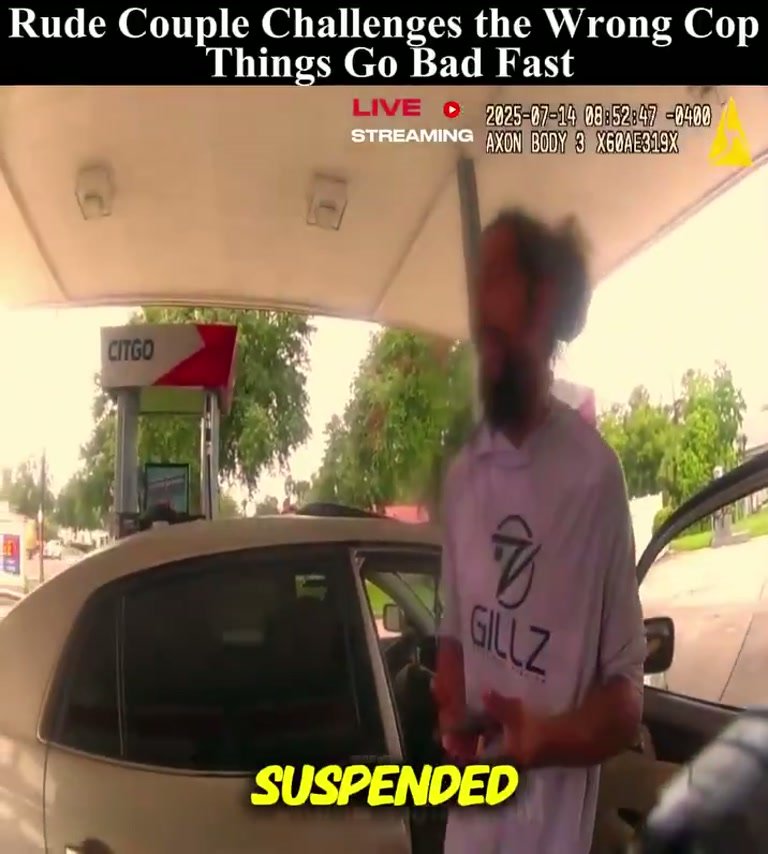
What should have been a straightforward traffic stop in Fairfax, Virginia, rapidly descended into a life-or-death situation. A 36-year-old driver, reportedly armed, argued with police before reaching for a weapon during the encounter. The incident, captured on video, has sparked intense debate about police use of force and the razor-thin margin between routine enforcement and sudden danger.
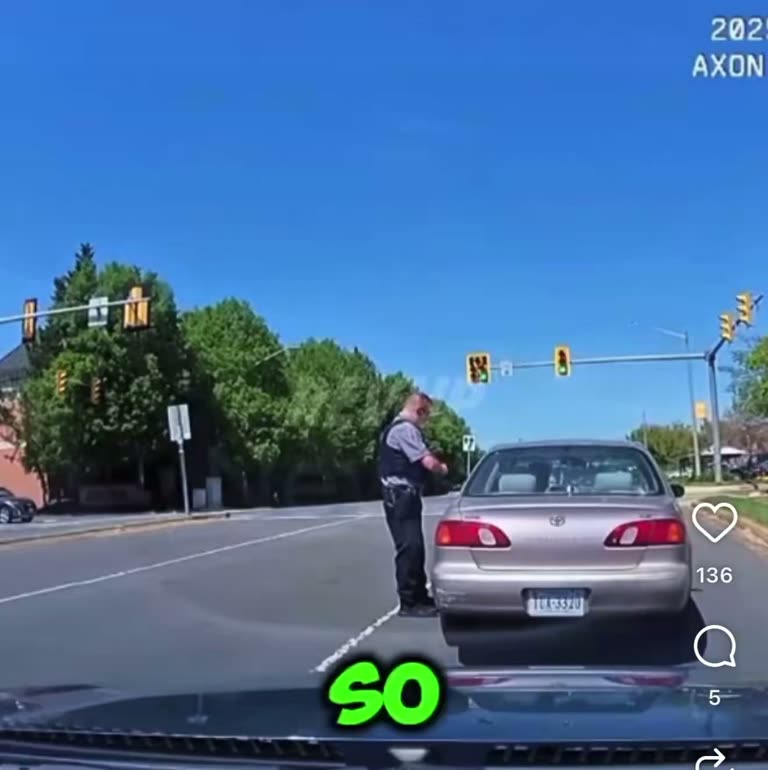
Overview of the incident and the key facts
- The incident occurred in Fairfax, Virginia, during a traffic stop initially prompted by an expired inspection sticker.
- The driver informed officers he was armed and then reached for his weapon, which subsequently jammed.
- Two officers sustained injuries during the confrontation, and police returned fire.
- The driver, a 36-year-old man, was ultimately subdued and the situation concluded without fatalities.
- The event has ignited discussions regarding the financial and insurance implications of such high-risk encounters.
The quiet hum of a suburban afternoon in Fairfax, Virginia, was shattered by the crackle of radio traffic and the sudden escalation of what began as a mundane traffic stop. A 36-year-old man was pulled over, not for speeding or reckless driving, but for something as seemingly trivial as an expired inspection sticker. The officer’s approach was standard, a routine check that happens thousands of times a day across the United States. Yet, within moments, the atmosphere shifted from bureaucratic annoyance to palpable dread. The driver, whose identity has not been formally released, immediately presented a confrontational demeanour, challenging the officer’s authority and questioning the reason for the stop. According to the audio transcript, the driver told the officer, "I have a gun and I'm armed, I'll let you know." This declaration, intended as a legal courtesy in some jurisdictions, immediately raised the stakes. What followed was a chaotic sequence of events that transformed a simple citation into a fight for survival.
The tension in the air was thick enough to cut with a knife. The officer, maintaining composure, attempted to de-escalate the situation, asking the driver to remain in the vehicle. However, the driver’s agitation grew. He demanded to know why he was stopped, and when informed about the expired sticker, he retorted with a dismissive, "Call to Biden or call towards your driver's." The absurdity of the statement hung in the air, a stark contrast to the seriousness of the emerging threat. The driver then admitted he did not have a driving licence. When instructed to return to his vehicle, he refused, saying, "No, no, it doesn't work that way." The officer’s request for a supervisor was met with a stream of verbal abuse, with the driver calling the officers "dumb ass people." The scene was set for a tragedy, a collision of obstinacy and duty that would leave two officers injured and a community reeling.
As the verbal sparring continued, the driver’s actions became physical. He reached for the weapon he had previously declared. The transcript notes that the weapon jammed. In that split second, the trajectory of multiple lives hung in the balance. The officers, faced with an imminent threat, responded with force. The sound of gunfire would have echoed through the tree-lined streets, a terrifying soundtrack to a sunny day. Two officers were hurt in the exchange. The driver was eventually stopped, but the aftermath of those few minutes would linger far longer than the screech of tyres or the blare of sirens. The incident serves as a chilling reminder of the volatility inherent in every traffic stop, where a routine interaction can turn deadly in the blink of an eye.
The financial fallout of a routine stop gone wrong
While the physical and emotional scars of this encounter are the most immediate concern, the financial repercussions ripple outward, touching on the complex world of insurance and liability. When a traffic stop escalates to this degree, the standard parameters of a simple motoring incident are blown apart. The vehicles involved, including the driver's car and the police cruisers, become part of a much larger investigation. In the United States, liability for such an event is a labyrinthine legal puzzle. If a driver initiates force against law enforcement, the subsequent damage to property and persons typically falls outside the scope of standard personal auto insurance policies. Most policies contain explicit exclusions for intentional acts, meaning the driver’s insurer would likely deny any claim for damages arising from his own vehicle or injuries he sustained, as the act was not accidental.
The financial burden then shifts to the officers and the police department. In the US, police officers are generally covered by their department’s liability insurance or municipal risk pools for injuries sustained in the line of duty. This coverage typically includes medical expenses, rehabilitation, and lost wages. However, the psychological toll—often manifesting as post-traumatic stress disorder—requires specialised care that may be subject to different policy limits and waiting periods. For the driver, the situation is even more precarious. Facing criminal charges, he would be responsible for his own legal defence. Furthermore, any damage to the police vehicles or third-party property would be pursued through civil litigation, potentially resulting in a hefty judgment against him. Without assets or insurance to cover such a claim, the financial impact would be devastating, leaving a trail of unpaid debts and ruined credit in its wake.
For the bystanders and the community, the incident raises questions about public liability. If a stray bullet had damaged a nearby home or business, the affected property owner would turn to their own homeowners or commercial insurance policy. Under UK and US law, this would typically be handled as a "no-fault" claim, where the insurer pays out and then seeks subrogation against the party at fault—in this case, the driver or the police department. However, such claims can take years to resolve, leaving property owners in financial limbo. The presence of a firearm in a vehicle also triggers specific insurance considerations. While carrying a legally owned firearm is not in itself a violation of most auto policies, using it in a criminal act voids any coverage. This case highlights the absolute necessity of understanding policy exclusions, particularly those related to criminal acts and intentional damage, which are standard across the industry.
Insurance and who pays
When a traffic stop devolves into an armed confrontation, determining "who pays" is a complex process that involves multiple insurance policies and legal doctrines. The first layer is the driver's personal auto insurance. As established, standard policies exclude coverage for intentional acts. If the driver is convicted of a crime, his insurer will almost certainly deny any claim related to the incident, including damage to his own vehicle or any liability he incurs. This leaves the driver personally exposed to financial ruin. The second layer is the police department's liability insurance. In the US, this is often a "sovereign immunity" issue, but most departments carry liability coverage to protect against civil rights lawsuits. If the officers' use of force is deemed justified, the department's insurer covers their injuries and legal defence. If it is deemed excessive, the insurer may still pay, but the department could face sanctions.
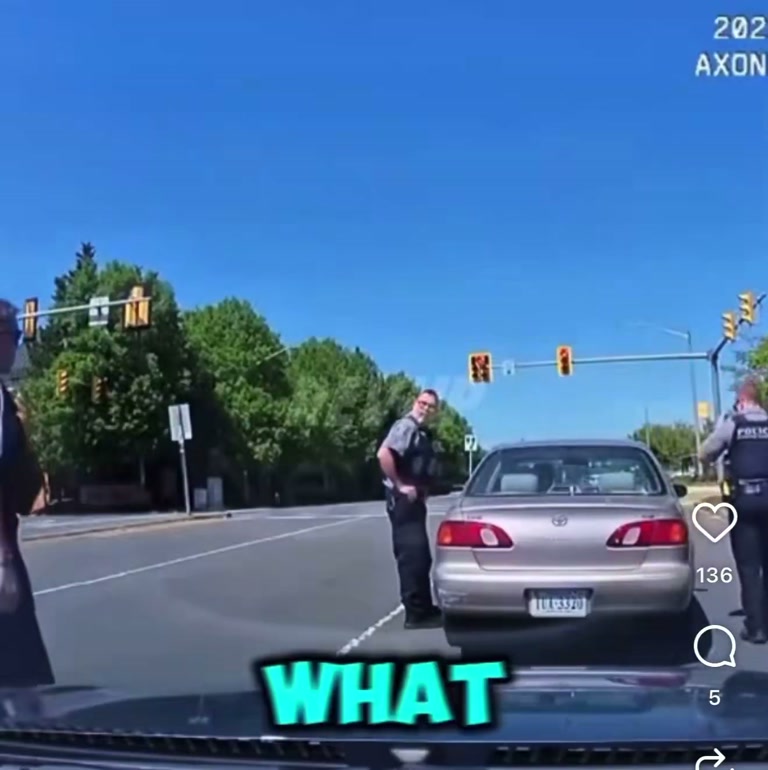
For the officers, their medical expenses are covered by workers' compensation insurance. This policy covers injuries sustained in the course of employment, regardless of fault. It pays for hospital bills, rehabilitation, and a portion of lost wages. However, workers' comp does not cover pain and suffering. For that, the officers would need to file a separate personal injury lawsuit, which is a lengthy and stressful process. In the UK, the equivalent would be the Criminal Injuries Compensation Authority (CICA), which provides compensation to victims of violent crime. However, the process is notoriously slow and the awards are often capped. The officers would also rely on their police federation or union for legal support.
The excess, or deductible, on these policies is a crucial factor. For a police department's liability policy, the deductible can be substantial, often running into tens of thousands of pounds or dollars. This means the department itself must pay a significant sum before the insurer steps in. For the individual driver, the financial fallout is catastrophic. Without insurance, he is personally liable for the damage to the police vehicles, the officers' medical bills, and any legal fees. The total cost could easily exceed hundreds of thousands of dollars, a debt that would follow him for life. It is a stark illustration of how a single moment of poor judgement can destroy a person's financial future, leaving them with no safety net.
The human cost and community impact
Beyond the cold calculations of insurance claims and legal liability, the human cost of this incident is immeasurable. The officers involved, who started their shift with the simple goal of enforcing traffic laws, were thrust into a situation where they had to make split-second decisions that could have ended a life. The psychological trauma of facing a weapon, even if it jams, is profound. It can lead to anxiety, depression, and a heightened state of alertness that makes returning to normal duties difficult. For the driver, the consequences are equally dire. He faces criminal charges that could result in a lengthy prison sentence. His family, mentioned in the audio as "kids and a lot of things," are left to grapple with the aftermath, their lives upended by a moment of anger and defiance.
The community of Fairfax, Virginia, is also left to process the event. The intersection where the stop occurred, a place usually associated with the mundane commute, has become a crime scene. Residents may feel a heightened sense of unease, questioning the safety of their neighbourhood. The incident fuels debates about police tactics, the prevalence of firearms, and the mental health crisis that often underpins such confrontations. The viral nature of the video, shared widely online, amplifies these tensions. Opinions are split, with some defending the officers' actions as necessary and others questioning whether the escalation could have been avoided. The incident has sparked a firestorm online, drawing massive attention to the challenges of modern policing.
The ripple effects extend to the insurance industry as well. High-profile incidents like this often lead to a reassessment of risk. Insurers may tighten their underwriting criteria for certain demographics or geographic areas, leading to higher premiums for everyone. The cost of police liability insurance is already a significant burden on municipal budgets, and incidents like this only add to the pressure. For the average driver, it is a reminder that their auto insurance policy is a contract with specific boundaries. It is not a catch-all safety net. Understanding those boundaries—the exclusions, the limits, and the deductibles—is essential. In the end, the Fairfax incident is a tragedy of errors, a moment where communication broke down and violence erupted, leaving a trail of physical, emotional, and financial damage in its wake.
| Incident parameter | Logged / on-scene information |
|---|---|
| Location | Fairfax, Virginia |
| Time of day | Daytime (based on video lighting) |
| Involved parties | 36-year-old driver and police officers |
| Initial reason for stop | Expired inspection sticker |
| Key action | Driver stated he was armed and reached for his weapon |
| Outcome | Weapon jammed; two officers injured; police fired back |
Important note: Some details regarding the exact charges and the identities of those involved have not been officially released and remain unverified.
Core questions still unanswered
- In a situation like this, do you believe the officers had any alternative to using force?
- Should insurance companies be allowed to deny coverage for injuries sustained during a criminal act?
- How can communities better support first responders who experience traumatic events on the job?
Learn more: Chicago Cop Suspended After Viral Gun Incident at Street Takeover
🎥 Watch the video at the bottom of the page 👇
This story was edited from a publicly posted video; some details may not be independently verified.