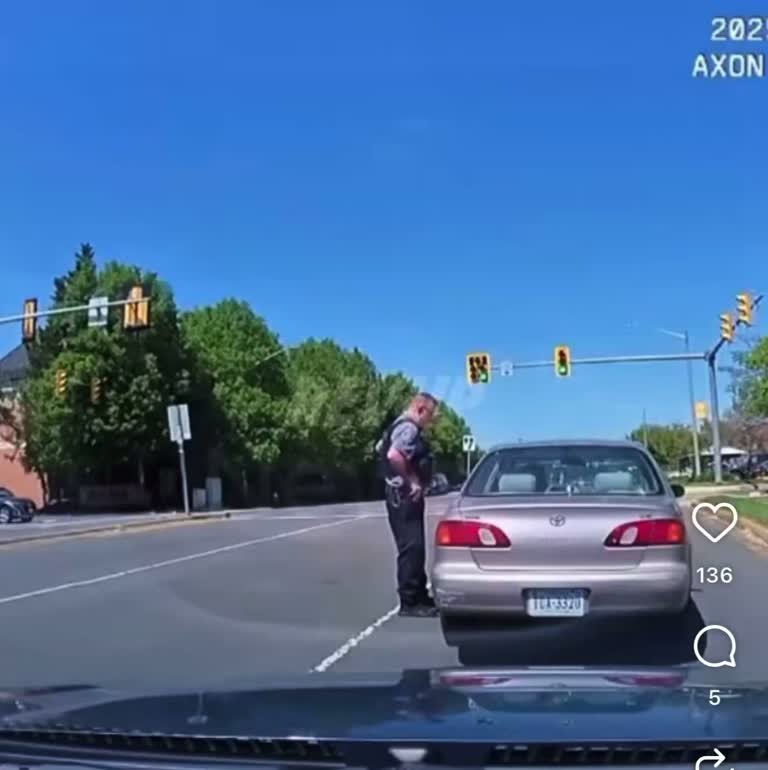
A seemingly ordinary traffic stop for a missed stop sign has ignited a fierce debate online after body camera footage showed a tense back-and-forth between a police officer and a cyclist. The rider repeatedly asks why he is being detained and why he must sit down for a simple bike ticket, while the officer insists he is not asking for identification and declines to answer questions directly. The video, which has been widely shared, captures the moment the cyclist accuses the officer of harassment and asks for a watch commander, turning a minor infraction into a viral confrontation.
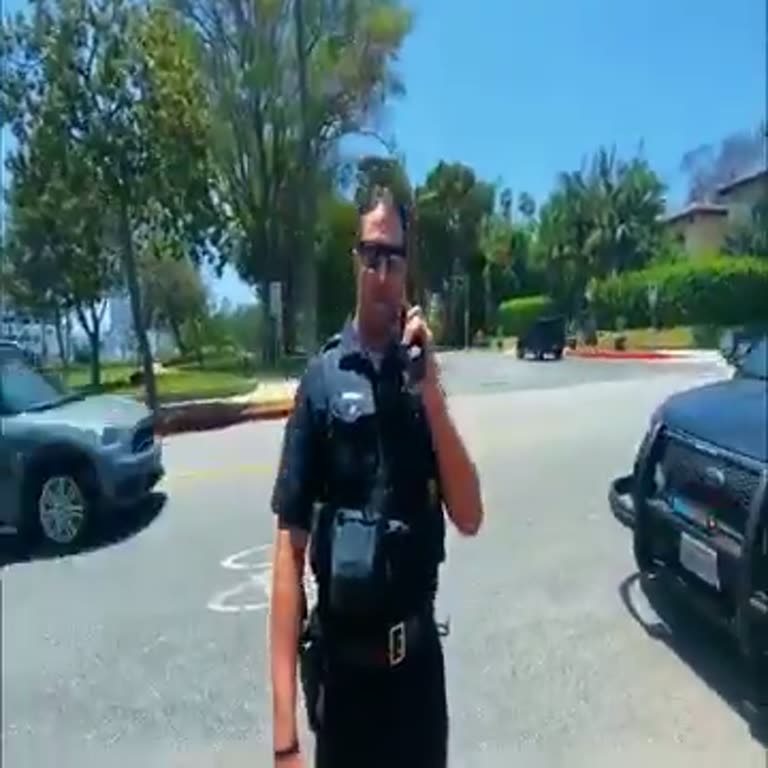
Overview of the incident and the key facts
- The incident begins with an officer stopping a cyclist for failing to stop at a stop sign.
- The cyclist questions why he needs to sit down for a bike ticket and offers to hand over his ID.
- The officer declines the ID and tells the cyclist he doesn't need to search his bag.
- The cyclist repeatedly asks to call a watch commander, saying he feels nervous and that the situation feels like retaliation.
- The officer asks if the body camera is on and continues to ask the cyclist to sit down, while the cyclist asks to stand.
- The video ends with the cyclist asking for the officer's last name and insisting he will give his ID.
The stop that sparked a firestorm
The footage opens on a sunlit street, the kind of quiet suburban scene where a missed stop sign usually means a brief word and a ticket. But within seconds, the atmosphere shifts. A cyclist, still straddling his bike, is told he is being detained. His voice, sharp with confusion, cuts through the ambient hum of traffic: "Am I being detained for what?" The officer's response is calm but firm, citing the stop sign violation. Yet what follows is anything but routine.
The cyclist immediately pushes back, insisting he doesn't need to sit down for a bike ticket. He offers his ID, but the officer declines it, saying he didn't ask for it. The cyclist then asks if he can search his bag, to which the officer replies, "I don't need to search for a bike ticket." The exchange is laced with tension, each sentence tightening the knot. The rider's frustration is palpable, his words tumbling out as he tries to understand the scope of the stop.
For viewers, the moment is a study in miscommunication. The officer repeats instructions to sit, while the cyclist asks why. "This is harassment," the rider says, his voice rising. "Make sure your screen recorded." The officer, unfazed, continues to ask him to take a seat. The scene is both ordinary and extraordinary — a minor infraction escalating into a standoff over rights and procedure, all captured in crisp detail.
A demand for accountability
As the confrontation drags on, the cyclist pivots to a new tactic: he asks for a watch commander. "Can you call the watch commander?" he pleads. "I'm nervous. This feels like retaliation." The officer doesn't immediately respond, and the cyclist repeats the request, insisting he has that right. The officer asks, "What can you call the watch commander for?" The cyclist's reply is simple: "I'm asking you a question."
The tension is thick enough to cut. The officer asks if his body camera is on, a detail that suggests both parties are aware of the stakes. The cyclist, now visibly agitated, says he thinks it's going to be a bike stop and mentions taking a supervisor medication. "Yeah, this guy's gone," he mutters, a flash of exasperation. He then asks if he can stand, but the officer replies, "No, I'm asking for you to sit." The cyclist refuses to answer further questions but insists he will give his ID.
This segment captures the heart of the viral debate: who is in control, and why? The cyclist's repeated requests for a supervisor and his refusal to sit create a push-and-pull that feels both deeply personal and universally familiar. It's a snapshot of a citizen trying to assert his rights while an officer tries to maintain authority — a dynamic that has played out on countless streets, but rarely with such raw, unfiltered clarity.
The legal and social ripple effect
Beyond the immediate exchange, the video raises broader questions about police conduct and citizen rights. The officer is heard saying he doesn't need to search the bag or see the ID, yet he continues to detain the cyclist. Legal experts might note that a bike ticket typically doesn't require the rider to sit or submit to a search. The cyclist's insistence on a watch commander is a recognised step in many jurisdictions when a person feels an officer is overstepping.
Social media users have shared the clip widely, with opinions split. Some argue the cyclist was unnecessarily combative, while others say the officer refused to answer basic questions. "It fueled heated debate online," one observer noted, as comments poured in. The phrase "this is retaliation" has become a flashpoint, with many voicing concern about the escalation of a minor stop. The officer's decision to ask for the cyclist's last name and the cyclist's refusal to answer further questions only add to the sense of a situation spiralling beyond its original purpose.
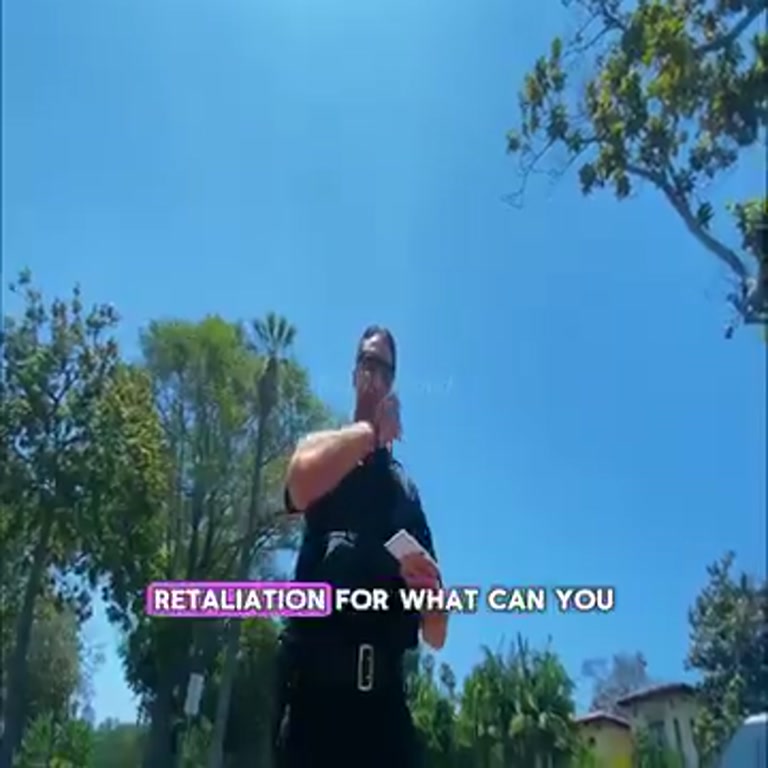
The footage ends with the cyclist asking, "May I stand?" and the officer replying, "No." The rider then says, "I'm asking for you to sit. Why? I don't want to answer questions. I will give you my ID. May I give you my ID?" The unresolved ending leaves viewers hanging, wondering what citation, if any, was issued and whether the watch commander ever arrived. It's a moment that encapsulates the fragility of trust between law enforcement and the public, all triggered by a missed stop sign.
Insurance and who pays
While this incident does not involve a vehicle collision or property damage, it carries significant insurance and financial implications for anyone who cycles on public roads. In both the US and UK, cyclists are advised to hold specialist bicycle insurance or at least personal liability cover, which can protect them if they are found at fault for an accident or if their bike is damaged. A ticket for a stop sign violation, however, is a fine — not an insurable event. The cyclist would be personally responsible for paying any citation issued, and that cost would not be covered by standard home or auto policies.
If the confrontation had escalated to a physical altercation or an accidental fall, the calculus would change. Health insurance would come into play for any injuries, while personal liability cover could respond if the cyclist damaged someone else's property. In the UK, cyclists are not legally required to have insurance, but many choose membership with organisations like Cycling UK, which includes third-party liability. In the US, some states require cyclists to follow the same rules as vehicles, but insurance mandates vary. The key exclusion to note: intentional acts or disputes with authorities are typically not covered under any standard policy.
For the officer, the department's liability insurance would be the relevant cover if a civil claim were filed. Police departments usually carry public liability insurance to handle lawsuits alleging misconduct or false arrest. However, such claims are subject to official immunity doctrines and require proving that the officer acted outside the scope of duty. The excess, or deductible, for such policies can run into thousands of dollars, and the taxpayer ultimately foots the bill. The cyclist, if he chooses to pursue a complaint, would not receive compensation automatically; he would need to file a formal claim and prove damages. The video itself could serve as evidence, but it does not guarantee an outcome.
What the footage does not tell us
As with any viral clip, the video captures only a fragment of the encounter. It does not show what happened before the recording began, nor does it show the resolution. The officer's body camera footage, if it exists, might provide a fuller picture. The cyclist's mention of "supervisor medication" suggests a potential medical context that could be relevant to how the stop was handled, but without confirmation, it remains speculation. The officer's repeated instruction to sit could be a standard safety protocol, or it could be an overreach — the video alone cannot settle that question.
The legal landscape is equally murky. In the US, a stop sign violation by a cyclist is typically a traffic infraction, and the rider is usually not required to dismount or sit unless there is a safety concern. In the UK, cyclists are subject to the Highway Code but are not required to carry ID, and the police have different powers of detention. The cyclist's request for a watch commander is a recognised step in many US departments, but the officer's refusal to answer could be within policy. Without knowing the department's specific rules, it's impossible to judge definitively.
What is clear is that the encounter has left many questions. It drew massive attention online, with users sharing it widely and opinions split. Some see a citizen standing up for his rights; others see a routine stop needlessly escalated. The video has become a lightning rod for debates about police accountability, the limits of minor stops, and the role of cameras in documenting them. The situation kept developing as comments poured in, and no official conclusion has been reached. Authorities have not spoken out publicly, and it remains unclear whether an investigation has been opened. The matter is still being reviewed in the court of public opinion, even if not in a legal one.
| Incident parameter | Logged / on-scene information |
|---|---|
| Location | A residential street with trees and parked cars (specific city not stated) |
| Time of day | Daytime, clear blue sky |
| Main event | A police officer stops a cyclist for failing to stop at a stop sign |
| Key demand | The cyclist repeatedly asks to call a watch commander |
| Officer's stance | Declines to take the cyclist's ID and says he doesn't need to search the bag |
| Cyclist's response | Refuses to sit, asks to stand, accuses officer of harassment and retaliation |
| Video outcome | The clip ends with the cyclist asking for the officer's last name and offering his ID |
Important note: Some details, including the exact location, department, and the final outcome of the stop, remain unverified and are based solely on the footage and transcript provided.
Core questions still unanswered
- Was the officer legally required to answer the cyclist's questions about why he was being detained?
- Should the cyclist have complied with the instruction to sit, or was his refusal justified?
- Does this encounter highlight a need for clearer guidelines on how police handle minor cycling infractions?
Learn more: Ohio Police Chase Ends on Golf Course: Insurance & Liability
🎥 Watch the video at the bottom of the page 👇
This story was edited from a publicly posted video; some details may not be independently verified.