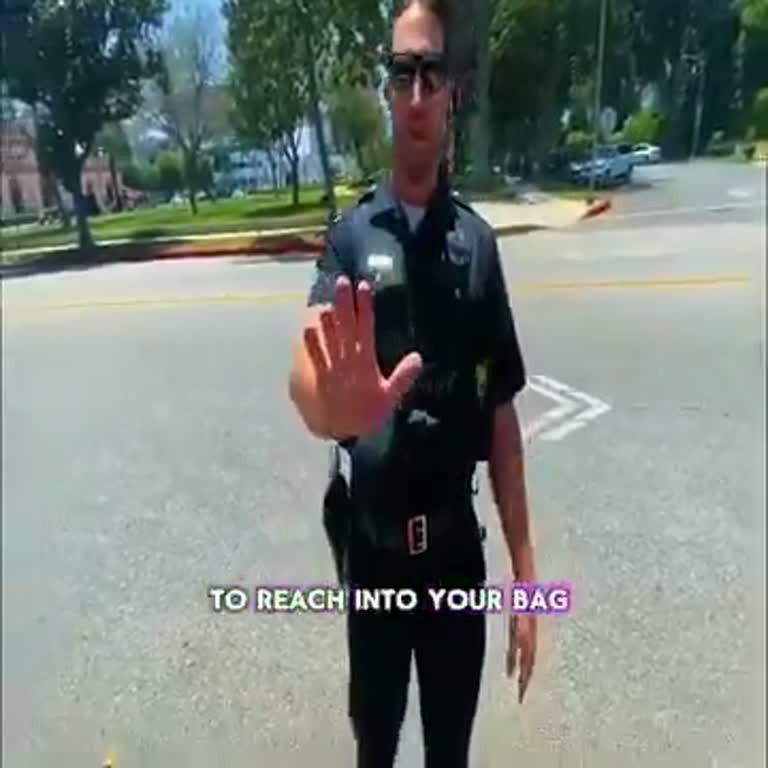
A late-night traffic stop in Connecticut took a dramatic turn when a man allegedly ambushed two police officers after a confrontation over a ticket and a towed vehicle. Body camera footage captures the tense moments leading up to the incident, showing a situation that escalated far beyond a routine stop. The events have raised serious questions about officer safety and the financial fallout for those involved.
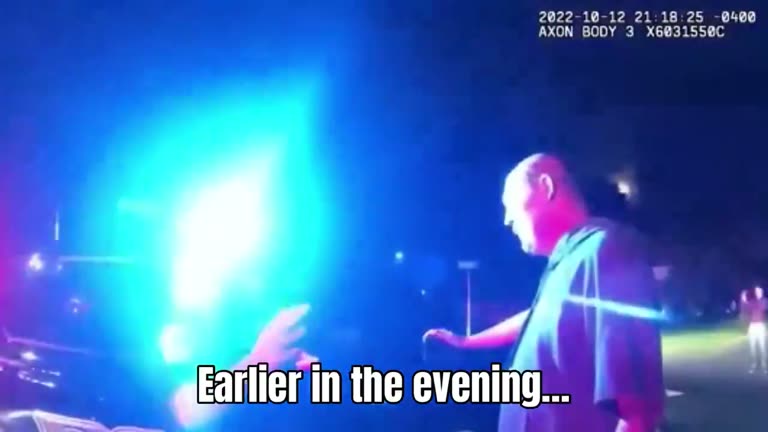
Overview of the incident and the key facts
- The incident began with a traffic stop in Connecticut involving a man named Nicholas Brutcher.
- Brutcher's vehicle was towed, and he received a ticket, which led to a verbal altercation with officers.
- Body camera footage shows officers attempting to de-escalate the situation before the confrontation turned violent.
- A 911 call was made later, describing an altercation between officers and a man, though the caller's intentions remain unclear.
- The footage captures the chaotic moments as the situation unfolded, highlighting the dangers law enforcement face during seemingly routine stops.
The footage begins with officers on the scene of what appears to be a traffic stop. The interaction is already fraught with tension, as a man—identified in the video as Nicholas Brutcher—is seen arguing with law enforcement. According to the description accompanying the video, the confrontation began after Brutcher received a ticket and his car was towed. That combination of penalties is often enough to inflame an already stressful situation, and here it seems to have done exactly that. The officers are heard trying to maintain control, with one instructing, "If you move, you are going to be placed under arrest." Another voice urges calm, saying, "Chill out, Nick." The scene is lit by the harsh glare of police lights, casting long shadows across the dark roadside. The atmosphere is tense, with voices raised and tempers flaring.
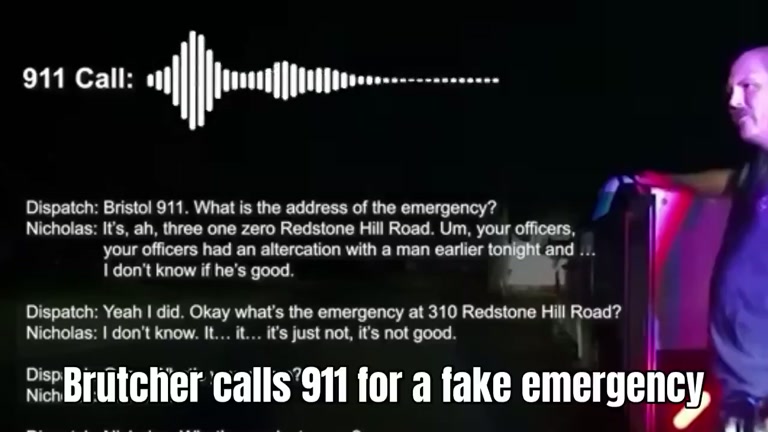
As the video progresses, the interaction becomes more chaotic. Brutcher is heard shouting, and at one point a voice says, "I really want to hurt you right now, so back off." The officers appear to be trying to keep their distance while managing the situation. Another voice is heard asking someone to get into the passenger seat, suggesting that there may have been other people present. The footage also includes a moment where an officer says, "I'm fearing for my life right now," which underscores the perceived threat. The scene is disjointed, with multiple voices overlapping, and the camera capturing only fragments of the action. It is clear that the situation is deteriorating rapidly. The video then cuts to a 911 call, where a dispatcher is heard asking for the address of the emergency. The caller, identified as Nicholas, states, "It's, ah, three one zero Redstone Hill Road. Um, your officers had an altercation with a man earlier tonight and … I don't know if he's good." This call adds a layer of confusion, as it is unclear whether the caller is reporting the incident or attempting to lure officers into a trap. The dispatcher responds, "Yeah I did. Okay what's the emergency at 310 Redstone Hill Road?" Nicholas replies, "I don't know. It. … it. … it's just not, it's not good." The call is cryptic and unsettling.
The final frames of the video show a dark, blurry scene with the text overlay, "When police arrive, he ambushes them." This suggests that the situation escalated into a violent confrontation when law enforcement responded to the address. The footage does not show the actual ambush, but the implication is clear: the officers walked into a dangerous situation. The video has sparked widespread attention online, with many viewers expressing shock at the sequence of events. The incident highlights the risks that police officers face every day, even during what initially appears to be a minor traffic violation. It also raises questions about how such situations can be de-escalated and what role insurance might play in the aftermath.
The financial fallout of traffic stops and towed vehicles
While the immediate focus of the video is the violent confrontation, there is a significant financial dimension that often goes unnoticed. When a vehicle is towed, the owner is typically responsible for paying towing fees and storage costs, which can quickly add up. In the United States, these fees vary by state and municipality, but they can range from $100 to over $500 for the tow alone, plus daily storage charges that can be $20 to $50 per day. If the vehicle is not claimed promptly, the costs can escalate, and in some cases, the vehicle may be sold at auction to recover the debt. For someone already facing the financial strain of a traffic ticket, which can be $150 or more depending on the violation, the added burden of a tow can be overwhelming. This financial pressure can contribute to heightened emotions and erratic behaviour, as seen in the video. It is not an excuse for violence, but it is a context that is often overlooked.
From an insurance perspective, a traffic ticket can have long-term consequences. In the UK, for example, a speeding ticket or a conviction for careless driving can lead to increased premiums for up to four years. In the US, the impact varies by state and insurer, but a single moving violation can raise premiums by 20% to 30%. If the incident leads to a criminal charge, the financial implications are even more severe. Bail, legal fees, and potential fines can run into thousands of dollars. For the officers involved, there may be workers' compensation claims if they are injured in the line of duty. Police departments typically have liability insurance that covers certain incidents, but the specifics depend on the policy and the circumstances. It is important to note that no official conclusion has been reached in this case, and any discussion of insurance is speculative until more facts are known.
Understanding insurance cover for police incidents
When a violent incident involving police occurs, there are several types of insurance that may come into play. For the officers, their employer—the police department—usually provides workers' compensation insurance, which covers medical expenses and lost wages if they are injured on the job. In the US, this is mandated by state law, and in the UK, police officers are covered by the Police Federation's insurance schemes or similar arrangements. However, the process of making a claim can be complex, and there may be exclusions for certain types of injuries or circumstances. For example, if an officer is found to have violated procedure, the claim might be denied. Additionally, there is the question of liability. If a member of the public is injured during a police incident, they may be able to claim compensation from the police department, but this requires proving negligence. In the US, qualified immunity often protects officers from personal liability, but the department itself can be sued. In the UK, claims against the police are handled through the Independent Office for Police Conduct (IOPC) and the courts.
For the person involved in the incident, the financial consequences can be dire. If they are charged with a crime, they will need legal representation, which can cost thousands. If they are convicted, they may face fines, court costs, and possibly imprisonment. Their vehicle, if towed, will incur fees that must be paid before it is released. If they have car insurance, it may cover the cost of a rental car or towing, depending on the policy. However, most standard policies do not cover towing unless it is part of a breakdown or accident cover. In the UK, comprehensive car insurance often includes breakdown cover, but this is not universal. Home insurance might cover legal expenses if the policyholder is sued, but it typically does not cover criminal defence. Health insurance may cover medical treatment if the person is injured, but again, there are deductibles and co-pays. It is crucial for anyone in this situation to understand their policy details and seek professional advice.
The insurance claims process and what to expect
If you find yourself involved in an incident like this, whether as a victim, a bystander, or even the person at the centre of it, the insurance claims process can be daunting. The first step is to report the incident to your insurer as soon as possible. Most policies require prompt notification, and delays can lead to a claim being rejected. You will need to provide a police report number, which you can get from the responding law enforcement agency. In the US, you can usually request a police report online or by visiting the station. In the UK, you can request a crime reference number from the police. Once you have that, you can file your claim. The insurer will then assign an adjuster to investigate. This may involve interviews, reviewing footage, and assessing damage or injuries. The time frame for a decision varies; it can take weeks or months. For car insurance claims, the excess (deductible) must be paid by the policyholder before the insurer covers the rest. In the UK, the excess is usually £100 to £500, while in the US, it can be $500 to $1,000. For health insurance, you may need to pay a co-pay or meet a deductible before coverage kicks in.
It is also important to note that insurance policies have exclusions. For example, if the incident is deemed to be a criminal act, the insurer may not cover certain costs. If the person was driving under the influence, the claim will likely be denied. If the incident involves intentional violence, the insurer may deny liability. For police officers, workers' compensation claims are usually straightforward, but if the injury is psychological, such as PTSD, the claim may be more complex. In the UK, there is increasing recognition of PTSD as a compensable condition for first responders, but it still requires medical evidence. For the public, if they are injured by police action, they may need to pursue a civil claim, which is separate from insurance. This can be a lengthy and expensive process. It is always advisable to consult a solicitor or attorney who specialises in personal injury or insurance law. They can help navigate the complexities and ensure that your rights are protected.
The aftermath and the questions that remain
The video of the incident has been widely shared, and it has sparked a firestorm online. Many users have expressed shock and concern, and opinions are split on what exactly happened and who is to blame. Some have praised the officers for their restraint, while others have questioned whether the situation could have been handled differently. The people involved have not publicly commented, and the authorities have not released an official conclusion. The matter is being reviewed, and it may take some time before all the facts are known. The incident has also raised questions about the safety of police officers and the mental health of those involved. It is a reminder that even a minor traffic stop can turn deadly in an instant. The financial implications for all parties are significant, and insurance will likely play a role in the aftermath, whether through workers' compensation, vehicle claims, or liability coverage.
One of the most puzzling aspects of the video is the 911 call. The caller, who identifies himself as Nicholas, gives an address and says, "your officers had an altercation with a man earlier tonight and … I don't know if he's good." The dispatcher seems confused, asking, "what's the emergency?" The caller's response is vague: "I don't know. It. … it. … it's just not, it's not good." This call is odd because it does not clearly report a crime or ask for help. It could be interpreted as a warning, a confession, or something else entirely. The lack of clarity makes it difficult to understand the caller's intent. Was he trying to report the earlier altercation? Was he trying to lure officers to the scene? Or was he simply incoherent? The video does not provide answers. This ambiguity has fueled speculation online, but without official statements, it remains just that—speculation. It is a situation no one saw coming, and it has left many questions.
| Incident parameter | Logged / on-scene information |
|---|---|
| Location | Bristol, Connecticut (mentioned in the 911 call) |
| Time of day | Evening (based on bodycam timestamps around 21:07) |
| Incident type | Traffic stop leading to an altercation and alleged ambush |
| Persons involved | Nicholas Brutcher (named in 911 call), two police officers |
| Vehicle action | Car towed, ticket issued |
| 911 call | Caller stated an altercation occurred at 310 Redstone Hill Road |
| Footage source | Police body camera (Axon Body 3) |
Important note: Some details, including the exact sequence of events and the outcome of the incident, remain unverified pending official reports.
Core questions still unanswered
- What exactly happened when police arrived at the address, and was anyone injured?
- What was the motivation behind the 911 call, and was it a genuine report or something else?
- How will insurance policies respond to the various claims that may arise from this incident?
Learn more: Orlando Wawa Card Skimming: Teens Caught on Camera
🎥 Watch the video at the bottom of the page 👇
This story was edited from a publicly posted video; some details may not be independently verified.