A quiet residential street in Wrexham became the unlikely setting for a tense and chaotic confrontation, captured entirely on camera. As shouts of "get back" echoed through the air, multiple police officers were forced to intervene in a dramatic scuffle that left onlookers stunned. The footage, which has rapidly spread across social media, raises urgent questions not only about public order but also about the financial fallout and insurance implications when violence erupts in residential neighbourhoods.
Overview of the incident and the key facts
- A violent altercation broke out on a residential street in Wrexham, United Kingdom, involving multiple individuals.
- Police officers were captured on video physically intervening to break up the fight and restrain those involved.
- Bystanders, including a woman holding a young child and another individual in a dressing gown, were present during the chaotic scene.
- The incident highlights the potential risks to property and personal safety in residential areas, raising complex questions about liability and insurance coverage.
- Footage shows officers grappling with individuals on the ground as they attempt to restore order.
The moment tension boiled over on a quiet street
The scene opens on an ordinary residential street in Wrexham, the kind of place where the loudest noise is usually the hum of a distant lawnmower or the chatter of neighbours. But on this particular day, the calm was shattered in an instant. A scuffle erupted in the middle of the road, drawing the attention of everyone within earshot. What began as a confrontation quickly spiralled into a chaotic scene that would require a significant police response.
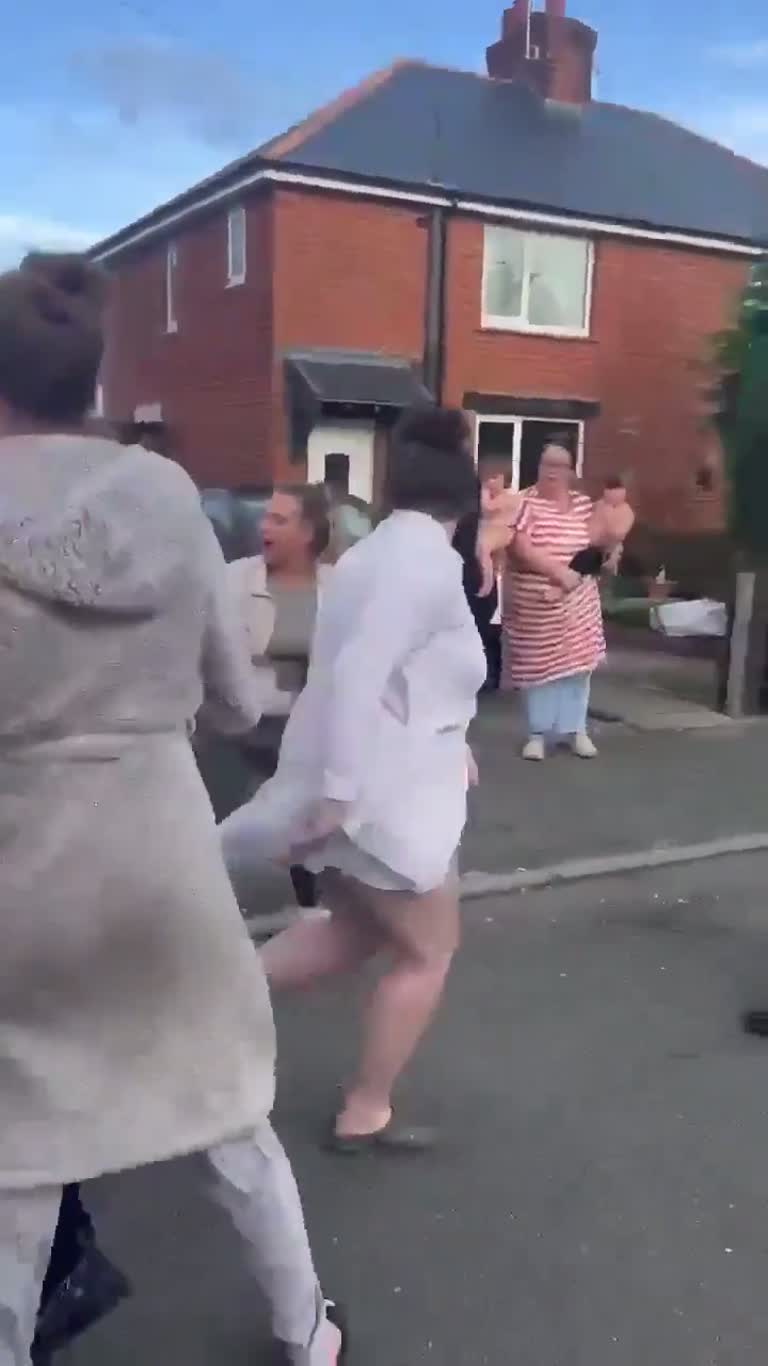
As the camera rolls, the atmosphere is thick with tension. A woman in a light-coloured dressing gown and grey trousers is seen moving hurriedly across the frame, her posture tense as she navigates the unfolding drama. Nearby, another woman dressed in a white top and shorts appears to be in the thick of the action, her movements rapid and urgent. The audio captures a voice repeatedly shouting "get back, get back," a desperate attempt to create distance and de-escalate the situation before it worsens.
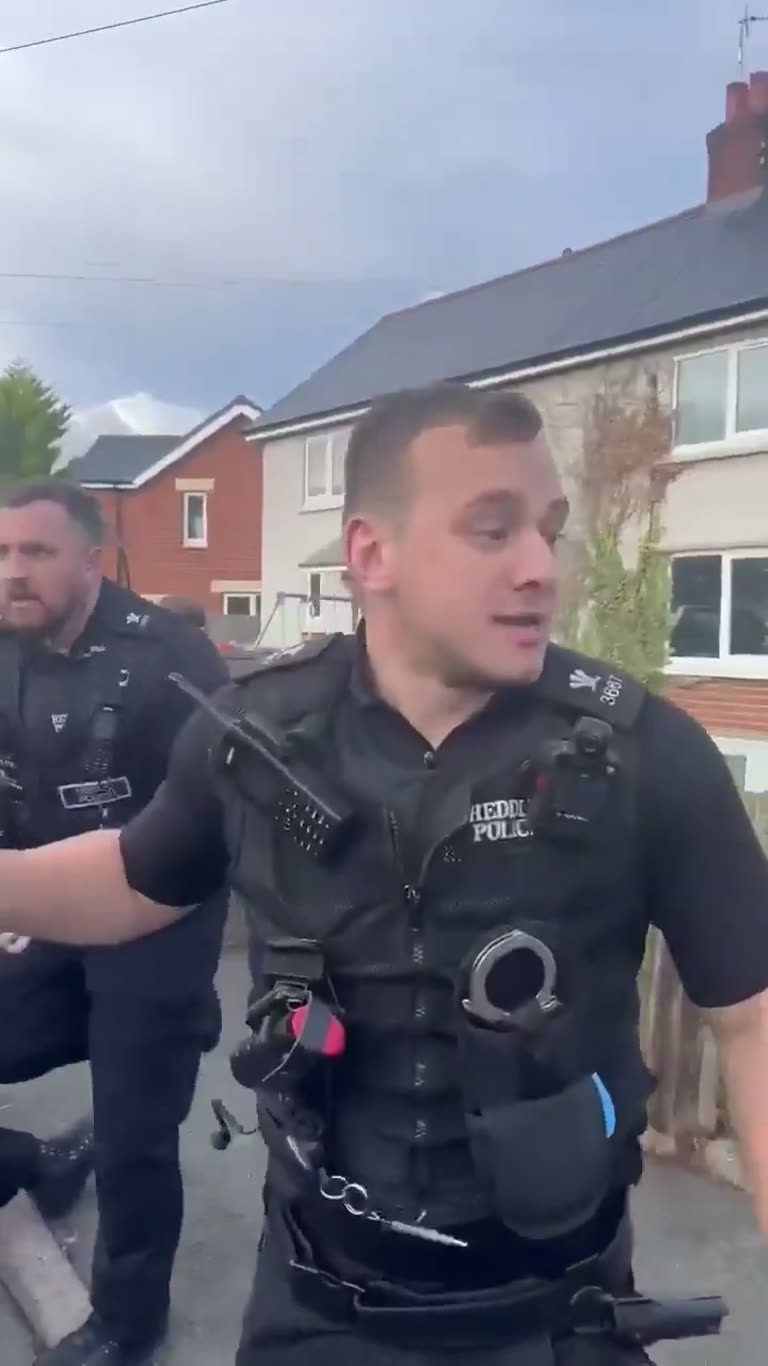
Within moments, the police arrive. Officers in black tactical gear are seen rushing into the fray, their presence immediately shifting the dynamics of the confrontation. One officer is visible grappling with an individual on the ground, while another moves to assist. The sheer physicality of the intervention is striking; this is not a calm mediation but a forceful effort to restore order. The footage captures the raw, unpolished reality of a public order incident, where split-second decisions can have lasting consequences.
As the struggle continues, the camera captures the blur of bodies and the frantic energy of the scene. A woman in a striped top and blue trousers watches from a distance, clutching a young child to her chest. Her expression is one of concern and perhaps disbelief at the sudden eruption of violence in her neighbourhood. The presence of the child adds a layer of vulnerability to the scene, a stark reminder that these events unfold in the midst of everyday life, affecting not just those directly involved but the entire community.
Police intervention and the aftermath on the ground
The arrival of the police marks a critical turning point in the footage. The officers, identifiable by their black uniforms and tactical vests, move with purpose. They are seen physically restraining at least one individual, their actions swift and coordinated. The struggle is intense, with officers forced to use their body weight to gain control. The sound of the scuffle—the shuffling of feet, the grunts of exertion—paints a vivid picture of the physical toll such interventions take on law enforcement.
As the situation unfolds, it becomes clear that this is not a simple dispute. The number of people involved and the intensity of the struggle suggest a deep-seated conflict that has boiled over into public view. The officers are not just breaking up a fight; they are managing a volatile situation that could easily escalate further. The footage shows them working as a unit, communicating through gestures and shouted instructions as they attempt to secure the area.
For the residents of this Wrexham street, the aftermath is likely to be a mix of shock and lingering unease. The street, once a place of quiet domesticity, has become a crime scene. The physical evidence of the struggle—scuff marks on the pavement, perhaps a dropped item or two—will serve as a reminder of the disruption. But the psychological impact may be more profound. Neighbours who witnessed the event will carry the memory of that day, a stark reminder that even the most peaceful communities are not immune to sudden outbursts of violence.
The video ends before the situation is fully resolved, leaving viewers with a sense of unresolved tension. We see the officers continuing their work, the individuals involved being restrained, but the ultimate outcome remains unclear. Was anyone arrested? Were there injuries? These are the questions that linger long after the footage stops, a testament to the incomplete nature of viral clips that capture only a fragment of a much larger story.
The financial and legal ripple effects of public disorder
While the immediate focus of the video is on the physical altercation, the event carries significant implications for those involved and the wider community. When violence erupts in a residential area, the consequences extend far beyond the immediate participants. Property owners may find themselves dealing with damage to fences, vehicles, or even their homes. Pedestrians who were simply going about their day could be caught in the crossfire, leading to potential injury claims. This is where the complex world of insurance and liability comes into play.
In the United Kingdom, incidents like this often trigger a web of insurance considerations. Homeowners' policies typically include public liability cover, which can protect the policyholder if someone is injured on their property or if they cause damage to others. However, the specifics of what is covered depend heavily on the circumstances. If the altercation began on private property and spilled onto the street, determining fault and liability can become a legal quagmire. Similarly, if a vehicle was damaged during the chaos, the owner would need to claim on their comprehensive car insurance, but they might face questions about whether the damage was a result of a criminal act or a civil dispute.
For the individuals directly involved in the fight, the financial fallout could be severe. If they are found to have caused damage or injury, they could be held personally liable. This means they might have to pay out of pocket for repairs, medical bills, or legal fees, unless they have specific personal liability coverage. In the heat of the moment, few people consider the long-term financial consequences of their actions, but the aftermath of such an event can be financially devastating. The cost of repairing a damaged car, for example, can run into thousands of pounds, while medical treatment for injuries sustained in a fight can also be substantial.
Furthermore, the police investigation that follows could lead to criminal charges. If charges are brought, the accused may face legal costs that are not covered by standard insurance policies. This is a critical point for readers to understand: while insurance can provide a safety net for accidental damage, it rarely covers intentional criminal acts. The distinction between an accident and a deliberate act is a key factor in how insurance claims are assessed. For those involved in the Wrexham incident, the legal and financial repercussions could be as significant as the physical confrontation itself.
Understanding insurance cover in the wake of a brawl
When a public order incident occurs, the first step for affected parties is to assess the damage and determine who is responsible. In the UK, the claims process for such events can be complex. If you are a bystander whose property was damaged, you would typically need to report the incident to the police and obtain a crime reference number. This number is often required by insurers to process a claim. Without it, your insurer may be unable to pursue the responsible party for reimbursement, leaving you to foot the bill.
For homeowners, a standard buildings and contents policy may cover damage caused by vandalism or civil commotion, but the wording of the policy is crucial. Some policies exclude damage caused by "riot" or "civil commotion" unless specifically included. The Wrexham incident, depending on how it is classified by authorities, could fall into a grey area. If it is deemed a public order offence rather than a riot, the insurance implications could differ. Policyholders are always advised to check their policy documents carefully and speak to their provider about what is and isn't covered.
The excess, or deductible, is another important consideration. Even if a claim is successful, the policyholder will usually have to pay an excess before the insurer covers the rest. For home insurance, this might be £100 to £250, while for car insurance, it could be higher. This means that for minor damage, it might not be worth making a claim at all, as the excess could exceed the cost of repairs. This is a harsh reality for many people who find themselves caught up in events beyond their control. The financial burden of a public disturbance often falls on the innocent, at least in the short term.
Furthermore, the claims process itself can be time-consuming and stressful. Providing evidence, dealing with loss adjusters, and waiting for a payout can take weeks or even months. For those who have suffered property damage or injury, this delay can be a significant hardship. It is advisable to document everything thoroughly—take photographs, keep receipts, and maintain a record of all communications with insurers and authorities. This meticulous approach can help streamline the process and ensure that you receive the compensation you are entitled to, if any.
The human cost and community impact
Beyond the insurance paperwork and legal wrangling, there is a profound human cost to incidents like the one in Wrexham. The footage shows real people in moments of extreme stress and conflict. The woman clutching her child, the officers straining to restrain individuals, the onlookers frozen in shock—these are not just images on a screen; they represent a community momentarily torn apart. The aftermath of such events can leave deep scars, fostering fear and mistrust among neighbours.
For the police officers involved, the incident is just one of many they may face in their careers. They are trained to handle volatile situations, but the physical and mental toll of such interventions should not be underestimated. The footage shows them in the thick of the action, putting themselves in harm's way to protect the public. Their swift response likely prevented the situation from escalating further, but the risks they take are real and significant.
The broader community in Wrexham will also feel the effects. Incidents like this can tarnish the reputation of a neighbourhood and create a sense of insecurity. Residents may become more vigilant, more wary of strangers, and more concerned about the safety of their families. Community groups and local authorities often step in to provide support and reassurance, but rebuilding a sense of safety takes time. It is a reminder that public order is not just a matter for the police; it is a shared responsibility that requires the cooperation and vigilance of everyone in the community.
Ultimately, the Wrexham street fight serves as a stark illustration of how quickly peace can be shattered. It is a reminder that the spaces we inhabit are not always safe, and that the actions of a few can have far-reaching consequences for many. As the video continues to circulate online, it is important to remember that behind the viral clip are real people dealing with real consequences, both seen and unseen.
Insurance and who pays
When violence spills onto the streets, the question of who pays for the damage is rarely straightforward. In the UK, the financial responsibility often hinges on establishing liability, which can be a complex legal process. For homeowners, standard home insurance policies typically include public liability cover, which can respond if a third party is injured or their property is damaged due to the policyholder's negligence. However, if the damage is caused by a deliberate criminal act, such as vandalism during a fight, the policy may respond differently. Many comprehensive policies do cover vandalism, but the policyholder will still be subject to an excess, which is the first portion of any claim they must pay themselves. For instance, if a car is scratched or a window is broken during a scuffle, the owner would need to claim on their motor or home insurance, pay the excess, and potentially lose their no-claims bonus, which can increase future premiums.
For those directly involved in the fight, the financial implications could be far more severe. If they are prosecuted and found guilty of criminal damage or assault, they could be ordered by a court to pay compensation to their victims. This is separate from any insurance claim and is enforced by the state. Standard insurance policies do not cover fines or compensation orders resulting from criminal convictions. Therefore, an individual who causes damage during a fight could find themselves personally liable for thousands of pounds, with no insurance safety net. This is a crucial distinction that many people overlook. The claims process itself involves several steps: reporting the incident to the police and obtaining a crime reference number, notifying your insurer as soon as possible, providing evidence such as photos and receipts, and then waiting for the insurer to assess the claim. It is a process that requires patience and thorough documentation. For those affected by the Wrexham incident, the coming weeks will likely involve navigating these very steps, a stark reminder that the consequences of a moment of chaos can last far longer than the fight itself.
What do you think should happen to those involved in public disturbances like this, and should insurance companies be expected to cover the damage they leave behind?
| Incident parameter | Logged / on-scene information |
|---|---|
| Location | Wrexham, United Kingdom |
| Time of day | Daytime |
| Event type | Public altercation / scuffle |
| Police presence | Multiple officers on scene |
| Bystanders | Present, including a woman holding a child |
| Footage source | Publicly posted video |
| Verification status | Unverified details |
Important note: Some details regarding the cause of the altercation and its aftermath remain unverified.
Core questions still unanswered
- What triggered the initial confrontation on the street?
- How will the police investigation proceed following the footage?
- What are the insurance implications for any property damaged during the incident?
Learn more: Shoplifting arrest: woman cries for mum in police bodycam
🎥 Watch the video at the bottom of the page 👇
This story was edited from a publicly posted video; some details may not be independently verified.