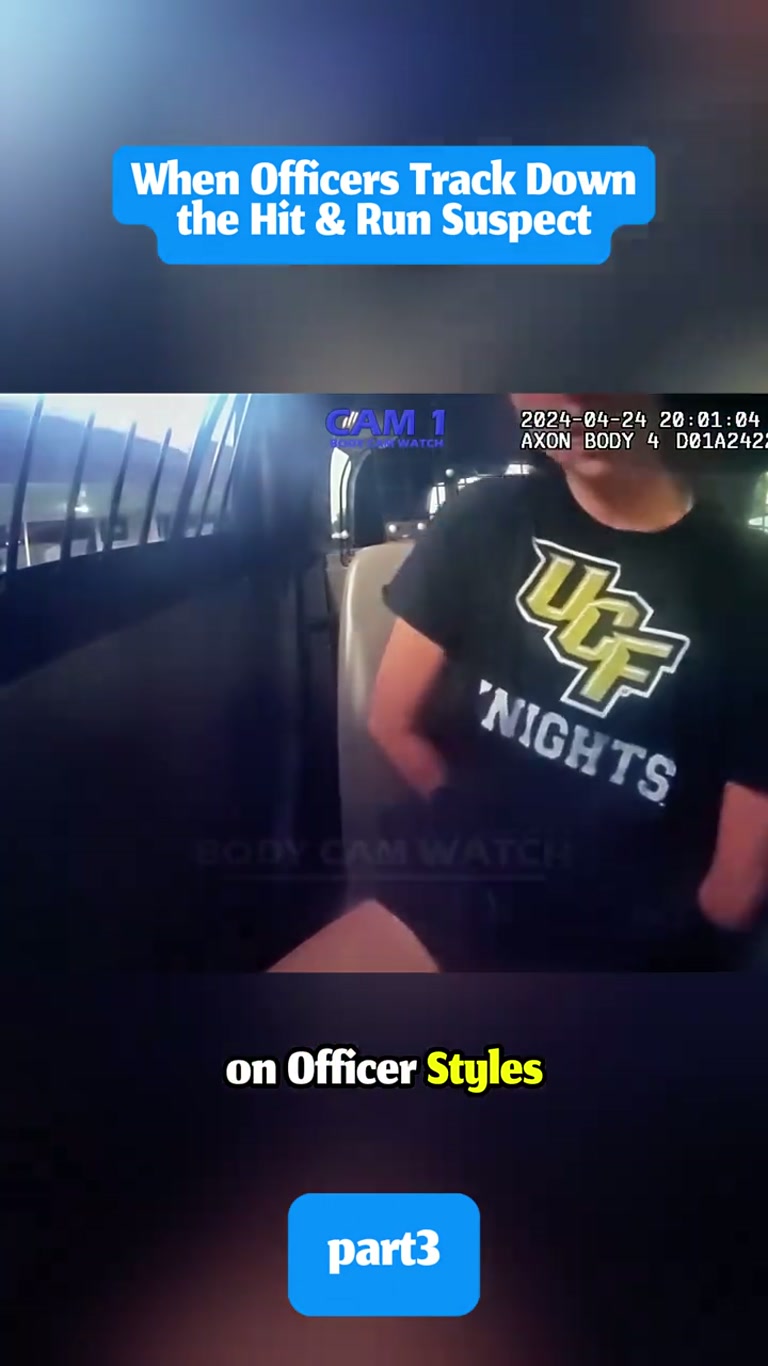
The body camera footage opens on a scene that feels deceptively calm: a woman, later identified as Summer, is being escorted towards a police vehicle, her hands already secured behind her back. What follows is a tense, bewildering sequence of events that transforms a standard DUI investigation into a serious additional charge of battery on a law enforcement officer. As officers attempt to process her for an alleged hit-and-run, the situation takes a sharp turn when she allegedly spits at the officer, before bizarrely puckering her lips and leaning in as if to kiss her.

Overview of the incident and the key facts
- The video captures the moment officers track down and arrest a suspect in connection with a hit-and-run incident.
- Summer, the suspect, is informed she will be transported to jail for DUI and is told she has a prior similar case.
- During a search by a female officer, Summer becomes increasingly hostile and allegedly spits at the officer.
- Summer is accused of battery on law enforcement after allegedly spitting directly on Officer Stiles.
- She denies the accusation, claiming her actions were playful and that bodycam footage will exonerate her.
The Arrest and the Initial Confrontation
The footage begins with a sense of finality. Officers have tracked down their suspect, and the moment of apprehension is at hand. A woman, identified in the transcript as Summer, is standing next to a police cruiser, her movements restricted. The audio captures the firm, instructional tone of the officers: "on top. All right. Get in the car. Get in the car." It is a command that leaves little room for negotiation, the kind of directive that signals the end of a pursuit and the beginning of a legal process. The scene is charged with the quiet tension that follows a chase, the adrenaline of the officers still simmering beneath their professional composure.
Summer is told she will be transported to jail for DUI, a revelation that seems to spark a desperate need to explain herself. She begins to talk, not about the hit-and-run that led officers to her, but about a previous arrest. She claims she has been in this position before, stating that she had previously completed a test successfully but received poor legal representation. It is a curious defence, one that suggests she believes the system, rather than her own actions, is the root of her current predicament. Even as she discusses that earlier case, her focus remains on the present, demanding to know what evidence proves she is intoxicated this time.
The atmosphere shifts from tense to volatile as a female officer arrives to conduct a search. Summer's demeanour changes; she becomes increasingly hostile, her body language stiffening and her words sharpening. The search, a routine procedure designed to ensure officer safety, becomes a flashpoint. Summer leans towards the officer, an action that is both physically intrusive and deeply confrontational. In that split second, the dynamic of the encounter changes entirely, moving from a legal detention to a potential physical altercation. The officer reacts instinctively, raising a hand to shield her face, a defensive posture that speaks to a sudden, perceived threat.
The Spitting Incident and the Accusation
What happens next is the crux of the video's dramatic tension. Summer is accused of spitting directly on Officer Stiles. The accusation is serious, transforming a DUI and hit-and-run case into a multi-count indictment that includes battery on law enforcement. The footage, though partially obscured by the angle and the movement, shows the officer's visceral reaction. The raising of the hand is not just a shield; it is a barrier against a bodily fluid that carries significant health risks in the eyes of the law. In many jurisdictions, spitting on an officer is treated as a felony, a charge that can carry severe penalties, including jail time and substantial fines.
Summer's response to the accusation is immediate and vehement. She denies spitting, claiming she was only making playful mouth movements. The transcript notes that she repeatedly puckered her lips and moved toward the officer as if she were trying to kiss her. This defence introduces a bizarre, almost surreal element to the confrontation. It is a claim that attempts to reframe an act of aggression as one of affection or playfulness, a narrative that seems at odds with the hostile atmosphere that preceded it. She insists that the body camera footage will prove she had never intentionally spit on the officer, placing her faith in the very evidence that is being used to charge her.
The officer, however, is not swayed. The instruction is clear: she will face an additional charge. The moment is a turning point, a line drawn in the sand. Summer's continued defiance, her refusal to follow instructions, and her insistence on her own version of events, highlight a profound disconnect between how she perceives her actions and how they are being interpreted by law enforcement. The video captures the frustration of the officers, who are trying to process a suspect who seems determined to escalate the situation rather than de-escalate it.
The Aftermath and the Legal Implications
The video ends with Summer being placed in the police vehicle, the sound of the door closing a stark punctuation mark to the chaotic encounter. The charges she now faces are likely to be significantly more severe than the initial DUI and hit-and-run. In the United States, battery on a law enforcement officer is a serious offence, often classified as a felony. It can lead to years in prison, mandatory anger management classes, and a permanent criminal record. The allegation of spitting, specifically, is often treated with zero tolerance due to the potential transmission of diseases, adding a layer of public health concern to the legal proceedings.
The incident serves as a stark reminder of the unpredictable nature of police work. An officer never knows what a routine stop or arrest will turn into. The female officer who conducted the search was simply doing her job, attempting to ensure that Summer did not have any weapons or contraband. Instead, she was allegedly subjected to a degrading and dangerous act. The body camera footage is now the central piece of evidence, a silent witness that will be scrutinised frame by frame by prosecutors, defence attorneys, and potentially a jury. It will be used to determine intent, to establish whether Summer's actions were deliberate or, as she claims, merely playful.
For Summer, the road ahead is fraught with legal peril. Her claims of poor legal representation in a previous case may become a self-fulfilling prophecy if she does not secure competent counsel for these new, more serious charges. The decision to speak so openly on camera, to demand evidence and offer explanations, could be used against her. Anything she said can be admissible in court. The footage is a double-edged sword; while she believes it will exonerate her, it may also provide the prosecution with the evidence they need to secure a conviction.
Insurance and who pays
While the criminal charges against Summer are a matter for the courts, the incident also raises significant questions about insurance and liability, particularly for the victims of the initial hit-and-run. In both the United States and the United Kingdom, a hit-and-run incident triggers a specific set of insurance protocols. If Summer is convicted of the hit-and-run, her motor insurance policy would typically be expected to cover the damage to the third party's vehicle and any associated personal injury claims. However, if she was driving without insurance, or if her policy is invalidated due to the DUI, the compensation process becomes far more complex.
In the UK, victims of uninsured or hit-and-run drivers can turn to the Motor Insurers' Bureau (MIB), which exists specifically to compensate victims of untraced or uninsured drivers. This is a crucial safety net, ensuring that innocent parties are not left out of pocket for repairs or medical bills. In the US, the system is more fragmented. Many states require drivers to carry uninsured motorist coverage, which would kick in if the at-fault driver has no insurance. However, the burden often falls on the victim's own policy to cover the costs upfront, with the insurer then attempting to subrogate the claim against the at-fault party.
The excess, or deductible, is a key factor here. If a victim claims on their own policy for a hit-and-run, they will likely have to pay their excess before the insurer covers the rest. This can be a significant financial hit, especially if the damage is extensive. Furthermore, a DUI conviction can lead to an insurance company refusing to pay out on a claim entirely, leaving the at-fault driver personally liable for all damages. This is why it is vital for victims to report the incident to the police immediately and obtain a crime reference number, as this is often required by insurers to process a claim.
The legal distinction between the US and UK is also important. In the US, liability insurance is mandatory in almost all states, but the minimum limits can be low, meaning a serious injury could exceed the policy limits. In the UK, third-party insurance is the legal minimum, but comprehensive cover is far more common. Regardless of the jurisdiction, the process of claiming compensation after a hit-and-run involves detailed paperwork, police reports, and often a lengthy wait. It is a process that adds financial stress to an already traumatic event, underscoring the importance of robust insurance coverage.
The incident captured on this body camera footage is a stark illustration of how quickly a situation can escalate. It leaves us with a lingering question: in the heat of an arrest, where is the line between a misunderstood gesture and a criminal act, and who should ultimately bear the financial cost of the chaos left behind?
| Incident parameter | Logged / on-scene information |
|---|---|
| Suspect | Summer |
| Officer | Officer Stiles |
| Initial Charge | DUI and Hit & Run |
| Additional Charge | Battery on Law Enforcement |
| Location | Unknown |
| Time of day | Evening (20:01) |
| Date | 24 April 2024 |
Important note: The details of this incident are based on a single body camera video; the full context and legal outcome may not be fully represented.
Core questions still unanswered
- Should the body camera footage be the sole determinant of intent in a spitting allegation?
- How can victims of hit-and-run incidents ensure their insurance claims are processed smoothly?
- What are the legal distinctions between a DUI and a battery on an officer charge in the US?
Learn more: Rude couple challenge cop at petrol station – licence suspended
🎥 Watch the video at the bottom of the page 👇
This story was edited from a publicly posted video; some details may not be independently verified.