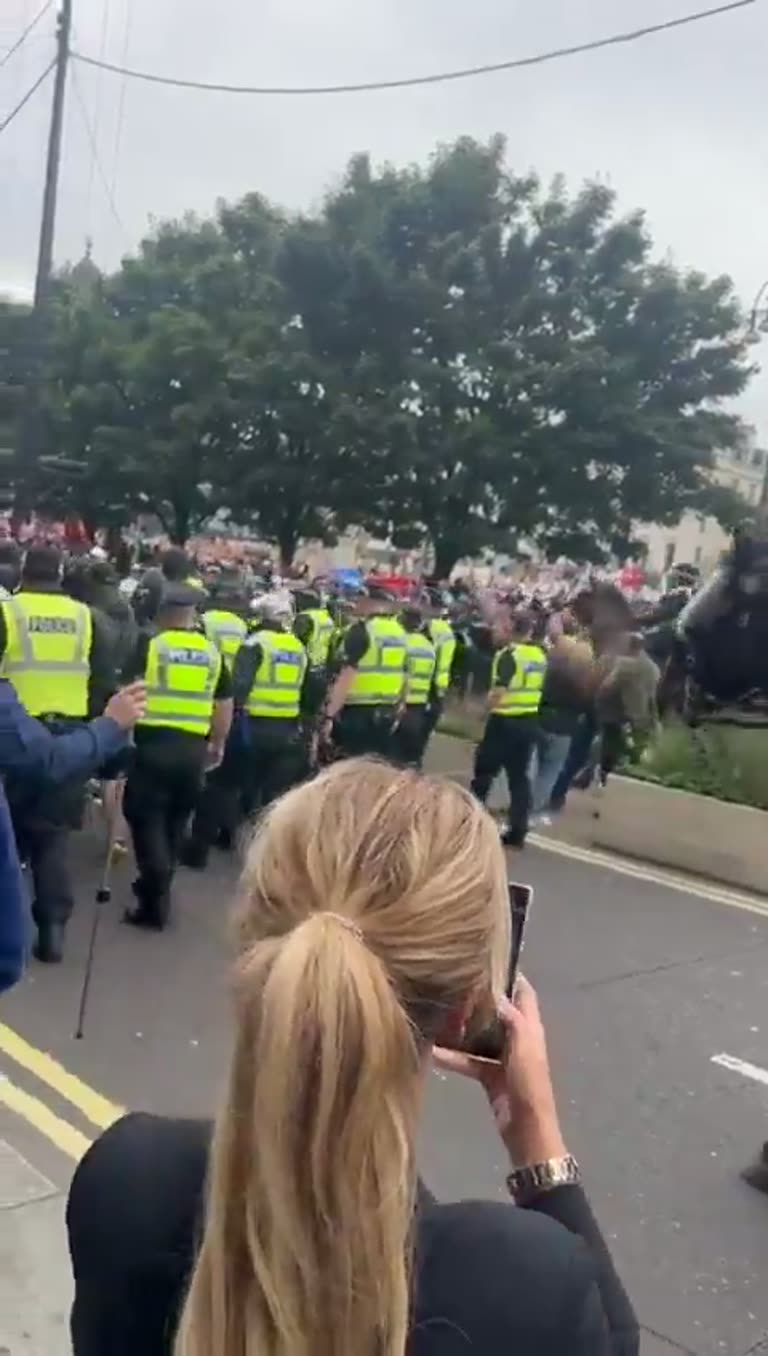
A tense afternoon in the heart of Glasgow saw a large police presence move through George Square as a crowd of protesters and onlookers gathered. Video captured the moment officers on foot and on horseback formed lines, while a voice in the crowd could be heard urging people to "make some noise". The scene raised immediate questions about public safety, liability and who picks up the bill when demonstrations spill into disruption.
Overview of the incident and the key facts
- A large group of police officers, including mounted units, moved through George Square in Glasgow during a demonstration.
- The footage shows masked individuals in the crowd and a heavy police line pushing through the area.
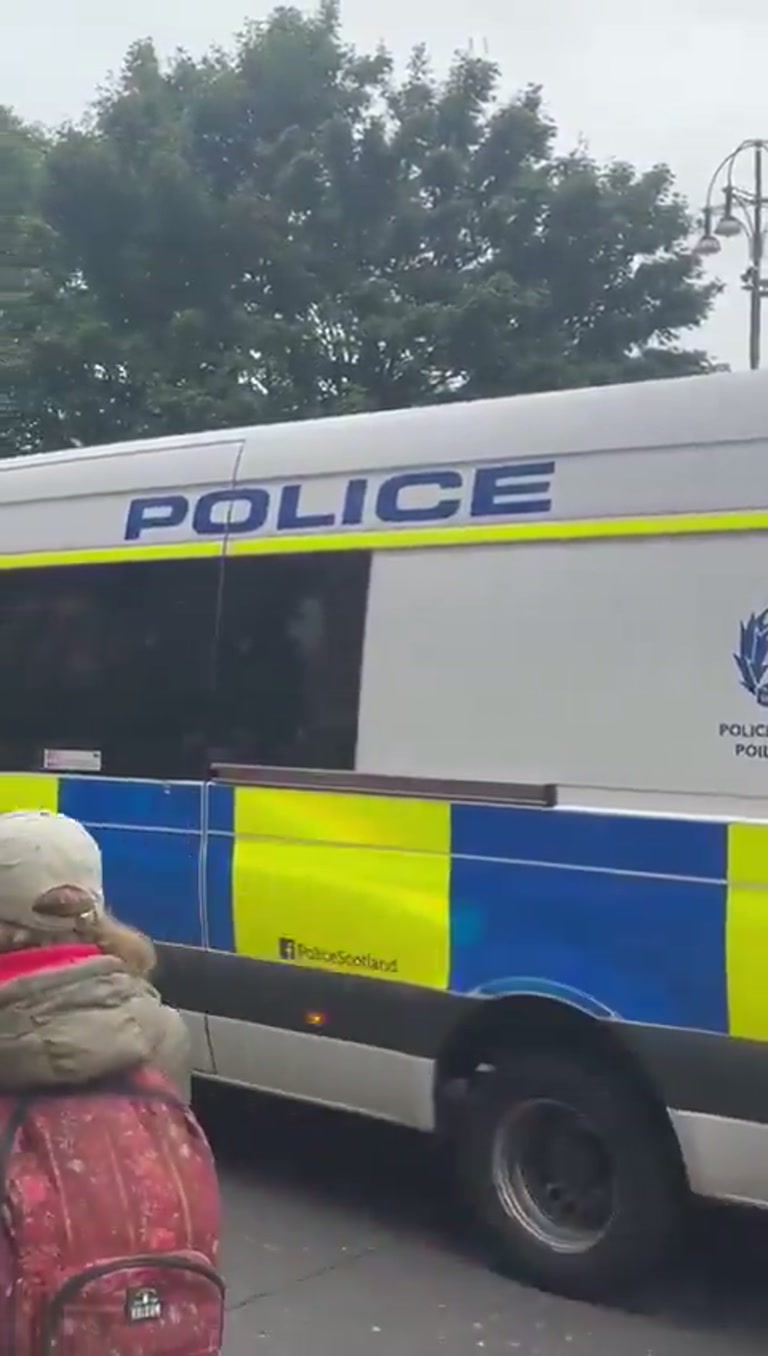
- A Police Scotland vehicle is visible, confirming the force's involvement in the operation.
- The original poster claims the masked men were not "British Patriots," hinting at a disputed narrative about who was present.
- The event drew a mix of protesters, bystanders and people recording on their phones.
The footage opens on a grey, overcast afternoon in George Square, Glasgow, where the usual bustle of the city centre has been replaced by something far more charged. A long line of police officers in high-visibility yellow vests moves steadily forward, their formation tight and deliberate. Behind them, mounted police on large dark horses add height and weight to the operation, their presence unmistakable in the middle of the street.
Witnesses can be seen standing on the pavements, phones raised, capturing the unfolding scene. The crowd is a mix of protesters, curious passers-by and people who seem to have been caught in the middle of the disruption. One voice in the crowd calls out for noise, a rallying cry that cuts through the ambient hum of the city. The tension is palpable, though the footage does not show any direct violence at this point.
The original poster's caption claims that a set of men, masked up and ready to cause trouble, were present in the square. The post explicitly states that these individuals were "not British Patriots," suggesting a contested narrative about who was actually involved. The video itself does not confirm identities or affiliations, leaving the exact composition of the crowd open to question. What is clear is that a significant police operation was underway in a major public space.
A large police presence, including mounted units, moved through George Square.
The footage shows masked individuals among the crowd.
A Police Scotland vehicle was present at the scene.
The original poster disputes the identity of the masked men.
The crowd included protesters, bystanders and people recording.
The police operation and public order
Public order policing in Scotland is a complex business, and the sight of horses in a city centre is usually reserved for major events or moments of heightened risk. The officers on foot formed a moving barrier, their yellow vests standing out against the grey stone of the surrounding buildings. The mounted officers rode alongside, their horses' hooves echoing on the road surface, adding a layer of authority and physical presence that is hard to ignore.
The operation appears to have been designed to control movement through the square rather than to make immediate arrests. There is no visible scuffling or direct confrontation in the footage, though the atmosphere is undeniably tense. The police line moves with purpose, and the crowd parts or follows at a distance. The presence of a Police Scotland van nearby suggests that the force was prepared for a range of outcomes, including transport of any individuals detained.
For the people caught in the square, the experience would have been unsettling. The noise of the crowd, the shouted calls, the sheer scale of the police response — all of it combines to create a sense of uncertainty. The video captures a moment of heightened awareness, where ordinary people are suddenly aware of the potential for things to go wrong. The question of who was there and why remains a matter of claim and counter-claim.
Insurance and who pays
When public order incidents occur, the financial consequences can be significant, and insurance often becomes the quiet backdrop to the headlines. For businesses in and around George Square, a heavy police presence and a disrupted afternoon can mean lost trading hours, damaged property or forced closures. Commercial insurance policies may respond to some of these losses, but the detail matters enormously.
Business interruption cover, for example, may pay out if a business is forced to close due to an insured event, but it typically requires that the disruption is caused by something like a fire, flood or a specific crime — not always a general demonstration. Damage to shopfronts, windows or stock caused by vandalism might be covered under a commercial combined policy, but the policyholder would usually need to pay an excess, and the insurer would assess whether the damage was a direct result of a covered peril. Liability is another key area: if someone is injured or property is damaged, the question of who is legally responsible can take months to resolve, and insurance claims often follow that determination rather than lead it.
For individuals, home insurance or contents cover might apply if personal belongings are damaged during a public order event, but again, exclusions can apply. Travel insurance is unlikely to be relevant for local residents, but it could cover visitors if their trip is disrupted in specific ways. The excess — the amount the policyholder pays before the insurer steps in — varies widely, and in the UK, it is common for standard policies to have an excess of £100 to £250 for certain claims. Repair costs for a smashed window or a damaged door can run into hundreds of pounds, and without cover, that falls on the owner.
The steps for making a claim are usually consistent: document the damage with photos, report the incident to the police and obtain a crime reference number if applicable, then contact the insurer as soon as possible. Keep receipts for any emergency repairs and avoid throwing away damaged items until the insurer has assessed them. It is important to note that no official conclusion has been reached about responsibility for any damage in this incident, and no compensation has been confirmed.
Context and community impact
George Square is one of Glasgow's most recognisable public spaces, a place where civic gatherings, celebrations and protests have long taken place. The sight of police horses moving through it is not unprecedented, but it is always a sign that the authorities believe there is a risk to public order. The footage shows a moment of disruption, but it also shows a community watching, recording and trying to make sense of what is happening.
For local businesses, the impact of such an event can linger. Even if no physical damage occurs, the loss of footfall on a busy afternoon can hurt small traders who rely on daily custom. The uncertainty that follows — wondering whether it will happen again, whether insurance will cover any losses, whether the police will be back — adds a layer of stress that is rarely captured in the headlines. The people in the video are not just a crowd; they are workers, residents and visitors whose day has been interrupted.
The original poster's caption adds a political dimension, claiming that the masked men were not "British Patriots" and hinting at a different group. This framing is contested and unverified, and it speaks to the broader tension that often surrounds public order events. What the video shows is a police operation, a crowd, and a moment of uncertainty. What it does not show is a clear resolution or a definitive account of who was there and why.
What happens next
The immediate aftermath of a public order operation is rarely clear-cut. Police may review footage, identify individuals and decide whether any arrests or charges follow. For those who suffered losses, the claims process can be slow, and the outcome depends on the specifics of the policy and the evidence available. The video itself will likely be one of many pieces of footage reviewed by authorities and insurers alike.
For the public, the scene in George Square is a reminder of how quickly an ordinary afternoon can change. The noise, the movement, the presence of horses and officers — all of it creates a spectacle that draws attention and raises questions. The original poster's caption invites viewers to draw their own conclusions, but the facts on the ground remain what they are: a police operation, a crowd, and an unresolved situation.
The financial ripple effects may take weeks or months to emerge. Businesses may file claims, individuals may seek advice, and insurers may assess liability. In the UK, the Financial Ombudsman Service can step in if a claim is rejected unfairly, but that is a lengthy process. For now, the focus remains on what happened in the square and what it means for those who were there.
What do you think should happen next, and would your insurance cover you if you were caught up in an event like this? Share your thoughts below.
| Incident parameter | Logged / on-scene information |
|---|---|
| Location | George Square, Glasgow |
| Police force | Police Scotland |
| Units present | Foot officers and mounted police |
| Crowd | Protesters, bystanders, masked individuals |
| Vehicle | Police Scotland van |
| Weather | Overcast |
| Original claim | Masked men were not "British Patriots" |
Important note: Some details, including the identity and purpose of the masked individuals, remain unverified and are based on the original poster's claims.
Core questions still unanswered
- What should happen to those who cause disruption in public spaces?
- Would your insurance cover you if you were caught up in a protest?
- Who should pay for damage caused during public order events?
Learn more: Seattle driver refuses to exit car as agents smash window
🎥 Watch the video at the bottom of the page 👇
This story was edited from a publicly posted video; some details may not be independently verified.
