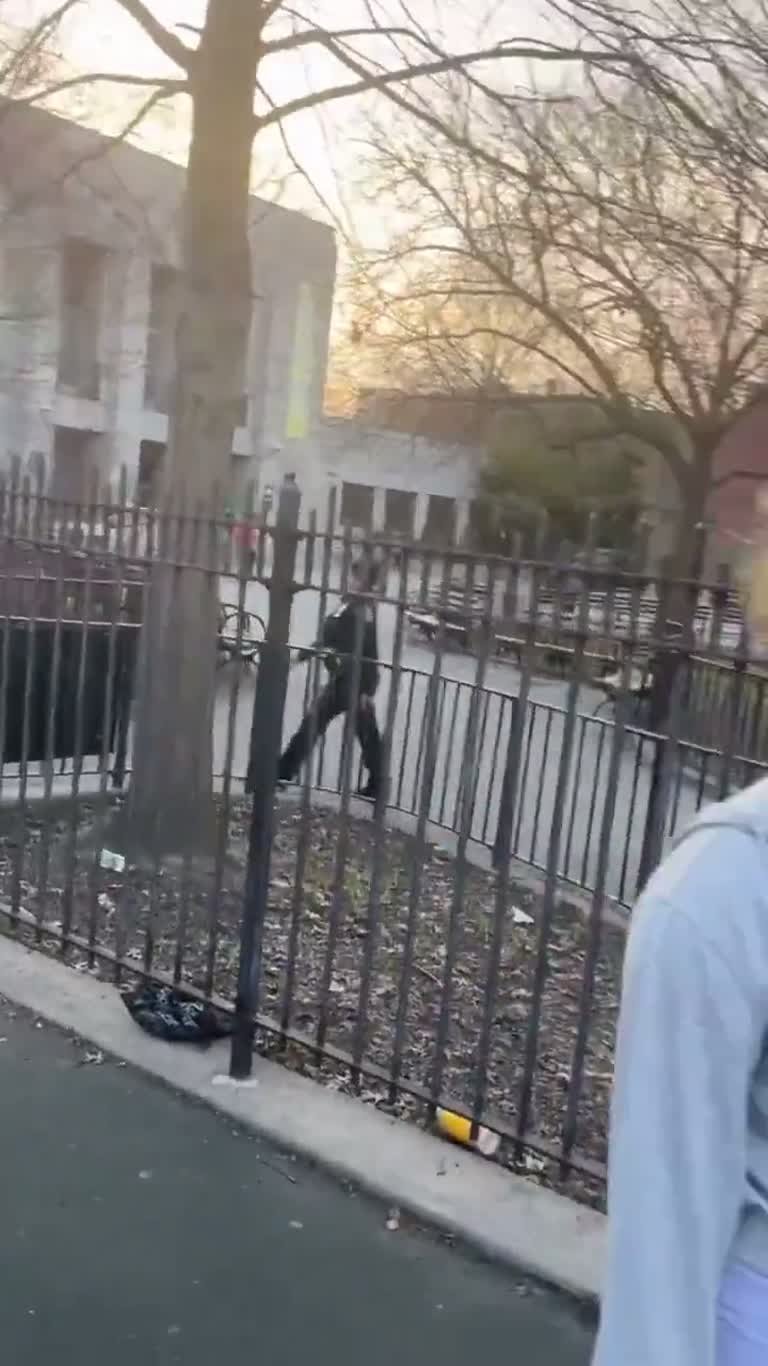
A tense confrontation between federal immigration officers and a member of the public has gone viral after body-worn camera footage captured the moment a woman was taken into custody. The clip, which runs for less than a minute, shows a chaotic scene by the side of a vehicle as voices overlap and the situation escalates rapidly. What begins as a verbal challenge — "You can't arrest me" — ends with a physical restraint, and the footage has since triggered a fierce debate about rights, resistance, and the limits of lawful orders.

Overview of the incident and the key facts
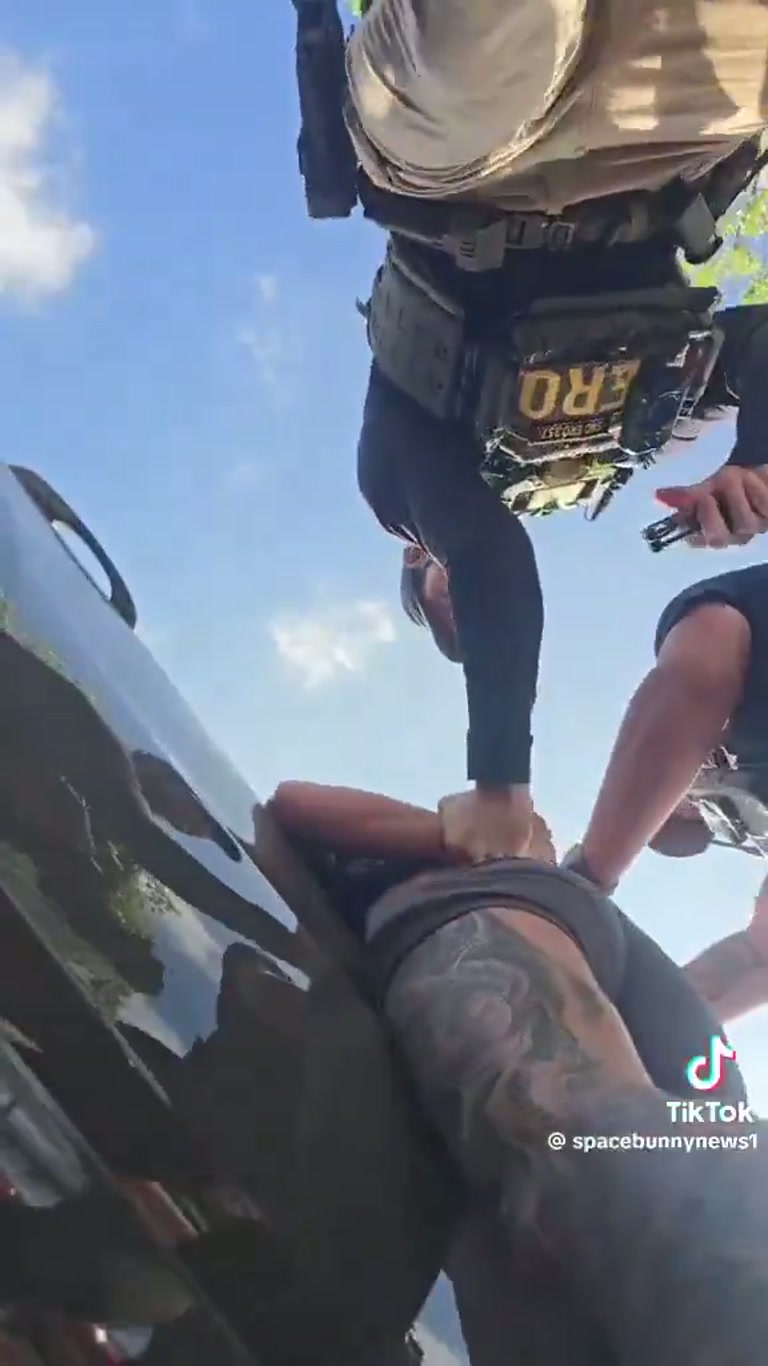
- The footage appears to be recorded on a police body camera, showing officers in tactical gear surrounding a woman next to a black car.
- A verbal exchange is captured in which the woman questions the grounds for arrest, while an officer states she is under arrest.
- A second voice can be heard shouting that the woman "did nothing" and was "stepping back," suggesting a disputed account of the physical interaction.
- The video has circulated widely on social media, drawing polarised reactions about the conduct of both the officers and the person detained.
- No official statement, charging decision, or confirmed identity has been verified from the source material, leaving key questions about the legal basis for the arrest unresolved.
The moment the confrontation turns
The footage opens on a scene that feels almost ordinary at first — a sunny day, a parked car, a small group of people standing near an open door. Within seconds, however, the mood shifts. An officer in a tan tactical vest and dark trousers steps forward, and the camera captures the woman at the centre of the frame turning to face him. Her words are clear and defiant: "You can't arrest me." The officer's reply is equally direct: "Yes, I will arrest you."
That exchange, brief as it is, sets the tone for everything that follows. The woman presses further — "Oh, you will? For what?" — and the audio captures a sharp, profane retort from one of the officers. The camera shakes as the situation accelerates, and the viewer is left watching a scene that is unfolding in real time, with no narration and no context beyond what the lens can capture.
What makes the clip so arresting, as a piece of viral content, is not just the confrontation itself but the way it captures a moment of decision. The woman appears to believe she has done nothing wrong; the officers appear to believe they have lawful grounds to detain her. Both positions are shouted into the same narrow patch of pavement, and neither side is willing to back down.
Voices overlap as the arrest proceeds
As the restraint begins, the audio becomes a jumble of overlapping voices. "I'm not impeding!" the woman calls out. "You're going to jail!" an officer responds. The phrase "You're under arrest" is repeated several times, layered over the sound of movement and the rustle of clothing against the camera microphone. At one point, a second voice — belonging to someone standing nearby — shouts, "She did nothing!" and "I was stepping back!"
That second voice introduces a crucial element of dispute into the footage. The claim that the woman was "stepping back" suggests a version of events in which she was not resisting but retreating, and that the arrest may have been based on a misreading of her actions. The officers, for their part, can be heard insisting that she is under arrest and that the matter is settled. There is no pause for explanation, no visible attempt at de-escalation on camera, and no indication that either side is willing to entertain the other's account.
The visual language of the clip reinforces the tension. The camera angle is low and unstable, occasionally catching glimpses of the sky and the roof of the car. Another officer's arm, heavily tattooed, comes into frame as the restraint is carried out. Bystanders hover at the edges of the shot, their presence adding to the sense of a crowd gathering around a flashpoint. It is the kind of footage that feels both intimate and intrusive — a window into a moment that was never meant to be watched by millions.
Why the clip has resonated so widely
Viral videos of arrests involving federal immigration officers tend to generate a particular kind of attention, and this one is no exception. The clip has been shared across multiple platforms, with users offering sharply divided interpretations. Some viewers see a person who was given a lawful order and refused to comply; others see an aggressive detention of someone who posed no clear threat. The absence of context — what happened before the camera started rolling, what the officers believed they were responding to, what the woman was doing at the scene — has only intensified the debate.
What the footage does show, unambiguously, is a confrontation that escalated quickly. It shows a verbal challenge, a physical response, and a disputed account of what the woman was actually doing in the moments before she was restrained. Those are the raw materials of a thousand arguments online, and they have been used to support a wide range of conclusions about policing, protest, and the boundaries of civic participation.
For readers in the United States, the incident raises immediate questions about the legal framework surrounding immigration enforcement. For readers in the United Kingdom, it offers a comparative window into how similar confrontations might unfold under a different legal system. In both countries, the question of when an officer may lawfully detain someone — and what happens when that power is contested in the street — is a live and contested one. The clip does not answer those questions; it simply dramatises them.
What the footage does and does not establish
It is important to be precise about what the video actually shows, because the stakes of misreading it are high. The footage shows officers in tactical gear, a woman being restrained, and multiple voices asserting competing versions of events. It does not show the lead-up to the encounter, the specific legal authority under which the arrest was made, or any official explanation of what prompted the officers' actions. Those are significant gaps.
The phrase "I'm not impeding" suggests that the woman believed she was being accused of obstructing officers in the course of their duties. Whether that accusation was accurate, whether any obstruction occurred, and whether the arrest was proportionate are all matters that would ordinarily be resolved by a court or an official review — not by a short clip on social media. Readers should treat the video as evidence of a confrontation, not as evidence of guilt or wrongdoing on either side.
There is also the question of the second voice in the clip, the one insisting that the woman "did nothing." That voice is part of the record, but it is not an independent verification. It is a person at the scene offering their own account in the heat of the moment. It may be accurate; it may be partial; it may be mistaken. The same caution applies to everything said by the officers, whose words are shaped by training, procedure, and the pressure of a fast-moving situation.
Insurance and who pays
When an incident like this involves an arrest, a detention, or a physical restraint, the financial consequences can extend well beyond the criminal justice system — and that is where insurance and financial protection questions come into play. It is essential to separate the viral drama from the practical realities of cover, liability, and compensation, and to be clear about what is and is not covered under typical policies.
First, consider the vehicle visible in the footage. If the car belongs to the person detained or to a family member, any damage caused during the incident — a scratched door, a dented panel, a broken window — would ordinarily fall under a comprehensive motor policy. In the United States, comprehensive cover is optional in most states but common on newer vehicles; in the United Kingdom, comprehensive cover is the most widely purchased type of motor insurance. The key point is that the policyholder would typically need to pay an excess — often between £100 and £500 in the UK, or $250 and $1,000 in the US — before the insurer covers the remaining repair cost. Without comprehensive cover, damage caused by a third party during a detention may not be covered at all, and the owner would need to pursue the responsible party directly.
Second, consider personal injury. If the person detained suffered a physical injury during the restraint, the question of who pays for medical treatment depends heavily on the legal system. In the United States, health insurance would typically cover emergency treatment, subject to deductibles and co-pays that can run into thousands of dollars. In the United Kingdom, NHS treatment is free at the point of use, but there may still be costs for follow-up care, physiotherapy, or lost earnings. Where an injury is caused by the actions of a public authority, a claim might be brought against that authority — but such claims are complex, require legal advice, and are not guaranteed to succeed. No compensation amount should be assumed, and no outcome should be promised.
Third, consider liability. If the person detained later brings a claim alleging unlawful arrest or excessive force, the financial exposure falls on the relevant authority or its insurers, not on the individual officer in most cases. In the United States, qualified immunity can shield officers from personal liability in certain circumstances, while in the United Kingdom, claims against the police are typically brought against the chief constable or the relevant force. These are legal questions, not insurance questions, but they determine who ultimately bears the cost. For the person detained, the practical steps after such an incident are usually: document everything, seek medical attention if needed, obtain legal advice promptly, and preserve any footage or witness details. For anyone whose property was damaged, the steps are: photograph the damage, report it to the insurer as soon as possible, and keep receipts for any emergency repairs.
Important note: Some details in this report — including the precise location, the identities of those involved, and the legal basis for the arrest — remain unverified from the source material.
Core questions still unanswered
- What legal authority, if any, was cited for the arrest at the time it took place?
- Does the claim that the woman was "stepping back" change how the physical interaction should be assessed?
- If property was damaged or an injury occurred, which insurance policy would respond first — and who should ultimately bear the cost?
Learn more: Almaty Airport Hostage: Bystander Swap and Insurance Fallout
🎥 Watch the video at the bottom of the page 👇
This story was edited from a publicly posted video; some details may not be independently verified.