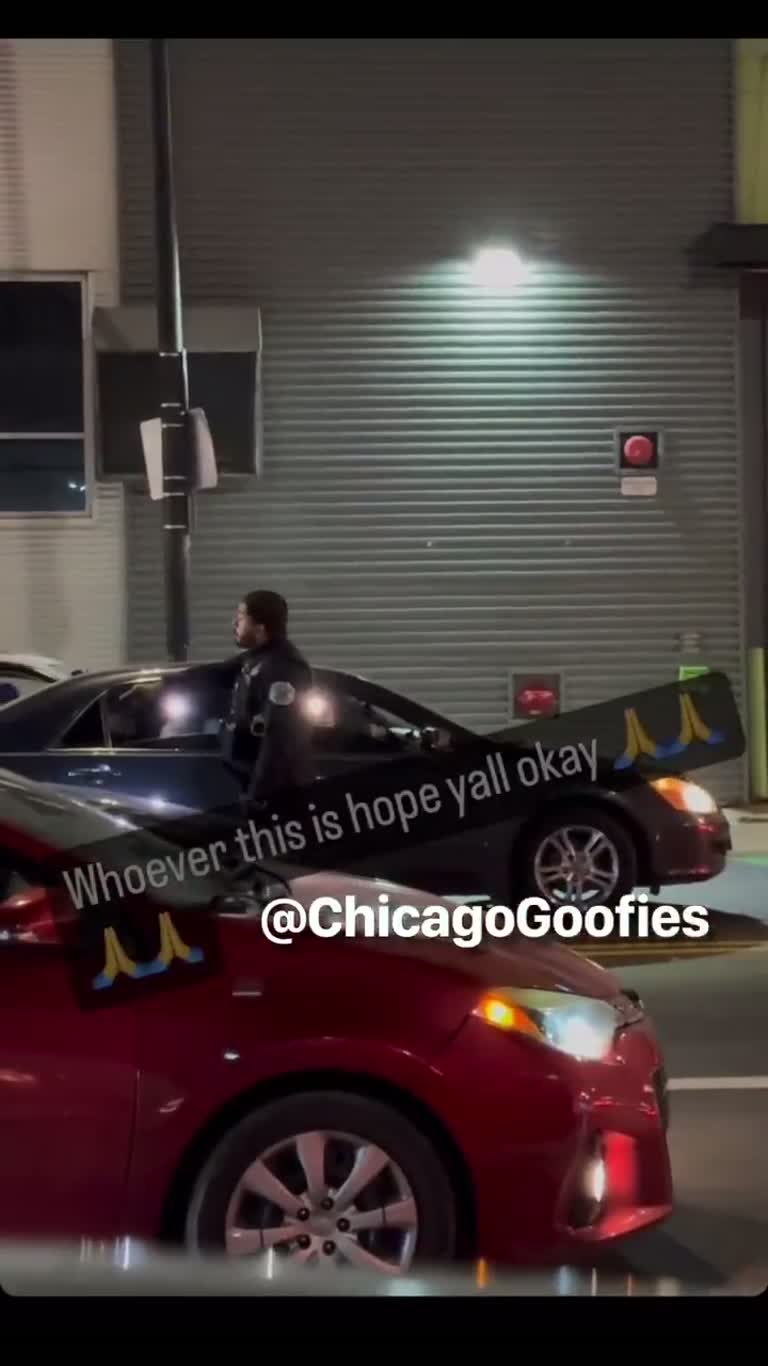
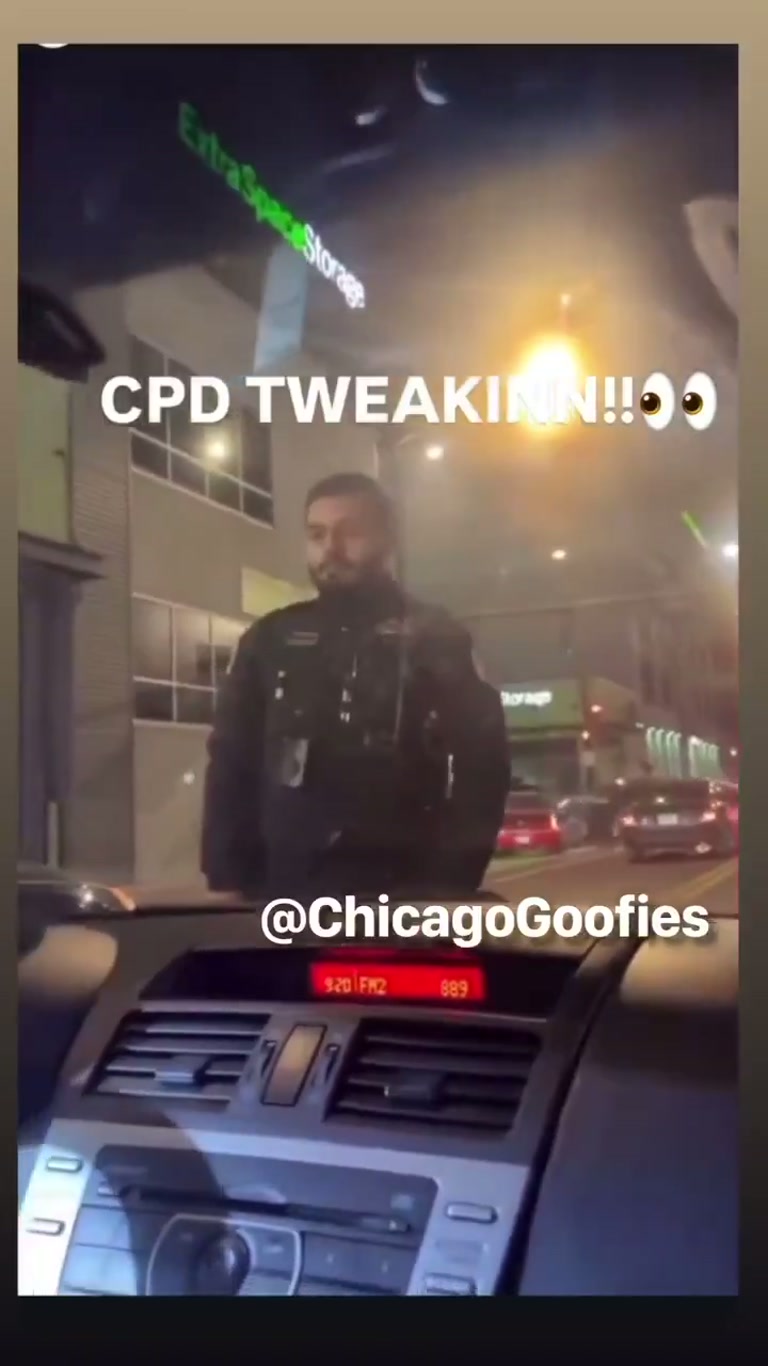
A routine night on Chicago's streets turned into a tense, viral flashpoint when a police officer was captured on camera pointing his service weapon at a driver during a street takeover. The encounter, which quickly spread across social media, has sparked a firestorm online and raised serious questions about policing, public safety, and the financial fallout for those involved.
Overview of the incident and the key facts
- A Chicago police officer was filmed pointing a gun at a driver during a street takeover event.
- The driver was reportedly held at gunpoint, and the officer received a one-day suspension.
- Charges against the driver were dropped nearly two years later, according to the source.
- The Civilian Office of Police Accountability (COPA) case page reportedly lacks the viral video, body-camera footage, and a transparency release date.
- The incident highlights the complex intersection of viral public encounters, police accountability, and the potential insurance and legal consequences for all parties.
The Night the Streets Erupted
The streets of Chicago have long been a stage for the unexpected, but on this particular night, the script flipped in a matter of seconds. A street takeover—an unsanctioned gathering where drivers block intersections to perform stunts—had drawn a crowd, and the atmosphere was thick with the roar of engines and the nervous energy of spectators. Amid the chaos, a driver found himself on the wrong end of a service weapon, an image that would soon be seared into the public consciousness. The video, which has since been shared widely, captures the raw, unfiltered tension of a moment where split-second decisions carry enormous weight.
As the footage unfolds, the audio reveals a frantic exchange: "What what the you want to be my trustee yeah we're good bro chill out we're good hey why he pointing that gun at us that's illegal that's illegal hey that's illegal wait recording bro we don't do nothing for real yeah i got eyes and bro bro chill out why you point me bro just give him the right thing yeah." The words tumble out in a rush, a mix of confusion, fear, and defiance. The driver's voice cracks as he insists on the illegality of the officer's actions, while the officer, according to the source, remains largely silent in the clip, his weapon drawn. It is a scene that has left people stunned, not just because of the immediate danger, but because of what it symbolises: a collision of authority and community in the most public of arenas.
The aftermath of that night has been a slow burn of legal and administrative proceedings. The driver, who was initially facing charges, saw those charges dropped nearly two years later. Meanwhile, the officer involved received a one-day suspension—a punishment that many have criticised as a slap on the wrist. The Civilian Office of Police Accountability (COPA) opened a case page, but according to the source, it contains no viral video, no body-camera footage, and no transparency release date. This lack of clarity has fuelled heated debate online, with opinions split on whether justice was served or whether the system simply swept the incident under the rug.
The Fallout: Suspensions, Dropped Charges, and Public Outrage
The one-day suspension handed to the Chicago police officer has become a lightning rod for controversy. For many, it represents a profound disconnect between the severity of the actions captured on video and the consequences meted out by the department. A one-day suspension is, in practical terms, a brief pause—a slap on the wrist that barely registers in the grand scheme of a career. Critics argue that such a penalty sends a message that pointing a gun at a civilian during a non-life-threatening situation is a minor infraction, rather than a potentially catastrophic error in judgment. The fact that the driver's charges were eventually dropped only adds to the sense of an outcome no one expected, a resolution that leaves more questions than answers.
The COPA case page, which should serve as a repository of evidence and a window into the investigation, has reportedly become a black hole of information. Without the viral video or body-camera footage, the public is left to rely on the fragmented clips that circulated on social media. This lack of transparency has sparked a firestorm online, with users sharing it widely and voicing concern about accountability. The absence of a transparency release date suggests that the official narrative may never be fully reconciled with what the public saw on their screens. It is a situation that has left many questioning the efficacy of oversight bodies and the willingness of institutions to hold their own accountable.
For the driver at the centre of it all, the ordeal did not end when the camera stopped rolling. Legal fees, time lost, and the psychological toll of being held at gunpoint can linger long after the charges are dropped. While the source does not provide details on whether the driver pursued legal action or filed a complaint, the potential for civil litigation is a looming shadow. In the United States, victims of excessive force or unlawful detention can seek compensation through civil rights lawsuits, but such cases are often lengthy, expensive, and emotionally draining. The driver's decision to record the encounter—evident in the audio—may have been his most powerful tool, a piece of evidence that could be used in a future legal battle.
The Financial Ripple Effects of a Viral Confrontation
When a video goes viral, the consequences ripple far beyond the immediate participants. For the driver, the financial implications could be substantial. Even with charges dropped, the cost of legal representation, bail, and potential vehicle impoundment can add up quickly. If the driver's car was towed or damaged during the street takeover, those expenses fall on the owner unless they have comprehensive insurance. In the US, standard auto policies often exclude damage that occurs during illegal activities, such as street racing or takeovers. This means that even if the driver was a victim of an officer's actions, he might still be on the hook for repairs or towing fees if his insurer determines the incident occurred during a criminal act.
For the city of Chicago, the financial exposure is twofold. First, there is the cost of the officer's suspension—a paid leave that still draws from the public purse. Second, there is the potential for a civil lawsuit. If the driver chooses to sue for excessive force or violation of civil rights, the city could be liable for damages, legal fees, and a settlement. These costs are ultimately borne by taxpayers, adding another layer to the public's frustration. The lack of body-camera footage in the COPA case page raises questions about evidence preservation and could weaken the city's defence if a lawsuit proceeds. Without a clear record, the case becomes a he-said-she-said scenario, which is precisely why transparency is so crucial.
Insurance companies are also watching such cases closely. For drivers who participate in street takeovers, obtaining or renewing auto insurance can become a nightmare. Insurers may flag the incident as a high-risk activity, leading to premium hikes or outright policy cancellation. Even for bystanders whose vehicles are damaged during these events, claiming on insurance can be complicated. In the UK, for instance, the Association of British Insurers (ABI) notes that policies may be voided if the vehicle was being used in an illegal activity at the time of the incident. The same logic applies in the US, where insurers can deny claims if the policyholder was engaged in a criminal act. This means that the financial fallout of a street takeover can extend to anyone in the vicinity, regardless of their involvement.
Understanding Insurance Coverage in the Wake of the Incident
When a confrontation like this occurs, the question of who pays becomes paramount. For the driver, the first port of call is often his own auto insurance policy. In the US, liability coverage typically pays for damage the policyholder causes to others, while collision coverage pays for damage to the policyholder's own vehicle. However, if the insurer determines that the driver was participating in a street takeover—an illegal activity—it may deny the claim entirely. This is a standard exclusion in most policies, designed to discourage reckless behaviour. The driver would then be left to cover repairs out of pocket, unless he can prove that the damage was caused by the police action and not the takeover itself, which is a murky legal area.
For the officer involved, his union or the city's insurance programme would likely cover any legal costs arising from a civil suit. In the US, police officers are often indemnified by their employers for actions taken in the line of duty, meaning the city pays any judgments or settlements. However, this indemnification does not protect the officer from departmental discipline, such as the one-day suspension. It also does not shield the city from reputational damage or the financial cost of prolonged litigation. In the UK, the situation is somewhat different; police officers are typically covered by the Police Federation or their force's insurance for civil claims, but the threshold for establishing liability is similarly high.
For members of the public who find themselves caught in such situations, the steps to make a claim are straightforward but often daunting. First, report the incident to the police and obtain a crime reference number. Second, notify your insurer as soon as possible, providing any evidence, such as dashcam footage or witness statements. Third, keep all receipts for repairs, medical treatment, or legal fees. Fourth, be prepared for a lengthy process; insurers may dispute liability, especially if the incident involves criminal activity. In the US, some states have "no-fault" insurance systems, which can speed up payouts for medical bills but do not cover vehicle damage. In the UK, the Motor Insurers' Bureau (MIB) can compensate victims of uninsured or hit-and-run drivers, but this does not apply to police actions.
The excess, or deductible, is another crucial factor. Most policies have a set amount that the policyholder must pay before the insurer covers the rest. For example, a driver with a £500 excess would need to pay the first £500 of any repair bill. If the claim is denied due to an exclusion, the policyholder bears the full cost. This is why it is vital to read the fine print of any policy and understand what is and is not covered. In the case of the Chicago street takeover, the driver's best hope for financial recovery may lie in a civil rights lawsuit, where damages could include pain and suffering, lost wages, and legal fees. However, such lawsuits are not guaranteed, and the burden of proof rests on the plaintiff.
The Broader Implications for Policing and Public Trust
This incident is not an isolated case; it is part of a wider conversation about policing tactics and community relations. The fact that the officer received only a one-day suspension has left many feeling that the system is not equipped to deliver meaningful accountability. When the public sees a video of a gun being pointed at a civilian during a traffic-related incident, the expectation is that the consequences will be proportionate. A one-day suspension feels like a footnote, not a verdict. This disconnect erodes trust and makes it harder for law enforcement to build bridges with the communities they serve.
The lack of transparency from COPA compounds the problem. Without the release of body-camera footage, the public is left to speculate about what happened before and after the clip. Was the officer's life in danger? Did the driver pose a threat? These are questions that cannot be answered without a full investigation. The absence of a transparency release date suggests that the official process is either stalled or unwilling to be scrutinised. In an era where viral videos can shape public opinion in hours, the slow grind of bureaucratic oversight feels inadequate. It fuels the narrative that the system protects its own, a perception that is damaging to the legitimacy of policing.
For the people involved, the aftermath is a mix of legal, financial, and emotional challenges. The driver, having had charges dropped, may still be dealing with the trauma of the incident. The officer, despite the suspension, remains on the force. The city, meanwhile, faces the dual burden of public scrutiny and potential financial liability. This is a situation no one saw coming, and it is one that will likely continue to develop as more information emerges. The question of who should pay—the city, the officer, or the driver—is not just a legal one; it is a moral one. And it is a question that the public will not stop asking.
| Incident parameter | Logged / on-scene information |
|---|---|
| Location | Chicago, Illinois, United States |
| Time of day | Nighttime (based on video frames and lighting) |
| Event | Street takeover confrontation involving a Chicago police officer and a driver |
| Officer action | Pointed a firearm at the driver during the encounter |
| Officer discipline | One-day suspension |
| Driver charges | Dropped nearly two years after the incident |
| COPA case page | Lacks viral video, body-camera footage, and transparency release date |
Important note: Some details regarding the specific charges, the exact date of the incident, and the full COPA investigation remain unverified due to a lack of official documentation.
Core questions still unanswered
- What factors led to the officer receiving only a one-day suspension for pointing a gun at a driver?
- Why has the COPA case page not released the body-camera footage or the viral video nearly two years later?
- Should the driver pursue a civil lawsuit for excessive force, and who would ultimately bear the financial cost?
Learn more: Police chief caught on camera in bizarre FOIA standoff
🎥 Watch the video at the bottom of the page 👇
This story was edited from a publicly posted video; some details may not be independently verified.