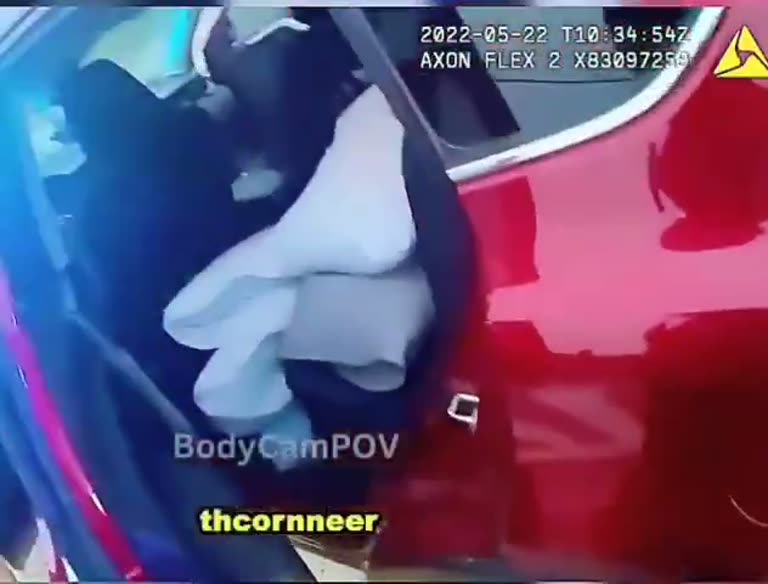
When officers in Athens, Georgia, approached a stationary red Toyota RAV4 sitting at a green light at the intersection of US 29 and Hull Road, they expected a routine welfare check. What followed was a perplexing and somewhat comical exchange that has since sparked a firestorm online, as body camera footage captured a driver seemingly unable to articulate how he ended up asleep in the middle of a busy junction. The clip, which has been circulating widely on social media, shows the man struggling to explain his actions, leading to a wave of heated debate about road safety, impairment, and the sheer unpredictability of human behaviour behind the wheel.
Watch Full Video
Overview of the incident and the key facts
- The incident occurred on 22 May 2022, at the intersection of US 29 and Hull Road in Athens, Georgia.
- A red Toyota RAV4 was found stationary at a green traffic light, prompting a police welfare check.
- Body camera footage shows the driver gave confusing and incoherent answers to officers' questions.
- The driver claimed it was his "first time" working the wheel and mentioned coming from Monsignor Donovan High School.
- The exchange has gone viral, with viewers split over whether the driver was experiencing a medical episode, extreme fatigue, or something else entirely.
- The Incident at the Intersection
- The scene opens on a quiet, sunlit afternoon in Athens, Georgia. The traffic lights cycle through their familiar rhythm, but at the intersection of US 29 and Hull Road, something is decidedly out of sync. A red Toyota RAV4 sits motionless at a green light, its engine idling, oblivious to the stream of traffic that should be flowing through the junction. For officers on patrol, a stationary vehicle at a green light is an immediate red flag—a signal that something is wrong, whether it be a mechanical failure, a medical emergency, or a driver who has lost consciousness.
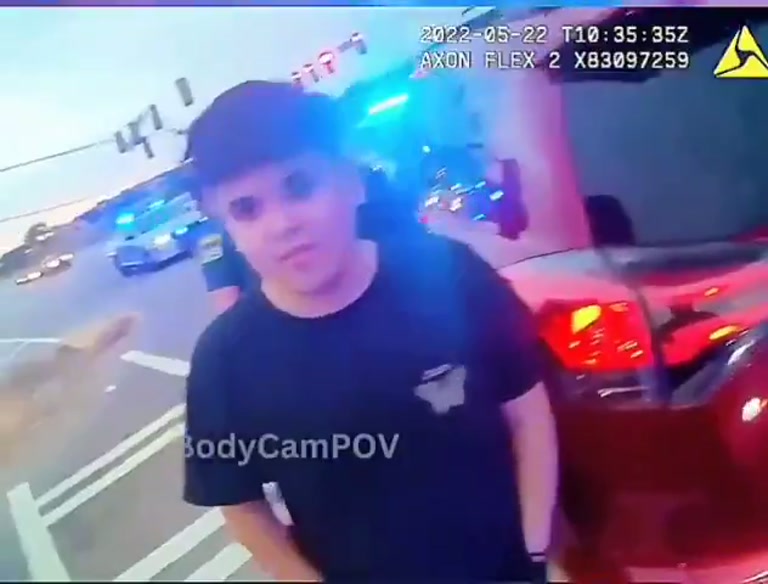
- As the body camera footage begins, the tension is palpable. The officer approaches the vehicle with a measured caution, peering through the window to assess the situation. The driver, a young man in a dark t-shirt, appears slumped at the wheel, seemingly asleep or unresponsive. The officer's voice cuts through the ambient hum of the street: "Put it in park! Put it in park! Stop what you're doing." The commands are firm, designed to rouse the driver and secure the vehicle before it rolls into oncoming traffic. It is a moment of heightened alertness, where split-second decisions can mean the difference between a minor incident and a catastrophic collision.
- When the driver finally stirs, the officer's tone shifts from command to concern. "Are you good? Get out of the car." The driver complies, stepping out onto the asphalt with the slow, unsteady movements of someone who has just been jolted from a deep sleep. The officer asks, "What's up, my man? Out of the vehicle. Step out of the vehicle." The repetition underscores the gravity of the situation; the officer is not just checking on a parked car, but managing a potential road hazard. The driver's demeanour is calm, almost detached, as he tries to process the officer's questions.
- The conversation that follows is where the incident takes a surreal turn. The officer asks, "What's going on, my man? You alright?" The driver responds with a phrase that is difficult to decipher, something about "a launder out of the car." The officer, clearly confused, repeats, "A launder out of the car? Say what?" The driver tries again, saying "The carner." The officer asks, "The carner? What's a carner?" The driver replies, "The carner of a particle." This exchange, bizarre and disjointed, sets the tone for the rest of the interaction. It is a moment where language fails, and the gap between the officer's questions and the driver's answers becomes a chasm of misunderstanding.
- The officer, maintaining his composure, tries a different line of questioning: "Where you coming from?" The driver answers, "From Monsignor Donovan High School." It is a concrete detail in a sea of confusion, but it only deepens the mystery. Why is a man who claims to be coming from a high school asleep at a green light in the middle of the afternoon? The officer asks again, "Where you coming from?" and the driver repeats, "Monsignor Donovan High School." Then he adds, "Walking to the front desk while my scotch is gone." The officer, baffled, repeats, "Walking to the front desk while my scotch is gone?" The driver confirms, "Yeah."
- The officer then asks the crucial question: "Why are you sleeping at the wheel?" The driver's response is perhaps the most puzzling of all: "It's the first time I work at the wheel." The officer repeats, "It's the first time you work the wheel?" The driver says, "Yeah. Four through Monday I work out. Friday I work out. Just went out. This time I just went out the wheel." The syntax is fractured, the meaning elusive. The officer, trying to cut through the confusion, asks, "Do you have any medical issues, man? Have you taken any medicine?" The driver replies, "No. No medicine? Yeah. No medical issues at all? No." The officer then asks, "Any alcohol?" but the driver's answer is cut off, leaving the question hanging in the air.
- The Viral Reaction and Public Scrutiny
- The body camera footage, released as part of a public records request, has since become a viral sensation. Social media users have shared it widely, with opinions split on what exactly transpired. Some viewers have expressed concern for the driver, suggesting he may have been experiencing a medical episode, such as a diabetic coma or a seizure, which could explain his disorientation and incoherent speech. Others have speculated that fatigue was the primary factor, pointing to his claim of working long hours and his admission that it was his "first time" working the wheel.
- The phrase "the carner of a particle" has become a particular point of fascination online. It is a nonsensical string of words that has fuelled countless memes and jokes, but it also raises serious questions about the driver's state of mind. Was he simply exhausted, his brain struggling to form coherent sentences? Or was there something else at play? The officer's question about alcohol remains unanswered in the clip, leaving a gap in the narrative that viewers have been quick to fill with their own theories.
- The incident has also sparked a broader conversation about road safety and the dangers of driving while fatigued. In the United States, drowsy driving is a significant contributor to traffic accidents, with the National Highway Traffic Safety Administration estimating that it causes hundreds of fatalities each year. The fact that this driver was found asleep at a green light, a scenario that could have easily resulted in a high-speed collision, serves as a stark reminder of the risks involved. It is a situation no one saw coming, and it has left many questions about how to prevent similar incidents in the future.
- For the officers involved, the encounter was a test of their training and patience. They approached a potentially dangerous situation with professionalism, securing the vehicle and ensuring the driver's safety before attempting to gather information. Their body camera footage provides a transparent record of the event, showing both the challenges of the job and the human moments that often go unseen. The officer's repeated attempts to understand the driver, his calm demeanour in the face of confusion, and his ultimate decision to step back and assess the situation are all captured in the clip, offering a window into the realities of modern policing.
- The Insurance Angle: Who Pays When Fatigue Leads to a Standstill?
- When a vehicle is found stationary at a green light, the immediate concern is safety, but the aftermath often involves a complex web of insurance and liability questions. In this case, the driver's bizarre behaviour and the lack of a clear explanation for his condition raise important issues about how insurance policies might respond. Whether the driver was suffering from a medical emergency or simply experiencing extreme fatigue, the incident highlights the fine line between a health crisis and a lapse in judgement, and how that distinction can affect insurance claims.
- In the United States, car insurance policies typically cover accidents and incidents that occur while the policyholder is operating a vehicle. However, if the driver was deemed to be impaired—whether by alcohol, drugs, or a medical condition—the insurer may deny a claim or seek to limit liability. The officer's question about alcohol, left unanswered in the clip, is a critical piece of the puzzle. If the driver was found to be under the influence, he could face charges and his insurer might refuse to pay for any damage or injuries, leaving him personally liable. Conversely, if the incident was caused by a sudden medical emergency, some policies may provide coverage, though the specifics depend on the terms of the policy and the laws of the state.
- In the United Kingdom, the situation is similarly nuanced. The Road Traffic Act 1988 requires all drivers to have at least third-party insurance, which covers damage to other people and their property. If a driver is found to be asleep at the wheel due to fatigue, they could be charged with driving without due care and attention, or even dangerous driving, depending on the circumstances. Their insurer would likely cover third-party claims, but they might refuse to pay for the driver's own vehicle damage if the incident was caused by negligence. The distinction between a medical episode and fatigue is crucial; a doctor's note confirming a sudden medical event could support a claim, whereas a pattern of poor sleep or overwork would be seen as a personal responsibility.
- The concept of the "excess" or "deductible" is also relevant here. In the UK, most comprehensive policies have a voluntary excess, which is the amount the policyholder agrees to pay towards a claim. If the driver's vehicle was damaged during the incident—perhaps it rolled into a curb or was struck by another vehicle—he would need to pay the excess before the insurer covers the rest. In the US, the deductible works similarly, and the policyholder is responsible for that amount regardless of who is at fault. Given that the driver in this case was found stationary and no collision was reported, it is unclear whether any damage occurred, but the potential for financial liability is significant.
- Beyond the immediate costs, there is also the question of liability for any third-party damages. If the driver had rolled into another vehicle while asleep, he would be liable for the damage caused, and his insurer would handle the claim. However, if the insurer determines that the driver was impaired or negligent, they might seek to recover the costs from him personally. This is where the importance of accurate reporting and a thorough investigation becomes clear. The body camera footage, which captures the driver's incoherent responses, could be used as evidence in any subsequent insurance claim or legal proceeding, highlighting the need for drivers to be aware of their responsibilities and the potential consequences of their actions.
- What Happens Next: Claims, Costs, and Consumer Rights
- For anyone involved in a similar incident, the process of making a claim can be daunting. The first step is to report the incident to the police and obtain a copy of the report, which is often required by insurers. In this case, the officers on the scene would have filed a report detailing their observations, including the driver's statements and any evidence of impairment. This report becomes a crucial document for the insurer, as it helps them determine liability and whether the claim falls within the scope of the policy.
- The next step is to notify the insurer as soon as possible, providing all relevant details, including the time, date, location, and a description of what happened. The insurer will then assign a claims adjuster to investigate the incident. In the US, this may involve reviewing the police report, interviewing witnesses, and inspecting the vehicle. In the UK, the insurer will follow a similar process, often working with the police and other parties to establish the facts. The adjuster will then decide whether to approve the claim, and if so, how much to pay out. This decision is based on the policy terms, the evidence, and the applicable laws.
- If the claim is approved, the insurer will cover the cost of repairs or replacement, minus any excess or deductible. For vehicle damage, the policyholder can usually choose a repair shop, though some insurers have preferred networks. In the UK, the Financial Ombudsman Service (FOS) provides a free dispute resolution service if the policyholder is unhappy with the insurer's decision. In the US, each state has its own insurance department that can handle complaints. It is important for consumers to know their rights and to seek advice if they feel they have been treated unfairly.
- In this particular case, the lack of a clear medical diagnosis or a confirmed cause for the driver's sleepiness means that any insurance claim would be subject to scrutiny. If the driver was simply tired, his insurer might argue that he was negligent and refuse to pay for his own vehicle damage, though third-party claims would still be covered. If he was suffering from a medical condition, he would need to provide medical evidence to support his claim. The outcome would depend on the specific facts and the terms of his policy. What is clear is that the incident serves as a cautionary tale about the importance of being fit to drive and the potential financial fallout when things go wrong.
- The Broader Implications for Road Safety and Insurance
- This incident is more than just a viral video; it is a snapshot of a growing problem on our roads. Drowsy driving is often overlooked compared to drink-driving or speeding, yet it can be just as deadly. The fact that this driver was found asleep at a green light, in the middle of the day, is a stark reminder that fatigue can strike anyone, anywhere. For insurers, this raises questions about how to assess risk and price policies. Should drivers who work long hours or have irregular sleep patterns pay higher premiums? How can insurers encourage safer behaviour without penalising those with genuine medical conditions?
- In the UK, the Association of British Insurers (ABI) has highlighted the dangers of drowsy driving, noting that it contributes to thousands of accidents each year. The ABI recommends that drivers take regular breaks on long journeys, avoid driving when tired, and seek medical advice if they experience excessive sleepiness. For insurers, the challenge is to balance the need for accurate risk assessment with the fair treatment of policyholders. Some insurers now offer telematics policies that monitor driving behaviour, including fatigue, and reward safe drivers with lower premiums. This could be a way forward, but it also raises privacy concerns and questions about data usage.
- In the US, the National Safety Council (NSC) has called for greater awareness of drowsy driving, urging drivers to prioritise sleep and to recognise the warning signs. The NSC also recommends that employers in industries with shift work, such as healthcare and transport, implement fatigue management programmes. For the insurance industry, this presents an opportunity to collaborate with employers and policymakers to reduce the incidence of fatigue-related accidents. By promoting better sleep habits and providing education on the risks, insurers can help prevent incidents like the one in Athens, Georgia, and ultimately reduce claims.
- As the video continues to circulate, it serves as a reminder of the unpredictability of human behaviour and the importance of being prepared for the unexpected. For the driver, the incident may have been a wake-up call—literally and figuratively. For the officers, it was another day on the job, handling a situation with professionalism and care. For the rest of us, it is a moment to reflect on our own driving habits and the potential consequences of getting behind the wheel when we are not fully alert. The story may have gone viral for its comedic value, but the underlying issues are serious, and they affect us all.
- Important note: This article is based on body camera footage and public records; the driver's medical condition and the outcome of any insurance claim have not been independently verified.
- Core questions still unanswered
- Was the driver experiencing a medical emergency, or was his condition caused by fatigue or something else?
- Did the officers conduct a field sobriety test, and were any charges filed?
- How will the driver's insurance company handle the incident, and will he be covered for any damage?
- Incident parameter Logged / on-scene information
- Date 22 May 2022
- Time Approximately 10:34–10:35 BST (bodycam timestamp)
- Location Intersection of US 29 and Hull Road, Athens, Georgia
- Vehicle Red Toyota RAV4
- Driver's stated origin Monsignor Donovan High School
- Driver's statement "It's the first time I work at the wheel"
- Officer's question "Any alcohol?" (answer not captured)
- Insurance and who pays
- In the event of an incident like this, the question of who pays is rarely straightforward. In the US, car insurance is mandatory in most states, and a standard policy will cover liability for injuries and property damage caused to others, as well as collision and comprehensive coverage for the policyholder's own vehicle. However, if the driver is found to have been impaired or negligent, the insurer may deny coverage for the driver's own losses. In this case, the officer's unanswered question about alcohol leaves open the possibility of impairment, which could complicate any claim. If the driver was simply fatigued, the insurer might still argue that he was negligent, but third-party liability would typically be covered.
- In the UK, the situation is similar. The Road Traffic Act 1988 requires drivers to have insurance, and a comprehensive policy will cover damage to the policyholder's vehicle as well as third-party liabilities. However, if the driver was asleep at the wheel due to fatigue, the insurer could argue that he was driving without due care and attention, which is a criminal offence. This could lead to a reduction in any payout or a refusal to cover the driver's own damage. The excess, or deductible, would still apply, and the policyholder would be responsible for that amount. If the incident was caused by a medical emergency, the insurer might be more sympathetic, but the driver would need to provide medical evidence to support his claim.
- For consumers, the key takeaway is to understand the terms of your policy and to be honest with your insurer. If you are involved in an incident, report it promptly and provide all necessary documentation. If you disagree with the insurer's decision, you have the right to complain to the Financial Ombudsman Service in the UK or your state insurance department in the US. It is also worth considering additional cover, such as personal accident insurance or income protection, which can provide financial support if you are unable to work due to an injury or illness. In this case, the driver's future insurance premiums could be affected, and he may face difficulties obtaining cover if he is deemed to be a high-risk driver.
- The Road Ahead
- As the sun sets on another day in Athens, Georgia, the red Toyota RAV4 is long gone from the intersection, but the questions linger. The body camera footage has given us a rare glimpse into a moment of confusion and vulnerability, reminding us that behind every traffic stop is a human story. For the officers, it was a job well done; for the driver, a puzzling episode that may have consequences far beyond a viral video. For the rest of us, it is a chance to think about our own responsibilities on the road and the importance of being alert, aware, and insured.
- What do you think should happen in a case like this—should the driver be held fully responsible, or does the lack of a clear cause change the way we view liability?
- This story was edited from a publicly posted video; some details may not be independently verified.
| Incident parameter | Logged / on-scene information |
|---|---|
| Location | Intersection of US 29 and Hull Road, Athens, Georgia |
| Time of day | Mid-morning (bodycam timestamp approx. 10:34) |
| Vehicle | Red Toyota RAV4 |
| Driver's stated origin | Monsignor Donovan High School |
| Driver's key statement | "It's the first time I work at the wheel" |
| Officer's question | "Any alcohol?" (answer not captured) |
| Source | Body camera footage (AXON FLEX 2) |
Important note: Some details, including the driver's medical condition and the outcome of any potential insurance claim, remain unverified.
Core questions still unanswered
- Was the driver experiencing a medical emergency, or was fatigue the primary cause?
- Should insurance companies treat fatigue-related incidents differently from medical emergencies?
- What steps can drivers take to ensure they are fit to drive before getting behind the wheel?
Learn more: Chaos on the pavement as a soldier steps in to break up a street brawl
🎥 Watch the video at the bottom of the page 👇
This story was edited from a publicly posted video; some details may not be independently verified.
