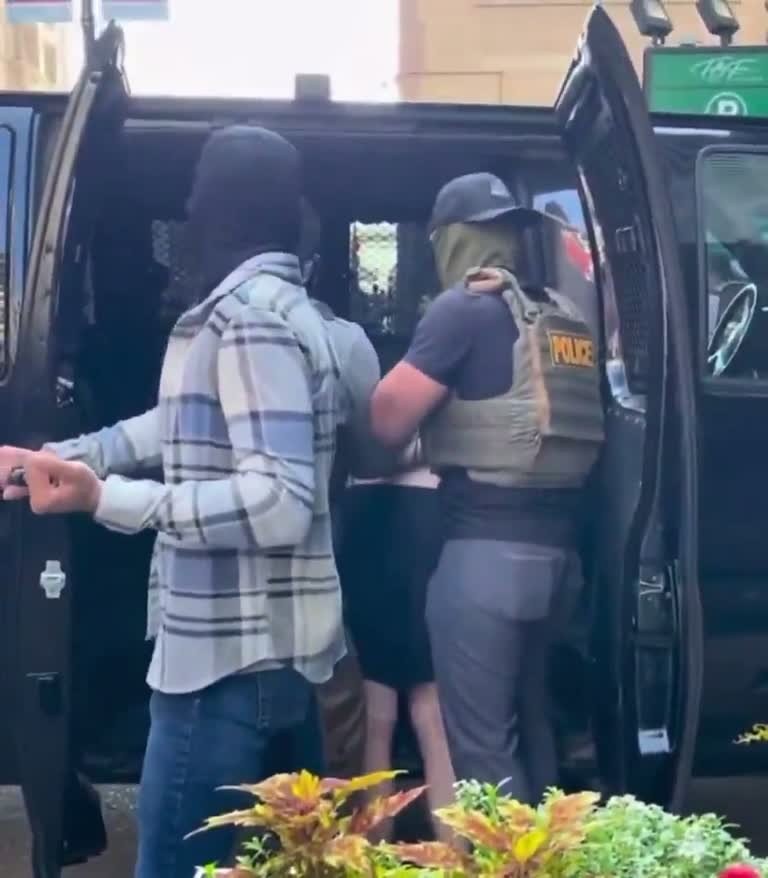
A tense and chaotic scene unfolded on a wide, dusty road in Minneapolis as a woman found herself surrounded by multiple federal agents dressed in tactical gear. The confrontation, which appears to have started after a vehicle was struck, quickly escalated into a physical struggle that ended with the woman pinned to the ground. The entire incident, captured from a bystander's perspective, has sparked intense debate online about the appropriate use of force and the legal boundaries of federal law enforcement actions.
Overview of the incident and the key facts
- The incident took place in Minneapolis, involving a woman and several Border Patrol agents in tactical uniforms.
- The confrontation began after the woman allegedly struck a Border Patrol vehicle, leading to an immediate and overwhelming response from a tactical unit.
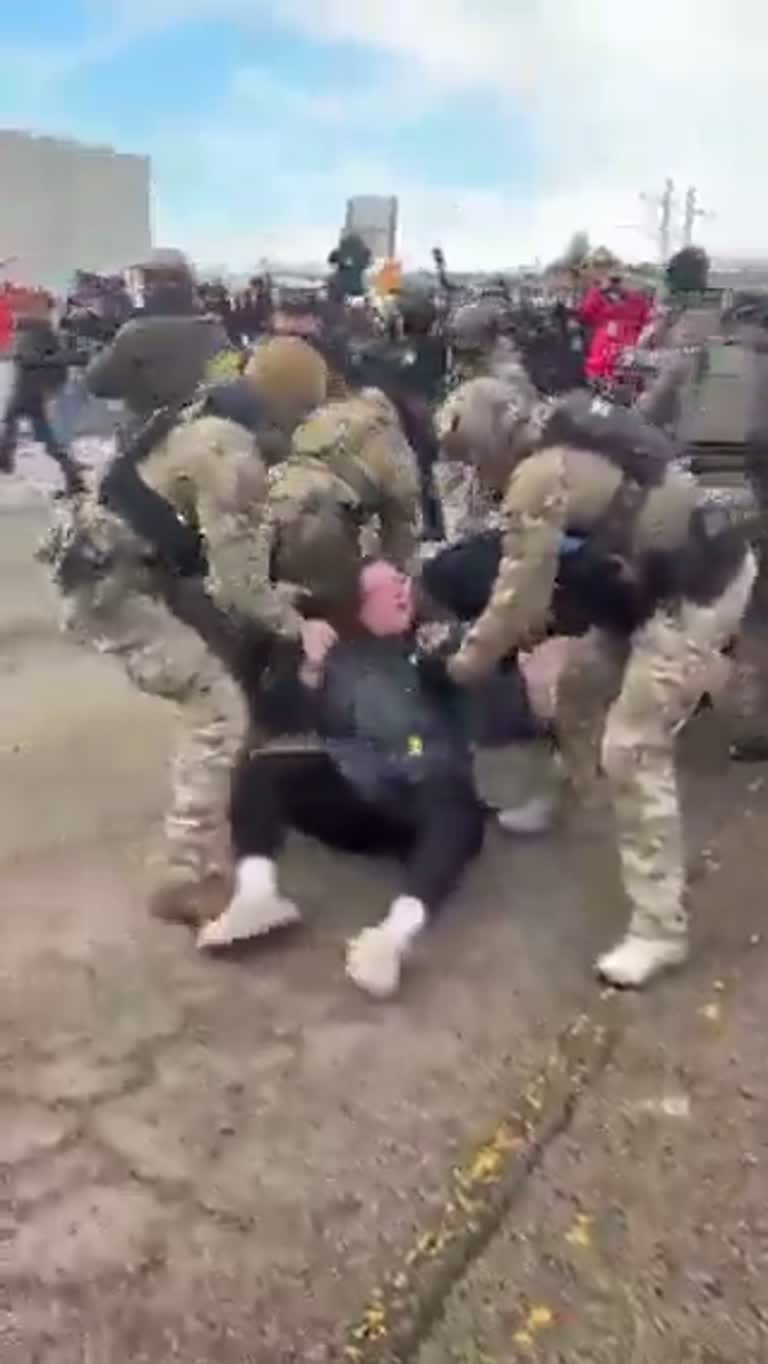
- Video frames show the woman being physically restrained and pinned to the ground by multiple agents, while a crowd watches nearby.
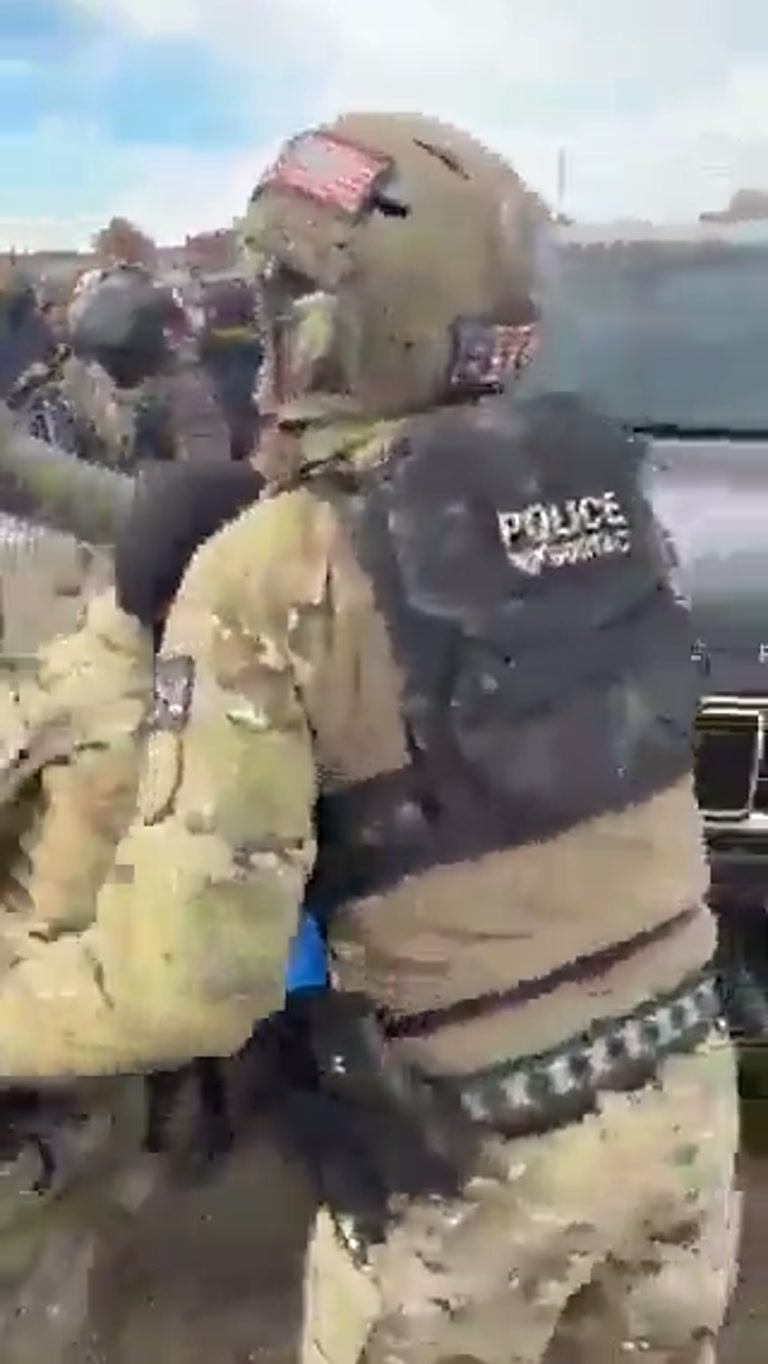
- The event was captured on video, showing agents in camouflage tactical gear and black vests marked 'POLICE' surrounding the individual.
- A voice can be heard in the audio transcript instructing someone to 'Step back,' indicating a chaotic and highly charged environment.
- The aftermath and the exact legal justification for the stop remain unclear, with no official conclusion yet released by authorities.
The anatomy of a sudden flashpoint
The footage opens on a wide, sunlit expanse of pavement, the kind of non-descript industrial or commercial road that could exist on the outskirts of any American city. What draws the eye immediately is the knot of uniformed figures in the centre of the frame. They are not moving with the casual stride of a routine patrol; they are converging with a focused, almost mechanical urgency. At the centre of this moving cluster is a woman, dressed in dark clothing and white trainers, who is in the process of being taken to the ground. The sheer number of agents involved creates a visual wall of camouflage and black tactical vests, making it difficult to see the woman herself for a moment. It is a scene that feels less like an arrest and more like a sudden, overwhelming swarm, the kind of moment where the sheer weight of official presence instantly changes the physics of a public space.
The sequence of events, as pieced together from the visual evidence and the brief description accompanying the clip, appears to stem from a vehicular incident. According to the source material, a woman struck a Border Patrol vehicle that had agents inside. This act, whether intentional or accidental, acted as the trigger for an immediate and highly kinetic response. The video does not show the impact itself, but it captures the immediate aftermath: the rapid disembarkation of agents and the swift, physical apprehension of the individual. It is a textbook example of a 'force multiplier' reaction, where a single point of contact rapidly expands into a multi-person operation. The tension in the air is palpable, even without sound; the body language of the agents is stiff, their movements sharp and practiced, leaving no room for ambiguity about their intent to detain.
What follows is a chaotic struggle on the asphalt. The woman is wrestled to the ground, her body disappearing beneath the press of bodies. One frame captures the raw, physical reality of the moment: the woman is seated on the ground, legs splayed, while agents in tan camouflage trousers and dark tops work to secure her arms. The scene is messy, human, and deeply uncomfortable to watch. It is the raw collision of an individual will against the immense machinery of federal law enforcement. The surrounding environment, a dusty lot with a dark SUV nearby, serves as a stark, unglamorous stage for this high-stakes drama. The suddenness of the action is the defining characteristic; there is no visible negotiation, no tentative approach. It is a rapid, decisive escalation that leaves the viewer grappling with the speed at which a situation can spiral into physical confrontation.
The visual language of tactical enforcement
The visual details of the video provide a masterclass in the aesthetics of modern tactical policing. The agents are not dressed in standard beat-cop blues; they are clad in military-style camouflage, complete with helmets and heavy tactical vests. One agent, seen from behind, wears a black vest with the word 'POLICE' printed in stark white letters, a clear indicator of the authority they are wielding. The presence of the American flag patch on the back of a helmet, visible in one of the later frames, grounds the scene firmly in a U.S. context. This is not a local sheriff's department serving a warrant; this is a federal tactical unit, likely Border Patrol's Tactical Unit (BORTAC) as suggested by the source description, operating in an urban environment. The optics are aggressive and uncompromising, designed to project strength and control.
The physical disparity between the lone woman and the group of agents is striking. She is on the ground, wearing casual black clothing and white socks or trainers, her posture one of total submission or defeat. The agents tower over her, their bulk and gear creating a sense of overwhelming force. This visual contrast is a powerful narrative device. It speaks to the inherent power imbalance in such encounters, where the state's monopoly on legitimate force is made manifest in the bodies of the officers. The woman's face, visible in one of the frames, appears to be speaking or shouting, though her words are lost to the viewer. Her expression is one of distress and shock, a human face in the middle of a faceless, uniformed machine. The dark SUV in the background, with its prominent grille, is a silent witness to the event, its presence hinting at the vehicle that was struck.
The audio transcript offers a single, stark command: 'Step back.' This brief snippet of dialogue is incredibly revealing. It suggests a crowd of onlookers has gathered, and the agents are actively managing the perimeter. The command is not a request; it is an order, delivered with the implicit threat of force. It adds a layer of crowd control to the incident, turning a simple arrest into a public spectacle. The presence of bystanders, some in the background observing the scene, adds a layer of social tension. The entire event is being watched, recorded, and immediately judged by the court of public opinion. The body language of the agents, focused entirely on the woman on the ground, betrays a singular focus. They are not there to de-escalate or chat; they are there to execute a physical task, and they are carrying it out with a chilling efficiency. The dust on the ground, kicked up by the scuffle, hangs in the air, adding a gritty texture to the scene.
The legal and financial fallout for those involved
When a physical altercation with federal agents occurs, the legal and financial repercussions can be severe and long-lasting. For the individual at the centre of this incident, the immediate concern is the criminal charges they may face. Striking a federal vehicle with agents inside is a serious matter, potentially leading to charges of assault on a federal officer, destruction of government property, or even domestic terrorism depending on the interpretation and the level of intent. The legal defence will hinge on a number of factors: whether the contact with the vehicle was intentional, whether the response was proportionate, and whether the individual's civil rights were violated during the arrest. This is where the insurance angle becomes crucial. Will the woman's personal insurance cover her legal fees? In the US, most standard homeowners or renters insurance policies do not cover intentional criminal acts. However, an umbrella liability policy or specific legal expense insurance might provide a defence, though the exclusions for intentional acts are often ironclad.
For the vehicle itself, the financial implications are complex. If the woman is found liable for damaging a federal vehicle, she could be personally responsible for the repair costs. This is not a simple fender bender; the costs of repairing a specialized Border Patrol vehicle could run into thousands of dollars. If she has car insurance, her liability coverage might be extended to cover damage to a third-party vehicle, but federal vehicles often have specific protocols for claims. The government may seek restitution as part of a criminal sentence. If she doesn't have the funds, this could result in wage garnishment or a civil judgment that follows her for years. The financial strain of such an event is often the hidden, long-term consequence that outlasts the immediate physical confrontation.
For the agents involved, the situation is different. They are covered by their department's liability insurance and workers' compensation. However, they also face the risk of civil lawsuits. If the woman or witnesses claim excessive force, the agents could be subject to a civil rights investigation. In the US, qualified immunity often protects officers from personal liability unless a constitutional violation is clearly established. However, the legal fees for defending such a suit are typically borne by the government or the police union, not the individual officer. The financial impact of the video going viral is another factor. The agents may face administrative leave pending an investigation, which is standard procedure. This means the taxpayer ultimately foots the bill for the overtime and the investigation, a cost that ripples out to the public purse.
When a viral incident like this occurs, the question of who pays for the damages is rarely straightforward. It involves a complex interplay of personal liability, government immunity, and insurance policy exclusions. Let's break down the key areas where insurance and financial responsibility come into play. First, we must consider the woman's potential auto insurance. If she was driving a personal vehicle when she struck the Border Patrol car, her liability coverage would typically be the first line of defence. However, standard US auto policies often have exclusions for intentional acts. If the act was deemed intentional, the insurer could deny the claim entirely, leaving her personally responsible for the damage. If it was an accident, the policy would respond, but the limits might be insufficient to cover the damage to a federal vehicle, which can be costly to repair.
Second, we look at homeowners or renters insurance. This type of policy often provides personal liability coverage that follows the insured anywhere in the world. If the woman is sued by the government for damage to the vehicle, her homeowners insurance might step in to provide a legal defence and pay a judgment, up to the policy limits. However, standard policies usually exclude liability arising from intentional or criminal acts. If she is convicted of a crime related to this incident, the insurer will almost certainly deny coverage. Furthermore, if she is sued for injuring an agent during the scuffle, the same exclusions would likely apply. The key takeaway is that standard insurance is designed for accidents, not for intentional confrontations with law enforcement. The financial burden of legal fees, potential criminal fines, and civil damages would likely fall squarely on the individual.
For the vehicle itself, a US government vehicle is typically self-insured. The government does not buy commercial auto insurance; it pays claims out of its own budget. If the woman is found liable, the government can seek reimbursement from her directly. If she cannot pay, the government might seize assets or garnish wages. In the UK, the situation would be different. The Crown would likely cover the damage, but the individual could still face criminal charges and a compensation order. In both jurisdictions, the long-term financial consequences for the individual are severe. The possibility of a civil claim for excessive force also opens another financial can of worms. If the woman sues the agents for violating her civil rights, the government would pay for the agents' legal defence. If she wins, the government pays the settlement. This creates a situation where the taxpayer ultimately bears the cost of both the enforcement action and the resulting litigation.
The financial and legal aftermath of this incident will likely be a long and drawn-out process. The criminal case will proceed first, and the outcome will determine the trajectory of any civil or insurance claims. If the woman is convicted of a crime, her ability to claim on insurance is severely compromised. If she is acquitted, she may pursue a civil rights claim against the government. The insurance industry will be watching this case closely, as it tests the boundaries of liability and exclusion clauses. The costs associated with the legal defence, the potential settlement, and the damage to the vehicle are all part of a complex financial web. For the average person, the message is clear: a moment of rash action can lead to a lifetime of financial ruin. The costs are not just legal fees and fines; they include lost wages, damaged credit, and the psychological toll of a protracted legal battle.
Important note: Some details regarding the exact charges and the full context of the incident are not present in the available sources and require further verification.
Core questions still unanswered
- Should federal law enforcement agencies use tactical units for traffic-related incidents in urban areas?
- How should insurance companies handle claims arising from intentional acts against government property?
- Does the viral nature of such videos influence the legal outcomes for the individuals involved?
Learn more: Construction worker killed by high-pressure concrete hose blast
🎥 Watch the video at the bottom of the page 👇
This story was edited from a publicly posted video; some details may not be independently verified.