Solar panels are built to last decades, and they do not last forever. As the first large wave of installations approaches the end of its working life, a question that was easy to defer is becoming practical: what happens to millions of panels when they stop producing useful power? The answer is a mix of recycling technology, economics and policy, and none of the three is fully settled.
Why panels wear out
A solar panel degrades gradually. Output falls by a small percentage each year, and after twenty-five or thirty years a panel may produce well below its original rating. Panels can also fail because of cracks, water ingress, inverter problems or storm damage. The result is a growing stream of end-of-life modules, arriving first from installations built during early subsidy booms.
What is inside a panel
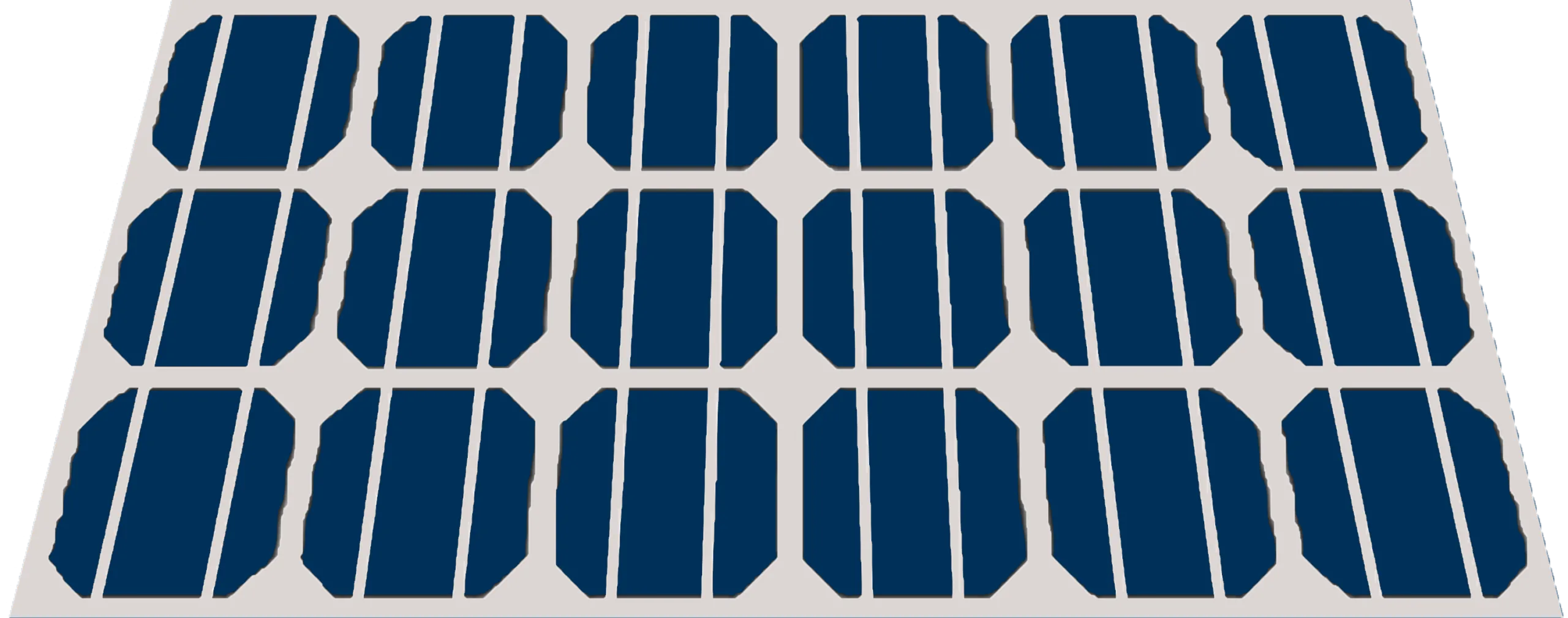
A module is a sandwich of glass, aluminium frame, silicon cells, copper wiring, encapsulant and a backsheet. Most of the mass is glass and aluminium, which are straightforward to recover. The valuable and difficult part is the silicon and the small amounts of silver used in the electrical contacts. Separating these materials cleanly is the technical challenge.

How recycling works today
Current processes typically shred or delaminate the module, then separate materials by mechanical and thermal means. Glass and aluminium are recovered at high rates. Silicon and silver recovery is lower, and some processes lose them entirely. More advanced methods use chemical treatment to separate layers, and they cost more than the recovered material is worth at present.
Recycling a panel costs money, and the materials recovered are worth less than the cost of recovery. That gap is the central obstacle. Where landfill is cheap and regulation is light, panels are more likely to be discarded. Where landfill is expensive or banned, recycling becomes viable. Economics, not technology, determines what happens to most modules.
Policy and producer responsibility
Some jurisdictions have introduced extended producer responsibility, requiring manufacturers to fund collection and recycling. Others treat panels as electronic or hazardous waste with specific rules. The design of these schemes determines whether recycling is financed and whether informal disposal is discouraged. Without a requirement, the incentive is to do the cheapest thing.
Design for recycling
Panels are not designed to be taken apart. Adhesives and encapsulants bond layers together, and dismantling them without damage is difficult. Design changes, such as easier separation of frames and junction boxes, could improve recovery rates. Manufacturers have little incentive to change unless regulation or customer demand pushes them, which is why policy matters to product design.
Not every retired panel is useless. A module that is below specification for a utility-scale array may still generate useful power for a household or a small off-grid installation. Reuse extends the working life and delays recycling, and it depends on testing, certification and a market for second-hand equipment. Standards for reused panels are still developing.
Why this matters now
The volume of end-of-life panels is growing, and it will keep growing as solar capacity expands. A waste stream that is small today becomes large within a decade. Acting before the volume peaks is cheaper than managing a crisis later, which is the usual argument for building recycling capacity in advance.
Where to look next
The indicators worth following are the share of modules collected and recycled, the recovery rates for silicon and silver, and the spread of producer-responsibility rules. Those determine whether solar power’s environmental case holds up at the end of the product’s life, not only during it.
Where formal recycling is expensive, panels can end up in informal channels. They may be stored indefinitely, shipped to countries with weaker rules, or dismantled for the aluminium frame with the rest discarded. Informal processing exposes workers to hazards and loses the materials that recycling is meant to recover. The pattern mirrors what happened with electronic waste, and the lesson from that experience is that cheap disposal does not disappear; it moves.
What would change the economics
Several developments could make recycling viable. Higher recovery rates for silicon and silver would increase the value of the output. Regulation that raises the cost of landfill would improve the relative position of recycling. Scale would help, because processing costs fall as volumes rise. Each of these is happening slowly, and none is sufficient alone.
A note on the climate case
Solar power’s climate benefits depend on the whole life cycle, including manufacturing and disposal. The emissions from producing a panel are recovered within a few years of operation, and the end-of-life stage is a smaller share of the total. That does not make waste management unimportant; it means the priority should be to keep panels in service as long as possible and to recover materials efficiently when they finally stop working.
This report draws on International Renewable Energy Agency (IRENA) and International Energy Agency (IEA).
Image: Pujanak · Public domain · via Wikimedia Commons.