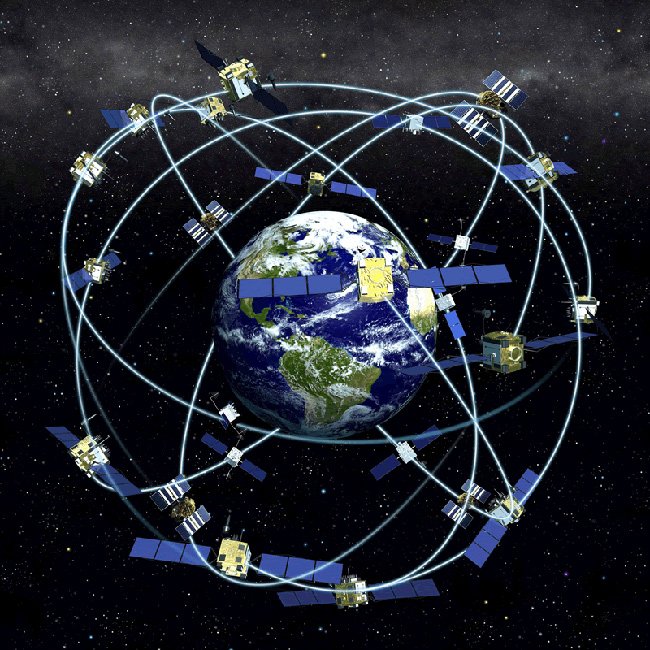
Low Earth orbit has become a busy place. Thousands of satellites now circle the planet, most of them small craft launched in large constellations to provide internet, imaging and other services. The growth has brought benefits and a problem that no single operator can solve alone: how to keep orbit usable when it is filling up.
Orbit is a shared resource, and unlike a road it has no lanes, no traffic police and no natural limit that anyone can see. That is what makes the governance question difficult.
Why constellations grew
Small satellites became cheaper to build and launch, and reusable rockets lowered the cost of getting them into orbit. Companies responded by deploying hundreds or thousands of satellites at once, rather than a handful of large, expensive spacecraft. The model spreads risk across many units and shortens the time to provide service.
The debris problem
Every launch adds objects, and every collision creates thousands of fragments. Debris travels fast enough that even a small piece can disable a satellite, which creates more debris. This cascade is the central long-term risk, and it is why operators are expected to deorbit their spacecraft at the end of life.
Who is responsible
International space law holds the launching state responsible for objects it sends to orbit, and for damage they cause. That framework was written when few countries launched anything. Today, private companies launch from many countries, and the link between a satellite and a responsible state is sometimes indirect. Enforcement remains weak.
Traffic management
Operators share collision warnings and manoeuvre their satellites to avoid close approaches. The system works through voluntary cooperation and constant communication, and it is increasingly strained. As the number of objects grows, the volume of alerts grows with it, and the margin for error shrinks.
Regulation and its limits
Licensing authorities can require deorbit plans, collision avoidance and insurance. Rules differ between countries, which creates an incentive to register where requirements are lightest. Harmonising standards is slow, and the pace of launches is faster than the pace of negotiation.
What would help
Clear deorbit requirements, shared tracking data and a common set of operating rules would all reduce risk. So would investment in removing existing debris, though the technology and the funding remain limited. None of these measures works without international agreement, which is the hardest part.
Why it matters beyond space
Satellites support navigation, weather forecasting, banking, agriculture and disaster response. A degraded orbit would affect services that most people never connect to space. That is why the governance of orbit is a practical question rather than a remote one.
Signals to follow
The indicators worth following are the number of active satellites, the rate of close approaches and the adoption of deorbit rules. Those figures describe whether orbit is being managed or merely used, and the answer will shape what remains available for the next generation of operators.
The economics of orbit
Orbit is treated as a commons, and it is being used as a free dumping ground for defunct hardware. Some economists argue that assigning a price or a property right to orbital slots would change behaviour, while others warn that it would favour wealthy operators. The debate is unresolved, and the underlying problem is that no one pays for the clutter they leave behind.
The insurance question
Satellite operators insure their spacecraft, and insurers are increasingly attentive to collision risk. Premiums reflect the density of the orbit and the operator’s track record, which creates a financial incentive to avoid creating debris. Insurance is a market signal, and it is weaker than regulation because it only covers insured assets, not the long-term health of the orbit itself.
What a crowded orbit means for science
Astronomers have raised concerns that bright satellites interfere with observations, leaving streaks across images and adding noise to measurements. Radio astronomers face similar interference. The effect is manageable with coordination, and it grows with the number of objects, which puts scientific observation in competition with commercial use of the same space.
This report draws on the United Nations Office for Outer Space Affairs and the European Space Agency’s space debris work.
Image: NASA · Public domain · via Wikimedia Commons.