Almost everything the internet does between continents happens through cables on the ocean floor. When one is cut, the effect is usually invisible: traffic reroutes and most users notice nothing. When several are cut in the same region, the effect becomes visible very quickly. The past few years have made that vulnerability a policy subject rather than an engineering footnote.
How much traffic runs on cables
The overwhelming majority of international data travels through submarine fibre-optic cables rather than satellites. Satellites matter for remote areas and for some military and emergency uses, and their total capacity is a small fraction of what cables carry. This is why a cable fault in a busy corridor can slow internet across several countries at once.
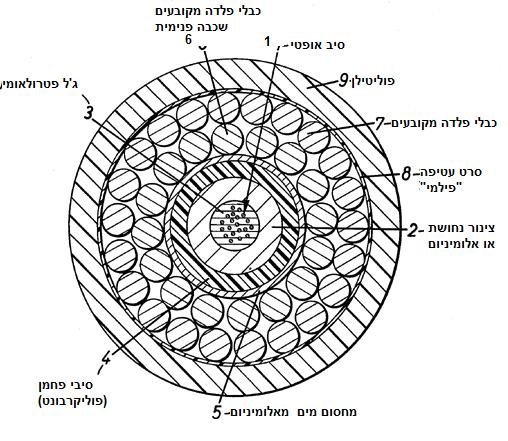
Why redundancy is thinner than it looks
Cables are laid along economically sensible routes, which tend to concentrate in a few corridors. Redundancy exists, but it is uneven: some regions have many alternative paths, others depend on a single cable or a single landing station. A country whose connectivity runs through one coastal point has little protection against a determined disruption.
Cables are damaged by anchors, fishing gear and earthquakes far more often than by anything deliberate. Deliberate interference is rarer and harder to attribute, which is part of what makes it a security concern. Because the damage happens on the seabed, often in international waters, establishing what occurred can take time.
Who repairs them
Repair depends on a small fleet of specialised ships and on international cooperation, since a cable may be owned by a consortium of companies from several countries. A ship may take weeks to reach a remote location, and the repair itself requires lifting the cable, splicing it and laying it back. The system works, and it is slow.
Satellite constellations have expanded and can provide connectivity where cables do not reach. They do not have the capacity to replace a major cable corridor for general traffic, and they have their own vulnerabilities. Treating satellites as a backup for cables misunderstands the scale difference.

The policy question
Governments have begun to treat cable security as critical infrastructure, alongside power grids and pipelines. That raises questions about ownership, landing stations, and who is allowed to build and repair. Restrictions on foreign ownership can improve security and reduce investment, and the balance differs by country.
More diverse routes, additional landing points and better monitoring would all help. So would faster repair capacity and clearer rules for who may operate in territorial waters. None of these is glamorous, and all of them cost money that is easy to defer until an outage makes the case for them.
The economics of cables
Submarine cables are expensive to build and financed by consortia of telecoms operators and content companies, which recover the cost through capacity sales over decades. That model explains the routing: cables follow demand, and demand follows population and commerce. It also explains why sparsely populated regions are served last and least. The economics of the seabed are the economics of the market above it.
Operators monitor cable performance and can detect a break quickly, but identifying the cause is harder. A ship’s anchor and a deliberate cut can produce similar signatures. Satellite tracking of vessels helps in some cases and is inconclusive in others, particularly in poor weather or where tracking is disabled. Attribution is the weak point of any response.

The role of navies and coast guards
Protecting cables falls to navies and coast guards, which have limited ability to patrol vast ocean areas. Some countries have begun to treat cable protection as a naval mission, and international coordination remains thin. The practical measures available are mostly deterrent and investigative rather than preventive, which is an uncomfortable position for infrastructure this important.
Some governments have begun to designate cable landing stations and repair ships as critical infrastructure, and to review foreign ownership of cable assets. Others have created funds for additional routes to reduce single points of failure. These measures are modest relative to the scale of the dependence, and they reflect a recognition that the private incentives that built the network do not automatically produce the resilience a country may want.
Why the problem is easy to ignore
Cables work so well that their fragility is invisible most of the time. The system’s redundancy absorbs ordinary faults, which means the case for investment is made only after a serious outage. That pattern is familiar from other infrastructure, and it explains why reform tends to follow disruption rather than precede it.
The strategic answer is not to eliminate dependence on cables, which is impossible, but to make sure no single break can isolate a country. That requires routes, landing points and repair capacity, and it requires treating them as infrastructure rather than as someone else’s commercial problem.
This report draws on International Telecommunication Union (ITU) and International Cable Protection Committee (ICPC).
Image: Harry Robert Kempe (section author) · Public domain · via Wikimedia Commons.