The ordinary rhythm of a busy international terminal was shattered in an instant when a confrontation at a security checkpoint escalated into a terrifying hostage situation. According to reports, a man seized a female employee by the hair and threatened her with a knife, prompting a 52-year-old bystander to step forward and offer himself in her place. What followed was a dramatic struggle that has drawn national attention and raised urgent questions about safety, liability and the financial aftermath of such events.
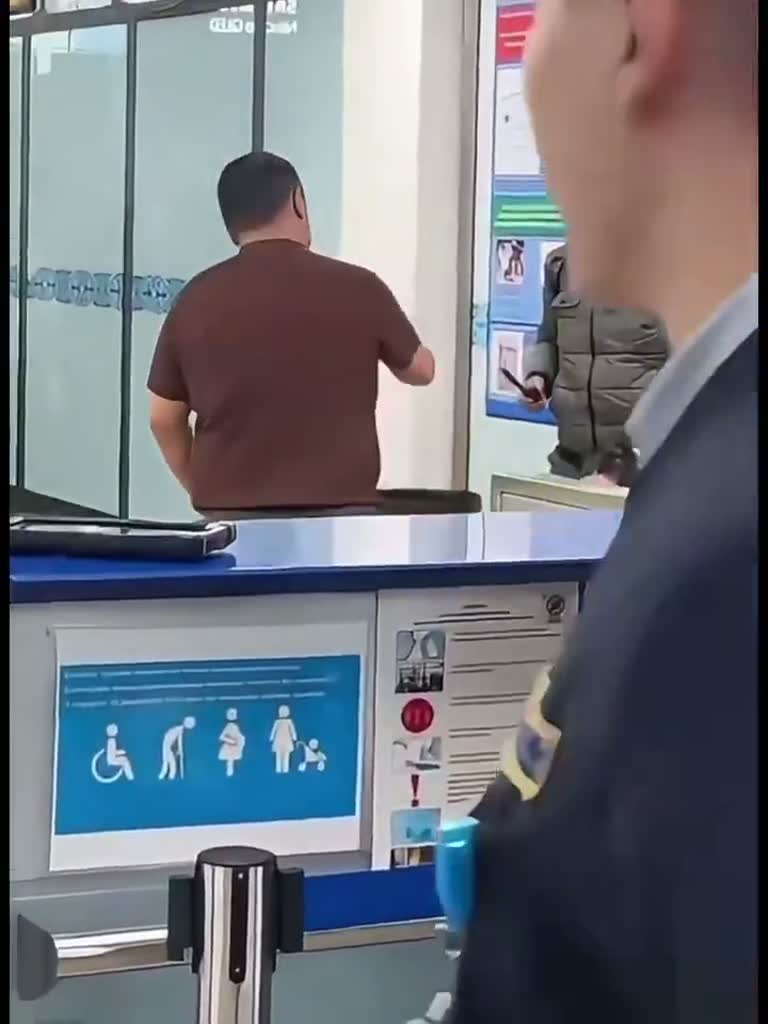
Overview of the incident and the key facts
- A man is reported to have taken a female airport employee hostage with a knife at Almaty International Airport on 7 March 2025.
- A 52-year-old man, identified in reports as Abdulaïm Mussayev, offered to swap places with the hostage and then fought the attacker.
- The employee was reportedly released, and the attacker was disarmed during the struggle.
- The President of Kazakhstan, Kassym-Jomart Tokayev, has ordered a state award for the man who intervened.
- The incident raises complex questions about airport security, liability, insurance cover and compensation for those affected.
A routine terminal, a sudden flashpoint
The scene inside Almaty International Airport on that March day was, by all accounts, unremarkable at first. Travellers moved through the terminal with the usual mix of fatigue and impatience. Announcements echoed over the public address system. Somewhere near the security and document-check area, a man was asked to present his identification papers. What happened next, according to the audio transcript, turned an ordinary request into a flashpoint: the man, described as aggressive, grabbed the female staff member by the hair and began threatening her.
Within moments, the atmosphere shifted from mundane to menacing. The transcript states that the man was armed with a knife, and that he used it to hold the woman against her will. The exact sequence of those first few seconds is difficult to reconstruct from the available footage, but the terror is evident. Passengers nearby would have heard raised voices, then the chilling realisation that a weapon was involved. In such moments, the human instinct is often to freeze, to retreat, to look for the nearest exit. Yet the situation demanded something else from someone.
It is in this context that a 52-year-old man, identified in reports as Abdulaïm Mussayev, enters the story. He was reportedly at the airport to see off an acquaintance, a routine act of farewell that placed him in the wrong place at the right time. According to the transcript, he made a decision that few would contemplate: he offered himself as a replacement hostage. The woman was released, and the man then found himself face to face with the attacker and the blade.
The swap, the struggle and the disarmament
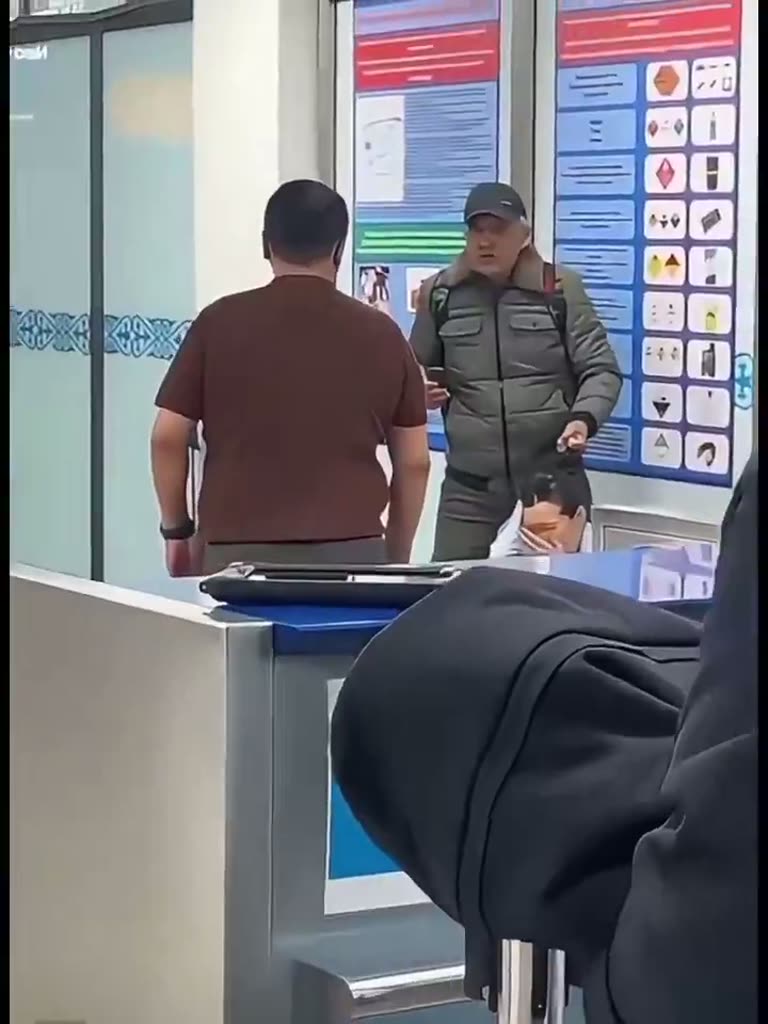
The moment of exchange is the pivot on which the entire incident turns. The transcript explains that the man "offered to become a hostage" and that the woman was freed. That single act transformed the dynamic. Instead of a terrified employee at knifepoint, the attacker now faced a grown man who was not only willing to stand in her place but also prepared to fight. The footage from the scene suggests a brief but intense physical confrontation. In the frames, we see figures moving quickly, the blur of an altercation, and the presence of other people nearby who appear to be intervening or reacting.
According to the transcript, the man "wrestled with the attacker and took away her knife" — a phrasing that may indicate the knife was taken from the attacker's possession. The struggle was short but decisive. The attacker was disarmed, and the immediate threat to the woman and others was neutralised. The transcript further notes that the President of Kazakhstan, Kassym-Jomart Tokayev, ordered a state award for the man who saved the girl. This official recognition underscores the gravity of the event and the perceived heroism of the intervention.
Yet beyond the dramatic headlines lies a more complex reality. Airports are high-security environments, and incidents like this expose the gaps that can exist even in controlled spaces. They also raise difficult questions about who is responsible when things go wrong, and who bears the financial cost of injuries, trauma and disruption. The heroism of one individual does not erase the systemic questions that follow.
A nation reacts, and a president intervenes
News of the incident spread quickly, and the reaction was immediate. The transcript mentions that the President of Kazakhstan, Kassym-Jomart Tokayev, ordered a national award for the man who rescued the girl. Such a gesture is significant: it elevates the individual act to a matter of national pride and public recognition. It also signals that the authorities are treating the event with the utmost seriousness. Official statements, however, have been limited, and the full details of the investigation remain unclear.
For the travelling public, the incident is a reminder that airports are not immune to violence. They are places where stress, mental health crises and personal conflicts can collide with crowds and tight security. The presence of a knife in a secure area will inevitably prompt questions about screening procedures and staff safety. The transcript does not provide a definitive account of how the weapon was brought into the terminal, and officials have not yet released a full timeline. What is clear is that a woman was threatened, a man intervened, and a potentially catastrophic outcome was avoided.
The story has also sparked a wider conversation about the role of bystanders in emergencies. The decision to trade places with a hostage is extraordinarily rare. It requires a level of courage that most people cannot imagine. But it also raises practical and ethical questions: should untrained civilians intervene in armed confrontations? What protections exist for those who do? And what happens to the victims — both the immediate hostage and the rescuer — in the days, months and years that follow?
The unseen aftermath: injury, trauma and liability
While the physical struggle may have lasted only seconds, the consequences can linger for a lifetime. The female employee who was grabbed by the hair and threatened with a knife may have suffered physical injuries, however minor, and almost certainly experienced significant psychological trauma. The rescuer, too, was involved in a violent confrontation and could have sustained injuries. The attacker, meanwhile, faces legal consequences that will unfold through the justice system.
In the immediate aftermath, the focus is often on the criminal case. But for those affected, the financial and practical questions quickly pile up. Who pays for medical treatment? Who compensates for lost wages if someone cannot work? What happens if the incident leads to long-term psychological damage requiring therapy? These are not abstract concerns; they are the real-world consequences that insurance policies and legal frameworks are designed to address.
It is important to note that no official conclusion has been reached regarding liability or compensation in this specific case. The information available is based on reports and the audio transcript, and details about insurance claims or payouts have not been disclosed. Readers should be cautious about assuming that any particular outcome is guaranteed. What follows is a general explanation of how insurance and liability might apply in a scenario like this, based on standard practices in the United States and the United Kingdom.
Insurance and who pays
In the event of a violent incident at an airport, several types of insurance could come into play. The first is travel insurance, which often includes cover for medical expenses, emergency assistance and trip disruption. However, most travel policies exclude losses arising from criminal acts or acts of war, and the specifics depend heavily on the wording of the policy. A traveller who witnessed the event or was caught up in the disruption might be able to claim for missed flights or accommodation, but only if the policy explicitly covers such scenarios. It is crucial to check the exclusions section, as many standard policies do not cover "acts of terrorism" or "civil unrest" unless a specific rider has been purchased.
For the airport employee, the situation is different. In most jurisdictions, employers are required to provide a safe working environment. If an employee is injured at work, they may be entitled to workers' compensation or its equivalent. In the UK, this is governed by the Health and Safety at Work etc. Act 1974 and the employer's liability insurance that most businesses are legally required to carry. In the US, workers' compensation laws vary by state, but the principle is similar: the employer's insurance covers medical costs and a portion of lost wages for work-related injuries. The employee would typically not need to sue the attacker directly; instead, the claim would go through the employer's insurance. However, if the employer was negligent — for example, if security was inadequate — there could be additional legal avenues.
For the rescuer, the picture is more complicated. As a bystander who voluntarily intervened, he may not be covered by workers' compensation. His own health insurance might cover his medical treatment, but only up to the limits and subject to deductibles and excesses. In the UK, the NHS would provide free treatment at the point of use, but there could still be costs for follow-up care or lost income. In the US, even a short hospital stay can generate thousands of dollars in bills, and the rescuer's health insurance policy would determine how much he pays out of pocket. If the attacker is convicted, a court could order restitution, but such orders are often difficult to enforce, especially if the attacker has no assets.
Liability insurance is another consideration. The airport, as a business, likely holds public liability insurance to cover claims from visitors who are injured on the premises. If the female employee or the rescuer were to sue the airport for failing to prevent the attack, that policy could respond. However, the airport would likely argue that it took reasonable precautions and that the attack was unforeseeable. The outcome would depend on the specific facts and the legal standards in Kazakhstan, which differ from both the US and the UK. It is important to stress that no such claim has been reported, and this is purely an illustrative explanation of how liability might be assessed.
In terms of excess and deductibles, most insurance policies require the policyholder to pay a certain amount before the insurer covers the rest. For example, a travel insurance policy might have a £100 excess for medical claims, while a health insurance policy in the US might have a deductible of several thousand dollars. These amounts can significantly affect the financial impact on the individual. Claim steps typically involve notifying the insurer promptly, providing evidence such as police reports and medical records, and keeping receipts for all expenses. The insurer will then assess the claim and determine what is covered. It is always advisable to keep detailed documentation and to seek professional advice if the claim is complex.
The wider financial ripple effect
Beyond individual claims, incidents like this can have broader financial implications. Airports may face increased insurance premiums if they are seen as high-risk. Security costs may rise as additional measures are implemented. For travellers, the disruption can lead to missed connections, cancelled plans and unexpected expenses. Travel insurance can mitigate some of these costs, but only if the policy covers the specific event. Many travellers do not realise that standard policies often exclude "acts of violence" or require additional cover for such risks.
The financial impact on the airport itself could be significant. In addition to potential liability claims, there may be costs associated with increased security, staff training and counselling for affected employees. These costs are often passed on to airlines and, ultimately, to passengers through higher fees. The insurance industry closely monitors such events to assess risk and adjust premiums accordingly. For the individuals involved, the financial aftermath can be life-changing. Medical bills, lost wages and legal fees can quickly mount, even if the physical injuries are not severe.
It is also worth noting that compensation in Kazakhstan may differ from US or UK norms. The legal system in Kazakhstan has its own rules for civil claims and state compensation. The presidential order for a state award suggests that the government may provide some form of recognition or support, but it does not necessarily equate to financial compensation for the rescuer or the victim. Details of any state support have not been disclosed. Readers should be cautious about assuming that a hero's actions automatically lead to a financial payout. In many cases, the hero receives praise but must navigate the insurance and legal systems like anyone else.
Conclusion: courage, consequences and cover
The events at Almaty International Airport on 7 March 2025 will be remembered for the extraordinary courage of one man who chose to put himself in harm's way. The transcript's account of his offer to swap places with the hostage, and his subsequent struggle to disarm the attacker, is a powerful reminder of human resilience. The presidential award is a fitting tribute to that bravery. Yet the story does not end with the applause. For the woman who was threatened, for the rescuer who fought, and for the airport that must now review its procedures, the aftermath is a long and complex road.
Insurance may provide a financial safety net, but it is rarely straightforward. Policies have exclusions, excesses and limits. Claims require evidence and patience. And in cases involving criminal acts, the legal system may take years to reach a conclusion. For readers, the key takeaway is to understand what your own insurance covers before you travel, and to consider whether additional protection is needed. It is also a reminder that safety is a shared responsibility, and that even in the most controlled environments, the unexpected can happen.
As the investigation continues, many details remain unverified. The exact sequence of events, the nature of any injuries, and the potential for insurance claims are all subject to further information. What is clear is that a potentially tragic outcome was avoided by a single act of courage. The questions that remain are not just about what happened, but about what comes next — for the people involved, for the airport, and for the wider conversation about safety and accountability.
What do you think should happen next — should the rescuer receive financial compensation, and would your travel insurance cover you in a situation like this? Share your thoughts in the comments below.
| Incident parameter | Logged / on-scene information |
|---|---|
| Date | 7 March 2025 |
| Location | Almaty International Airport, Kazakhstan |
| Incident type | Hostage-taking with a knife |
| Hostage | Female airport employee |
| Intervenor | 52-year-old man (reported as Abdulaïm Mussayev) |
| Outcome | Hostage released, attacker disarmed |
| Official response | Presidential order for state award |
Important note: Some details, including the exact sequence of events and any injuries, remain unverified pending official statements.
Core questions still unanswered
- What was the attacker's motive and how did he bypass security?
- Will the rescuer and the victim receive compensation, and from whom?
- What new security measures will be introduced at the airport?
Learn more: Walmart Shoplifter’s Tearful Plea Unravels Over $300 Secret
🎥 Watch the video at the bottom of the page 👇
This story was edited from a publicly posted video; some details may not be independently verified.
