Public art is often treated as an uncontroversial good, and in practice it raises questions about money, taste and power. A sculpture in a square is paid for by someone, chosen by someone, and experienced by everyone who passes. The disagreements that follow are not a sign that public art has failed. They are what happens when a public object is placed in a public space.
How public art is funded
Funding comes from several sources: municipal budgets, percent-for-art programmes that allocate a share of construction costs, private donations, and corporate sponsorship. Each source carries different expectations. Public money invites public scrutiny, and private money invites questions about whose interests are served.
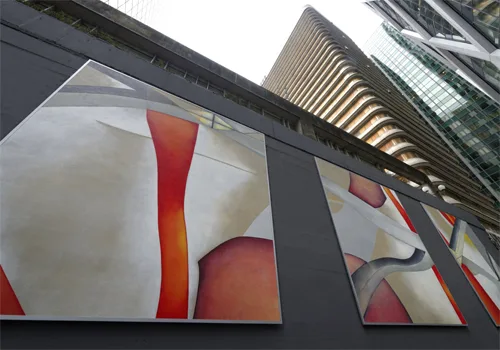
Who chooses
Selection usually involves a committee, which may include artists, curators, officials and community representatives. The composition of that committee shapes the outcome, and it is often the point of contention. A committee of experts will choose differently from one dominated by local residents, and neither is automatically right.
The question of permanence
Public art is expensive to remove, which makes a contested choice durable. A work that offends some residents may remain for decades, and the debate may outlast the officials who approved it. This asymmetry between the ease of commissioning and the difficulty of removing is a recurring feature of the field.
Consultation often reveals that residents want different things from professionals. They may prefer work that reflects local history or that provides a meeting point, rather than a statement by an internationally recognised artist. Where consultation is genuine, it can produce work that is better received; where it is token, it can deepen resentment.
Why controversies recur
Public art controversies usually concern three things: cost, meaning and process. Cost raises questions about priorities in a time of stretched budgets. Meaning raises questions about what a community is being asked to look at. Process raises questions about who was consulted. Most disputes combine all three, which is why they are hard to resolve.
The maintenance problem
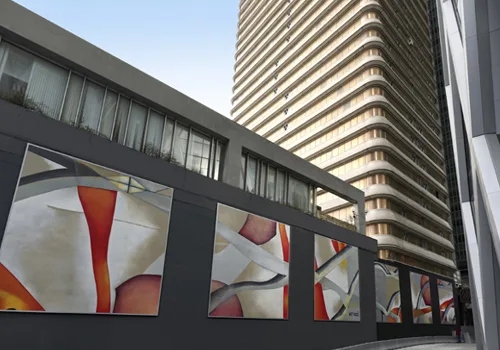
Public art requires maintenance, and maintenance budgets are easy to cut. A work that is neglected deteriorates, and a deteriorated work invites removal. The life of a piece often depends less on its reception than on whether anyone is funded to care for it, which is a practical point that rarely features in the debate.
Good practice tends to involve early consultation, clear criteria, transparent selection and a maintenance plan. It also involves accepting that not everyone will like the result. Public art is a shared product, not a consensus one, and the process of deciding is part of what it means.
The role of artists
Artists commissioned for public work face constraints that studio artists do not. They must respond to a site, a budget, a committee and a community, and they may have limited control over the final result. The best public commissions give artists room to work while keeping the process accountable, and the worst reduce them to suppliers of a pre-approved idea. The balance shapes the quality of what is produced.
Examples and their lessons
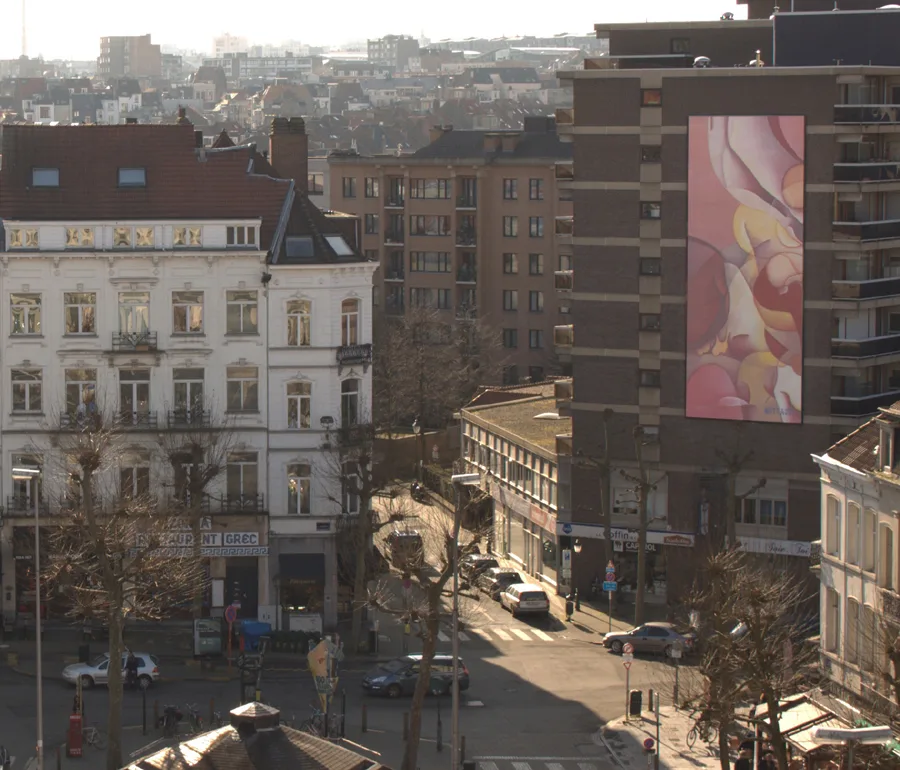
Public art programmes in several cities have produced both celebrated works and contentious ones. The celebrated cases often share features: early engagement, a clear brief and a respected artist given genuine freedom. The contentious cases often share the opposite: late consultation, unclear criteria and a decision that appeared to be made before anyone asked. The pattern suggests that process matters as much as the artwork.
When budgets tighten, public art is often among the first items cut, because its benefits are cultural rather than immediate. Programmes tied to construction budgets can survive because the money is committed in advance; standalone budgets are more exposed. This is one reason percent-for-art schemes are popular with advocates: they embed funding in a process that is harder to cancel.
The digital dimension
Public art increasingly includes digital and light-based works, which raise different questions. They may require electricity and maintenance, they can be altered or switched off, and their documentation matters because the work may not persist in physical form. Collecting and preserving digital public art is a new problem for institutions, and standards are still being developed.
The broader point is that public art is a negotiation between many interests, and its value cannot be reduced to the object alone. How it is commissioned, funded and cared for matters as much as what it looks like, and those processes are where the arguments are really about.
Ultimately, public art is judged by the community that lives with it, and that judgement takes years to form. A work that is criticised on installation may become loved, and one that is welcomed may be forgotten. The process that produced it is the part that can be evaluated immediately, and it is where the lessons for the next commission lie.
This report draws on UNESCO and International Council of Museums (ICOM).
Image: Frederic Edwin Church · Public domain · via Wikimedia Commons.