An archive is a living resource. That is the quiet lesson from a new catalogue built out of years of Chandra observations, in which researchers found 84 objects that do not look like anything astronomers have a tidy explanation for. The finding, published in Nature Astronomy and described by NASA on 9 September, is a reminder that some of the most interesting results come not from new telescopes but from looking again at old data with a sharper question.
What “hypersoft” means
The 84 sources are described as hypersoft, meaning their X-ray emission is concentrated at unusually low energies, with strong ultraviolet emission alongside it. That combination is the puzzle. Most familiar X-ray sources have a characteristic energy profile, and these do not. In astronomy, a spectrum that sits in the wrong place is a signal that something about the object, or about the assumptions used to interpret it, is not standard.
The usual suspects
When astronomers see unexplained X-ray emission, they reach for a short list of candidates. A compact object – a black hole, neutron star or white dwarf – pulling material from a companion star is the classic explanation. Accretion disks can produce a wide range of spectra depending on mass, spin and viewing angle. The problem is that none of the standard configurations reproduces the hypersoft pattern cleanly across all 84 sources.
That does not mean the answer is exotic. It may mean the answer is mundane but currently under-modelled.
Why 84 is better than one
A single odd object is a curiosity; it can be dismissed as a measurement error or an unusual but rare case. A catalogue of 84 changes the nature of the question. It suggests a population, which in turn implies a process common enough to produce many examples. Populations can be modelled statistically, and a model that fails on 84 cases is easier to test than a model that fails on one.
Archive work has a built-in limitation: you can only analyse what was observed, with the instruments and exposure times that were chosen for other purposes. Chandra’s archive is rich, but it was not designed to characterise these objects. The team can describe the light; it cannot yet say what the source is. That gap reflects the boundary of the method. It is the boundary of what the method can reach.
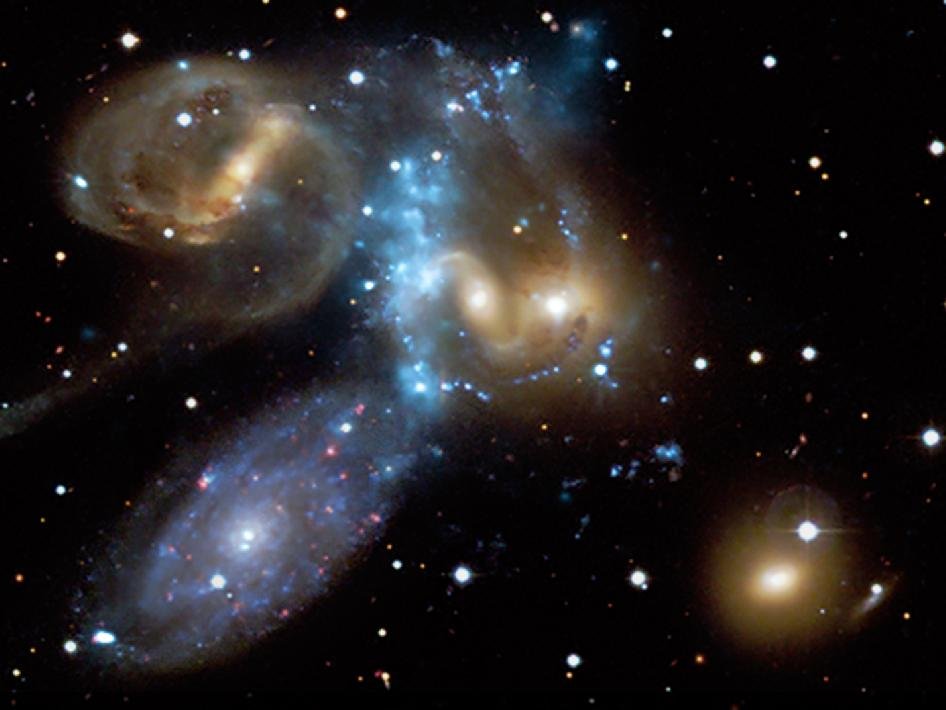
The Nature Astronomy papers
The work appears in peer-reviewed form, which matters because it means other astronomers have examined the analysis before publication. Peer review does not guarantee a correct interpretation, but it does mean the measurements are reproducible and the reasoning is open to challenge. For a result that is essentially “we found something we cannot explain”, that scrutiny is especially valuable.
How astronomers will narrow it down
The next steps are the familiar ones of observational astronomy: more data, better data, and targeted follow-up. Spectroscopy at other wavelengths, long-term monitoring to see whether the sources vary, and searches for counterparts in optical or radio surveys would all constrain the possibilities. Some of the 84 may resolve into known categories. A few may not, and those are the ones that will drive the argument.
It is tempting to frame a result like this as “mysterious objects baffle scientists”, and that framing does the research a disservice. The honest statement is narrower and more interesting: a well-characterised sample does not fit current models, and the work of finding out why has just begun. That is how astronomy usually advances – not with a single revelation, but with a mismatch that refuses to go away.
Why archive mining is underrated
Chandra has been observing since 1999, and its archive is one of the richest X-ray datasets in existence. Results like this one show why that archive matters. A telescope that stopped taking new data would still yield discoveries for years, because the questions change faster than the instruments do. In an era when new observatories dominate headlines, the patient work of re-examining existing observations is easy to overlook. It is also, often, where the surprises are – because the data was collected without knowing what to look for, and therefore without the biases that shape targeted observations.
A catalogue is a starting point, not a conclusion
The most useful thing about a well-defined sample is that it can be attacked from several directions at once. Theorists can test whether any known physical process produces hypersoft spectra under realistic conditions. Observers can look for these objects in other wavelengths. And statisticians can ask whether the 84 are distributed in space in a way that hints at their origin. None of these approaches will settle the question alone. Together, they are how a strange catalogue gradually becomes an ordinary one – or, occasionally, a new class of object.
This report draws on NASA / Chandra.
Image: Wikimedia Commons · Public domain · via Wikimedia Commons.