Anniversaries are usually celebrations. UNESCO’s 60th International Literacy Day, marked with a programme in Chiapas, Mexico on 8-9 September, was framed differently: as an occasion to draw attention to an unfinished task. The organisation’s advance notice, published on 28 August, cited an estimate that 739 million young people and adults still lack basic literacy skills.
That framing is worth noting. After six decades of effort, the headline number remains large, and the gap between global progress and individual exclusion is the subject.
What the programme covered
The agenda included literacy prizes, a Global Alliance for Literacy meeting, and discussion of language and multilingualism. It aimed to bring together education officials, experts, teachers and students to examine progress and remaining gaps. The choice of Chiapas, a region with significant Indigenous populations and multilingual education needs, was not incidental.
Why multilingualism matters to literacy
Literacy programmes often assume that people will learn to read in a dominant language, which can be a second or third language for them. Evidence from many contexts suggests that learning to read first in a familiar language produces better results, and that transitioning to another language afterwards is easier. Ignoring this can turn literacy teaching into an obstacle rather than a bridge.
The Global Alliance for Literacy
The Global Alliance for Literacy brings together countries and organisations committed to improving literacy, with a focus on youth and adults. Alliances of this kind are useful for coordination, and they do not provide significant funding. Their value lies in keeping an issue on the agenda and enabling countries to learn from each other’s programmes.
What the numbers mean
The estimate of 739 million people lacking basic literacy is a modelled figure, produced from surveys and projections. Like all such estimates, it carries uncertainty and depends on how literacy is defined. Definitions vary between countries, and self-reported literacy can overstate ability. The number is best read as an indication of scale rather than a precise count.
A record of the agenda
This article reports the published programme and its stated priorities. It does not claim attendance, award results or policy outcomes that the advance notice cannot establish. That distinction matters for any preview of a scheduled event, and it is easy to lose in coverage that treats an agenda as an achievement.
Who is still excluded
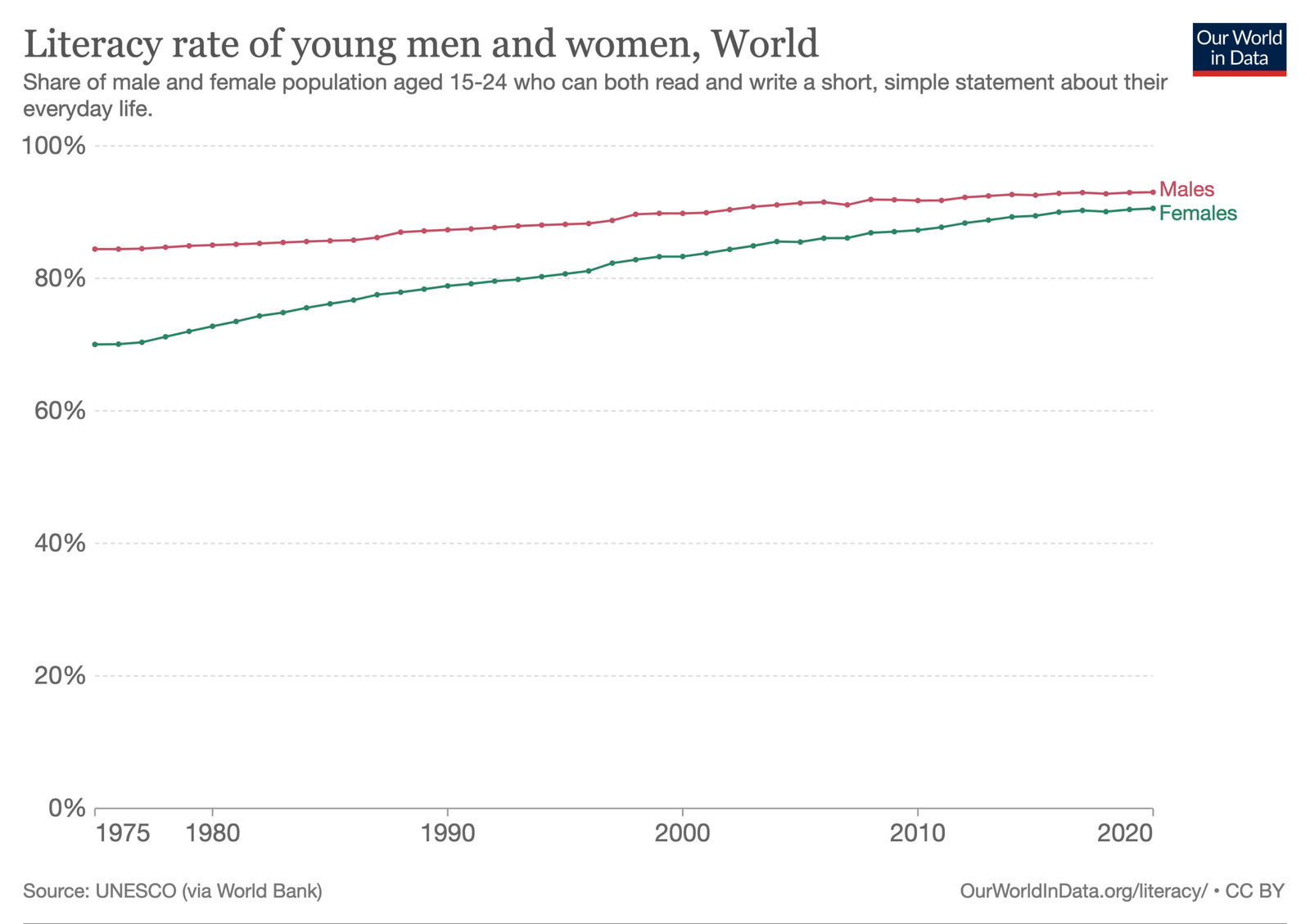
Literacy gaps are not evenly distributed. They concentrate among older adults, women in some regions, rural populations and people with disabilities. These patterns reflect the conditions that made schooling inaccessible in the past, and they tend to persist because adult literacy programmes are underfunded relative to children’s education. Addressing them requires targeted programmes, not general campaigns.
The economics of literacy
Literacy affects employment, health and civic participation, and the economic case for investment is strong. It is also a case that governments find easier to make for children than for adults, because the returns to adult literacy appear over a shorter horizon. That asymmetry helps explain why the adult gap persists despite decades of advocacy.
How adult literacy is taught
Adult literacy programmes differ from children’s education because participants bring experience, responsibilities and often a history of educational failure. Effective programmes tend to use materials relevant to daily life, such as forms, labels and instructions, and they build on what learners already know. They also need flexible schedules, because adults juggle work and care. Programmes designed around school timetables often fail to retain participants, and retention is where many initiatives lose their results.
The measurement problem
Literacy is difficult to measure. Self-reported ability overstates skill, and short tests capture only basic reading. International assessments such as those measuring adult skills use detailed instruments, and they are expensive and infrequent. The result is that policy is often based on modelled estimates with wide uncertainty, which makes it harder to target programmes or demonstrate their effect. Better measurement would help, and it competes for resources with the programmes themselves.
What works
The evidence points to a few consistent factors: teaching in a language learners speak, relevance to daily needs, adequate hours, trained instructors and follow-up support. None of these is surprising, and all of them cost money. Programmes that cut corners on any of them tend to produce attendance without learning, which is why evaluations that measure participation rather than skill can be misleading.
The role of community programmes
Much adult literacy work happens outside formal education, through libraries, community centres, workplaces and religious organisations. These settings reach people who would not enrol in a course, and they depend on volunteers and small grants. Their scale is modest and their reach is often wider than official programmes. Strengthening them is a practical way to address the adult gap, and it rarely features in high-level statements.
Sources
- UNESCO. UNESCO celebrates the 60th International Literacy Day in Chiapas, Mexico. unesco.org
Image: Discott · CC BY-SA 3.0 · via Wikimedia Commons.