Heatwaves kill more people in cities than many other hazards, and the deaths are often invisible. They occur at home, among the elderly and isolated, and they are recorded as heart attacks or respiratory failure rather than as heat deaths. As cities warm, the problem is growing, and the response is uneven.
Urban heat is not only a climate story. It is a product of how cities are built, who lives where, and what protection they can afford.
Why cities are hotter
Concrete and asphalt absorb heat during the day and release it at night, so cities stay warm when the surrounding countryside cools. Dense construction reduces airflow, and a lack of trees and green space removes shade and evaporation. The result is an urban heat island that can be several degrees warmer than nearby rural areas.
Who is most at risk
Older people, infants, outdoor workers and those with chronic illness are most vulnerable. Poverty compounds the risk, because air conditioning may be unaffordable or unavailable and housing may be poorly insulated. Neighbourhoods with less green space and more pavement are consistently hotter than wealthier ones.
The invisible death toll
Excess mortality during heatwaves is measured by comparing deaths with the seasonal average. The figures often surprise officials, because individual deaths are attributed to other causes. Recognising heat as a killer is a precondition for acting on it.
Early warning systems, cooling centres, tree planting, reflective roofs and building standards all reduce exposure. So does protecting outdoor workers through shade, water and adjusted hours. These measures are inexpensive relative to their effect, and they require coordination across health, housing and planning departments.
The equity dimension
Heat falls hardest on people with the least capacity to avoid it. A city that protects only its wealthier neighbourhoods leaves the majority exposed. Mapping heat and vulnerability together shows where investment is most needed, and it often reveals that the hottest areas are the least served.
The indicators worth following are heat-related mortality, the extent of tree cover and the availability of cooling for the most vulnerable. Those figures show whether cities are adapting or merely enduring hotter summers.
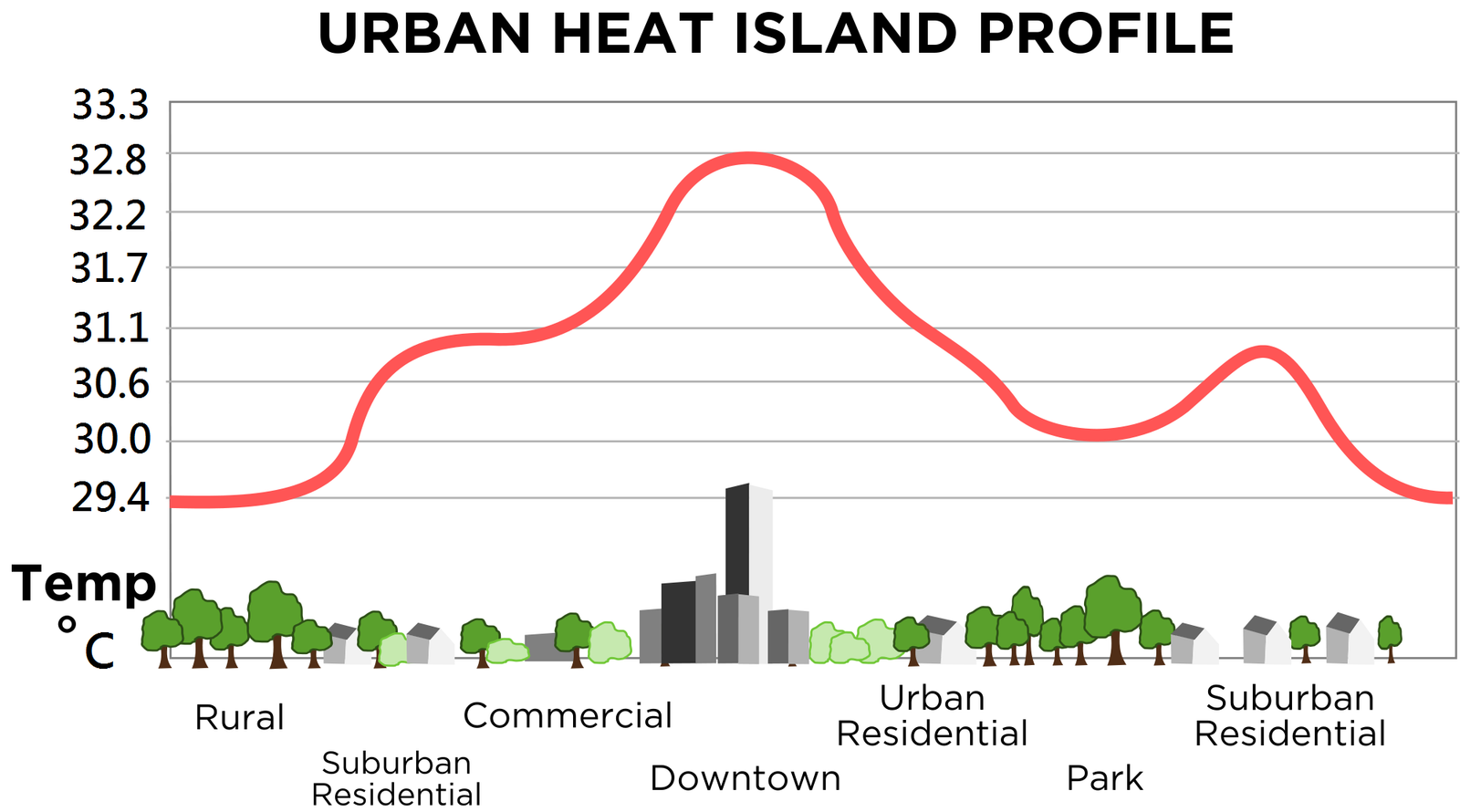
The role of design
How a city is built determines how hot it gets. Street orientation, building height, materials and the amount of shade all affect temperature at street level. Cities that plan for heat use light-coloured surfaces, plant trees along walking routes and keep air moving between buildings. These choices are made at the design stage, and they are difficult and expensive to reverse once construction is complete, which is why planning rules matter more than later interventions.
A growing number of cities have appointed heat officers, opened cooling centres and introduced heat action plans that trigger specific measures when temperatures cross thresholds. The measures are unglamorous and they save lives. Their weakness is that they depend on funding and coordination that can lapse once a heatwave passes and attention moves on, which is the recurring problem with hazards that produce no dramatic single event.
The role of health systems
Heat deaths are prevented by health systems as much as by urban design. Hospitals need plans for surges, ambulances need to reach people quickly, and primary care needs to identify those at risk before a heatwave arrives. Cities that have integrated heat into public health planning respond more effectively than those that treat it as a weather event. The difference shows up in mortality figures during extreme weeks.
Outdoor workers, from construction to agriculture to delivery, are among the most exposed and the least protected. Shade, water, rest breaks and adjusted hours reduce risk, and they depend on employers and regulators rather than on the workers themselves. Where protections are absent, heat becomes an occupational hazard that falls on those with the least ability to refuse the work, which makes it an issue of labour standards as well as public health.
The policy response
Heat is unusual among hazards in that the response is largely local. National governments can set building standards and fund health systems, and the measures that save lives in a specific city are usually decided there. That makes municipal capacity decisive. Cities with the staff, data and political support to act on heat do so; those without it rely on emergency response after the fact. Strengthening local capacity is therefore one of the most effective climate adaptation measures available, and it is chronically underfunded.
What other cities learned
Cities that have experienced deadly heatwaves tend to act, and those that have not tend to wait. The pattern is familiar across hazards: reform follows disaster. Cities that moved early often did so because a heat officer or a health department pushed the issue without a crisis to force it. Their experience is that the measures are inexpensive and effective, and that the main obstacle is not cost but coordination and attention. Sharing that experience between cities is one of the more useful forms of climate cooperation available, because the solutions are local and transferable.
This report draws on the World Health Organization and UN-Habitat’s urban climate work.
Image: Wikimedia Commons · Public domain · via Wikimedia Commons.