🎥 Watch the video at the bottom of the page 👇
A tense encounter between Israeli police and an accredited news crew has drawn widespread attention after video surfaced showing officers pushing correspondents during a street deployment. The footage captures the moments when a CNN team, including correspondent Ben Wedeman, was directed to move to the back of a scene. What began as a routine crowd-control instruction escalated into a physical confrontation that has sparked debate about press freedom in conflict zones.
Overview of the incident and the key facts
- Video shows Israeli police physically pushing a CNN news crew, including correspondent Ben Wedeman, during a street deployment.
- An officer is heard instructing the team, "We must go to the back, you're covering this situation."
- The incident is part of a broader pattern of press interference that the correspondent says happened to multiple journalists that week.
- The description notes a separate interaction where an officer told the correspondent to "f*ck off" after a greeting.
- The footage has fueled online discussion about the treatment of accredited journalists in tense areas.
The Moment Tension Flared on the Street
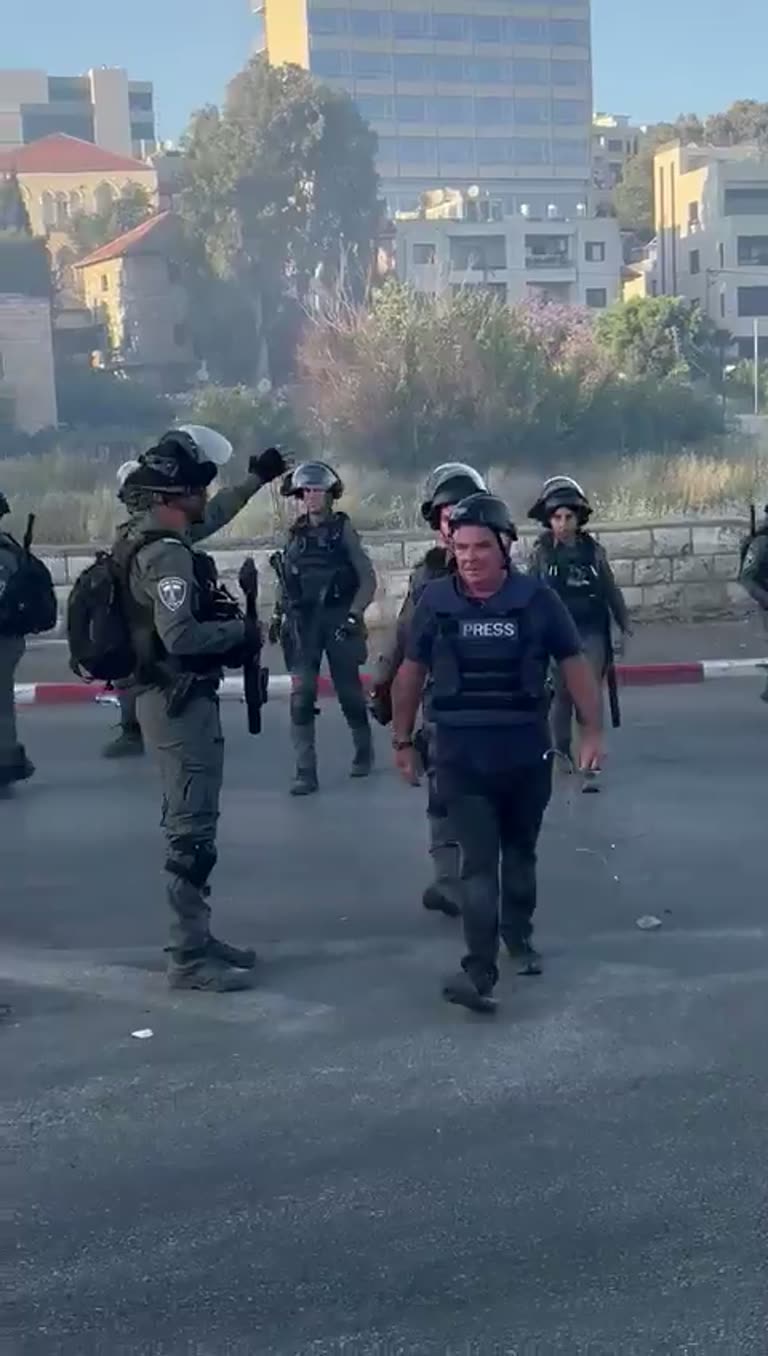
The scene unfolds on a sunlit street lined with stone walls and modern buildings, where a group of Israeli police officers in full riot gear are positioned. Among them, a man wearing a dark blue vest with "PRESS" printed in bold white letters stands out—Ben Wedeman, a veteran CNN correspondent. The video captures the precise moment when an officer steps forward, gesturing sharply and pushing the journalist backward. The correspondent, identifiable by his helmet and protective vest, appears to be trying to maintain his position while the officer insists he move.
The audio captures the officer's command: "We must go to the back, you're covering this situation." The instruction is firm, leaving little room for negotiation. Around them, other officers in helmets and tactical gear form a loose perimeter, their presence adding to the sense of urgency. The lighting suggests late afternoon, with long shadows stretching across the asphalt. The atmosphere is thick with tension, the kind that builds when authority and media intersect in a volatile environment.
What makes this moment particularly striking is the calm demeanor of the journalist. He does not resist aggressively; instead, he seems to be trying to understand the directive while continuing to do his job. The officer's hand makes contact with the journalist's chest area, a gesture that has been interpreted by many online as a push. The camera captures the reaction of bystanders, some of whom are recording the scene on their phones. The entire exchange lasts only seconds, but it encapsulates a larger conflict that has been simmering for days.
The video description, posted by the correspondent himself, adds context: "The Israeli police pushing around accredited news correspondent @bencnn and his @cnni crew. It’s happened to us all this week." This statement transforms a single incident into a pattern, suggesting that this was not an isolated confrontation but part of a series of interactions between police and journalists. The phrasing "pushing around" implies a physical and perhaps demeaning treatment, while "accredited" emphasizes the legitimacy of the press crew's presence.
The description accompanying the video does not stop at the physical push. It goes on to recount a separate, equally troubling interaction: "Today I walked past a policeman. I smiled and said hello. 'F*ck off' he said." This brief anecdote, shared in the same post, paints a picture of an environment where hostility toward the press is not just institutional but personal. The contrast between a friendly greeting and a profane response is jarring, highlighting a breakdown in basic civility.
For journalists working in conflict zones, such encounters are not merely inconvenient—they are dangerous. When officers physically push correspondents, they not only disrupt the ability to report but also signal that the press is not welcome. The video shows the CNN crew complying with the order to move back, but the question remains: why were they targeted? The officer's words, "you're covering this situation," suggest that the very act of reporting was the problem. This raises concerns about transparency and the right to document events in public spaces.
The post's mention that "it's happened to us all this week" implies a coordinated or at least widespread phenomenon. If multiple news crews faced similar treatment, it points to a systemic issue rather than a rogue officer. The description does not specify which other crews were affected, but the use of "us all" suggests a collective experience among journalists. This has led to discussions about whether press freedom is being eroded in the area, and whether accreditation matters when officers decide who gets to stay and who gets pushed back.
The reaction online has been swift. Many users shared the video widely, expressing concern about the treatment of journalists. Some pointed out that the crew was clearly identifiable as press, making the push seem unnecessary. Others questioned whether the officer's actions were justified under crowd-control protocols. The lack of an official statement from authorities at the time of the video's circulation left room for speculation, but the visual evidence—the push, the command, the "PRESS" vest—spoke for itself. The incident became a flashpoint for a broader debate about the role of media in tense situations.
The Human Cost of Covering Conflict
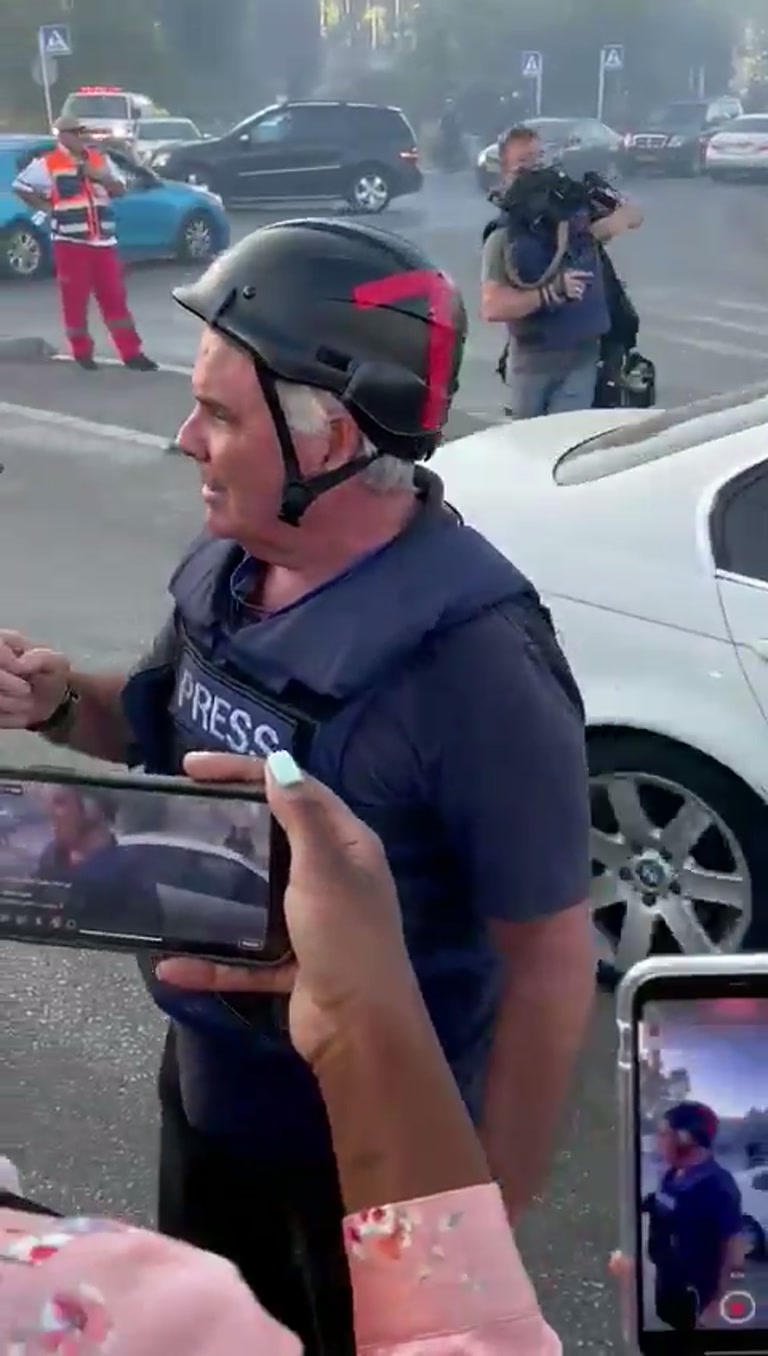
Behind the gear and the dramatic footage lies a simple truth: journalists are people doing a job. The video shows a man in his sixties, gray-haired and wearing a helmet, being physically directed by a younger officer in tactical gear. The age difference and the disparity in equipment add a layer of vulnerability to the scene. The correspondent is not a combatant; he is a storyteller, there to document what is happening. Yet in that moment, he is treated as an obstacle.
The description's tone is one of weary frustration rather than outrage. "It's happened to us all this week," the correspondent writes, as if this is just another day in a difficult assignment. That resignation is perhaps the most powerful element of the story. It suggests that such treatment has become normalized, that journalists expect to be pushed, yelled at, or told to leave. The "f*ck off" anecdote reinforces this: a simple hello, a smile, met with hostility. It is a small moment, but it speaks volumes about the atmosphere.
For viewers, the video offers a window into the challenges of reporting from the ground. It is not just about the dangers of a conflict zone; it is about the daily friction with authorities who may view the press as a nuisance rather than a necessary part of a functioning society. The CNN crew's composure—they do not fight back, they do not shout—demonstrates professionalism under pressure. But it also raises the question: how much can journalists endure before they are unable to do their jobs?
The broader implications are significant. If police can push accredited journalists without consequence, what does that mean for smaller outlets or freelancers? The video serves as a reminder that press freedom is not just a legal concept; it is a physical reality that must be protected in the streets. The officer's order to move to the back may have been about safety, but the method—a physical push—undermined the very principle of a free press. As the footage circulates, it becomes part of a larger conversation about accountability and the treatment of those who bear witness.
What the Footage Reveals About Authority and Media
The visual details in the video are telling. The officers are dressed in heavy protective gear—helmets with visors, body armor, knee pads. The journalist wears a similar helmet but a lighter vest marked "PRESS." This visual contrast is stark: the state's monopoly on force versus the media's mandate to observe. When the officer's hand meets the journalist's chest, it is a collision of these two worlds. The journalist stumbles back slightly, not from the force but from the surprise of the contact. The officer's face is obscured by his helmet, making him anonymous, while the journalist's face is visible, expressive, and clearly identifiable.
The camera work itself is shaky, handheld, capturing the chaos of the moment. The audio picks up the officer's command clearly, but also the ambient noise of the street—distant voices, the shuffle of feet. This raw quality gives the footage an immediacy that polished news reports lack. It feels like a slice of reality, unvarnished and unfiltered. The description's inclusion of the "f*ck off" quote adds a linguistic punch, a reminder that hostility can be expressed in words as well as actions.
The video does not show what happened before or after the push. It is a fragment, a few seconds out of a longer encounter. This ambiguity is important: it means we cannot know the full context. Was there a prior warning? Was the area restricted? The officer's words "you're covering this situation" suggest that the crew was there to report on something specific, but what that situation was remains unclear. The lack of context is a reminder that even with video evidence, the full story is often elusive. What we see is real, but it is not everything.
The description's reference to "@cnni" (CNN International) and the tagged correspondent "@bencnn" (Ben Wedeman) grounds the incident in a specific professional reality. This is not an anonymous citizen with a phone; this is a major international news organization. The fact that they were treated this way suggests that even the most established outlets are not immune. The phrase "accredited news correspondent" emphasizes that the crew had official permission to be there, making the push seem even more egregious. It is one thing to remove someone who is trespassing; it is another to manhandle a credentialed journalist.
The Ripple Effect on Public Trust
When videos like this surface, they do more than document a single incident; they shape public perception. For supporters of the police, the action may be seen as necessary crowd control in a difficult environment. For critics, it is evidence of heavy-handed tactics and disrespect for the press. The video does not resolve this debate, but it adds fuel to it. The description's personal tone—"It's happened to us all this week"—invites empathy for the journalists, portraying them as victims of unwarranted aggression. The "f*ck off" anecdote, in particular, resonates because it is so relatable: who hasn't been stung by a rude response to a friendly gesture?
The incident also raises questions about the role of media in society. In a democracy, the press acts as a watchdog, holding power accountable. When that watchdog is physically pushed aside, the public's ability to know what is happening is compromised. The officer's command to "go to the back" is symbolic: it tells the journalist that his presence is not wanted, that his eyes are not welcome. This is not just about one crew; it is about the principle that the public has a right to see what is done in its name.
The online reaction has been a mix of anger, frustration, and calls for accountability. Users shared the video widely, and the hashtag #PressFreedom appeared in many comments. Some noted that the crew was clearly marked as press, making the push seem like a deliberate act of intimidation. Others pointed out that the officer's words, "you're covering this situation," imply that the media's very act of witnessing was the problem. The lack of an official response from Israeli police at the time of writing means that the incident remains one-sided in the public record. But the video itself is a form of evidence, and it has already done its work: it has started a conversation.
The story of the CNN crew being pushed by Israeli police is a reminder that the act of reporting is not always welcomed. It is a moment of friction between two powerful forces: the state and the press. The video captures a split second of that friction, but its implications stretch far beyond the few seconds of footage. As the correspondent notes, this was not an isolated event; it was part of a week of similar encounters. That pattern is what makes the story significant. It suggests that the treatment of journalists is not accidental but systemic. Whether that system will change remains an open question, but the video has ensured that the conversation is far from over.
What does this incident reveal about the safety of journalists in conflict zones, and how can press freedom be protected when even accredited crews are physically pushed aside?
| Incident parameter | Logged / on-scene information |
|---|---|
| Location | A street in Israel (specific city not named) |
| Time of day | Daytime, late afternoon lighting |
| People involved | Israeli police officers, CNN correspondent Ben Wedeman, CNN crew |
| Key action | Officer physically pushes journalist and orders crew to move back |
| Officer's words | "We must go to the back, you're covering this situation." |
| Additional interaction | Correspondent reports being told "f*ck off" after greeting an officer |
| Source of footage | Video posted by the correspondent |
Important note: The video provides only a brief excerpt of the encounter, and the full context remains unverified.
Core questions still unanswered
- What was the specific situation the CNN crew was covering when the push occurred?
- Did the officer's action violate any protocols regarding treatment of accredited journalists?
- Were there any official statements or investigations launched following the incident?
Learn more: Chicago Hookah Lounge Food Fight Escalates Into Brawl
This story was edited from a publicly posted video; some details may not be independently verified.