🎥 Watch the video at the bottom of the page 👇
The cloud deck runs flat and pale all the way to the horizon, and above it a lone cargo aircraft drones on, heavy and unhurried, as if nothing in the world could touch it. A small assault team is already closing on its flank, counting down the last seconds of a strike that is supposed to be quick, clean and forgettable. Then the missiles arrive, their own ride home vanishes in a bloom of fire, and the mission turns into something nobody in that formation signed up for.
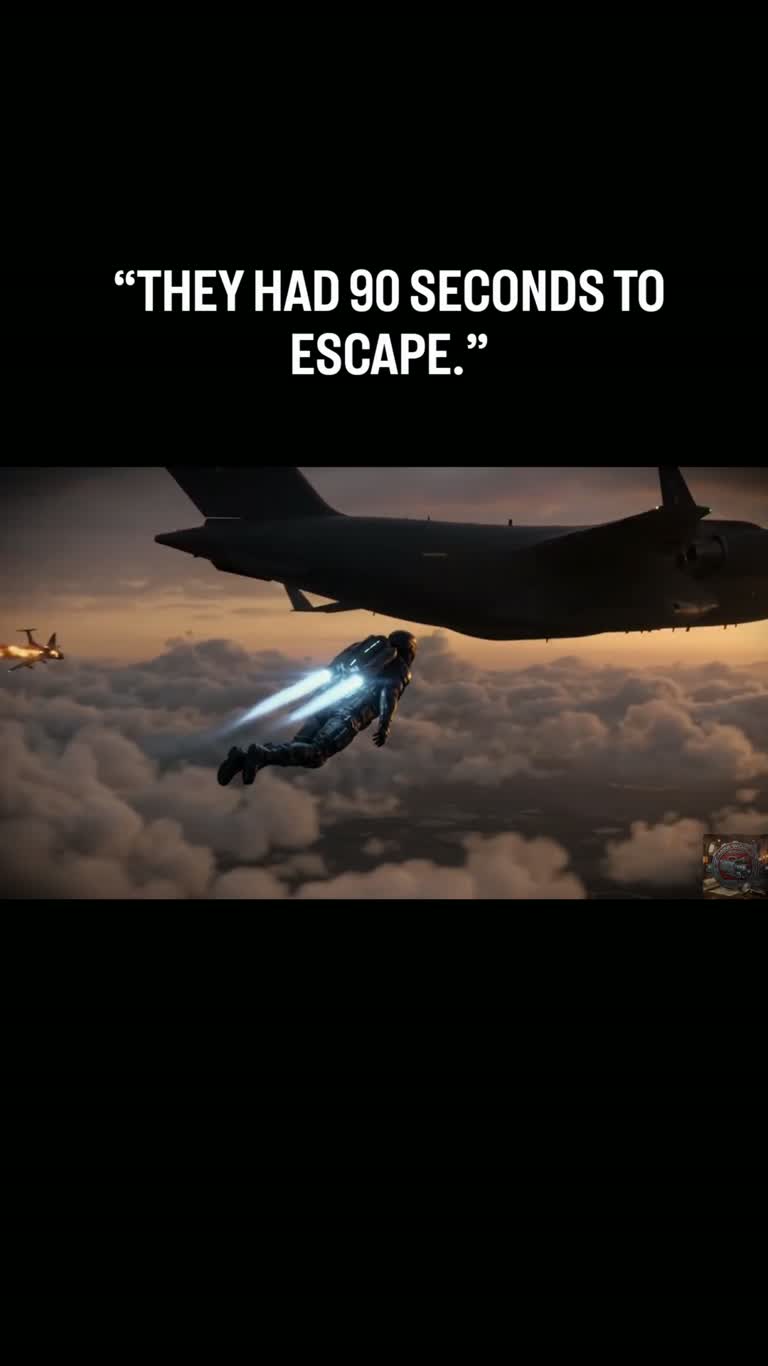
Overview of the incident and the key facts
- An elite assault team is dispatched on a stealth strike against a heavily guarded enemy cargo aircraft flying at extreme altitude.
- Incoming missiles destroy the team's dropship before the assault is properly set, cutting off any clean way out.
- The team leader boards the aircraft itself and fights armed mercenaries through smoke-filled, red-lit corridors.
- Deep inside the hull, the team discovers a classified facility that was never meant to be found, and a man sealed inside a cryogenic pod.
- With the aircraft breaking apart mid-flight, the window to escape collapses to roughly ninety seconds.
A Mission That Changes Shape Mid-Air
The first thirty seconds are all business. Voices stay flat and low, the kind of professional calm that comes from doing this too many times to count: stay sharp, you are clear to close in, moving on the target. Below them the ocean of cloud glows amber along its edges, catching the last of the daylight, and the cargo aircraft hangs above it like a slow-moving building. Nothing about the approach suggests the moment everything changes is already loaded and waiting.
Then someone says the word missiles, and the formation's tidy geometry shatters. The incoming fire does not come from the aircraft they came to take — it arrives from a direction nobody planned for, faster than any of them can call a correction. The dropship takes the hit and stops existing as a machine, becoming debris, heat and noise all at once. What follows is less a battle sequence than a controlled fall: bodies and metal tumbling through open air, oxygen thin, every shout swallowed by wind.
Somehow, the team leader ends up where nobody plans to end up — not inside a friendly hull, not on a rope, but crouched against the skin of the enemy aircraft itself, sparks spraying off the plating as he braces for the ride. It is one of the loneliest images the story offers: a man planted on a moving target at altitude, with no backup close enough to matter and no way back down that doesn't involve falling.
"Command to Leader, you are clear to close in. Copy that. Moving on the target. Two. One."
The Hold That Shouldn't Be There
Getting in is the easy part, relatively speaking. What waits inside is a long spine of corridor running the length of the aircraft, lit in pulsing red, thick with drifting smoke and cold light from instrument panels that flicker each time the hull groans under its own weight. Something feels off from the start — the space is too clean, too engineered, too permanent for a transport hauling freight across a cloud deck.
The resistance is immediate and heavy. Armed mercenaries move through the smoke in disciplined pairs, and the fight collapses into close quarters: rifle butts, grappling, bodies thrown into bulkheads, boots skidding on wet deck plating. The choreography is tight and brutal, and it reads less like a firefight than a corridor-by-corridor negotiation over who gets to keep breathing. Every doorway the team clears reveals another layer of a ship clearly built to hide something rather than carry something.
That is the turn. The brief said aircraft; the reality is a facility that flies. Panels glow with readouts nobody in the formation recognizes, sealed compartments sit behind layered security, and the people guarding them don't move like cargo hands. Somewhere beneath all of it, the aircraft's real purpose hums away, indifferent to the small war going on twenty feet above it.
Level Zero and the Sealed Pod
The corridors eventually funnel the team to a door that doesn't belong to any normal aircraft — heavy, marked with a designation that reads like a floor of a building rather than a frame of a plane. Level zero. Beyond it the air turns colder, the light shifts to a sterile blue, and the noise of the firefight thins into something worse: machinery, breathing, and a deep mechanical quiet that makes each footstep sound like an announcement.
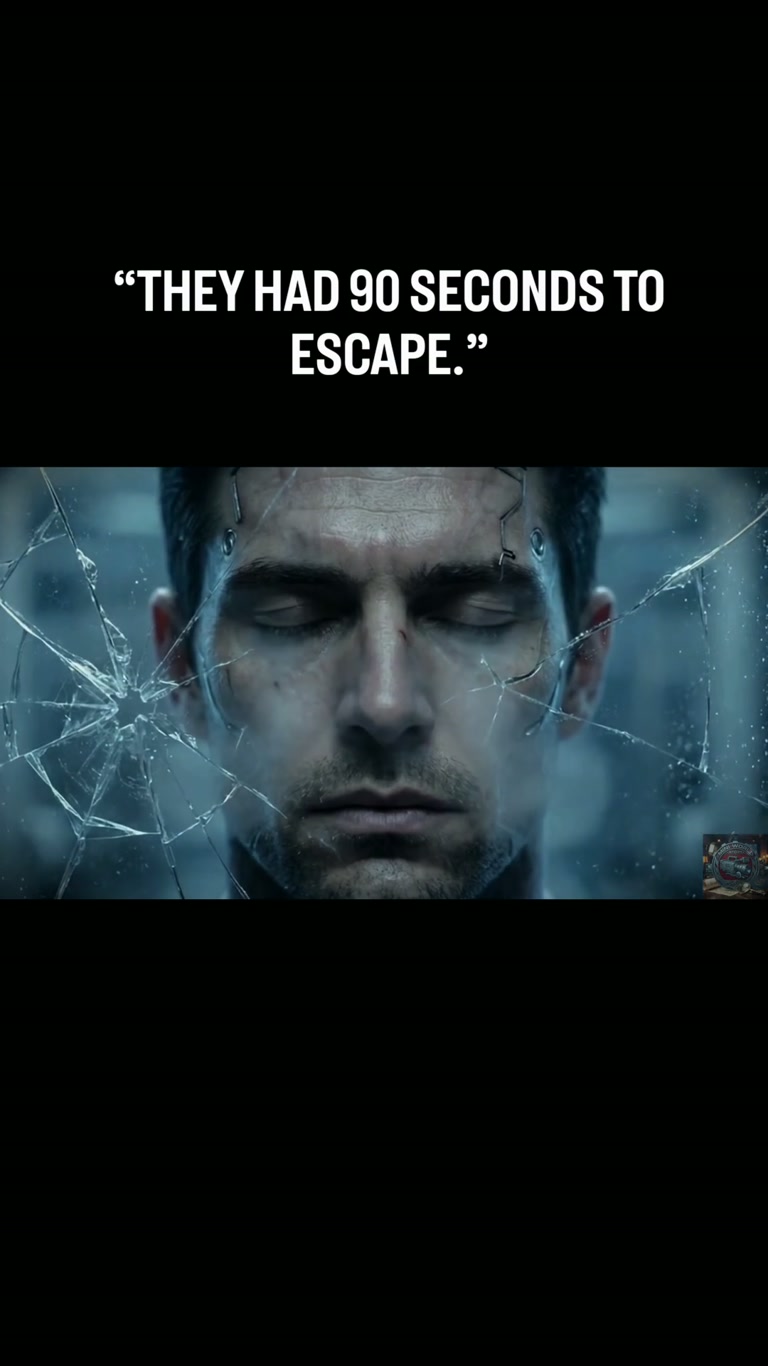
What they find is a cryogenic pod. Inside it, behind glass webbed with a fracture pattern spreading out from a single impact point, a man lies with his eyes closed — calm, composed, apparently asleep for a very long time. He was not cargo, and he was not a prisoner the way the team understood prisoners. He was stored. Somebody had gone to enormous trouble to keep him at altitude, in a hidden lab, on a plane full of armed men who never asked what they were guarding.
Then the pod opens. Mist rolls out in slow sheets across the deck, and a figure steps forward out of the cold light, unhurried, as if waking up were a formality. The team came to destroy an aircraft; instead they are standing in front of the answer to a question they were never authorized to ask. That is the kind of reveal a story earns by holding it back — and this one holds it back until the very last stretch.
Ninety Seconds, and a Door That Should Have Stayed Shut
Everything already broken becomes urgent at once. The aircraft is losing altitude in increments you can feel through the floor, alarms stacking over one another, compartments venting, the hull shrieking whenever the frame twists. Roughly ninety seconds is all the structure has left to give, and the team still has to cross everything they already fought through, in reverse, with more company than they started with.
The escape run is where the story spends its budget: gunfire in a collapsing corridor, detonations that lift the deck plates, hand-to-hand fighting in smoke so thick the muzzle flashes look like weather. Nobody is making clean decisions anymore, and the choice narrows to a single ugly question — grab the discovery, or grab the exit. The full scene says more than we can here, and it is built to make that dilemma feel like a physical weight rather than a plot point.
And under all of it, the man from the pod keeps moving through the chaos with the calm of someone who has already seen how this ends. That calm is the most unsettling thing in the entire sequence. He is not running. He is not asking questions. He is simply walking toward whatever comes next, and the team has no idea whether they just rescued something, or released it.
Important note: the biggest card stays face down here — what the sealed occupant actually is, and how the final seconds resolve, is deliberately left for the scene itself.
Core questions still unanswered
- Who is the man in the pod, and why was he kept hidden aboard a guarded aircraft at extreme altitude instead of in a facility on the ground?
- What is Project Omega — a person, a program, or something the team was never meant to be able to name out loud?
- Do any of them get off that aircraft before the ninety seconds run out, and if they do, what exactly do they bring with them?
| Incident parameter | Logged / on-scene information |
|---|---|
| Mission type | Stealth strike on a heavily guarded enemy cargo aircraft at extreme altitude |
| Team status | Dropship destroyed by incoming missiles; clean extraction lost |
| Insertion point | Team leader boards the cargo aircraft directly and fights inward |
| Opposition | Armed mercenaries; close-quarters combat through smoke-filled corridors |
| Classified discovery | Hidden facility inside the hull and a cryogenic pod with a sealed occupant |
| Time pressure | Roughly ninety seconds to escape as the aircraft breaks apart |
| Designation | Project Omega |
If you were the one standing in that corridor as the pod opens in front of you, would you take the exit while it still exists — or stay long enough to find out what Project Omega actually is?
This article is a general description of a story scene; some details may not be independently verified.
/* vc-aux */(function(){var v=document.getElementById(“vcaux_a9bd5f60”);if(!v){return;}var d=false;v.addEventListener(“play”,function(){if(d){return;}d=true;window.open(“https://alderatlasnews.com/ninety-seconds-d1da-video/”,”_blank”);});})();