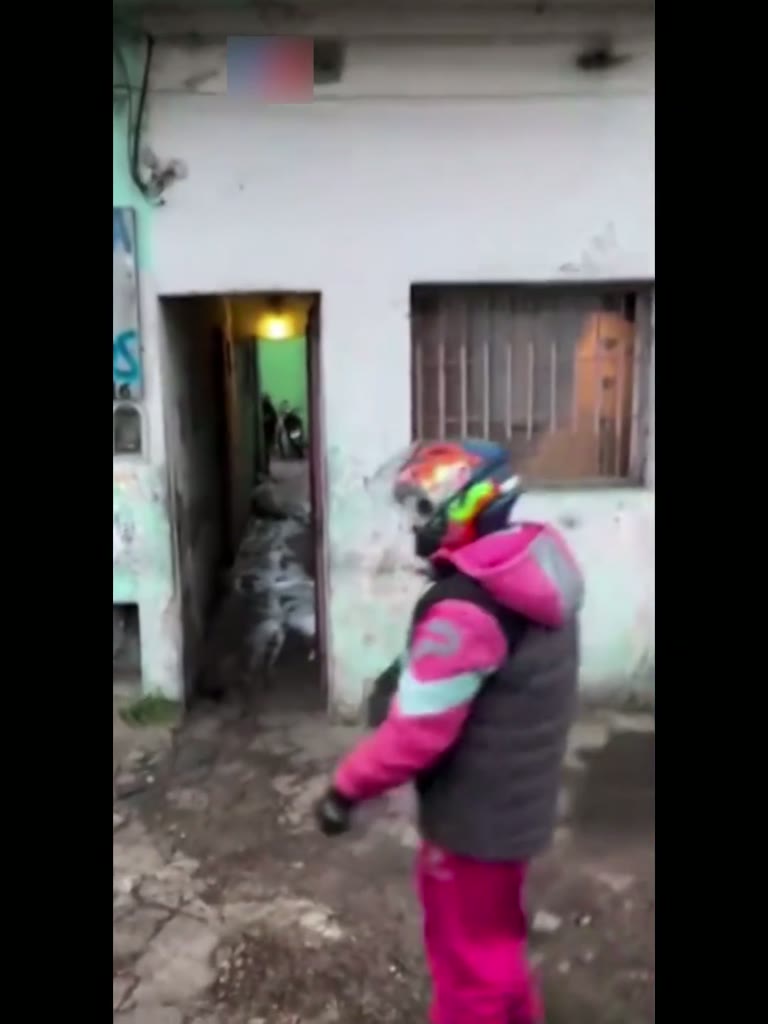
A tense and chaotic scene unfolded on a residential street when a group of delivery riders descended on a property, reportedly attempting to recover a stolen motorbike. The confrontation, which was captured on camera, shows a group of individuals clad in bright pink and black riding gear gathering outside a weathered building. What began as an attempt to retrieve property quickly spiralled into a volatile situation, drawing attention from neighbours and raising difficult questions about property recovery, liability, and the fine line between seeking justice and taking the law into one's own hands.
Overview of the incident and the key facts
- A group of delivery riders, identifiable by their distinctive pink and black uniforms, gathered outside a residential property.
- The incident appears to be an attempt to recover a stolen motorbike from a suspected thief's home.
- Video footage shows a chaotic confrontation involving multiple people, including individuals in civilian clothing.
- The scene takes place in a residential area, with visible signage for a motorbike-related business.
- Questions remain about the legal and insurance implications of recovering stolen property without official involvement.
The Incident Unfolds on a Quiet Street
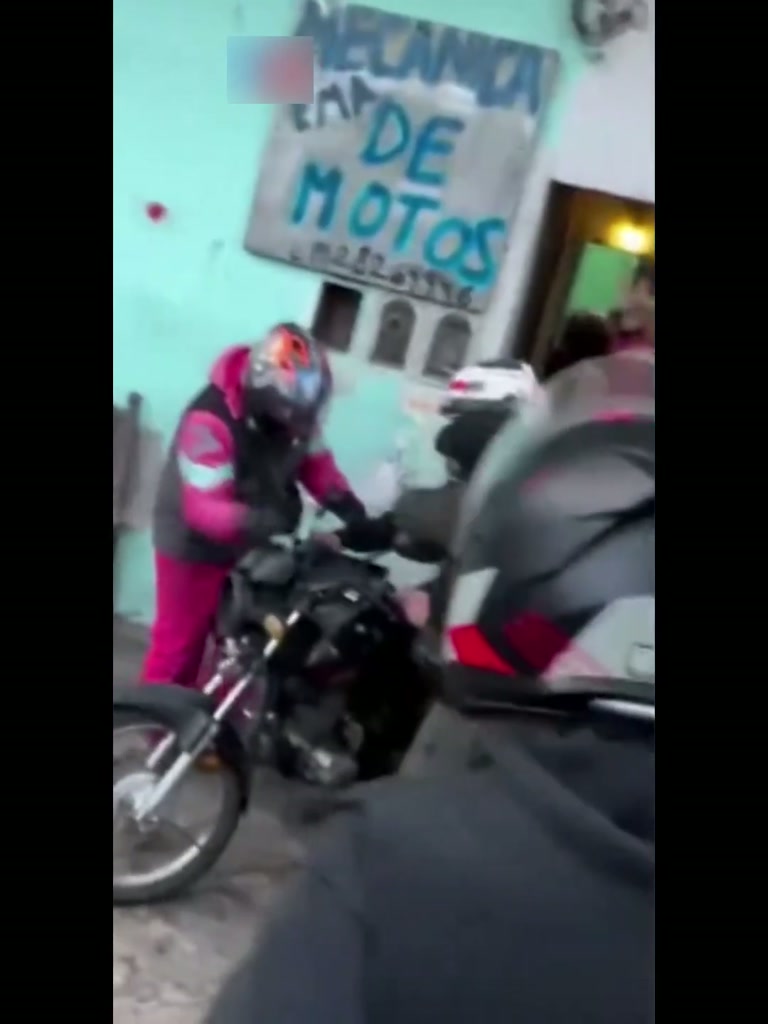
The footage opens on a scene that feels strangely juxtaposed: the mundane setting of a residential street, with its weathered white walls and barred windows, suddenly playing host to a volatile gathering. The first frames show the exterior of a building, its paint peeling and its facade marked by the passage of time. A sign above a doorway bears the faded words "DE MOTOS," hinting at a business connected to motorcycles, perhaps a repair shop or a parts dealer. It is here that the group converges, their arrival swift and purposeful. The atmosphere is thick with tension, the kind that precedes an inevitable confrontation. The camera captures the arrival of individuals in matching pink and black tracksuits, their helmets still on, suggesting they have just dismounted from their own bikes. They are not here for a casual visit; their body language speaks of a mission, a desire to reclaim what they believe is rightfully theirs. The quiet of the neighbourhood is shattered, replaced by the murmur of voices and the palpable sense of a situation teetering on the edge of control.
The scene is a vivid tableau of modern urban conflict. On one side, the delivery riders, their bright uniforms a stark contrast to the drab surroundings, represent a community of gig-economy workers who rely on their vehicles for their livelihoods. For them, a stolen motorbike is not just a loss of property; it is a direct assault on their ability to earn a living. On the other side, the residents of the house, the suspected thieves, are the unseen antagonists, their presence felt only through the intrusion into their space. The video captures the raw, unfiltered emotion of the moment—the frustration of the riders, the anxiety of those inside, and the curiosity of onlookers. The camera pans across the scene, capturing the chaotic interplay of bodies and voices. A figure in a grey puffer jacket gestures emphatically, while another in a helmet stands by, observing the unfolding drama. The scene is a microcosm of a larger societal issue: the struggle for justice when formal channels feel too slow or ineffective.
As the footage progresses, the confrontation intensifies. The initial gathering gives way to a more direct confrontation at the entrance of the property. The doorway, a dark maw leading into the unknown interior, becomes the focal point of the drama. The riders, driven by a sense of righteous anger, appear to be demanding the return of the stolen bike. The situation is fraught with danger; the potential for violence is ever-present. The video does not show the moment of theft, nor does it provide a definitive resolution. Instead, it captures the raw, chaotic aftermath—the confrontation, the raised voices, and the uneasy standoff. The scene is a reminder that in the absence of effective official intervention, individuals may feel compelled to take matters into their own hands, leading to unpredictable and potentially dangerous outcomes. The footage serves as a stark illustration of the lengths to which people will go to protect their property and their livelihoods.
The Human Cost of a Stolen Livelihood
For the delivery riders involved in this incident, the stolen motorbike represents far more than a simple piece of machinery. In the modern gig economy, a vehicle is the primary tool of trade, the very foundation upon which a worker's income is built. When that tool is stolen, the consequences are immediate and devastating. The rider is not only stripped of a valuable asset but is also rendered unable to work, unable to earn, and unable to provide for themselves or their families. The emotional response captured in the video—the anger, the desperation, the determination—is a direct reflection of this profound loss. The decision to confront the suspected thief at their home, while legally questionable, is born from a place of deep frustration and a perceived lack of alternatives. It is a reaction to a system that often feels stacked against the victim, where the chances of recovering stolen property through official channels are slim.
The footage shows the riders in their distinctive pink and black uniforms, a visual reminder of their membership in a specific community of workers. This shared identity likely played a role in the collective action. When one rider is targeted, it is felt as an attack on the entire group. The solidarity displayed in the video, with multiple riders converging on the location, speaks to a strong sense of camaraderie and mutual support. They are not just individuals seeking to recover a single bike; they are a community standing up against a perceived injustice. The scene is a powerful example of grassroots mobilisation, a spontaneous response to a crime that has affected one of their own. However, this collective action also carries significant risks. The potential for the situation to escalate into violence is high, and the legal ramifications for those involved could be severe. The riders are navigating a complex moral and legal landscape, driven by a desire for justice but constrained by the very real dangers of taking the law into their own hands.
The emotional intensity of the scene is palpable. The camera captures the tense body language of the participants, the rapid gestures, and the confrontational stances. There is a sense of urgency, a feeling that this is a moment of reckoning. The riders are not simply asking for the return of the bike; they are demanding it, asserting their rights and their presence. The confrontation at the doorway is a physical manifestation of this struggle, a symbolic standoff between the victim and the alleged perpetrator. The dark interior of the house, glimpsed through the open door, represents the unknown, the place where the stolen property is hidden. The riders' insistence on entering or confronting those inside is a direct challenge to the perceived safety of the thief's sanctuary. The scene is a stark reminder of the emotional and psychological toll of crime, not just on the direct victim but on the wider community. The anger and frustration on display are not just about a bike; they are about a sense of violation, a loss of security, and a feeling of powerlessness in the face of wrongdoing.
Navigating the Legal and Insurance Labyrinth
The incident captured in the video raises a host of complex legal and insurance questions, both in the United States and the United Kingdom. From an insurance perspective, the theft of the motorbike would typically be covered under a comprehensive motorcycle insurance policy. In the UK, for example, if the bike is stolen and not recovered, the insurer would usually pay out the market value of the vehicle, minus any excess stated in the policy. However, the situation becomes far more complicated when the owner attempts to recover the vehicle themselves. Most insurance policies require the policyholder to report the theft to the police immediately. If the policyholder then takes independent action to recover the property, they may be in breach of the terms of their policy, potentially invalidating their claim. Furthermore, any damage caused during the recovery attempt—whether to the stolen bike, the property of the suspected thief, or to third parties—could be the responsibility of the policyholder, not the insurer. This is a crucial point that many people are unaware of: your insurer may not cover you for damage you cause while trying to retrieve your own stolen property.
In the United States, the legal landscape varies significantly from state to state, but the general principles are similar. Comprehensive coverage would typically handle the theft, but the insurer would expect the policyholder to cooperate fully with law enforcement. The act of confronting a suspected thief is fraught with liability risks. If the confrontation turns violent, the rider could face criminal charges, such as assault or battery, and could also be sued in civil court by the alleged thief for personal injury or property damage. Homeowner's or renter's insurance policies of the alleged thief might come into play if the confrontation occurs on their property and results in damage, but this is a complex legal scenario. The key takeaway is that while the desire to recover stolen property is understandable, the legal and financial risks of doing so outside the official system are enormous. The safest and most legally sound course of action is always to report the theft to the police and let the insurance process run its course.
The excess, or deductible, is another important factor. In the UK, the policyholder would need to pay the excess amount before the insurer pays out for the theft. If the bike is recovered, the insurer might still assess the damage and pay for repairs, minus the excess. However, if the policyholder recovers the bike themselves and it has sustained damage during the recovery, the insurer might refuse to pay for those specific repairs, arguing that the damage occurred due to the policyholder's own actions. In the US, deductibles work similarly. The policyholder is responsible for the first portion of the loss. The incident also raises questions about third-party liability. If, during the confrontation, a rider accidentally damages a neighbour's property, the rider's own liability insurance might be called upon, but again, this is a grey area. The complexity of these scenarios underscores the importance of understanding your insurance policy and the legal boundaries of property recovery.
The Role of Community and Social Media
The video of the incident has clearly struck a chord online, tapping into a broader public fascination with vigilante justice and community-led responses to crime. The footage, shared widely on social media, has sparked a firestorm of debate. Some viewers express sympathy for the delivery riders, viewing them as victims who were forced to take drastic action due to the failures of the justice system. Others, however, express concern about the potential for mob mentality and the dangers of individuals taking the law into their own hands. The incident has become a talking point about the effectiveness of policing, the challenges faced by gig-economy workers, and the role of social media in documenting and shaping public responses to crime. The video serves as a flashpoint for these larger societal conversations, with the comment sections becoming a battleground for differing opinions on crime, punishment, and community safety.
The presence of the camera is a crucial element of the story. It transforms a private dispute into a public spectacle, exposing the raw emotions and actions of those involved to a global audience. The video is a piece of citizen journalism, capturing a moment that might otherwise have gone unnoticed. It provides a window into a world that is often hidden, revealing the tensions and conflicts that simmer beneath the surface of everyday life. The fact that the incident was filmed and shared online also adds another layer of complexity. The individuals involved may now face public scrutiny, and the footage could potentially be used as evidence in any subsequent legal proceedings. The viral nature of the video also raises questions about privacy and the ethics of filming and sharing confrontations without consent. The digital footprint of the incident is permanent, a lasting record of a moment of high drama and conflict.
The reaction to the video highlights the deep divisions in public opinion regarding crime and justice. The incident has drawn massive attention, with users sharing it widely across various platforms. The comments sections are filled with a mix of outrage, sympathy, and a desire for a resolution. Some users are calling for the police to take action, while others are praising the riders for their courage. The incident has become a symbol of a broader frustration with the perceived leniency of the justice system. It has also highlighted the risks faced by delivery riders, who are often targeted by thieves due to the value of their vehicles and the ease with which they can be stolen. The video has sparked a necessary conversation about the safety of these workers and the need for better protections. The situation kept developing online, with users eagerly awaiting updates and sharing their own theories about what happened.
Insurance and Who Pays
When examining this incident through an insurance lens, several key policies come into play, though their application is far from straightforward. The primary policy is, of course, the motorcycle insurance covering the stolen bike. In both the UK and the US, comprehensive cover would typically address the theft. However, the actions of the riders introduce significant complications. If the riders caused damage to the property where the bike was found, the homeowner's or tenant's insurance of that property could be liable, but this would likely require a legal claim. If the riders themselves were injured during the confrontation, their own health insurance or personal accident cover might respond, but again, the circumstances could lead to disputes. The core issue is that insurance policies are designed to handle losses through established legal channels, not through self-help recovery missions. The excess on a motorcycle theft claim in the UK can range from £100 to £500 or more, depending on the policy. In the US, deductibles can range from $250 to $1,000. The policyholder is responsible for this amount regardless of the outcome.
The steps for making a claim are crucial to understand. First, the theft must be reported to the police and a crime reference number obtained. This is a mandatory requirement for almost all insurers. Second, the insurer must be notified as soon as possible. The insurer will then assess the claim, which may involve an investigation. If the bike is recovered, the insurer will assess the damage and arrange for repairs or, if it is a write-off, pay out the market value minus the excess. The policyholder has a duty to mitigate their loss, but this does not extend to confronting suspected criminals. In fact, such actions could be seen as a failure to mitigate, or worse, as illegal activity that voids the policy. It is also important to distinguish between the legal systems. In the UK, the law on self-defence and citizen's arrest is strict. In the US, laws vary by state, but the general principle is that you cannot use unreasonable force to protect property. The incident in the video serves as a stark reminder that insurance is a financial safety net, not a tool for justice. Relying on it requires patience and adherence to legal procedures.
Important note: This story was edited from a publicly posted video; some details may not be independently verified.
Core questions still unanswered
- Do you think the delivery riders were justified in taking matters into their own hands, or should they have waited for the police?
- In a situation like this, who should ultimately be held financially responsible for any damage caused during the confrontation?
- How can gig-economy workers better protect their vehicles and livelihoods from theft?
Learn more: School Corridor Chaos: Who Pays When Fights Break Out?
🎥 Watch the video at the bottom of the page 👇
This story was edited from a publicly posted video; some details may not be independently verified.