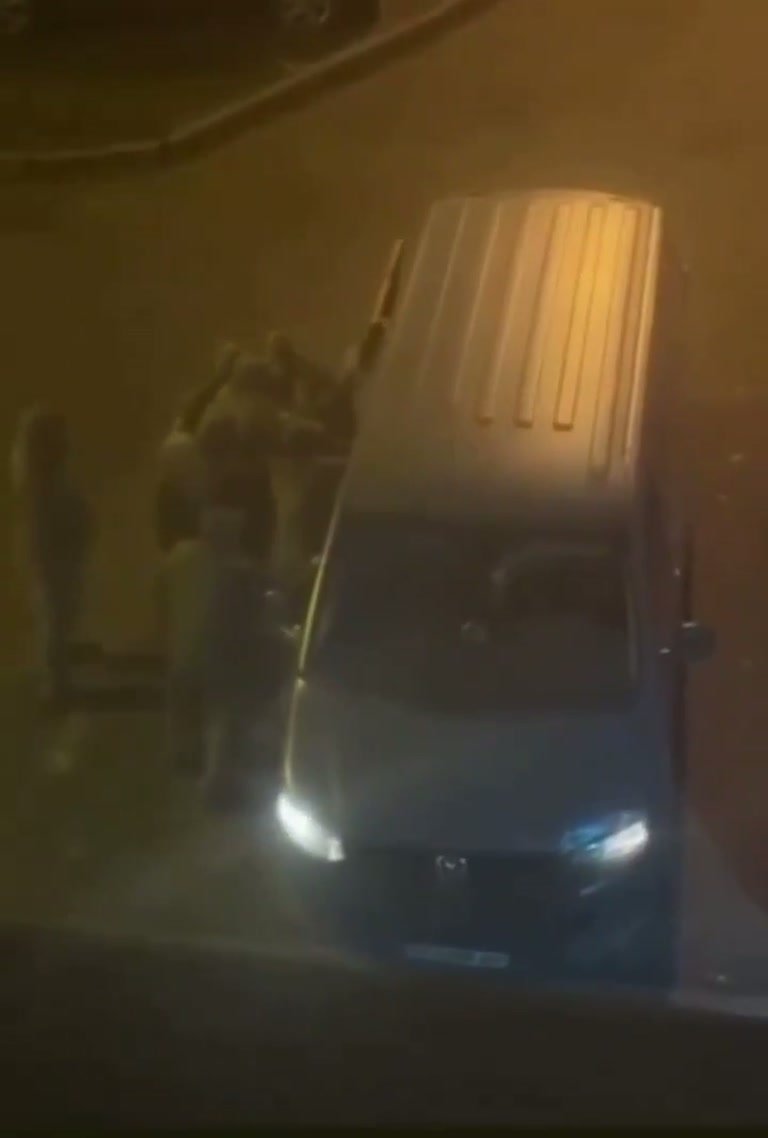
A quiet neighbourhood street at night becomes the backdrop for a sudden, frantic dispersal. Shouts ring out through the darkness, urging everyone to move, as figures sprint in different directions under the cold glare of a streetlight. The camera captures the raw, unscripted urgency of the moment, leaving viewers to piece together exactly what prompted the sudden flight.
Overview of the incident and the key facts
- A group of individuals is seen moving quickly through a dark residential street at night, illuminated by overhead street lighting.
- Multiple voices can be heard shouting a specific warning, with the phrase "12" repeated numerous times in rapid succession.
- The footage captures the immediate, chaotic reaction of the group as they scatter, with individuals running in different directions.
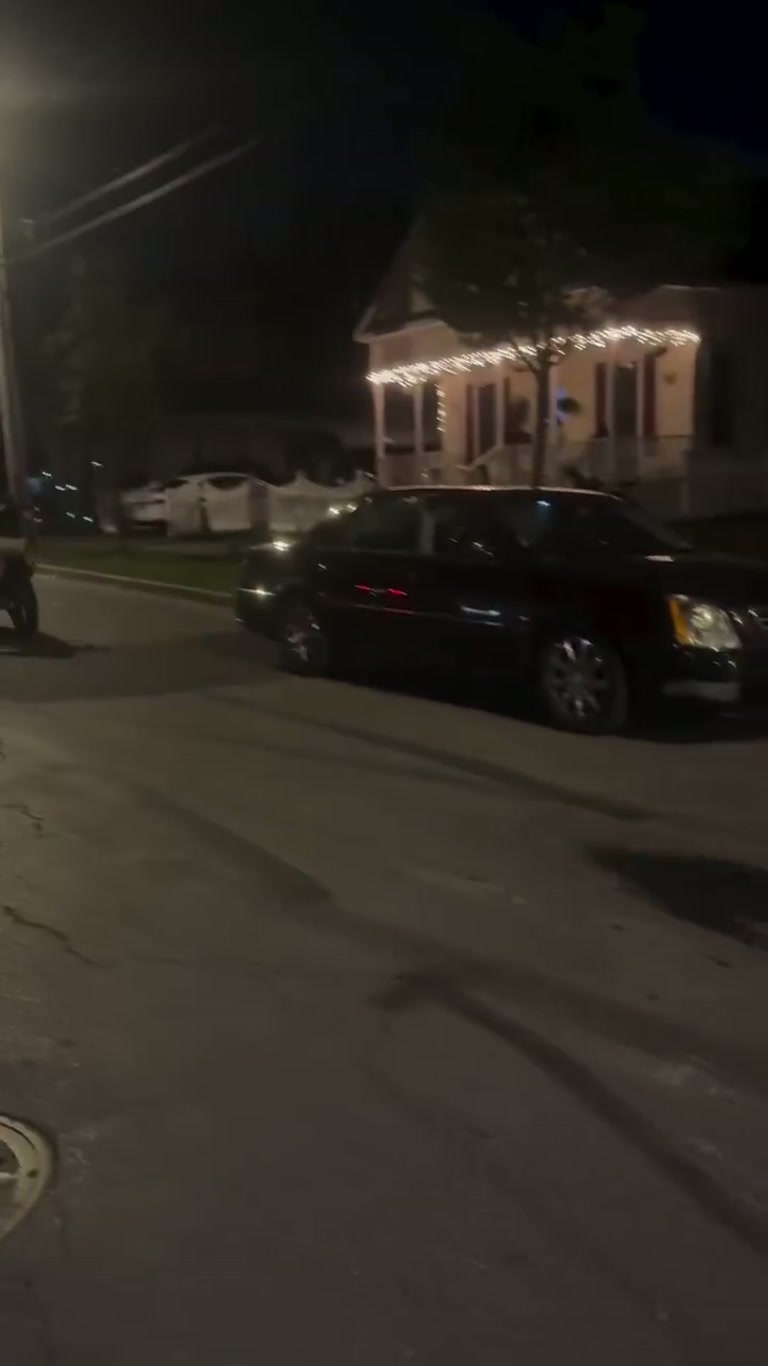
- The event appears to take place on a paved roadway, with parked vehicles and a house featuring decorative lights visible in the background.
- The exact cause of the sudden dispersal remains unclear, as the camera focuses on the movement and the verbal warnings rather than the source of the alert.
The video opens on a dark, paved street in what appears to be a quiet residential neighbourhood. Under the bright, slightly blinding glare of a streetlight, several figures are captured moving rapidly across the asphalt. The atmosphere is thick with a sense of immediate urgency, driven by loud, repeated shouts that cut through the night air. It is a scene that feels raw and entirely unscripted, a fleeting glimpse into a moment of sudden, collective decision-making.
As the camera pans and shakes, struggling to keep up with the movement, the central action is clear: a group of people is dispersing. The audio is dominated by a cacophony of voices, with one particular word shouted over and over again. The sheer volume and repetition of the warning suggest a high level of panic or extreme urgency among those present. The visual evidence matches the audio's intensity, showing individuals sprinting away from a central point, their silhouettes cast long and distorted by the overhead lighting.
The setting itself provides a stark contrast to the chaos unfolding within it. In the background, a house is decorated with a string of warm, festive lights, offering a hint of normal domestic life that stands in sharp contrast to the frantic activity on the street. A dark sedan is parked along the curb, and utility poles stand silently as the scene plays out. The ordinariness of the environment makes the sudden eruption of movement feel all the more jarring and unexpected.
This clip is a classic example of a viral moment, capturing a brief window of time where a group's plans—or perhaps their peaceful evening—are abruptly interrupted. The camera operator is clearly part of the group, moving with them, their breathing and quick footsteps adding to the immersive, first-person feel of the footage. It is not a distant, detached observation, but an immediate, visceral experience of the event as it happens, leaving the viewer with a sense of having been right there in the middle of the sudden scramble.
The frantic response and the warning calls
The most striking element of the footage, beyond the visual blur of running figures, is the audio. The transcript reveals a relentless, almost rhythmic repetition of the word "12," shouted by multiple voices. In many communities, this is a widely understood colloquial term used as a warning for the presence of law enforcement. The shouted warnings—"Nigga, that's 12! 12! 12!"—serve as the primary catalyst for the action, transforming a quiet night into a sudden sprint.
The reaction is immediate and disjointed. The video shows individuals not moving as a single, cohesive unit, but rather scattering in multiple directions. Some figures are seen cutting across the street, while others head towards the darker edges of the frame. This pattern of dispersal is a classic response to a perceived threat, where the primary goal is to break line of sight and create distance as quickly as possible. The camera follows one specific path, jostling and turning, providing a first-person perspective of the escape.
Mixed in with the shouts of "12" are other fragmented phrases that add to the sense of confusion. A voice calls out, "Oh, Greg!" which suggests a personal connection and a moment of concern for a specific individual amidst the chaos. Another voice urges, "Let's go, ready?" and "Alright, come on, we here, we on the block." These snippets of conversation paint a picture of a group that was perhaps in the middle of a gathering or a plan, which was instantly derailed by the sudden alert.
The emotional tone is a blend of panic and adrenaline. The shaky camera work, the heavy breathing implied by the rapid movements, and the overlapping, urgent voices all contribute to a feeling of high-stakes improvisation. The footage captures the raw instinct of flight, a moment where rational thought is overtaken by the immediate need to move and avoid whatever threat the warning "12" represents. It is a snapshot of a community's learned response to a specific, unwelcome presence.
Unpacking the viral moment and its context
This clip falls firmly into the category of viral, trending content. It is a short, unfiltered burst of real-life drama, the kind that spreads rapidly across social media platforms. The appeal lies in its authenticity and its mystery. Viewers are dropped into the middle of a tense situation with no explanation, forced to rely on the shouted warnings to understand what is happening. The lack of a clear resolution—the video ends before we see if anyone was caught or what happened next—is a key driver of its shareability.
The footage serves as a window into a specific subculture and its relationship with authority. The use of the term "12" as a code for police is a well-known linguistic marker. For an outside audience, the video might seem confusing or even humorous, as evidenced by the original caption's tone: "They out there running drills 🤣🤣🤣." The caption frames the event as a comical, almost athletic display of evasion, suggesting a perspective that views this type of interaction as a regular, if unwanted, part of life.
However, the reality on the ground appears far more serious for those involved. The genuine panic in the voices and the headlong sprint into the night indicate a real fear of consequences. The video captures a moment of societal friction, a brief but intense intersection between a community and the police. It highlights the hyper-awareness some individuals have of their surroundings and the speed with which a peaceful evening can change.
For the average viewer, the clip is a piece of gripping, chaotic entertainment. It offers a thrill, a dose of adrenaline by proxy, without any real danger. It is a story told in a single, breathless minute. But it also raises questions about why this flight was necessary, what the individuals were doing, and what the ultimate outcome was. These unanswered questions are what make the clip linger in the mind long after the short video has ended.
Insurance and who pays
When a sudden event like this leads to property damage—such as a vehicle being struck by a fleeing person, or a fence being damaged—the financial aftermath can be complex. The first step is always to determine what actually happened, which in this case is entirely unclear from the footage. However, if we consider a scenario where property was damaged during such an incident, several types of insurance policies could come into play. It is crucial to note that this is a general explanation, as the specific details of this event remain unverified.
For damage to a parked car, such as the dark sedan visible in the background, the owner's comprehensive car insurance would typically be the first port of call. Comprehensive cover is designed to protect against damage not caused by a collision with another vehicle, including vandalism or damage caused by a third party. The policyholder would need to pay their excess (the UK term) or deductible (the US term), which is the amount they must contribute towards a claim before the insurer pays the rest. The insurer would then assess the damage and arrange for repairs.
If the incident involved damage to a home's exterior, such as a fence or a window, a standard homeowners insurance policy would usually respond. These policies typically cover accidental damage to the structure of the property. Again, an excess would apply. The insurer would send a loss adjuster to assess the damage and authorise a repair or replacement. It is important to note that most standard home policies do not cover damage caused by criminal acts if the property was left unsecured, though this varies.
The tricky part of this scenario is liability. If the individuals running away caused damage, they would theoretically be personally liable for the repair costs. However, claiming against an individual can be difficult and costly. This is where liability insurance would be relevant if the individuals were on someone else's property with permission and accidentally caused damage. In the UK, the Financial Ombudsman Service can help with disputes between policyholders and insurers, while in the US, each state has its own Department of Insurance to handle consumer complaints. The key takeaway is that for the victim of any damage, their own insurance policy is usually the fastest route to repair, even if it means losing a no-claims bonus.
The financial and legal ripple effects
Beyond the immediate insurance implications, this type of incident can have a broader financial impact on a community. If such events happen frequently, insurers may reassess the risk levels for an area. This can lead to higher premiums for all residents, not just those directly involved. A pattern of claims can turn a neighbourhood into a higher-risk zone in the eyes of insurers, affecting the cost of both car and home cover for everyone.
Furthermore, the legal consequences for those involved, if identified, could be significant. While the video itself does not show any crime being committed, a fleeing person could be found liable for any damage they cause in their panic. This could lead to a civil claim for compensation from a property owner. In the US, this might involve a small claims court for minor damages, while the UK has a similar system for small claims. Proving who caused the damage, however, is often the biggest hurdle.
The video also touches on the wider social costs. The resources deployed to police such incidents are a public expense. If the shouts of "12" indicate the presence of police, the cost of that response is borne by the taxpayer. This cycle of evasion and enforcement consumes significant public funds that could be directed elsewhere. It is a complex social equation where the cost of a single moment of panic is distributed across insurance premiums, legal fees, and public budgets.
Ultimately, the financial story behind a viral clip like this is rarely straightforward. It is a web of liabilities, policies, and public costs. While the video itself is fleeting, its potential financial echoes can last for months or years, affecting insurance rates, legal records, and community relations. It is a reminder that even a brief moment of chaos can have a long and expensive tail.
| Incident parameter | Logged / on-scene information |
|---|---|
| Location | A residential street, unverified location |
| Time of day | Nighttime |
| Lighting | Overhead streetlight, decorative house lights in the background |
| Main action | A group of individuals scattering and running |
| Key audio | Repeated shouts of "12" and "Let's go" |
| Visible objects | A dark car, a house with lights, utility poles |
Important note: This article is based on a short, publicly posted video and its audio transcript; some details regarding the exact location, time, and the full sequence of events remain unverified.
Core questions still unanswered
- Based on the shouted warnings, what do you think was actually happening in this scene?
- If property had been damaged during this scramble, how do you think insurance companies should handle the claims?
- Does the viral caption "running drills" change the way you view the seriousness of the event?
Learn more: Late-Night Street Confrontation: Insurance and Liability Questions
🎥 Watch the video at the bottom of the page 👇
This story was edited from a publicly posted video; some details may not be independently verified.