🎥 Watch the video at the bottom of the page 👇
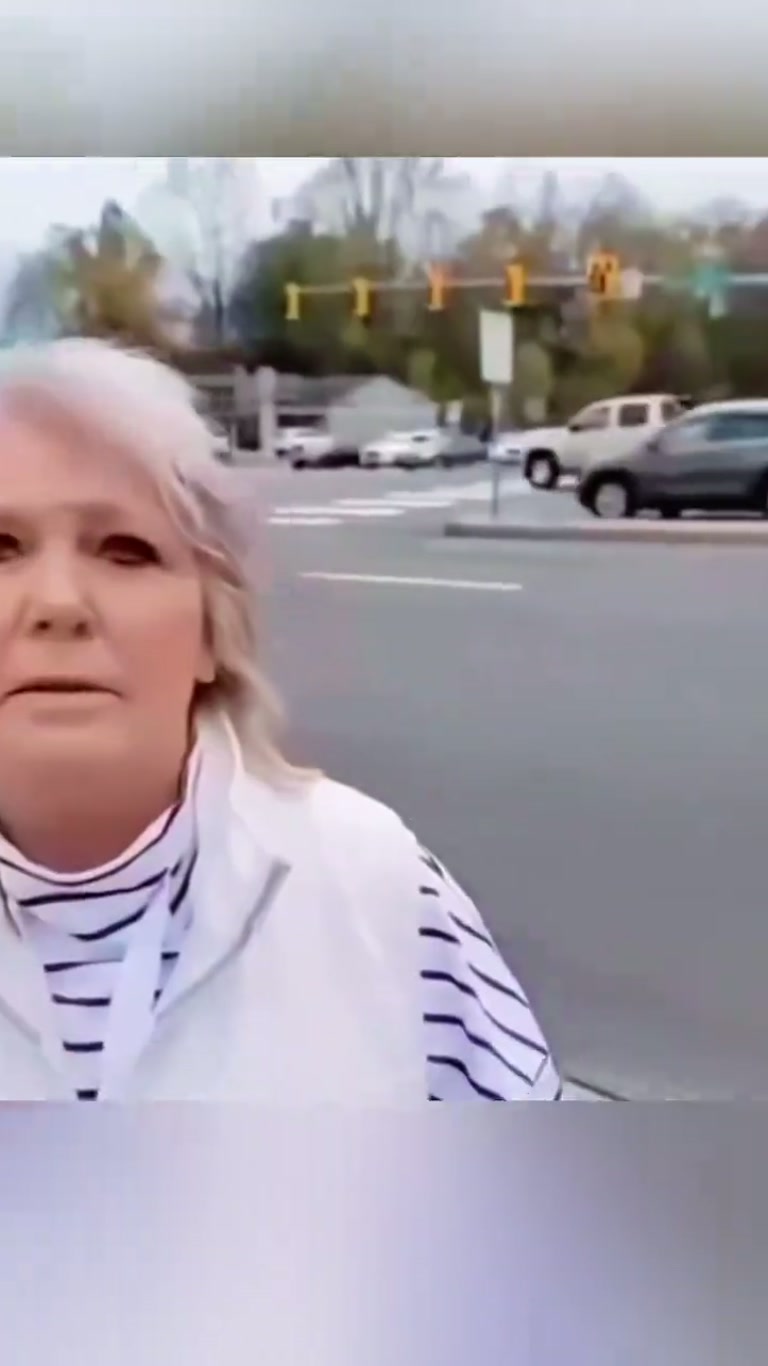
Another day, another compilation of public meltdowns doing the rounds on TikTok. This week’s offering comes courtesy of the account @crazyangrykarens, whose latest upload — titled ‘5 Karens Getting Instant Karma Moments’ — has racked up millions of views and a comment section divided between gleeful schadenfreude and weary recognition. The clip stitches together five separate incidents, each featuring a person behaving in a manner that might generously be described as ‘entitled’, and each ending with a comeuppance that ranges from the mildly amusing to the quietly satisfying. Nobody is harmed, no punches are thrown, and the forces of calm bureaucracy — a security guard, a store manager, a fellow motorist — carry the day. It is, in short, the internet’s favourite genre: the Karen video.
For the uninitiated, the term ‘Karen’ has evolved over the past decade from a straightforward first name into a cultural shorthand for a particular archetype of public behaviour. The Karen is not merely rude; she is convinced of her own righteousness. She demands to speak to the manager. She believes rules apply to others. She is aggrieved by the very existence of queues, policies, and the word ‘no’. The label is admittedly blunt — and campaigners have noted it can veer into sexist and ageist territory — but as a piece of internet folklore it has proved remarkably durable. The videos that feature such behaviour tap into something deep: the universal human desire to see the self-important brought low by the mundane machinery of everyday life.
The security guard who simply said no
The compilation opens with a scene familiar to anyone who has ever queued outside a venue: a woman at the front of a line, arguing with a security guard about entry. According to the footage, she is insistent that she should be allowed in ahead of others, citing a vague connection to someone inside and a growing sense of personal urgency. The guard — a young man with the patient expression of someone who has done this shift many times before — listens, nods, and then delivers a single, immovable refusal. No raised voice, no theatrical sigh. Just a quiet, professional ‘no’.
What follows is the classic escalation. The woman demands his name, his supervisor, his manager, and possibly his birth certificate. The guard, still calm, points to a sign behind him that outlines the venue’s policy. She threatens to call the police; he invites her to do so. She threatens to post about him online; he wishes her a pleasant evening. Eventually, having exhausted her repertoire, she storms off, and the line — which has been watching with the rapt attention of a Wimbledon crowd — shuffles forward. The clip ends with a small child in the queue asking, audibly, ‘What was wrong with that lady?’ It is a perfect opener: low stakes, high dignity, and a reminder that the most effective response to a tantrum is often a shrug.
Viewers in the comments were quick to praise the guard’s composure. ‘That man deserves a raise,’ wrote one. ‘He didn’t even blink,’ noted another. The moment resonates because it is so recognisable. Most of us have witnessed a version of this scene — at a concert, a club, an airport gate — and most of us have felt the same quiet relief when the person behind the counter simply refuses to be bullied. The guard is not a hero in any grand sense. He is just doing his job. That, somehow, makes it better.
The shopper who was escorted out
The second segment moves indoors, to what appears to be a supermarket or department store. A shopper is at a till, arguing with a member of staff about a returns policy. The details are slightly obscured by the camera angle, but the gist is clear: she wants a refund on an item without a receipt, and she is not taking no for an answer. The staff member — polite, apologetic, clearly following a script — explains that the policy requires proof of purchase. The shopper responds by raising her voice, accusing the employee of calling her a liar, and demanding to see a manager.
The manager arrives. She is calm, professional, and entirely unimpressed. She repeats the policy, offers a store credit as a compromise, and is met with a fresh wave of indignation. At this point, the shopper makes a tactical error: she announces, loudly, that she will never shop here again and that she will tell everyone she knows how badly she has been treated. The manager, with the faintest of smiles, wishes her well and asks her to leave the premises. When the shopper refuses, a security guard appears. The shopper is escorted out, still talking, her voice echoing through the automatic doors as they close behind her.
The clip has been viewed, shared, and dissected across multiple platforms. Some commenters have questioned whether the shopper’s frustration was justified — returns policies can be maddening, after all — but most have focused on the manner of her exit. It is the walk of shame, the slow realisation that the audience is not on your side, that gives the segment its power. The manager, meanwhile, has become something of an unlikely folk hero. ‘She handled that like a pro,’ read one top comment. ‘I hope she got a bonus.’ The scene is a reminder that retail workers are people too, and that the customer is not always right — particularly when the customer is shouting.
The driver held to account
The third incident takes place in a car park, and it is perhaps the most relatable of the five. A driver has parked in a space clearly marked for disabled users or parents with children. A passer-by — not an official, just an ordinary member of the public — points out the sign. The driver responds with a gesture that needs no translation and a few words that the subtitles tactfully render as ‘[expletive]’. The passer-by, rather than escalating, simply takes out their phone and starts filming. The driver, suddenly aware of the camera, changes tack. She claims she is only stopping for a moment. She claims the sign is unclear. She claims she has a disability that is not visible. She claims the passer-by is harassing her.
The passer-by, still filming, asks a simple question: ‘If you’re only stopping for a moment, why are you putting your shopping in the boot?’ The driver has no answer. She gets in her car and drives off, narrowly missing a trolley. The clip ends with the passer-by zooming in on the empty space and the sign above it, which reads, in large letters, ‘This space is reserved’. The comment section erupts. ‘The zoom at the end is chef’s kiss,’ wrote one viewer. ‘Why do people do this?’ asked another. ‘Because they think they won’t get caught,’ came the reply.
There is a particular satisfaction in this segment because it involves no authority figure at all. It is just one person holding another to account, using nothing more than a phone and a well-timed question. The driver’s excuses collapse under the mildest scrutiny, and her exit is not a dramatic storm-off but a quiet, embarrassed retreat. It is the kind of moment that makes viewers feel, however briefly, that the social contract is still intact — that the rest of us are watching, and that we remember.
The coffee shop confrontation
The fourth clip is short but memorable. A woman is at the counter of a coffee shop, complaining that her drink is not hot enough. The barista — who, judging by the queue behind her, is already under pressure — offers to remake it. The woman refuses, saying that she wants a refund and a free drink. The barista explains that she can have one or the other. The woman demands both. The barista, still smiling, says she will have to speak to her manager. The woman says she already has, and that the manager agreed. The barista, without missing a beat, calls over the manager, who is standing two feet away and who confirms that no such conversation took place.
The woman, caught in the lie, changes her story. She says she was mistaken. She says she is having a bad day. She says she will just take the remake. The barista, gracious in victory, makes her a fresh drink and hands it over. The woman takes it, mutters something inaudible, and leaves. The clip ends with the barista turning to the camera and giving a small, exhausted shrug. It is a masterclass in de-escalation, and a reminder that the truth is often the most effective weapon in a customer service arsenal.
Some commenters have speculated that the woman may have been genuinely stressed, and that the barista’s calmness was a form of kindness rather than a victory. Others have pointed out that the ‘Karen’ label can be applied too readily to anyone who complains, however reasonably. It is a fair point. But the segment’s appeal lies in its ambiguity: we are not asked to hate the woman, only to observe the moment when her bluff is called. The barista does not gloat. She just gets on with her job. The lesson, if there is one, is that honesty tends to work better than bluster — and that a free drink is rarely worth the embarrassment of being caught out.
Why ‘Karen’ videos keep going viral
The ‘Karen’ genre is not new. Its roots can be traced back to the early days of YouTube, when videos of public arguments were shared as curiosities. But the rise of TikTok has supercharged the format. The platform’s short-form, algorithm-driven nature rewards conflict and resolution in equal measure. A clip that sets up a villain and delivers a satisfying conclusion in under sixty seconds is perfectly engineered for the ‘for you’ page. Add a captioned voiceover, a dramatic sound effect, and a hashtag like #karen or #instantkarma, and you have a recipe for virality.
There is also a psychological explanation. Researchers who study online behaviour have noted that videos of this kind offer a form of vicarious justice. In a world where rude behaviour often goes unchallenged, the Karen video provides a neat narrative arc: transgression, confrontation, comeuppance. It is a morality play for the smartphone age, and it allows viewers to feel that the universe is, on some level, fair. The fact that the ‘Karen’ is usually a woman — and often a middle-aged one — has drawn criticism, with some arguing that the label is a way of policing women who are simply assertive. Others counter that the behaviour shown in these clips is not assertiveness but aggression, and that men who behave similarly are simply called ‘rude’ or ‘aggressive’ without a catchy nickname.
Whatever one’s view, the videos show no sign of losing their appeal. The @crazyangrykarens account alone has amassed hundreds of thousands of followers, and its compilations are regularly shared across Twitter, Facebook, and Reddit. The comment sections are a mix of laughter, outrage, and the occasional plea for empathy. ‘I feel sorry for her,’ wrote one viewer under a recent post. ‘Imagine being that angry all the time.’ It is a sentiment that cuts to the heart of the genre: the Karen is not just a villain but a cautionary tale. We watch to laugh, but also to reassure ourselves that we are not like that.
A note on the footage
It is worth remembering that the clips in this compilation are edited from a publicly posted TikTok and that some details may be unverified. The identities of the individuals involved are not known, and the context of each incident — what happened before the camera started rolling, what was said afterwards — is necessarily incomplete. The footage is presented as entertainment, not as evidence, and viewers would do well to treat it with the same scepticism they would apply to any viral clip. That said, the moments themselves are undeniably watchable. They capture something real about the way we live now: the friction of public life, the quiet heroism of frontline workers, and the enduring appeal of seeing a bully meet their match. Whether you call it karma or just good manners, it makes for compelling viewing.
As the compilation continues to circulate, one thing is clear: the Karen is not going away. She will be back, in another car park, another coffee shop, another queue. And somewhere, a security guard will be waiting, patient and unimpressed, ready to say no. That, perhaps, is the real instant karma.