A diver hovers above a giant manta ray in water so dark the seabed never appears. That image opens a short compilation built around thalassophobia, the fear of deep water, and the clips that follow move from strange to stranger. By the last shot, the camera is flying over a circular water intake tower that looks like a drain set into a lake.
Manta Rays and Dark Portholes
The compilation starts underwater. A large manta ray glides below the surface while a person floats above it, thin lines running down from above into the green-black water, and the animal spans most of the width of the view. An on-screen caption asks one question: do you have thalassophobia? It is the only text the clip needs.
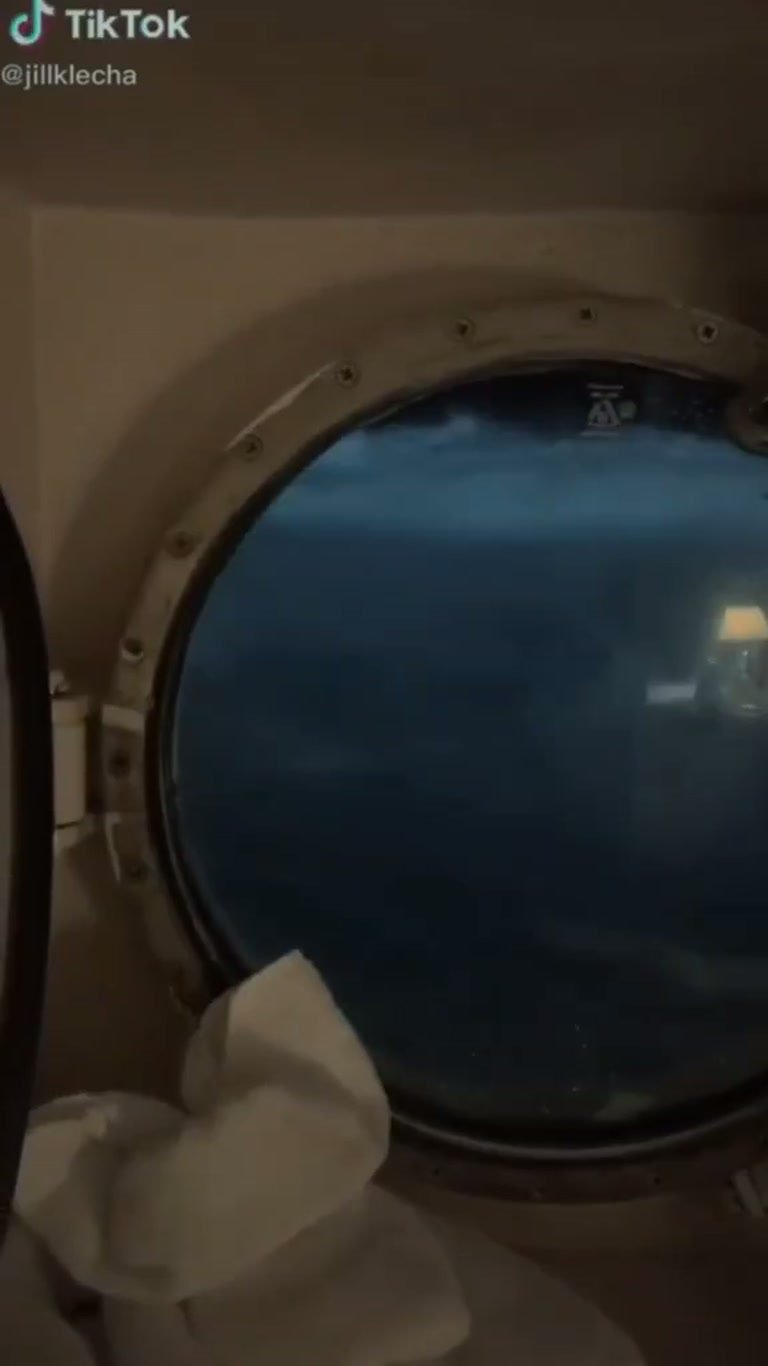
Later shots look up from beneath the ray, its wide wings and pale underside filling the view as the person stays centered above. Then the scene shifts to a cabin at sea, where a round porthole frames a dark horizon and crumpled tissues rest on the ledge in the foreground.
From there the footage moves into rocky passages and cave mouths, pale walls giving way to openings that fade to black. One segment plays on a ship's deck at night, with dark water and low clouds beyond the rail; the word for the fear appears across the frame there in a different spelling, "Talasofobia".
A Spillway That Looks Like a Drain
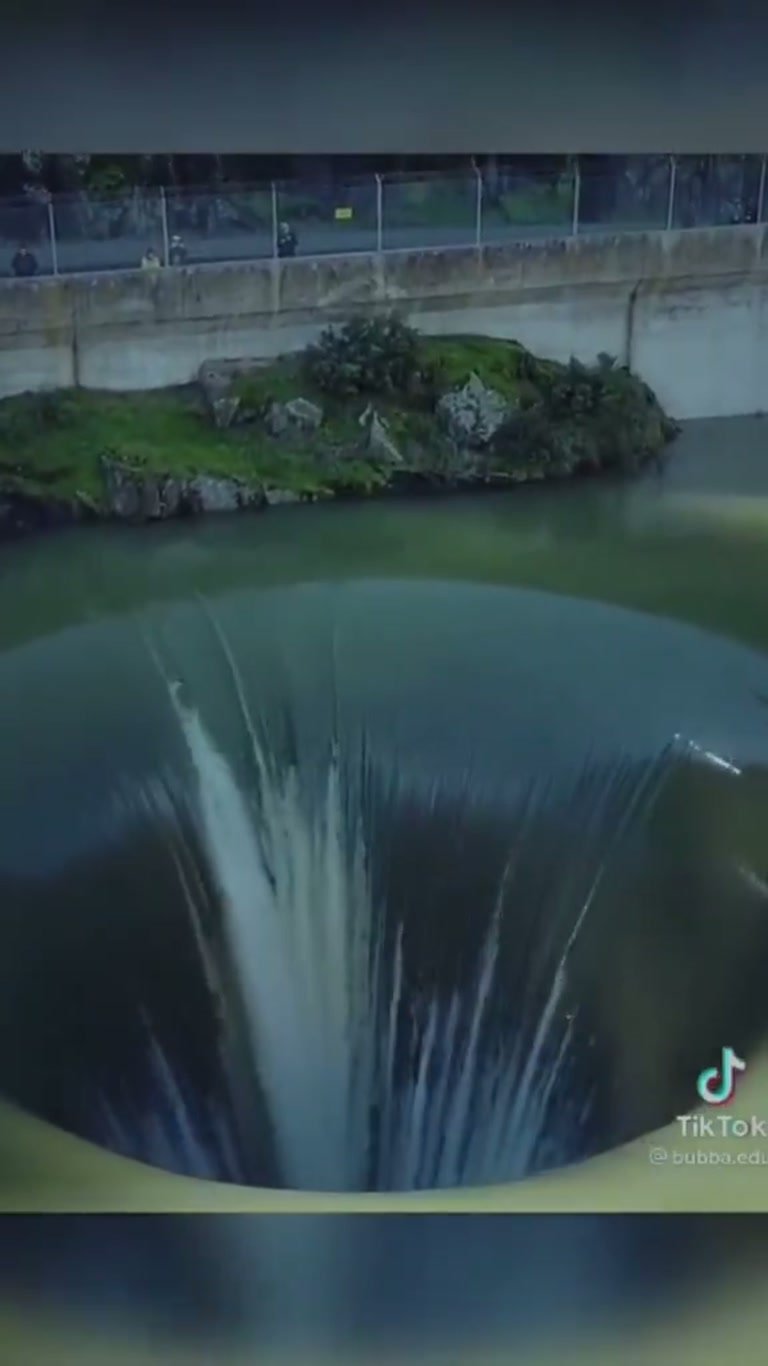
The final stretch leaves the ocean and goes aerial. The shots show a circular concrete tower standing in a body of water, labeled as a water intake tower, also known as a morning glory spillway. Water pours over the rim and spirals down the center of the funnel.
A road and a bridge sit just beyond the shoreline in the same views, and grass and rocks line the bank nearby, which is what gives the structure its scale. In the widest shots the rim sits nearly level with the green surface, while the water inside turns white as it drops.
Seen from directly above, the hole reads as an exit rather than an entrance — a drain at the surface of something much larger. That is the image the compilation saves for last, and it lands differently from the ray or the porthole. Those clips hint at depth; this one shows water disappearing into it.
Why These Clips Keep Circulating
Nothing here is narrated. The only framing is a question in the caption and a single word repeated on screen, which turns passive viewing into a kind of self-test: keep watching, or look away. Deep-water footage travels easily for that reason — its subject is not an event but a feeling many viewers recognize.
The clips carry different TikTok handles and appear to come from separate uploaders, so the compilation stitches together material with different origins. The exact location and date of each segment is not established by what is shown.
Deep water rarely offers a beginning, a middle and an end. It offers scale instead: a ray wider than the person beside it, a porthole with nothing behind it, a hole in a lake with water pouring in and no visible bottom, and the camera never stays long enough to explain any of it. The tension lives in whatever stays out of frame.
The Line Between Fear and Fascination
For viewers who do not share the fear, the sequence is a curiosity, a tour of places most people will never see in person. The clips are short, and none of them resolves. For viewers who do, the aerial finish at the spillway may be the hardest part to sit through.
Either way, the clips ask the same question the caption does and leave the answer to whoever is holding the phone. Nothing explains the water, the ray or the drop. The compilation simply keeps moving deeper.
Would you still get into the water after watching that last shot?
This story was edited from a publicly posted video under the name OANASA; some details may not be independently verified.