A posted clip follows a man near a car with its door open, then shows him going down after, according to the narration, running about 50 meters. An officer checks on his condition, requests medical help and provides emergency aid; the man is later pronounced dead at the scene. The footage never shows how or why he collapsed — and that missing piece sits at the center of a much louder argument.
What the Footage Shows
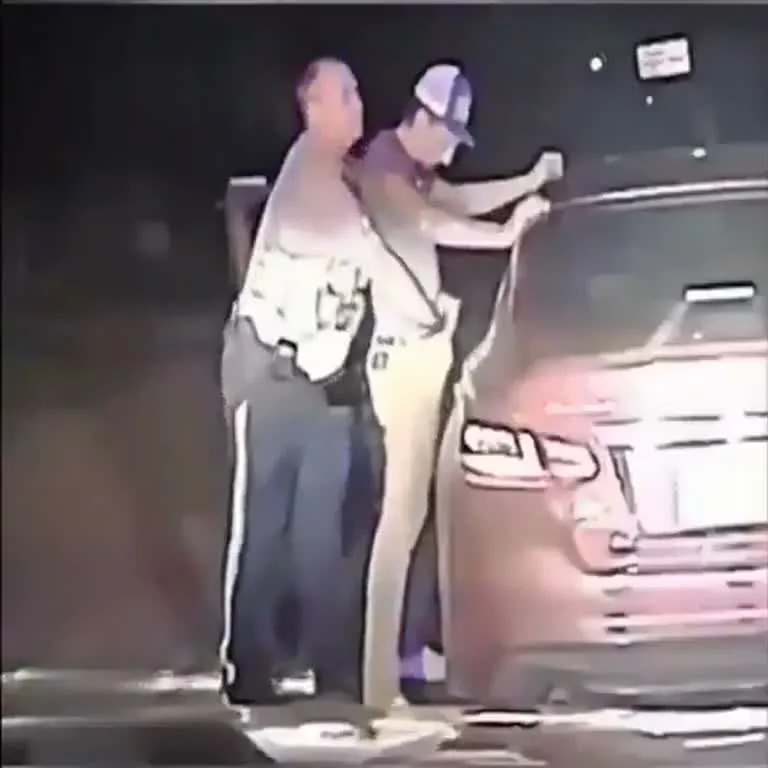
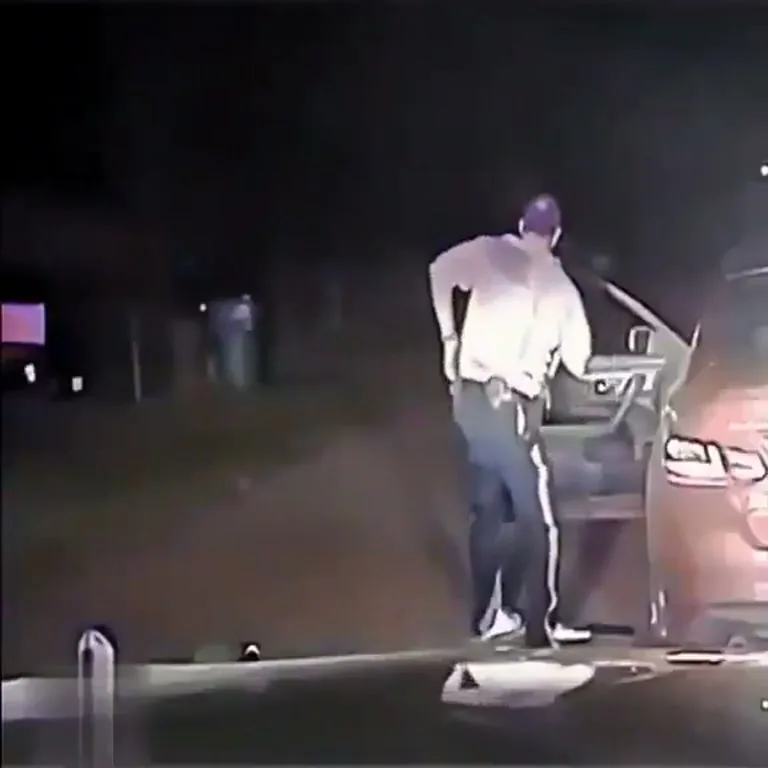
The sequence opens with a vehicle on the right side of the frame, its door standing wide open. A man in a light-colored shirt and dark pants with a white stripe along the leg is the central figure, visible in front of the car and beside the open door.
Subtitles laid over the video move the account forward in plain steps. They state that after running about 50 meters, the man suddenly collapsed, and that he had been reporting the situation to dispatch beforehand.
Other people appear across the frames, including a figure on foot behind the vehicle and a person kneeling at ground level. The frames are low in detail, so who is doing what at each second is not always clear.
One frame shows a person bent near the open door; another shows the same car with the door still open and a figure standing beside it. The clip is presented as a record of one night, not a reconstruction.
What the man had been reporting to dispatch, and what preceded the run, is not included in the material. The name used in the narration is the only identifier attached to him in the clip.
The Response and the Outcome
The narration then describes what happened next: the officer checked on Randall's condition and found him unresponsive.
the man was unresponsive
From there, the account says the officer requested medical assistance from dispatch and provided emergency medical aid. Rescue personnel later arrived, and the man was pronounced dead at the scene.
The visible material does not show a weapon, a physical struggle between the people on camera, or any use of force. It also does not show what took place before the run began.
Where the Claims Diverge
The title attached to the video, and the text posted alongside it, make a far more serious claim about how the man died, pointing at an officer. That version is specific and confident, and none of it appears in the narration or in the images.
That leaves two incompatible accounts inside the same package: a step-by-step record of a collapse and a medical response, and a caption asserting something else entirely. Neither the audio nor the frames name a cause of death, and no official conclusion is included.
Screenshots of that caption have travelled further than the sequence it describes, which is why the two are so often discussed as if they were the same thing.
The gap matters because captions travel faster than footage. A claim can be copied thousands of times before anyone asks whether the seconds of video underneath it carry a single word of it.
Why It Matters to Viewers
Footage of police contact spreads quickly because it seems to promise a clean answer about who did what. When the video itself is ambiguous, the caption ends up doing the arguing. Here, the argument has been louder than the clip.
What the material actually supports is narrower: a man went down, an officer responded, help was requested, and the man died at the scene despite that response. Questions about the cause, about what came before the run, and about responsibility remain open.
No statement from officials confirming the events is included, and the man is identified only by the name used in the narration. Whether the footage will ever be reviewed next to the caption that accompanied it is, so far, unclear.
For readers, the practical takeaway is to keep the two apart: what is visible and narrated, and what is asserted in text. The first can be examined frame by frame. The second, in this material, cannot.
If the only thing the footage clearly shows is a collapse and an attempt to help, what should happen to a caption that tells viewers something else?
This story was edited from a publicly posted video; some details may not be independently verified.