🎥 Watch the video at the bottom of the page 👇
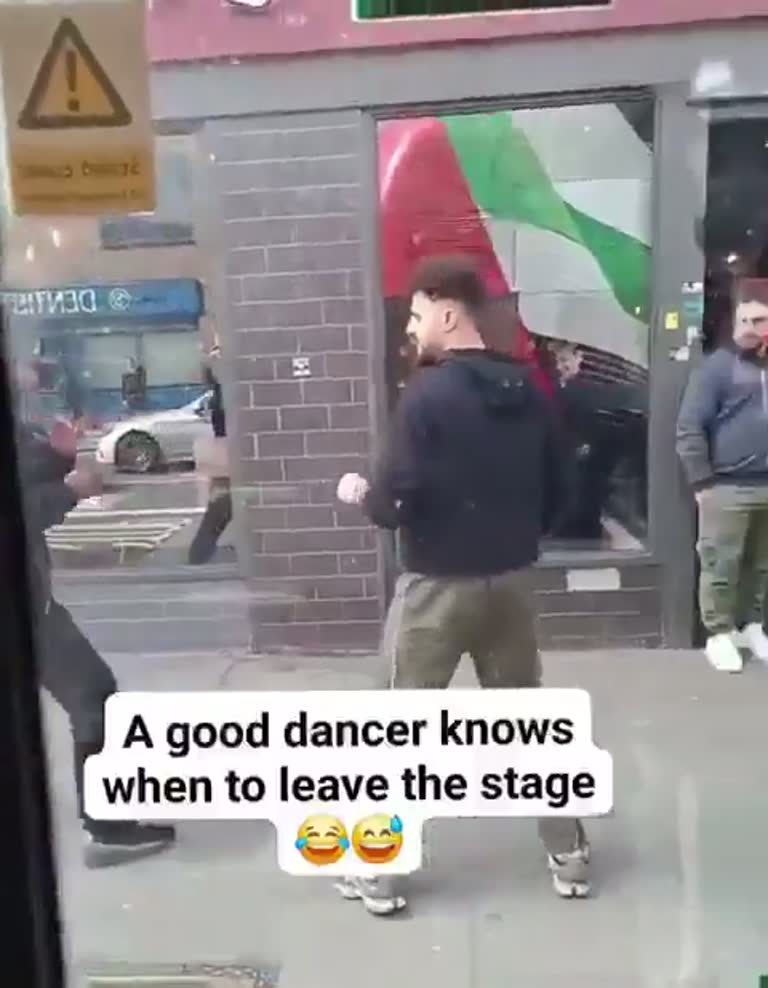
A brief but heated confrontation unfolded on a busy London street, drawing the attention of passersby and a nearby security guard. What began as a test of fighting skill quickly turned into something else entirely when one of the men decided to document the moment rather than continue the altercation. The entire scene was captured from a nearby vantage point, showing how quickly public disputes can shift from physical aggression to a strange, almost comedic standoff.
Overview of the incident and the key facts
- Two men faced off on a London street in what appeared to be a spontaneous test of fighting ability.
- A voice in the background urged one man to stay and fight, while another noted that a security guard was doing nothing to intervene.
- The confrontation ended abruptly when one man retreated and the other began taking photos instead of continuing the fight.
- Bystanders and onlookers watched without getting involved, prompting commentary about public apathy.
- The video was shared online, sparking discussion about how modern bystanders react to street conflicts.
The Moment Tension Flared on the Street
The video opens on a scene that could happen on any busy city street: a few people standing outside a coffee shop, traffic moving in the background, and a sense of ordinary daily life. But the atmosphere quickly changes as two men square up, their body language signaling that a physical confrontation is about to begin. One man, dressed in dark clothing, stands his ground while the other circles cautiously, testing the waters. A voice off-camera begins to narrate the scene with a mix of encouragement and mockery, urging one of the men not to back down.
What stands out immediately is the strange contrast between the aggression on display and the calm, almost theatrical commentary from the person filming. The voice repeats phrases like "Come, come, come" and "Don't go," as if directing a scene rather than witnessing a real dispute. The tone is not one of panic or fear, but of entertainment, as though the entire event is being staged for an audience. Meanwhile, the security guard visible in the background remains stationary, watching but not stepping in, which becomes a point of frustration for the person recording.
The confrontation itself is short-lived. One of the men, perhaps realizing he is outmatched or simply losing his nerve, begins to back away. The other man does not pursue him aggressively; instead, he stops and watches, almost bemused by the sudden retreat. The physical threat dissolves as quickly as it appeared, leaving behind a strange, unresolved tension that hangs in the air like smoke after a firework.
A Retreat That Turns Into a Photo Opportunity
Just when it seems the confrontation might escalate again, the situation takes a surprising turn. The man who retreated does not simply walk away; he stops, turns back, and raises his phone as if to take a picture. The voice in the background seizes on this moment, saying, "He's taking a picture with you." It is a bizarre twist—what started as a fight has suddenly become something closer to a photo op. The aggressor, if he can even be called that anymore, stands still, seemingly unsure how to react to this sudden shift in tone.
This moment is where the video's comedic undertone becomes unmistakable. The tension that had been building evaporates, replaced by a kind of awkward absurdity. The man taking the photo is no longer a fighter; he is a documentarian, capturing the aftermath of a scuffle that never quite became a real brawl. The person recording continues to comment, noting that the man is "taking a picture with you" and then declaring, "Bye-bye," as if closing the curtain on a short play.
The security guard, who had been standing nearby the entire time, remains passive. The voice on the recording grows more critical, calling the guard a "coward" and lamenting that "no one's getting involved." This lack of intervention becomes a central theme of the commentary, turning a brief street scuffle into a broader critique of public apathy and the role of bystanders in modern society.
Bystanders, Security, and the Question of Intervention
One of the most striking aspects of the video is the presence of other people who simply watch without stepping in. A man in a grey hoodie stands off to the side, observing the scene with a neutral expression. The security guard, positioned near the entrance of the coffee shop, does not move to separate the men or de-escalate the situation. The person filming repeatedly points this out, asking, "But what's the security looking at? It's doing nothing." This commentary reflects a common frustration: when violence or conflict erupts in public, why do so many people stand by?
The answer, of course, is complicated. Bystander apathy is a well-documented phenomenon, but so is the fear of escalation. Intervening in a street fight can be dangerous, and security guards are often trained to observe and report rather than physically engage. Still, the video captures a moment where the absence of action feels conspicuous. The fight never becomes serious enough to demand intervention, but the potential is there, and the lack of response from those nearby leaves a lingering question about what would have happened if things had turned more violent.
The man filming seems to relish this tension, using it to fuel his running commentary. He mocks the guard, criticizes the crowd, and frames the entire event as a failure of community responsibility. Whether or not that criticism is fair, the video does highlight a real issue: in moments of public conflict, the line between safety and apathy can be blurry, and the decision to step in or stand back is rarely clear-cut.
The Aftermath and the Power of Documentation
As the confrontation fizzles out, the man who retreated walks away, and the man who stood his ground is left standing alone. The person filming continues to narrate, saying, "You tell him you don't record," as if offering advice to the man who just took the photo. The scene ends with a sense of anticlimax, the tension replaced by a strange, almost humorous resignation. The fight is over, but the recording continues, capturing the mundane aftermath of a moment that could have gone very differently.
What remains is the footage itself—a short clip that transforms a brief street scuffle into a story about modern life, where cameras are always rolling and conflicts are often resolved not with fists but with phones. The man who took the picture may have been mocking his opponent, or he may have simply been documenting the moment for his own reasons. Either way, the act of recording becomes the final word in the confrontation, a way of asserting control without throwing another punch.
The video's circulation online adds another layer to the story. Once uploaded, it becomes part of a larger conversation about public behavior, security, and the ways people navigate conflict in shared spaces. The comments and reactions it generates reflect a mix of amusement, criticism, and curiosity, showing that even a minor incident can spark widespread discussion when it is captured on camera.
What the Incident Says About Public Spaces
This brief London street confrontation is not unique. Similar scenes play out in cities around the world every day, often without anyone filming. What makes this one notable is the way it was captured and the commentary that accompanies it. The person recording acts as a narrator, guiding the viewer through the action and offering a running critique of everyone involved. His voice turns a simple scuffle into a kind of street theater, complete with heroes, cowards, and a final curtain call.
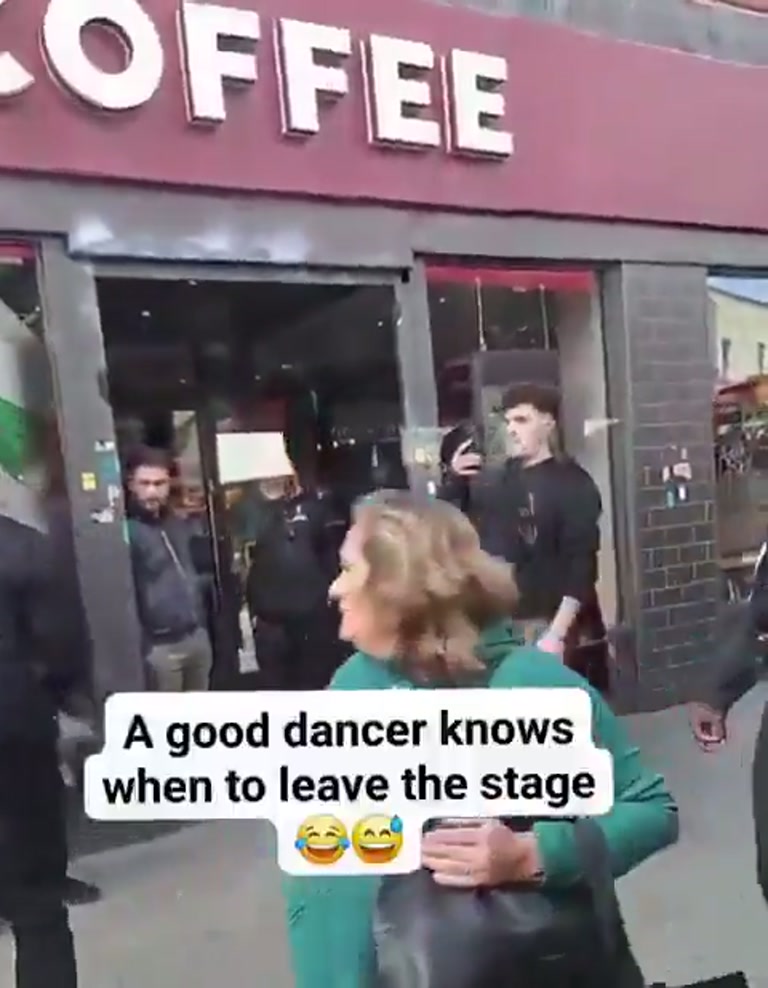
The incident also raises questions about the role of security in public spaces. The guard's inaction is criticized, but it is worth considering what he was actually supposed to do. Security personnel are often instructed to avoid physical intervention unless absolutely necessary, and the fight here was brief and relatively low-intensity. Still, the perception of passivity can be damaging, making people feel that no one is willing to help when trouble arises.
Ultimately, the video is a snapshot of a moment when ordinary life briefly became dramatic. It captures the raw energy of a confrontation, the awkwardness of a retreat, and the strange comedy of a man taking a photo in the middle of a fight. It is a reminder that public spaces are unpredictable, and that the presence of a camera can change the way people behave—sometimes for the better, sometimes for the worse.
The Role of Cameras in Modern Confrontations
In an age when almost everyone carries a smartphone, the dynamics of public confrontations have shifted. People know they might be recorded, and that awareness can influence how they act. In this case, the man who retreated may have realized that continuing the fight would be pointless, especially with someone filming. The act of taking a photo could have been a way to save face, to turn a moment of weakness into a moment of control.
The person filming also plays a role in shaping the narrative. His commentary is not neutral; it is opinionated, mocking, and at times inflammatory. He calls the security guard a coward and suggests that no one is willing to get involved. This kind of narration can amplify the drama, making the incident seem more significant than it actually was. It also invites viewers to take sides, turning a minor scuffle into a debate about courage, responsibility, and community.
The video's afterlife online is a testament to the power of documentation. Once posted, it can be shared, commented on, and analyzed by thousands of people who were not there. Each viewer brings their own perspective, and the story evolves with every retelling. What started as a brief fight on a London street becomes a case study in public behavior, a meme, or a cautionary tale, depending on who is watching.
Why This Moment Resonates With Viewers
There is something deeply human about watching a conflict unfold and then dissolve. The tension, the uncertainty, the sudden shift to humor—these are the ingredients of drama, and they are all present in this short clip. The fact that it happened on an ordinary street, outside a coffee shop, makes it feel relatable. Anyone could find themselves in a similar situation, whether as a participant, a bystander, or a person with a phone.
The video also taps into a larger cultural conversation about masculinity, violence, and the ways men resolve disputes. The initial posturing, the retreat, and the photo-taking all speak to a complicated dance of pride and self-preservation. No one wants to be seen as weak, but no one wants to get hurt either. The man who walked away may have lost the fight, but he also avoided injury and found a way to leave with his dignity somewhat intact.
For viewers, the appeal lies in the unpredictability. You never know what will happen next, and the video keeps you guessing until the very end. Will they fight? Will they walk away? Will someone intervene? The answers come slowly, and the resolution is not what anyone expected. That unpredictability is what makes the clip memorable, and it is why people share it with others.
The Unanswered Questions That Linger
As with any viral video, there are gaps in the story. We do not know what started the confrontation or whether the men knew each other beforehand. We do not know if the police were called or if the security guard faced any consequences for his inaction. The footage is a fragment, a slice of time that raises more questions than it answers.
This ambiguity is part of what makes the video compelling. It invites speculation and debate, allowing viewers to fill in the blanks with their own assumptions. Some will see the man who retreated as a coward, while others will see him as sensible. Some will criticize the security guard, while others will defend him. The lack of a clear resolution means the story stays open, continuing to generate discussion long after the initial viewing.
In the end, the video is a reminder that public spaces are full of small, unpredictable dramas. Most of them go unnoticed, but when they are captured on camera, they can become something more—a mirror reflecting our fears, our values, and our endless fascination with the lives of strangers.
| Incident parameter | Logged / on-scene information |
|---|---|
| Location | A street in London, outside a coffee shop |
| Time of day | Daytime, with natural light and visible traffic |
| People involved | Two men in a confrontation, a security guard, and several bystanders |
| Key action | One man retreated and then took a photo instead of fighting |
| Bystander response | Onlookers watched without intervening; security guard remained passive |
| Audio commentary | A voice urged one man to stay and criticized the lack of intervention |
| Outcome | No physical injuries shown; the confrontation ended without escalation |
Important note: Some details about the individuals involved and the aftermath of the incident remain unverified, as no official report has been released.
Core questions still unanswered
- What caused the initial confrontation between the two men?
- Why did the security guard choose not to intervene during the altercation?
- Would the outcome have been different if someone had stepped in earlier?
Learn more: Street Fight in USA Caught on Camera: The “ED Card” Confrontation
This story was edited from a publicly posted video; some details may not be independently verified.
