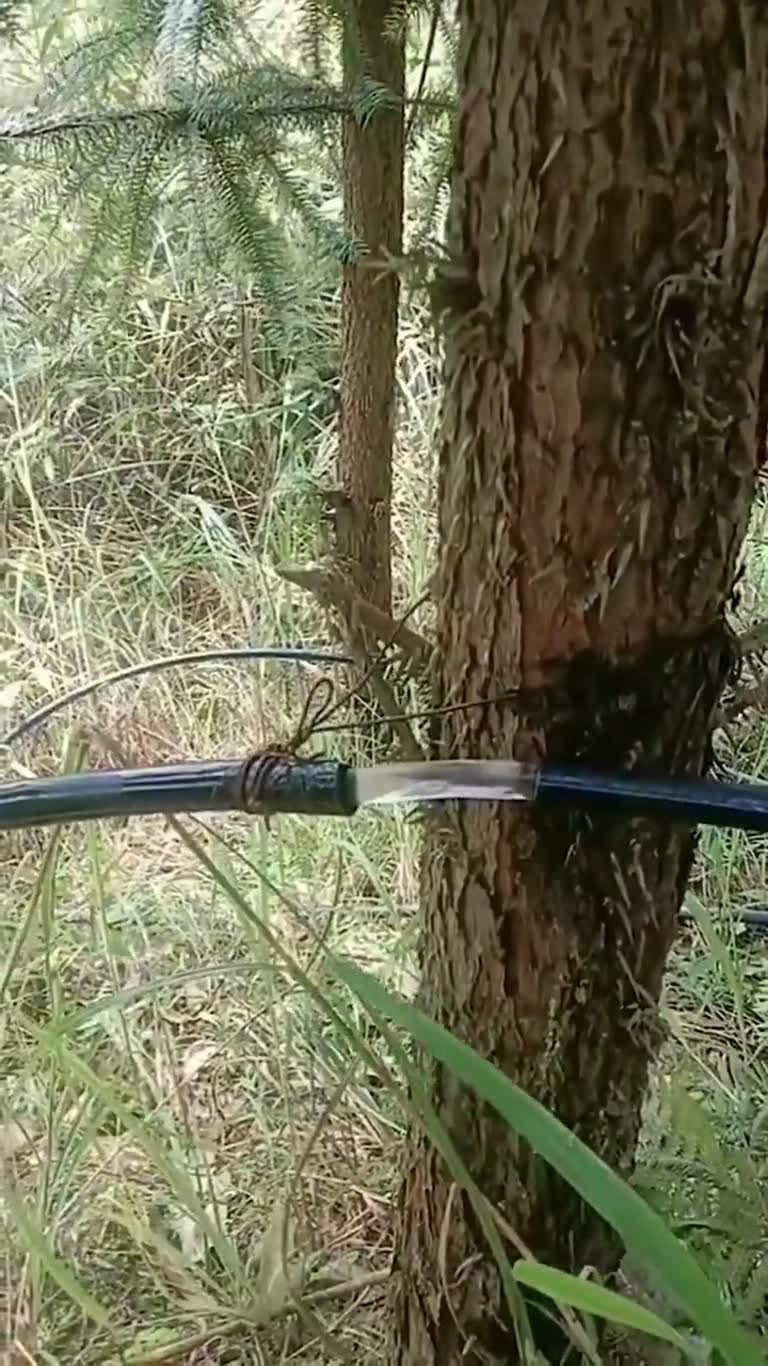
A short, silent clip posted under the name Science girl shows a dark hose strapped to a tree trunk, with a small green insect resting on the bark right beside it. The only caption is a joke borrowed from film: "Glitch in the matrix." There is no dialogue, no location and no explanation — which is exactly why viewers keep rewinding it.
What the Frame Actually Holds
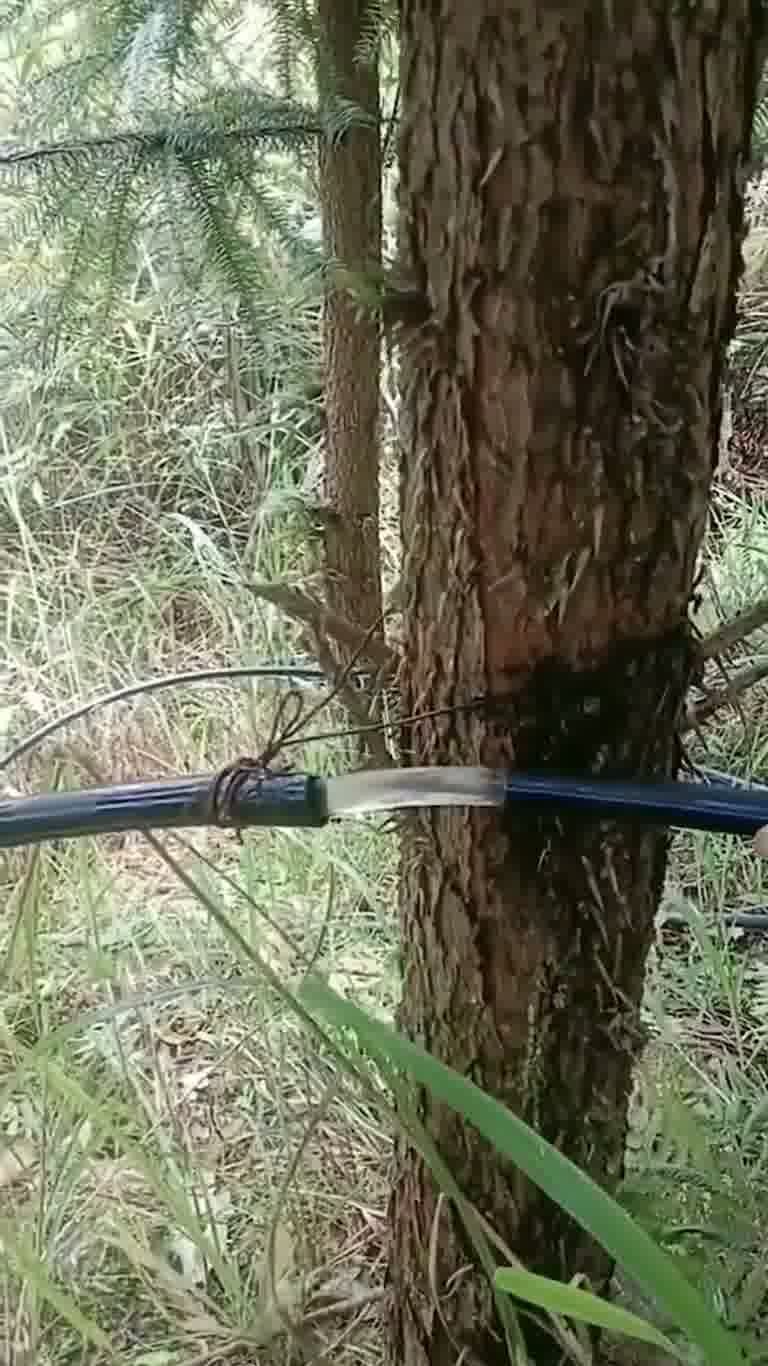
The camera sits low in tall grass and looks up at a thick conifer trunk that fills the right side of the image. A dark blue hose runs horizontally into the shot from the left, passes beneath a thinner curved line, and stops at the bark, where it is tied off with cord or twine. A darker, almost black patch marks the trunk exactly where the tubing meets the wood, and strands of webbing or plant fibre cling to the bark above it.
Resting on that surface, a short distance from the junction, is a slender green insect. Across the sequence of frames, almost nothing changes: the grass barely stirs, the camera keeps its angle, and the insect shifts only slightly, as if adjusting its grip on the rough, reddish-brown bark. It is a static, quiet shot in a wooded setting — the kind of image a phone camera can hold for a long time without effort.
That stillness is the whole point. Nothing in the footage announces an event. There is no sudden movement, no reaction, no voice. The only thing shaping how the clip reads is the two-word caption attached to it.
Why the 'Glitch' Label Sticks
"Glitch in the matrix" is shorthand borrowed from a well-known film idea: a simulated world where an impossible detail or a repeated object betrays an error in the code. Applied to ordinary nature clips, the phrase is a joke about reality skipping a frame — and it does the heavy lifting here.
The hose helps. Tubing strapped to a tree is unmistakably man-made, so the eye files it as equipment rather than a living thing. An insect sitting at the exact lip of that tubing creates an accidental visual pun, as if something organic were pouring out of an industrial object or plugging into it. The mismatch is what makes people stop scrolling.
Silent, tightly framed videos also travel well because they leave work for the viewer. Someone arrives in the middle of a scene with no context, and the mind supplies the missing story. That gap between what is shown and what is suggested is what turns a quiet forest shot into a debate.
Reading the Scene Carefully
A fixed camera and a nearly unchanging image have a side effect: they make it hard to tell how long the recording really is. Because the frames are close to identical, a long take can be trimmed into a few seconds without a viewer noticing, or a short moment can be looped. Whether either happened in this case cannot be confirmed from the material available.
It helps to separate two questions. The first is what is physically present: a tree, a hose, cord, grass, a small insect. The second is what the clip is claimed to mean. The first can be checked against the image; the second is interpretation.
- Confirmed by the footage: tubing tied to a trunk, a green insect on the bark, a steady camera angle.
- Not confirmed: where or when it was filmed, who filmed it, or what happened before and after.
No location or date appears in the available material, and no one in the clip speaks, so the scene has to be read on its own terms.
Before You Share the Next 'Glitch'
Odd-looking nature footage circulates constantly, and a few habits help sort it out. Look for the original upload rather than a re-share, because captions often drift far from the source. Ask whether a longer, unedited version exists, and watch the edges of the frame for signs that something was set up. A reverse image search can show where a clip first appeared. It is also worth remembering that nature produces plenty of mechanical-looking moments on its own — insects emerging from casings, moulting, or waiting out weather in strange positions. A strange image is not automatically a fake, and a viral clip is not automatically proof of anything.
Does this clip read to you as a coincidence of timing and camera angle, or does something in the frame still not add up?
Content edited from a public video posted under the name Science girl; some details have not been independently verified.