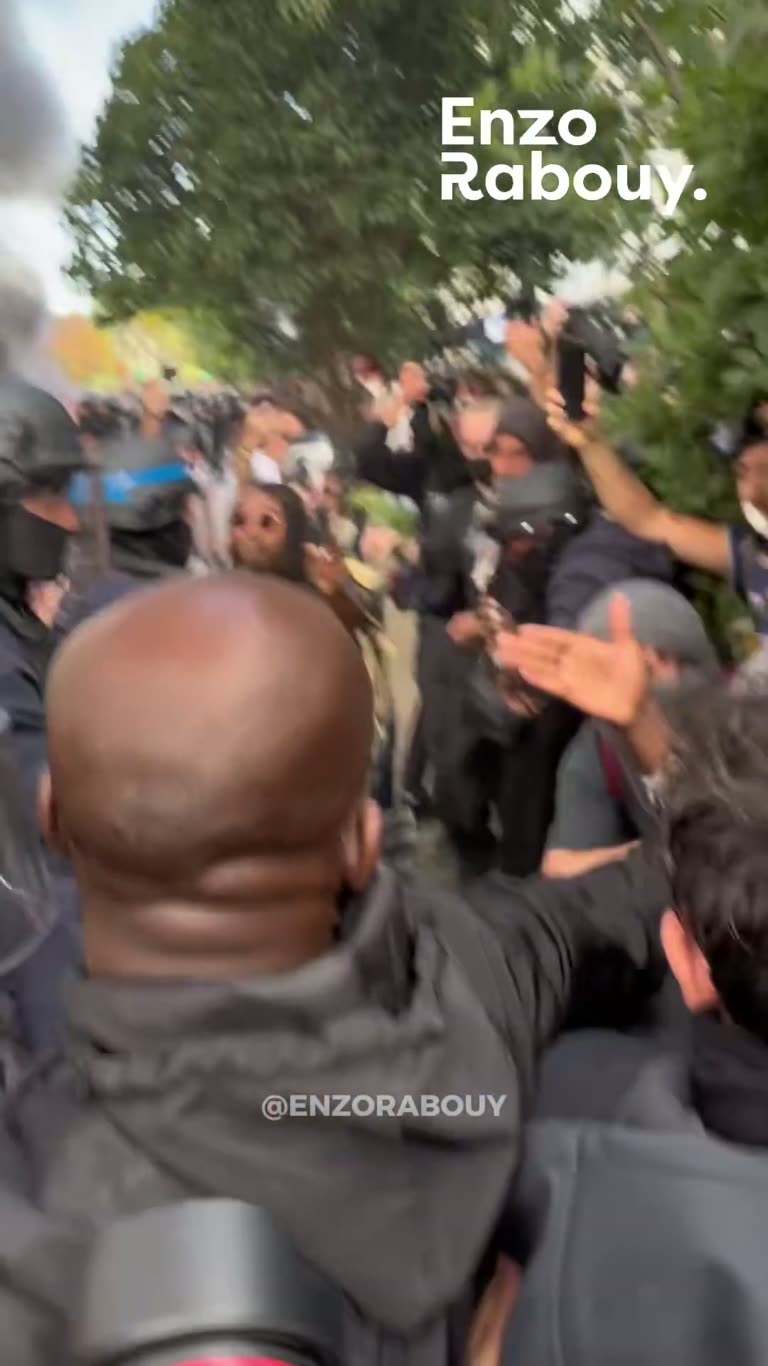
In a tense street confrontation captured on video, a French mayor was seen placing himself between student protesters and advancing police officers. The footage, which has rapidly spread across social media, shows the official desperately trying to de-escalate a volatile situation as voices clash and the crowd surges.
Overview of the incident and the key facts
- A French mayor, identified in the source material as Bally Bagayoko, was filmed intervening in a confrontation between police and student protesters.
- The footage captures the official physically positioning himself between the two groups in an apparent attempt to prevent clashes.
- The incident highlights the intense friction between authorities and demonstrators in the region.
- The video has quickly gained traction online, prompting widespread debate about the role of local officials in public protests.
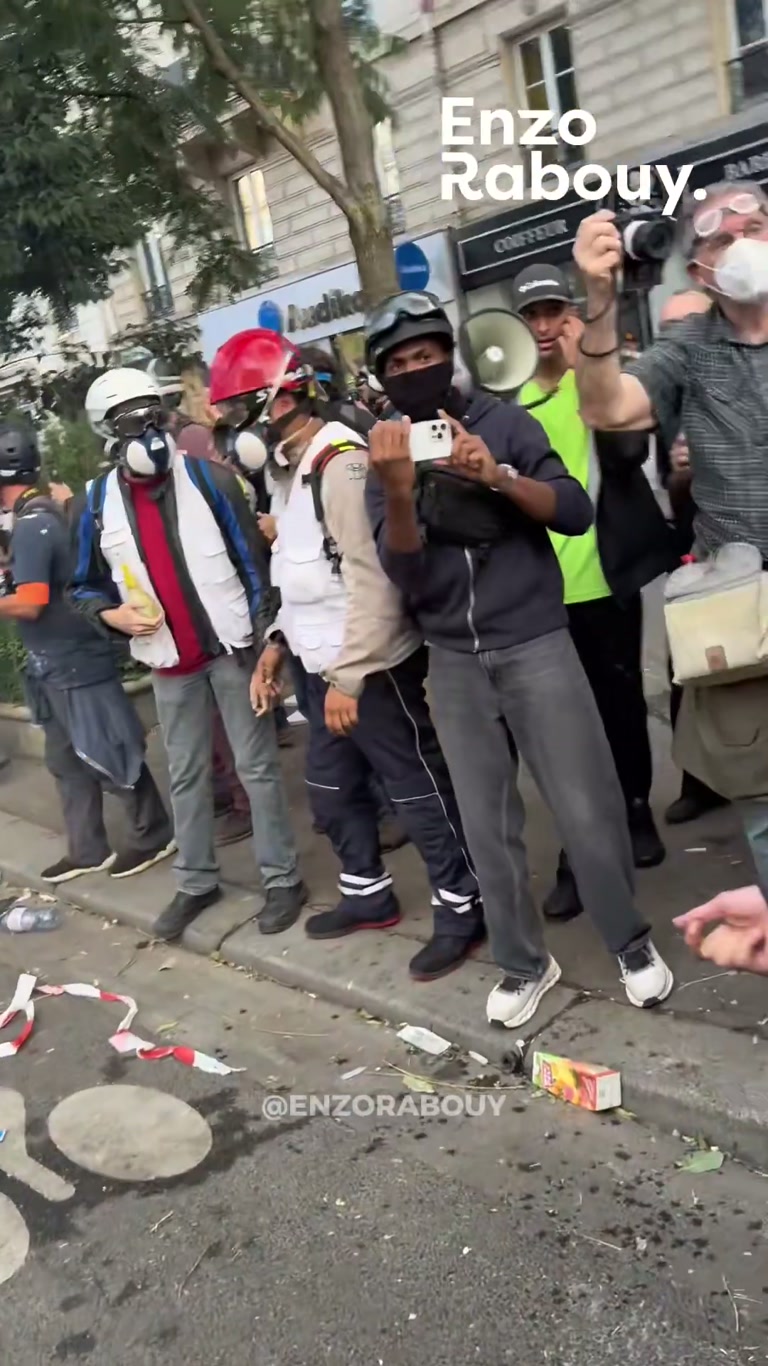
The footage opens on a chaotic street scene, where the boundaries between a public protest and a police operation have blurred into a tense standoff. Trees and buildings form a static backdrop to a moving, shifting crowd, capturing the raw energy of a demonstration that appears to be teetering on the edge of control. A group of student protesters is visible, their presence marked by the density of the gathering and the raised voices echoing through the street. The atmosphere is thick with apprehension, the kind that precedes a sudden shift in momentum. It is in this highly charged environment that a local mayor steps forward, acting as an unexpected buffer between the two opposing forces.
The central figure in the video, identified as Bally Bagayoko, moves with a sense of urgency that suggests he understands the stakes of the moment. He is not standing on a podium or speaking from a position of formal authority; instead, he is physically placing his body in the gap between the protesters and the police line. His actions appear to be a direct attempt to mediate a situation that is rapidly escalating, with his voice cutting through the noise to issue pleas for calm. The camera captures the blur of movement, the jostling of bodies, and the intense expressions of those caught in the middle of the confrontation. The scene is a vivid snapshot of civic tension, where the rule of law meets the passion of public dissent.
For the viewer, the footage raises immediate questions about the dynamics of power and protection in public spaces. The mayor's intervention is not a passive act; it is a physical and vocal attempt to alter the trajectory of a potentially dangerous event. The video does not show the lead-up to this moment, nor does it provide a clear conclusion, leaving the viewer suspended in the middle of a high-stakes interaction. The sheer proximity of the individuals involved—police, protesters, and the mayor—creates a claustrophobic feel, underscoring the fragility of public order during moments of intense social friction. It is a scene that resonates far beyond the immediate street, touching on broader debates about policing, protest rights, and the role of elected officials in the heat of the moment.
The role of the mayor and the plea for calm
The audio transcript from the scene reveals a series of urgent, repeated commands, primarily in French, that paint a picture of a man trying to prevent a physical clash. The voice, presumably that of the mayor, is heard shouting "Arrêtez!"—Stop!—multiple times, interspersed with pleas for gentleness, such as "Doucement les gars!"—Easy, guys! The tone is not one of aggression but of desperate mediation, as he tries to hold back the tide of both the advancing police and the agitated protesters. At one point, he is heard saying "Continuez les gars!"—Keep going, guys!—which, in the context of his other pleas, likely refers to the protest continuing peacefully rather than a call for confrontation. This verbal jockeying is a testament to the confusion and high emotions of the moment.
His words are a mix of firm instructions and polite appeals, reflecting the delicate balance he is trying to strike. He addresses the crowd with a sense of familiarity, using colloquial terms like "les gars" (guys), which suggests he is trying to connect with the demonstrators on a human level rather than issuing orders from a distance. The phrase "S'il vous plaît!"—Please!—is repeated, adding a layer of civility to an otherwise chaotic scene. The transcript also captures him saying "Vous inquiétez pas monsieur!"—Don't worry, sir!—and "Nous sommes correspondants," which translates to "We are correspondents." This latter phrase is particularly intriguing, as it suggests the presence of media or a formal delegation, adding another layer of complexity to the standoff. The mayor appears to be navigating a minefield, trying to protect the students while also maintaining a line of communication with the authorities.
The visual frames support this interpretation, showing the mayor with his hands raised or outstretched, a universal gesture of de-escalation. He is not a passive observer; he is an active participant in the physical negotiation of space. The frames capture him in close proximity to the protesters, his back often turned to the camera as he faces the police line or the crowd. The sheer physicality of his intervention—standing in the gap, raising his arms, shouting over the din—demonstrates a deep commitment to preventing violence. The video does not show the outcome of his efforts, but the intensity of his actions leaves a lasting impression of a local leader willing to put himself in harm's way to protect his constituents.
Public reaction and the viral spread of the footage
Since the footage emerged, it has sparked a firestorm online, with users sharing it widely across various platforms. The video has drawn massive attention, fueling heated debate about the appropriate use of force by police and the rights of students to assemble. Opinions were split, with some praising the mayor for his bravery and others questioning whether his intervention was appropriate or effective. The clip has become a focal point for discussions about the balance between maintaining public order and protecting the right to protest. It has also highlighted the often-overlooked role of local officials in mediating conflicts between national police forces and local communities.
The reaction to the video is a microcosm of broader societal tensions, where trust in institutions is often fragile and the actions of individuals can quickly become symbols of larger issues. The mayor's decision to step into the fray has made him a central figure in the ongoing conversation, with many voicing concern about the escalation of tensions in the area. The fact that the footage was captured and shared so rapidly speaks to the power of citizen journalism and the modern appetite for raw, unfiltered accounts of civic unrest. The video has not only documented a specific event but has also become a catalyst for a wider discussion about the state of democracy and public dissent.
As the footage continues to circulate, it is likely to trigger further waves of reactions and analysis. The images of the mayor standing between the two groups are powerful and evocative, capturing a moment of high drama and moral clarity. The situation kept developing as the video went viral, with the potential for the narrative to shift as more context becomes available. For now, the footage stands as a stark reminder of the volatility of public protests and the critical role that individuals can play in defusing tension. It is a story that resonates with audiences far beyond the borders of France, touching on universal themes of justice, authority, and the human instinct to protect.
Insurance and who pays
While the video primarily depicts a civic confrontation rather than a physical accident, the presence of a large crowd, police operations, and potential for property damage introduces significant insurance considerations. If the protest were to result in damage to public or private property, or if individuals were to sustain injuries, the financial fallout would be governed by specific policies. In France, as in the UK and the US, local authorities and event organisers typically hold public liability insurance to cover claims of injury or damage arising from their activities. However, the application of these policies in the context of a spontaneous protest can be complex. For the mayor and the local municipality, their liability cover would generally respond to claims of negligence, but intentional acts or clashes with police might fall outside standard coverage parameters, leading to disputes about who bears the cost.
For the students and protesters involved, their personal insurance—such as health insurance or travel insurance if they are from out of town—might come into play if they sustain injuries. However, standard health policies often exclude injuries sustained during illegal activities or riots, and claiming for damaged personal property, such as phones or clothing, would usually require a specific contents or personal accident policy. The police force involved operates under a different set of indemnity rules, typically covered by government self-insurance schemes, which can make claims against them challenging for private citizens. The incident highlights the importance of understanding the exclusions and excesses in any insurance policy, as the average deductible for a public liability claim can run into thousands of pounds, and the policyholder is often responsible for the initial portion of any payout.
The steps for making a claim following such an event are intricate. For property damage, a claim would typically begin with a police report and photographic evidence, followed by a formal submission to the relevant insurer. In the UK, the Financial Ombudsman Service can adjudicate disputes between policyholders and insurers, while in the US, state insurance departments provide similar oversight. However, in the context of a chaotic protest, proving liability and causation is a significant hurdle. The cost of repairs or replacement for damaged property can vary wildly, from minor repairs to shopfronts to significant medical bills, and the insurance industry often relies on specific legal determinations of fault. The incident serves as a reminder that while insurance can provide a financial safety net, it is not a guaranteed shield against the complex legal and financial consequences of civil unrest.
Important note: Some details regarding the exact location, the specific cause of the protest, and the final outcome of the confrontation remain unverified based on the available footage and source material.
Core questions still unanswered
- What do you make of the mayor's decision to physically intervene in the standoff?
- Would standard public liability insurance cover the damages if a protest like this turns violent in your area?
- How should local authorities balance the right to protest with the need to maintain public order?
Learn more: Woman dragged by moving train in shocking platform fall
🎥 Watch the video at the bottom of the page 👇
This story was edited from a publicly posted video; some details may not be independently verified.