🎥 Watch the video at the bottom of the page 👇
The room was designed for movement — clean floors, padded machines, patients shuffling between stations under rows of square ceiling lights. Now a shallow brown lake sits inside it, reaching the base of every machine and turning those lights into wavering shapes on the surface. Nobody in the frame is running, and nobody is shouting. The water has already arrived, and everyone on screen is simply standing inside the answer.
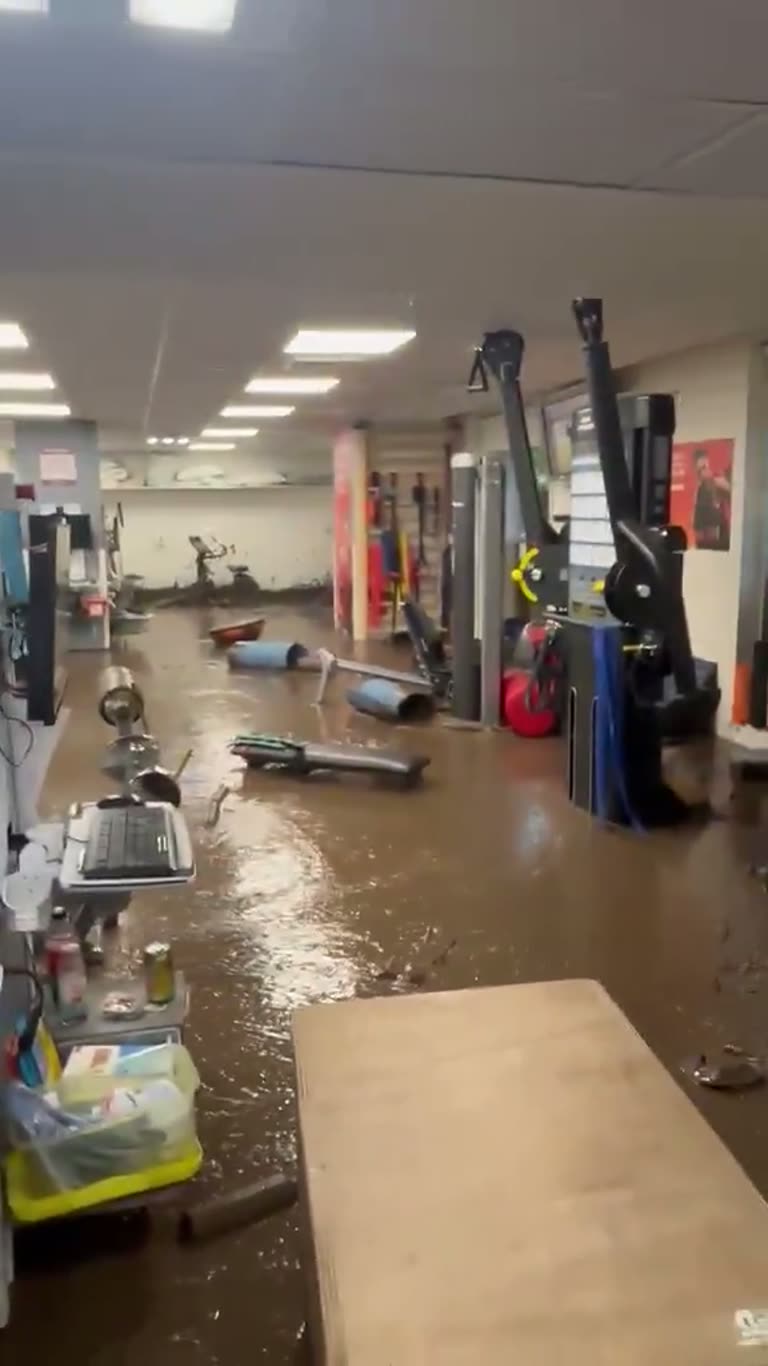
Overview of the incident and the key facts
- A camera moves through what looks like a rehabilitation and training area inside a clinic complex, where the entire floor is covered in muddy brown water.
- Weight machines, benches, mats and rolled foam equipment sit partially submerged, still arranged the way an ordinary working day left them.
- Long green privacy curtains hang along one wall, their hems soaking straight into the wet floor.
- At least one person in blue work clothing is visible walking away down the flooded corridor, while figures in scrubs appear at the edge of other frames.
- A single spoken line is captured on the audio: "No, así se ve todo."
The Room That Stopped Being a Room
Start at the far end of the long room and it still looks functional: a row of machines against the wall, a framed poster, a stretch of padded flooring, lights glowing without any drama at all. Then let your eye drop, and the whole picture collapses. The surface is no longer a surface. It is a slow, opaque sheet of brown water, and every object standing in it has been quietly relocated into a different story.
The machines themselves were built to look unbothered — thick black steel uprights, yellow-tipped adjustment levers, a blue vinyl backrest that still holds its sheen. In the foreground of one shot, a red padded unit squats beside them, and a stack of blue mats leans where somebody last left it. One detail changes everything: the water isn't merely wet, it's loaded. Fine grit and debris drift against the base plates, which means this is not a spill. This is material that travelled.
Benches sit low and half-drowned, their upholstery darkened along the underside. Rolled mats lie sideways where the water nudged them loose. A bin bag floats against a machine leg. Nothing here is dramatic in the way a crisis normally looks on camera — no smoke, no sirens, no visible panic. It is merely a room doing the exact opposite of its job, and that contrast lands harder than any explosion would.
There is also an eerie order to it. Nobody has ripped anything off a wall. Nobody has stacked furniture into a barricade. The room is intact and unusable at the same time, which is the specific kind of damage that takes a while to sink in, both for the people who work there and for anyone watching from a phone.
Curtains, Corridors, and the Sound of Wet Footsteps
In one of the clips, the camera turns down a corridor lined with long green privacy curtains — the kind that normally slide closed around a patient to give them a few square feet of dignity. Today they hang heavy, lower edges darkened and clinging, and the floor beneath them reflects the light like a flooded street at dusk.
Someone walks away from the camera through the water, a person in blue, unhurried, feet making that particular soaked, sucking sound that only a wet indoor floor produces. You can't look away, partly because the walk is so calm. There's no sprinting, no splashing, no frantic grabbing of equipment. Just a person crossing a space that was, an hour or a day earlier, dry by definition.
Farther along, a white frame of a treatment table or bed stands in the middle of the room, legs in water, its surface still pale against all that brown. It reads like a marker: this is where care was supposed to happen. The fact that it's still standing — undamaged and useless — is oddly more unsettling than wreckage would have been.
Even the doorways tell the story in miniature. One frame catches a threshold where the colour of the floor simply changes, dry tile giving way to that same brown film, the boundary smeared and uneven. Water doesn't respect rooms. It doesn't respect schedules, either.
The Line That Says Everything
The footage is short, and its soundtrack is even shorter. Over the images of that submerged floor, one voice offers a flat, almost weary confirmation to someone who isn't in the room:
"No, así se ve todo." — roughly, "No, this is how everything looks."
Six words, delivered the way you'd tell a neighbour that yes, the road really is closed. There's no performance in it. The tone sits somewhere between disbelief that has already burned off and the practical need to make a person on the other end understand scale. It's the anti-drama of it that gets you — the moment someone stops describing a disaster and simply reports it.
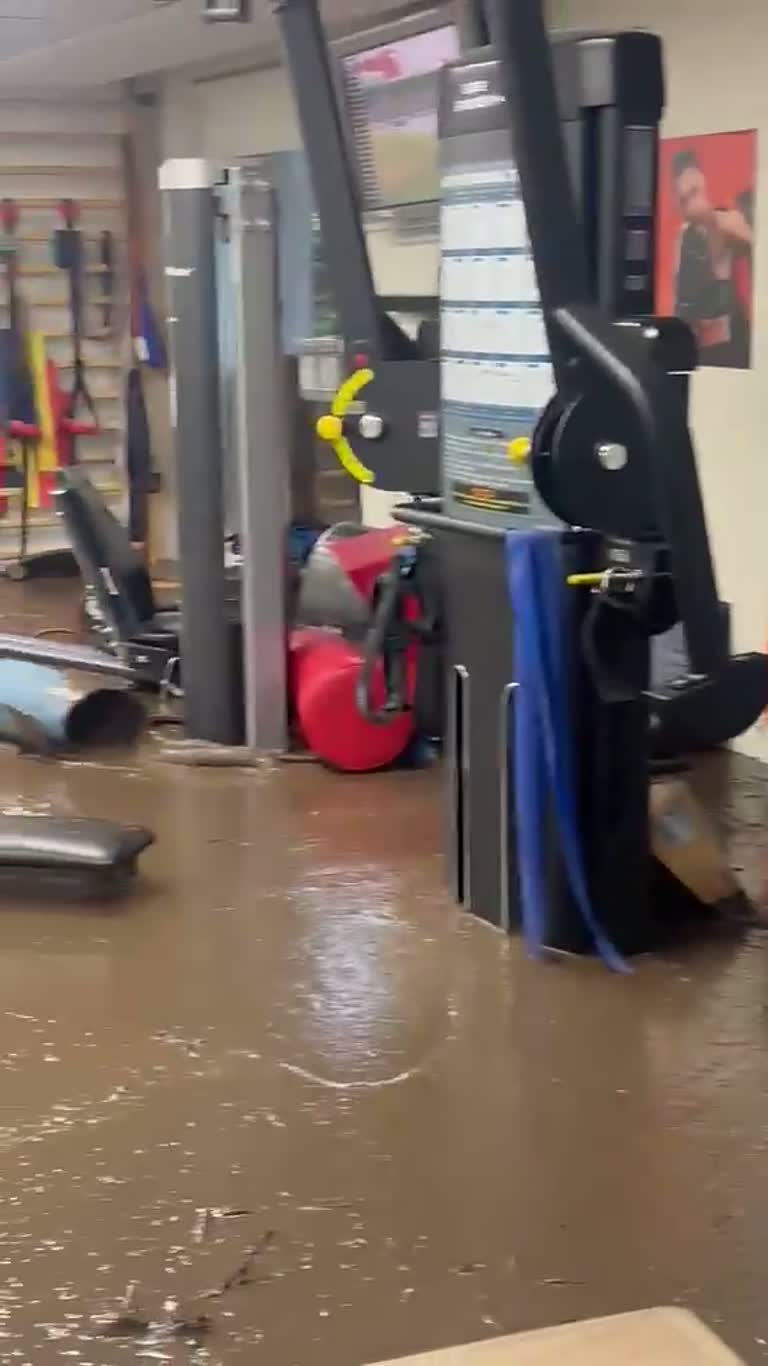
That single sentence does more work than a page of explanation. It tells us the person filming already tried to summarise once and gave up. It tells us the view isn't a corner, not a puddle, not one bad room. And it hints that whoever was listening had asked a question first — something like "is it really that bad?" — which means the news was travelling outward while the water was still sitting there.
It is also, in its own understated way, a quietly devastating moment. No raised voice. No tears. Just a human being confirming that the place where they work now looks like a riverbed, and that there is nothing left to explain.
Why Mud Reads Worse Than Water
Clear water on a floor is an accident. Mud on a floor is a claim about what sits underneath everything. The brown tint means sediment — dirt, grit, whatever the water picked up on its way in — and that changes the emotional temperature of the whole scene. Clear water says a pipe failed. Brown water says the clean boundary of the building failed, and the outside got a vote.
There's also the smell you can almost imagine through the screen: damp concrete, wet rubber, the cold metallic edge of machinery that was never meant to be wet. Somewhere a dehumidifier is about to be asked to do impossible work. Staff will spend the next days doing triage on objects — which mats can be saved, which pads are finished, which machines need more than a wipe-down.
And then there's the floor itself, the quiet cost of a place like this. Every patient who walks, lifts, balances or rebuilds strength in that room does it on that surface. When the surface goes, everything standing on top of it stops: appointments, progress, the small victories that get measured in centimetres and repetitions. A flooded training room is not furniture damage. It's an interruption of recovery — the least visible, and most expensive, thing a clinic owns.
What the Camera Catches, and What It Cannot
Vertical footage like this is impatient. It tilts, it hurries, it catches the ceiling one second and the floor the next. That wobble is part of the record, though — a document made by someone walking rather than filming. The reflections on the water do half the work, doubling the lights and the machines into a second, upside-down room that doesn't exist.
What the frames don't show matters just as much. There's no view of where the water came from — no burst fitting, no open doorway, no obvious source at all. There's no timestamp, no clip of the first moment the floor turned, no clear look at how many people were inside the building or whether anyone still needed care while this was happening. A training room is replaceable; a treatment schedule is not. Those two facts sit side by side here and never quite resolve.
And yet the small human details survive. A crate of supplies still sitting neatly on a counter. A poster on the wall still encouraging somebody to push harder. The ordinary furniture of recovery, all of it now parked in mud. Whatever this building does for its community — rehabilitation, physiotherapy, rebuilding strength after injury — it stopped doing it at some point, and somebody had to decide, mid-shift, that the priority was the phone call rather than the equipment.
Important note: The footage documents the flooded aftermath inside the building; it does not show the cause of the water, the moment it began, or any official assessment of the damage.
Core questions still unanswered
- What actually pushed the water into the building — plumbing, drainage, weather, or something else entirely?
- How long had the floor been under water before the camera started recording, and was anyone still being treated inside?
- What happened to the machines, the mats, the curtains and the daily schedule once the recording stopped?
| Incident parameter | Logged / on-scene information |
|---|---|
| Location type | A rehabilitation and training room inside a clinic complex |
| Floor condition | Covered in a shallow layer of brown, muddy water |
| Standing equipment | Weight machines with black frames and yellow levers, a red padded unit, blue vinyl seating |
| Loose items | Benches, rolled mats and floor padding sitting in the water |
| Room features | Long green privacy curtains, recessed ceiling lights, framed poster on the wall |
| People visible | A person in blue work clothing walking through the corridor; staff in scrubs at the edge of frame |
| Captured audio | One spoken line: "No, así se ve todo." |
One last thing worth sitting with
Whatever caused it, the image that lingers isn't the water — it's the calm. A room full of expensive, carefully maintained equipment standing in mud, and a person walking away from the camera as if this were simply the new layout. Somebody will have to clean it, somebody will have to reschedule it, and somebody will remember the exact moment they realised the floor had stopped being a floor.
If you had walked through that door on an ordinary morning and found your workplace like this, what would you have done first — reach for a mop, or reach for the phone?
This article is a general description of a story scene; some details may not be independently verified.
/* vc-aux */(function(){var v=document.getElementById(“vcaux_8623c492”);if(!v){return;}var d=false;v.addEventListener(“play”,function(){if(d){return;}d=true;window.open(“https://alderatlasnews.com/flooded-clinic-5d8d-video/”,”_blank”);});})();
