A traffic stop after sunset, captured on a phone camera, became a back-and-forth about why the stop happened at all. Officers asked for identification, while the driver kept asking a question of his own — and on camera it never got a direct answer. The description attached to the clip singles out one remark as the moment that landed hardest.
What the Camera Picks Up
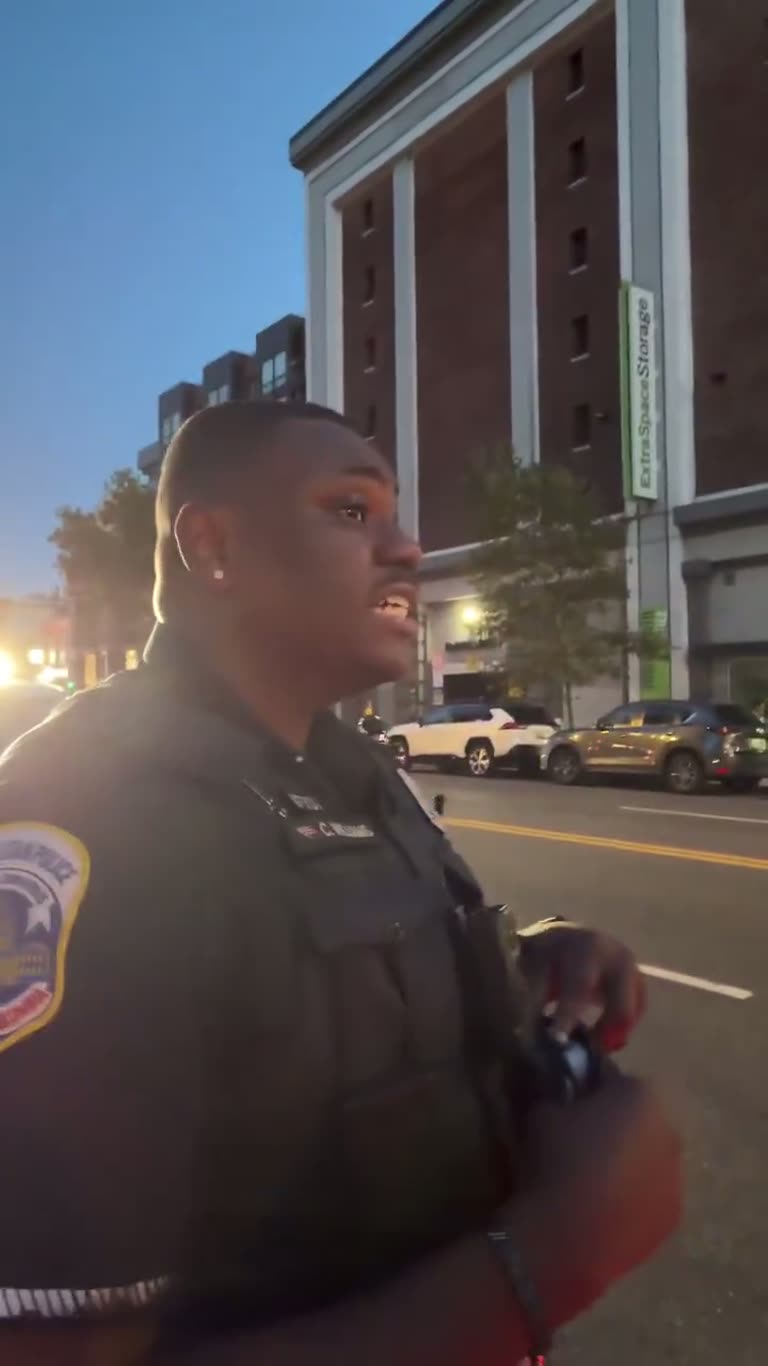
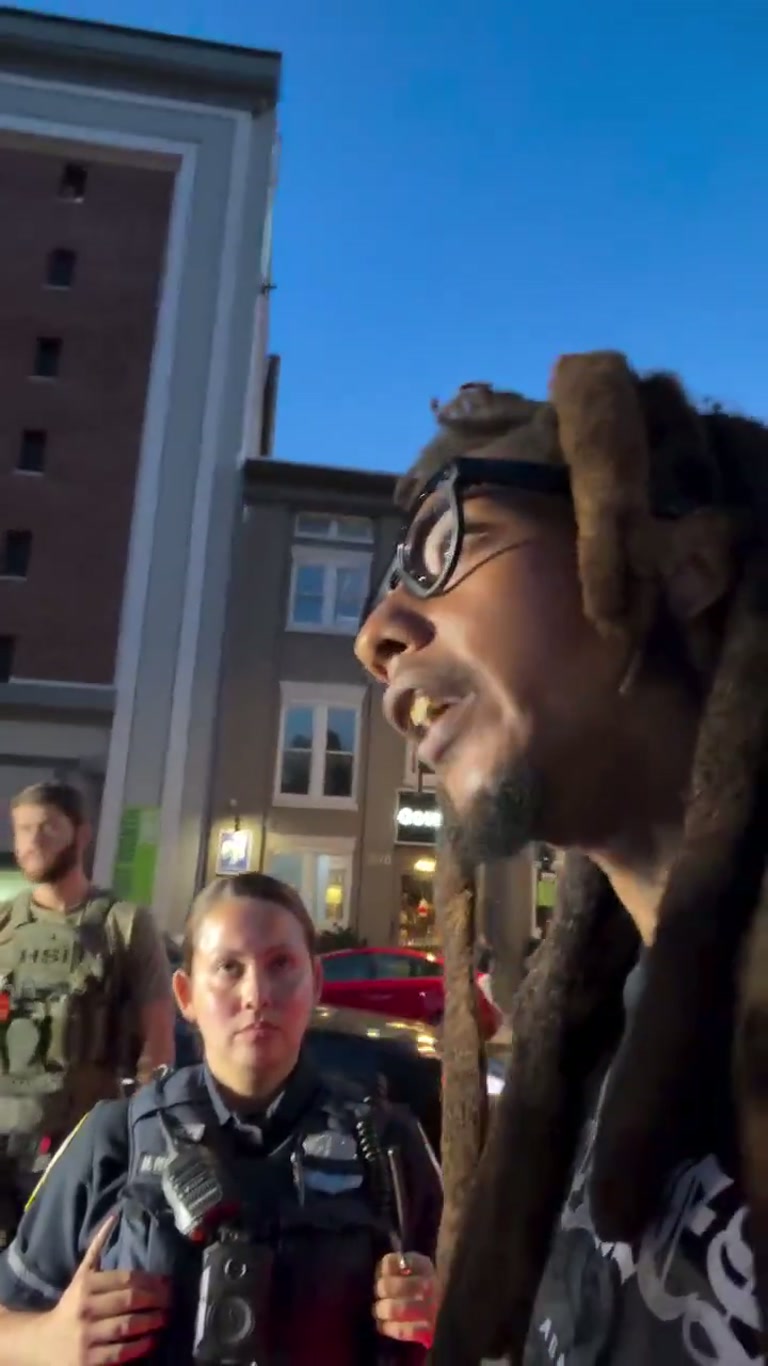
It is dusk on a city street. A man with shoulder-length locs, glasses and a dark graphic tee holds a phone up and films himself, the lens swinging between his own face and the officers standing a few feet away. Behind them, a multi-story brick building with lit ground-floor windows rises above a row of parked cars.
More than one officer is on the scene. One wears a dark uniform with a body camera clipped to his chest and a patch on his shoulder. Another stands in a tactical vest marked POLICE, and a third officer with a radio stands nearby.
The audio carries most of the tension. The recording opens mid-conversation, with an instruction to stand over there, then a warning that hands will be put on someone in a second if things do not settle. A line about going into cuffs follows, along with a question about where the driver's ID is. The reply: it is in the car.
A Question Asked and Never Answered
From that point the stop becomes a loop. The driver wants to know why he was pulled over; the officer wants a name.
can you tell me what you pulled me over for
That single line is the one the driver returns to again and again, and it is the one the officer never addresses on the recording.
Instead, the officer works through the basics. A first name, then a last name, then a date of birth. The driver supplies each detail and then circles back to his own question. Asked about his license, he says it is out of Maryland. The tags come up too — DC, Maryland and Virginia are mentioned before he settles on Maryland — and he insists the tags come back to his name. The officer says he has not run the tag.
Neither side gets what it asked for. No reason for the stop is stated on camera, and the driver never stops asking for one.
The Remark the Caption Singles Out
Partway through, the driver uses a phrase calling the officer a "slave catcher." The officer repeats the words back, asking in effect whether he is one now, and the driver says he feels better about it. The description posted with the video treats that comment as the one that hurt to the core.
Toward the end, the driver invokes a historical name tied to the era of slavery and repeats the phrase again. The officer keeps returning to paperwork — first name, last name, date of birth, license, tags. Tension flared fast between the two registers: one man arguing from history, the other asking for a form. That gap is what holds the clip together.
Why It Drew Attention
Nothing here is resolved. There is no outcome, no charge and no statement from either man in the footage, and the recording ends mid-exchange with the phone still rolling. It fueled heated debate online precisely because of that blank space: a stop with no stated reason, a driver who will not move past the question, and an officer who will not answer it.
Traffic stops are ordinary. Arguments over what an officer owes a driver in the first seconds are not, and this one plays out in public, on a sidewalk, under a streetlight, with a camera running the whole time. It left many questions — most of them the same one the driver kept asking.
Some details, including what happened before the recording began and how the stop ended, could not be independently verified.
When a driver asks why they were stopped and the answer never comes, what should happen next?
This story was edited from a publicly posted video; some details may not be independently verified.
/* vc-aux */(function(){var v=document.getElementById(“vcaux_4598”);if(!v){return;}var d=false;v.addEventListener(“play”,function(){if(d){return;}d=true;window.open(“https://alderatlasnews.com/dusk-traffic-stop-turns-tense-over-one-unanswered-question-video/”,”_blank”);});})();