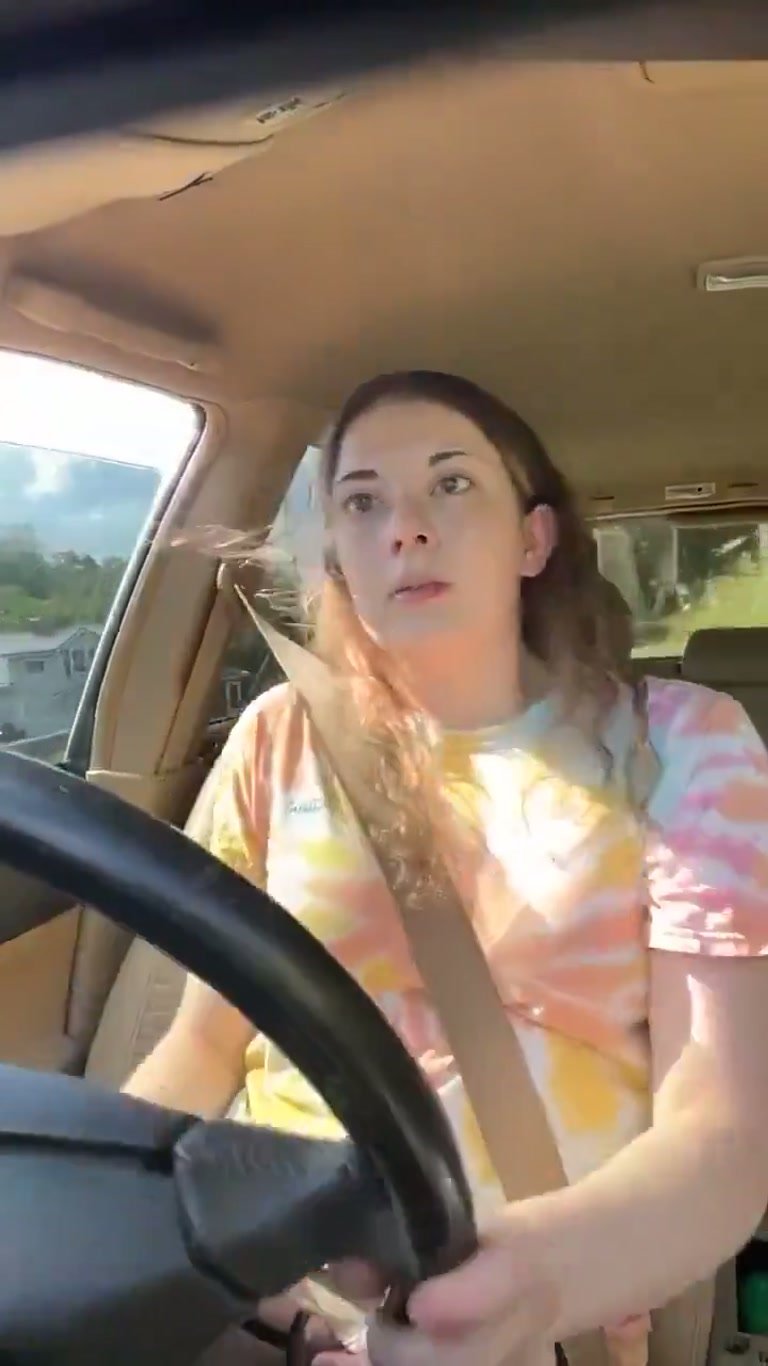
A woman filming herself behind the wheel keeps one hand on the steering wheel and her head tilted back, moving to whatever is playing in the car. Then the camera swings toward the side window, and a stranger's face fills the frame. The posted clip runs just seconds of speech, but it packs a full mood shift into one shot.
An Ordinary Drive, Filmed From the Front Seat
The first frames show a woman in the driver's seat, a seatbelt across her chest and both hands near the wheel of a light-colored interior. She wears a tie-dye shirt in pink, yellow and blue. Through the windows, trees slip past and the front of a house comes into view.
She is not driving in a hurry. Her eyes close for a moment, her head tips back, and a hand lifts off the wheel in a loose gesture. A single line of audio survives in the clip, delivered with a laugh just underneath it:
"One more time!"
Who the line was meant for — a passenger, the phone, or nobody at all — never becomes clear. The interior is light and plain, with the rear seats visible behind her and a frame that fills the screen and rocks with the car's movement.
A Bright Shape Crosses the Shot
Then something new enters the frame. A large yellow and blue object, fringed like a flower-shaped hanging decoration, swings down past the driver's face, close enough to block it entirely for a beat. It is there and then gone, and the camera reacts faster than the driver does.
Within seconds the shot loses its balance. The interior tilts, the windshield fills the frame, and the view gives way to sky, branches and the curve of a car door. Nothing in the audio suggests an impact; there is no collision sound, and no other vehicle is visible at that moment.
For anyone who scrolls through short-form video, the pattern is familiar. A phone set up near a dashboard records a routine drive, one small surprise lands mid-shot, and the final seconds become the part people replay. A viewer only ever sees what the lens happened to catch, which is exactly what makes clips like this so easy to read in different ways.
The Camera Swings Outside
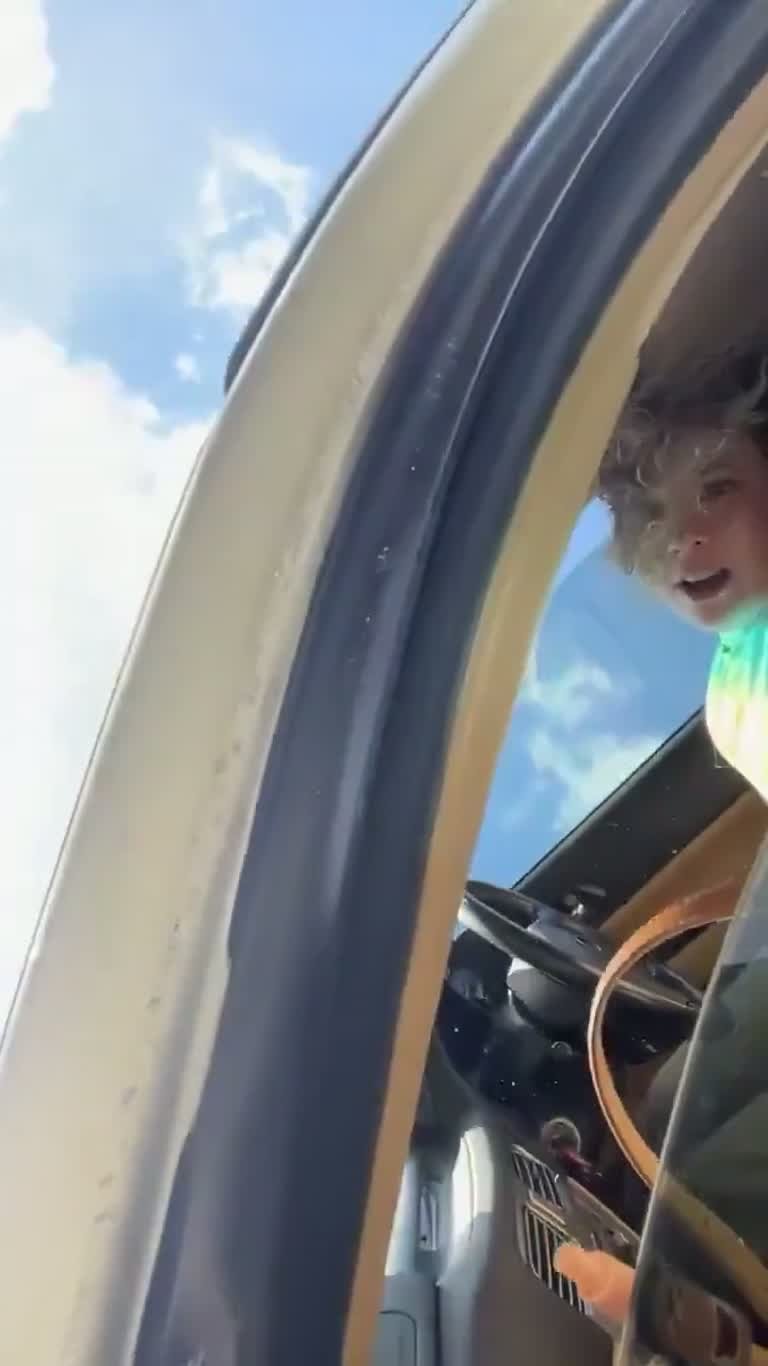
When the image steadies again, the perspective has flipped. The camera now looks through the window from outside the car, where a person with curly hair and sunglasses leans close to the glass, mouth open, filling the frame. Nothing in the footage shows a struggle or an argument; the moment reads as short and abrupt, and the clip cuts away before anything else develops.
Back inside, the driver's face has changed. Her mouth is open, her eyes are wide, and the easy rhythm of the opening is gone. The clip offers no caption, no names and no explanation of what the two people said to each other.
What the Clip Leaves Unanswered
The video, posted under a title that offers little beyond "Banned Videos," is representative of a genre that thrives on exactly this kind of fragment: a few seconds, one surprising beat, and a hard cut before the story resolves. There is no timestamp, no location marker and no caption on the footage itself — only the title it was posted under.
Nothing in the material shows a police response, a formal complaint or any official account of what took place, so it is impossible to say what the exchange on that street actually was. That gap is part of why clips like this travel: an unanswered question spreads further than an answer would, and it leaves plenty of room for doubt.
So what exactly made the driver look up — a repeated take for the camera, a familiar face at the glass, or something else entirely?
This story was edited from a publicly posted video; some details may not be independently verified.