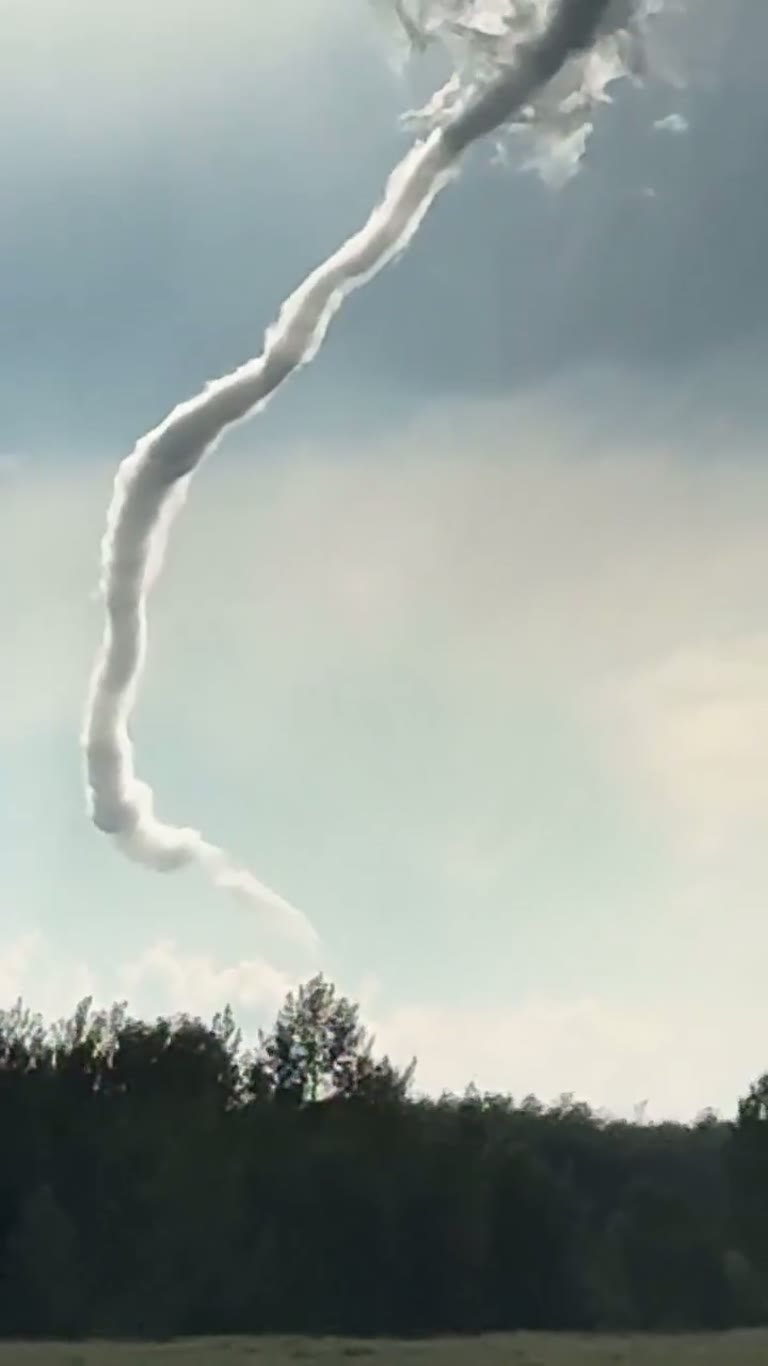
A thin, white funnel curled out of a dark cloud base above the Canadian countryside, looping in a slow S-shape over a quiet field. The clip was posted with a caption that mixes storm-watching with a well-worn internet joke, and it has been passed around as one of the season's more striking sightings.
A Funnel Hanging Above the Treeline
The setting is plain: a flat, pale-green field in the foreground, a dense treeline running along the horizon, and a low ceiling of grey and blue cloud filling the rest of the view. From that cloud base, a narrow tube of condensation extends downward. It is not a heavy, dust-choked wedge. It is rope-thin, bright against the darker sky, and it bends as it descends.
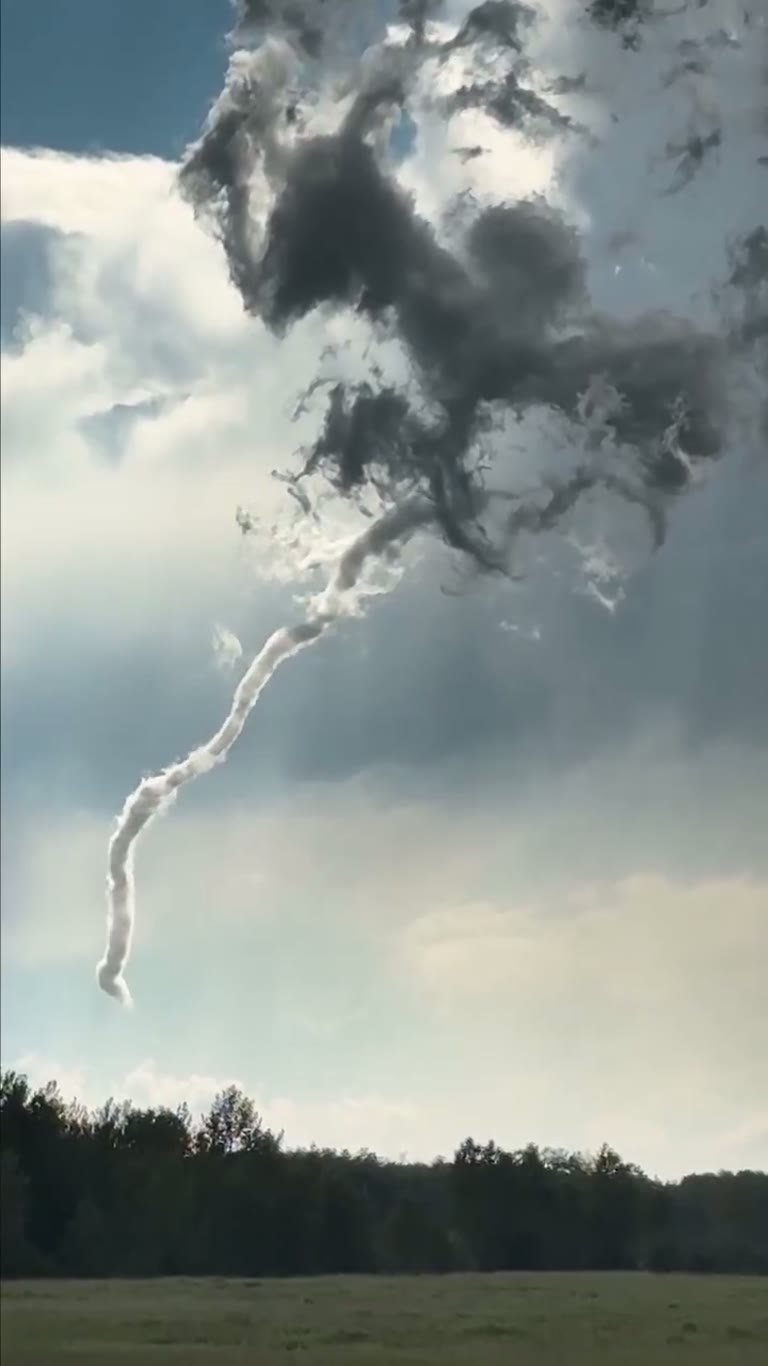
Across the sequence, the funnel keeps changing shape. It narrows, kinks, straightens, then curls again, the way a length of ribbon behaves in moving air. The camera stays fixed on it, and the surrounding landscape barely shifts, which gives the footage an odd stillness.
Nothing in the visible scene suggests damage. There is no debris cloud, no structure, no person walking through the field. The funnel hangs above the treeline rather than pressing down into the grass, and at no point in the clip does it clearly touch the ground. The person filming reacts in a relaxed, almost amused tone, counting this sighting against earlier ones from the same year. There is no alarm in the voice and no sign that anyone nearby was in danger.
What the Caption Actually Says
The post carrying the clip leans on a joke. Its text pairs the storm with "chemtrails," a reference to the long-running online claim that aircraft exhaust trails are something other than ordinary contrails. The phrasing invites the funnel and the trail-like streak of condensation to be read as one event, even though the two ideas come from very different places.
The narration is more grounded, though still informal. The speaker sizes the storm up against others seen earlier in the season and settles on a lighthearted ranking.
"First Canadian Tornado of the Year? No, like the second or third, but this is the best Canadian Tornado of the Year so far."
That ranking is a personal impression, not an official record. The source gives no precise location beyond a national label, no date, and no statement from a weather agency that a tornado was recorded. What the frames show is a funnel-shaped cloud formation over fields and trees. Whether it was a tornado, a funnel cloud, or a brief condensation feature is not settled by the material itself.
Why the Clip Spreads So Easily
Weather footage travels fast because it is short, visually strong, and open to interpretation. A rope-like funnel is also less familiar to many viewers than the wide, dark wedge they picture when they hear the word tornado, so the clip reads as unusual even to people who follow storms closely.
- The scene is quiet and rural, which makes the spinning cloud stand out.
- The funnel's shape shifts continuously, rewarding a second watch.
- The caption adds a familiar internet argument, pulling in commenters.
- No damage appears on camera, so the clip stays easy to pass along.
Because there is no ground contact shown, no harm visible, and no location given, viewers are left to fill the gaps themselves. That is usually where disagreement starts in the comments, and it is why the same clip can be read as a lucky catch by one person and an exaggeration by another.
How to Verify Viral Weather Footage
When a storm clip spreads without a clear place or date, a few quick checks help. Look for a timestamp, a geotag, or a named town in the original post, since reposts often strip both away. Cross-check the time and area against official weather service bulletins and local news coverage from that day. Search for other angles of the same storm, because genuine events usually produce several clips from different observers. Finally, run a reverse image search on a still frame, as older footage is frequently recycled and passed off as new. None of these steps alone proves a clip is fake, but together they separate a documented storm from an anonymous one.
If a funnel like this one appeared over your area, would you keep filming or head for shelter first?
This article was compiled from a publicly posted video; some details have not been independently verified. According to West Coast Wizard.