🎥 Watch the video at the bottom of the page 👇
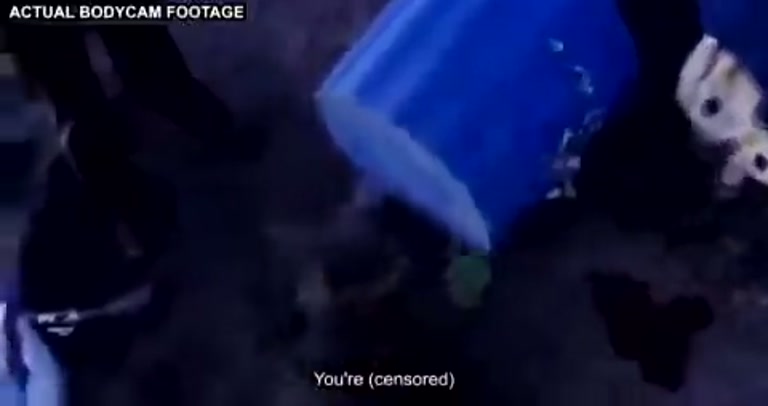
Body camera footage has surfaced showing the tense moments when law enforcement officers discovered two young girls concealed inside blue plastic barrels on a property linked to a cult run by their fathers. The recording captures the immediate aftermath of the search, as officers attempt to identify the children and determine the whereabouts of others who may have been hidden on the grounds. The video offers a rare, unfiltered glimpse into the confusion and urgency that unfolds when authorities execute a search warrant in an environment described as isolated and tightly controlled.
Overview of the incident and the key facts
- The footage shows officers locating two girls hidden inside blue barrels on a property associated with a cult.
- The property was reportedly run by the fathers of the children involved, according to the source description.
- Audio from the bodycam reveals officers asking the girls for their names and the location of other children.
- The search appears to have taken place in a remote, rugged outdoor environment with limited visibility.
- The recording captures a moment of disorientation as officers try to piece together who is on the property and where they are hiding.
- The video was originally shared by Crime Net, a channel known for compiling and distributing bodycam and crime-related footage.
The moment of discovery
The footage begins in near-darkness, the camera jostling as the officer moves across uneven ground. The beam of a flashlight cuts through the gloom, illuminating patches of dirt and scrub. Then, a shape emerges: a large blue plastic barrel, the kind typically used for storage or transport, sitting incongruously in the open. The officer’s breathing is audible, a steady rhythm against the crunch of footsteps. There is no narration, no dramatic music — just the raw, unedited reality of a search that has clearly been underway for some time.
As the camera steadies, a second barrel comes into view. The officer approaches, and the audio picks up voices — muffled at first, then clearer. A child’s voice, small and uncertain, responds to a question. The officer asks, “What’s her name?” The question hangs in the air, a simple inquiry that carries the weight of everything that has come before it. The camera pans, revealing more of the terrain: rocky, barren, and desolate. It is not a place where children would ordinarily be found playing.
The discovery is not presented as a dramatic raid. There is no shouting, no forced entry. Instead, the scene unfolds with a quiet, almost eerie matter-of-factness. The officer’s tone is calm but urgent, the kind of voice used when trying to keep a situation from escalating. The girls are not immediately visible in the frame, but their presence is unmistakable — they are the reason for the search, the reason for the barrels, the reason for the bodycam.
The footage does not show the initial approach or the decision to search the property. It picks up mid-action, leaving the viewer to piece together the context. What is clear is that this is not a routine call. The setting, the barrels, the children — every element points to a situation that is deeply unusual and deeply troubling.
The questions on the audio
The audio track is fragmented, a series of questions and partial answers that paint an incomplete picture. “What’s her name?” the officer asks. Then, a moment later: “Where’s your sister?” The words are simple, but they suggest a larger concern. There are other children unaccounted for. The officer’s voice remains steady, but there is an undercurrent of tension. Every second counts when children are involved, and the officer knows it.
Later in the recording, a different question emerges: “Where is, where’s the other two girls?” The phrasing is awkward, the grammar imperfect, but the meaning is clear. There are two more children somewhere on the property. The officer is trying to establish a headcount, to understand the scope of what they are dealing with. The response is not fully audible, but the officer’s follow-up — “One of these?” — suggests they are being directed toward specific locations.
The transcript also includes the line, “You’re (censored),” which appears to be a moment of realization or frustration. The censorship obscures the exact wording, but the tone is unmistakable. This is not a situation that can be resolved with a simple conversation. The officer is dealing with a scenario that is both logistically complex and emotionally charged.
Throughout the audio, there are pauses — long, heavy silences that speak volumes. The listener can almost hear the officer thinking, processing the information, trying to decide what to do next. The bodycam does not capture the officer’s face, but the voice alone conveys a mixture of determination and unease. This is not what anyone expects to find when they set out on a shift.
The property and the cult connection
According to the source description, the property was run by a cult, and the girls’ fathers were involved in its leadership. This detail, while brief, is crucial. It suggests a closed, insular community where outside scrutiny is unwelcome and where children may be raised according to strict, unconventional rules. The barrels, then, are not merely storage containers — they are hiding places, chosen precisely because they are unremarkable and easy to overlook.
The footage does not show the broader compound, but the glimpses of the terrain suggest a rugged, isolated location. There are no houses visible in the frames, no signs of modern infrastructure. The ground is uneven, covered in rocks and sparse vegetation. It is the kind of place where someone could disappear without a trace, where a community could operate away from prying eyes. The officer’s presence there is a disruption, a breach of the boundary that the cult has likely worked hard to maintain.
The fact that the girls were found in barrels raises immediate questions about their living conditions and their treatment. Were they hiding voluntarily, or were they placed there by adults? Were they frightened, or were they simply following instructions? The bodycam does not provide answers, but it does provide evidence — evidence that something was deeply wrong on this property, evidence that children were being kept in circumstances that prompted a law enforcement response.
The involvement of the fathers adds another layer of complexity. These are not strangers to the children; they are their parents. The decision to hide them, if that is what happened, suggests a level of control and possibly coercion that is difficult to comprehend. The officer’s questions — “Where’s your sister?” “Where’s the other two girls?” — imply that the children may not even know the full extent of what is happening around them.
The officers on the ground
The bodycam perspective puts the viewer directly in the officer’s shoes. We see what they see, hear what they hear, and feel the weight of each decision. The officer is not a superhero; they are a professional trying to navigate an unprecedented situation. Their voice wavers slightly at times, a human reaction to a human crisis. But they keep going, keep asking questions, keep searching.
The footage also hints at the presence of other officers. At one point, a voice is heard saying, “Cedar 1 to B15, why don’t you come on.” This is radio communication, a request for backup or coordination. It suggests that this is not a solo operation, that there is a team working together to secure the scene. The call sign “Cedar 1” and the unit “B15” are specific, adding a layer of authenticity to the recording. This is a real operation, with real protocols, unfolding in real time.
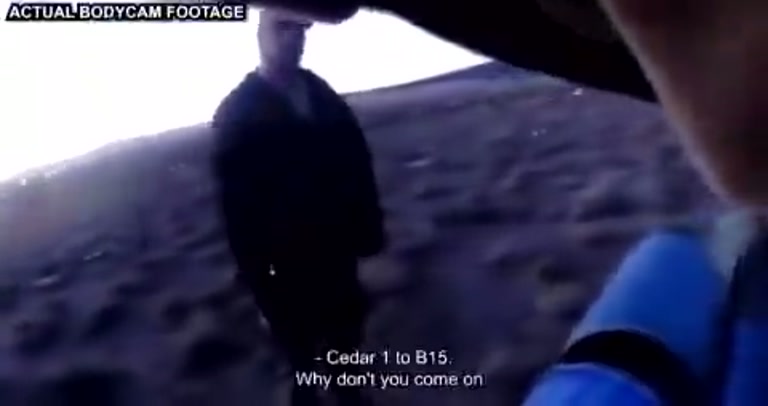
The officer’s physical movements are also telling. The camera swings back and forth, scanning the environment. There is a sense of urgency, but not panic. The officer is methodical, checking each barrel, each potential hiding spot. They are not rushing, because rushing could lead to mistakes. They are thorough, because thoroughness is the only way to ensure that no one is left behind.
The bodycam does not show the officer’s face, but it does show their shadow, cast long across the ground. It is a reminder that behind the camera is a person — someone who will carry this experience with them long after the shift ends. The footage is a record, but it is also a memory, one that will likely be revisited in reports, interviews, and perhaps even court proceedings.
The children at the center
The children are the heart of this story, even though they are barely visible in the footage. Their voices, small and tentative, are the most poignant element of the recording. They answer the officer’s questions, but their responses are not fully captured. We hear the officer ask, “What’s her name?” but we do not hear the answer. We hear “Where’s your sister?” but we do not hear the reply. The gaps are frustrating, but they are also a reminder of the limitations of the source material.
What we do know is that these children were found in a place where they should not have been. They were hidden, concealed, kept away from the outside world. The officer’s questions suggest that they may have been separated from siblings, that they may not have known where the others were. This is a level of isolation that is difficult to fathom. Children need stability, security, and love. The barrels offer none of these things.
The fact that the girls were found at all is a testament to the thoroughness of the search. Someone — perhaps a concerned relative, perhaps a whistleblower — provided information that led law enforcement to this property. That information was specific enough to prompt a raid, to prompt officers to search barrels in a remote field. The children are safe now, or at least safer than they were. But the questions remain: How long were they there? What did they endure? And what will happen to them next?
The footage does not answer these questions. It simply shows the moment of discovery, the moment when the hiding stopped and the questions began. It is a snapshot, not a full picture. But it is a powerful snapshot, one that raises awareness about the realities of cults and the vulnerabilities of children within them.
The aftermath and the unanswered
The video ends without resolution. The officer is still on the scene, still asking questions, still trying to piece together the full story. The viewer is left with a sense of incompleteness, a desire to know what happened next. Did they find the other two girls? Were the fathers arrested? What happened to the children? The footage does not say.
What the footage does do is provide a window into a world that most people will never see. It shows the raw, unglamorous work of law enforcement — the searching, the questioning, the waiting. It shows the human cost of isolation and control. And it shows the resilience of children, who even in the most frightening circumstances, can still answer a stranger’s question.
The source description notes that the property was run by a cult, and that the girls’ fathers were involved. This is a detail that will likely be explored in subsequent reporting. Cults are notoriously difficult to investigate, as they often operate in secrecy and discourage members from speaking to outsiders. The fact that this one was penetrated, that children were found, is significant. It may lead to further investigations, further rescues, further revelations.
But for now, the bodycam footage stands as a record of a single moment. It is not the whole story, but it is a crucial piece of it. It reminds us that behind every headline, there are real people — officers, children, families — whose lives are forever changed by the events that unfold. And it reminds us that sometimes, the most important discoveries are the ones that happen in the most unlikely places.
The footage raises profound questions about the safety of children in closed communities and the challenges faced by law enforcement when trying to intervene. It also highlights the importance of vigilance — the willingness of neighbors, relatives, or concerned citizens to report suspicious activity. Without that initial report, the search may never have happened. The barrels may never have been opened.
For the officers involved, this was likely just one call among many. But for the children, it was a turning point. The moment the barrel was opened, their world changed. They were no longer hidden; they were seen. And that visibility, however frightening, is the first step toward safety. The footage does not show what comes next, but it does show that someone cared enough to look.
The story is not over. Investigations take time, and the full truth may not emerge for months or years. But the bodycam footage ensures that the moment of discovery is preserved — not as a spectacle, but as evidence. Evidence that something was wrong, evidence that someone acted, and evidence that even in the most isolated places, the outside world can still reach in.
| Incident parameter | Logged / on-scene information |
|---|---|
| Location | Remote outdoor property linked to a cult |
| Time of day | Dusk or night, based on low-light footage |
| Children found | Two girls concealed in blue barrels |
| Key audio quote | "Where's the other two girls?" |
| Source channel | Crime Net |
| Property affiliation | Reportedly run by the girls' fathers |
| Search status | Ongoing at the time of the recording |
Important note: The source video does not provide a full resolution, and the identities and exact circumstances remain unverified by independent parties.
Core questions still unanswered
- What happened to the other two girls who were not immediately located?
- Were any arrests made following the discovery on the property?
- How did law enforcement obtain the information that led them to search the barrels?
Learn more: Charlotte School Brawl: Officer Investigated for Takedown
This story was edited from a publicly posted video; some details may not be independently verified.