🎥 Watch the video at the bottom of the page 👇
A newly released police bodycam video captures the tense, disorienting moments following a violent encounter in an outdoor area at night. The footage shows a man with a bloodied mouth being restrained, while another person claims to have been stabbed, a claim an officer immediately doubts. The clip, shared widely online, offers a raw, unfiltered look at the confusion and split-second decisions that follow a chaotic incident.
Overview of the incident and the key facts
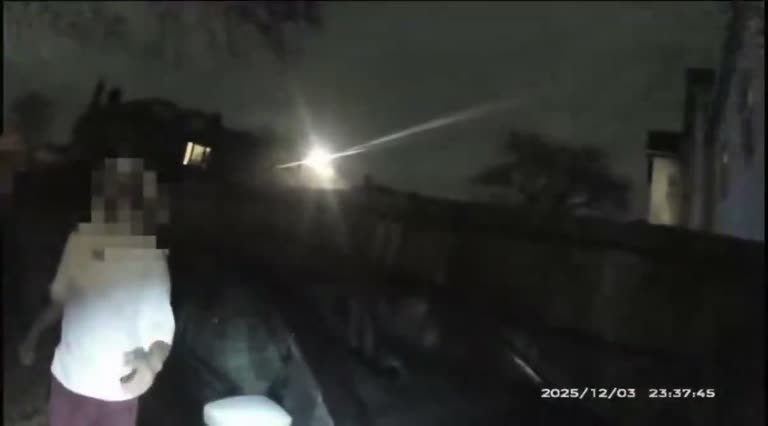
- The video appears to be police bodycam footage from a nighttime incident in an outdoor residential area.
- A man is seen being restrained by officers, with one officer noting he has a "mouth full of blood" and has been jumping over fences.
- Another individual at the scene claims to have been stabbed, but an officer responds, "I don't think you have mate."
- A person at the scene says they were assaulted, stating, "He's grabbed my brother, he's took my turban off, started grabbing my head."
- The footage shows officers working to secure the scene and manage multiple people, with one officer heard asking, "Has anyone been hurt other than him?"
The chaotic nighttime scene
The video opens in near-total darkness, the kind of blackness that swallows details and leaves only shapes and sounds. A police body camera captures the scene in shaky, high-contrast frames, the flashlight beam cutting through the night to illuminate a man on the ground. He is dressed in dark clothing, his face obscured by the angle, but the officer's voice cuts through the ambient noise with a blunt assessment: "He's got a mouth full of blood."
The officer's narration is calm but urgent, a stream of consciousness meant for the record. "He keeps dropping side to side so I'm just trying to keep him set up," the officer says, describing the physical struggle to keep the man restrained. The words paint a picture of a subject who is not compliant, not still, and not easily controlled. The officer adds that the man has "jumped over these fences and stuff like that" and has "fallen from there and slipped from there." It is a scene of movement and chaos, where the geography of the night—fences, uneven ground, the dark—becomes as much an obstacle as the people involved.
The camera swings wildly, catching glimpses of other figures in the darkness. The officer's voice continues, a steady anchor in the confusion: "There's other shooters left over there mate." The phrase is cryptic, a snippet of radio-style communication or a warning to others. It suggests that the situation is not yet contained, that there are other elements or people to be aware of. The viewer is left to piece together the puzzle from fragments, the way the officer himself is likely doing in real time.
The claims and the confusion
As the camera continues to roll, the focus shifts to another individual at the scene. A voice, presumably from a person standing nearby, makes a startling claim: "I've been stabbed." The officer's response is immediate and skeptical. "You've been stabbed? Whereabouts?" the officer asks, before adding, "I don't think you have mate." The exchange is a microcosm of the confusion that reigns in the aftermath of a violent event. In the dark, with adrenaline high and information scarce, claims and counter-claims fly. The officer's doubt is not necessarily an accusation; it is a professional assessment made in the moment, a triage of truth in a situation where nothing is clear.
The camera captures the officer instructing the person to put their hand in a cuff, a standard procedure that suggests the person is being detained or at least secured. "Hand? Put the hand in the cuff mate. Come on please!" the officer says, the "please" a small concession to civility in a moment that is anything but civil. The tone is firm but not hostile, a command delivered with the expectation of compliance.
Meanwhile, another voice—perhaps the same person who claimed to be stabbed, or another individual entirely—offers an explanation for the violence. "He's grabbed my brother, he's took my turban off, started grabbing my head." The words are heavy with meaning. The mention of a turban suggests a person of Sikh faith, and the act of removing it is a profound violation, a physical and spiritual assault. The speaker is not just describing a fight; they are describing an attack on identity and dignity. The officer asks, "Are you injured?" and the response comes back: "Yeah, I've got a swollen eye, a little bruise." The injuries are real, if not life-threatening, and they add another layer to the night's events.
The response and the aftermath
The bodycam footage shows the officers attempting to bring order to the chaos. One officer asks, "Has anyone been hurt other than him?" a question that seeks to triage the situation and identify all victims. The answer—"Yeah, me"—comes from the person who says they were assaulted. The officer then instructs, "Alright, just step back a little bit for me." It is a small attempt to create a perimeter, to separate the players and prevent further escalation. The camera captures the arrival of more help: "Someone flagged these down." The phrase suggests that the incident did not go unnoticed, that someone in the community raised the alarm.
The officers continue their work, moving from person to person. "Alright, let's get you out of there shall we? Grab his other arm," one officer says, directing the physical restraint of the man on the ground. The teamwork is evident, a choreography of law enforcement that is both practiced and improvised. The man on the ground is the central figure, the one with the bloodied mouth, the one who allegedly jumped fences and fell. But the footage makes clear that he is not the only one affected.
The video ends without a clear resolution. There is no final pronouncement, no official statement of what happened or why. The viewer is left with the raw material of the event: the darkness, the blood, the claims, the doubts, the commands. It is a snapshot of a moment that is both specific and universal, a reminder of the unpredictability of human conflict and the difficult work of those who respond to it. The footage has been shared widely online, drawing attention for its unflinching portrayal of a tense and confusing night.
The questions that linger
The release of the bodycam footage raises as many questions as it answers. Who was the man on the ground, and what led to his restraint? What was the nature of the dispute that left one person with a bloodied mouth and another with a swollen eye? The mention of a turban suggests a possible hate crime or bias-motivated attack, but the footage does not provide a definitive conclusion. The officer's skepticism about the stabbing claim adds another layer of ambiguity. Was the person actually stabbed, or was it a mistake made in the heat of the moment? The footage does not say.
The video also highlights the challenges of policing in low-light, high-stress environments. The officers are forced to make split-second judgments based on incomplete information. Their words—"I don't think you have mate"—reflect the difficulty of discerning truth from confusion. The footage is a reminder that body cameras capture raw data, not definitive narratives. They show what happened, but not always why.
For the public, the video is a window into a world that is usually hidden. It shows the messiness of real-life emergencies, the way that violence and fear can turn a quiet night into a whirlwind of shouting and struggle. It also shows the humanity of those involved—the officer who says "please," the person who claims to be a victim, the man on the ground who is both a subject of force and a person in pain. The footage does not offer easy answers, but it does offer a vivid, unsettling glimpse of a night that no one involved will soon forget.
###END===
Learn more: Georgia Judge’s Arrest Video Ends in Acquittal, Removal
This story was edited from a publicly posted video; some details may not be independently verified.