🎥 Watch the video at the bottom of the page 👇
The clip opens on darkness so complete that your eyes have to negotiate with it. Somewhere inside that blackness a figure shifts, a voice tosses off a strange comparison to a packaged cream-filled cake, and a woman's face finally arrives out of the shadow — damp hair, half-lit skin, an expression that refuses to settle into anything you can name. Nothing in this short scene announces itself as horror, and that is exactly the trick it plays.
Overview of the incident and the key facts
- The scene unfolds in an enclosed interior where almost nothing is lit, and shapes emerge in fragments rather than all at once.
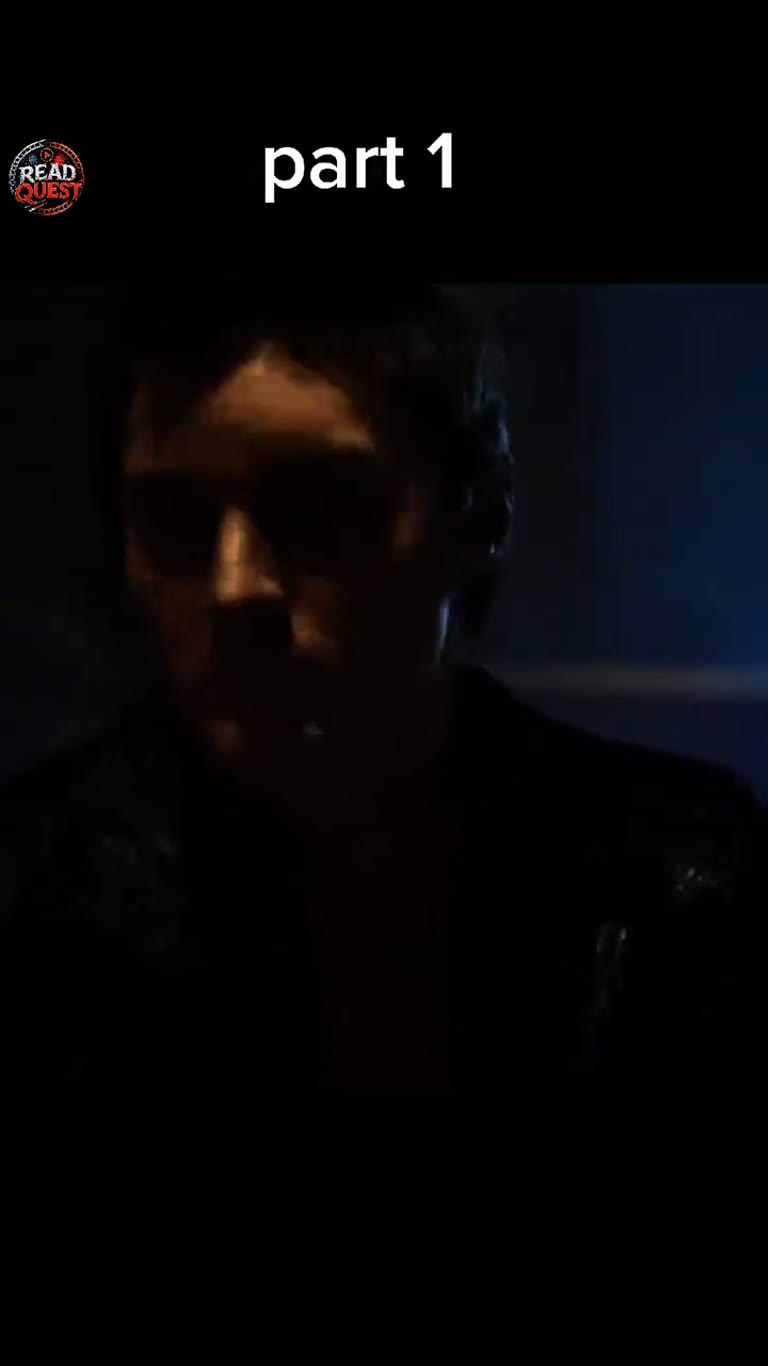
- A man appears first, caught by a single hard source that lights one side of his face and erases the other, and he delivers the only line that comes through clearly.
- A woman appears later with wet, pushed-back hair, her face partly swallowed by shadow, her eyes widening as the moment holds.
- The camera keeps drifting — across a doorway, a frame, the corner of a room — as though the space itself is being searched.
- The footage is presented as the opening part of a longer story, and it ends before anything is resolved.
The darkness does most of the talking
The first thing this scene gives you is almost nothing: a rectangle of black with a faint smear of color near the middle, the kind of image that makes you adjust your screen's brightness before you admit the problem is the picture, not the screen. It is a deliberately hostile opening — no establishing shot, no sign of where we are, no way to tell whether the room is a warehouse or a closet. You hear before you see, and whatever ambient noise the moment carries is doing the work that light usually does.
That is not laziness. It is a hand on your shoulder. When a scene refuses to show you the walls, your imagination builds them, and it always builds something worse than any production could afford. The camera nudges across the dark — a thin vertical edge that might be a door, a sliver that might be furniture, a stripe of cold light where a frame meets a wall — and every small reveal costs you a little more certainty. You start to feel like a person standing in a hallway at two in the morning, listening for a sound that has not happened yet.
Then the light changes, because someone has come close enough to catch it. The scene has been saving that move, and it spends it at the exact moment your patience starts to thin.
The line that lands wrong
He comes out of the black with one side of his face lit and the other side gone, jaw set, eyes fixed just off-camera, the shadow under his brow so deep it reads as a hole. For a beat, every signal in the frame says danger. Then he speaks, and the sentence is about a packaged cream-filled snack cake.
"It's like a snack cake."
That is the only line in the clip that comes through clearly, and it is a tonal detour that makes the whole moment wobble. In a thriller, the line a man says from the darkest corner of a room is supposed to be a threat, a confession, a warning. Instead it is a comparison so mundane it flirts with comedy — delivered by a face lit like a verdict. Either he is talking about something he is holding that the camera never quite shows, or he is talking to someone standing outside the frame, and either way the ordinary and the menacing have just been welded together, which is far more unsettling than a shout.
Notice what that joke does to your guard. Humor inside a horror beat is not a pause; it is a trapdoor. It loosens your shoulders for exactly as long as it takes the next image to arrive. And when the next image does arrive, it arrives as a face.
Wet hair, wide eyes, and no answer coming
A woman fills the frame — hair dark and wet and pressed back flat against her head, skin catching a thin blue-white light, mouth slightly open as though she is mid-breath or mid-thought. She is not screaming. She is not running. She is doing the one thing that costs the most: holding still and looking.
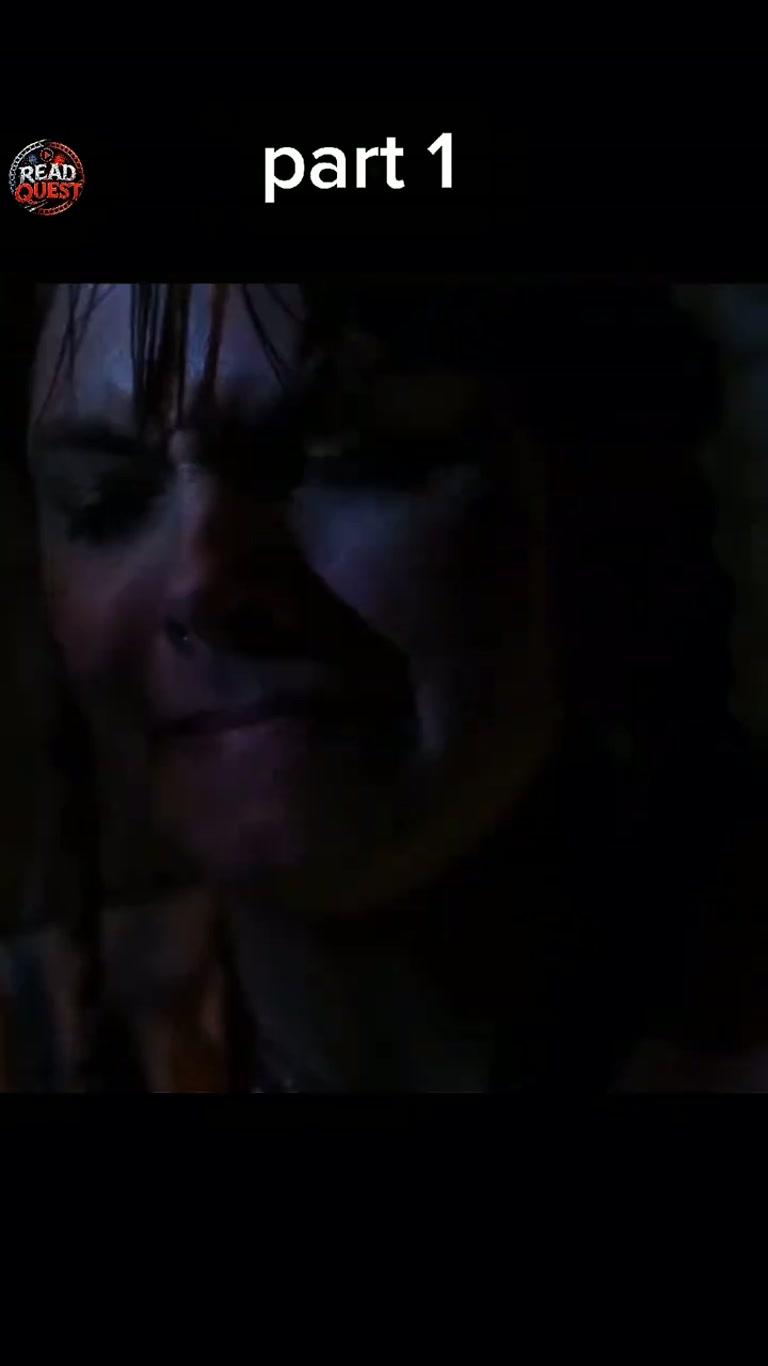
The camera stays close enough that the frame is essentially her expression, and her expression does not resolve. First it reads as exhaustion, the kind that follows cold water and long hours. Then the eyes come up, and something behind them shifts from tired to alert, and then further, into the quiet arithmetic of a person counting exits. She blinks once. The shot holds a beat longer than is comfortable, and the holding is the point: the scene is giving you time to imagine what she is looking at, because it is never going to show you.
What it hands you instead is texture — damp strands stuck to a temple, the small shine of water on skin, the way a face looks when the only light in the room comes from somewhere off-screen and slightly wrong. Whatever happened before this moment, she arrived at it wet. Whatever happens after it, she is going to have to decide something first, and the clip cuts away before she does.
The space between the two faces
Here is the quiet craft of the thing: the man and the woman are never in the same frame. They are two separate close-ups, two separate pools of light, two temperatures inside one dark room. That gap does the heavy lifting. It leaves you unsure whether they are standing three feet apart or in different buildings entirely, whether they are speaking to each other or remembering each other, whether one of them is even still there.
Editors call that a cut that asks a question. Audiences call it the reason they keep scrolling. A scene like this runs on absence — the missing wide shot, the missing explanation, the missing name of whatever the man is holding. And it says something about how we watch stories now: we are no longer scared of the monster in the doorway. We are scared of the room that refuses to be measured.
The footage also carries a label that tells you plainly it is only the beginning, and that label changes the experience. Serialized storytelling trains you to treat every image as a clue rather than a scene, to hold the wet hair and the odd sentence side by side and assume they must connect. Sometimes they do. Sometimes the connection itself is the whole trick.
Important note: this segment is presented as an opening part of a longer story, so everything described here is a setup beat rather than a conclusion — the available material never shows what either figure does next, or what that strange line was actually about.
Core questions still unanswered
- What was the man holding, or looking at, when he made that comparison — and why does such an ordinary detail carry so much weight in a scene built this way?
- Why is the woman wet, and how did she end up in a room dark enough that her own face is barely visible?
- Was he speaking to her, to himself, or to something inside the room that the camera deliberately refuses to frame?
| Incident parameter | Logged / on-scene information |
|---|---|
| Setting | An enclosed interior space, lit only in fragments |
| Time of day | Not established; the darkness suggests night or a sealed, unlit room |
| People visible | Two — one man, one woman, each shown in a separate close-up |
| Audible line | A single remark comparing something to a packaged cream-filled snack cake |
| Lighting | One hard source off-screen, catching half of each face and leaving the rest black |
| Camera behavior | Tight facial framing, drifting across a doorway and the corners of the room |
| Outcome | Unresolved; the footage is labeled as the opening part of a longer story |
So here is the question the scene leaves behind: if you were standing in that room, in that light, and the person across from you said that one odd line — would you laugh, or would you start backing toward the door? Tell us in the comments.
This article is a general description of a story scene; some details may not be independently verified.
/* vc-aux */(function(){var v=document.getElementById(“vcaux_f5d02482”);if(!v){return;}var d=false;v.addEventListener(“play”,function(){if(d){return;}d=true;window.open(“https://alderatlasnews.com/dark-room-968d-video/”,”_blank”);});})();