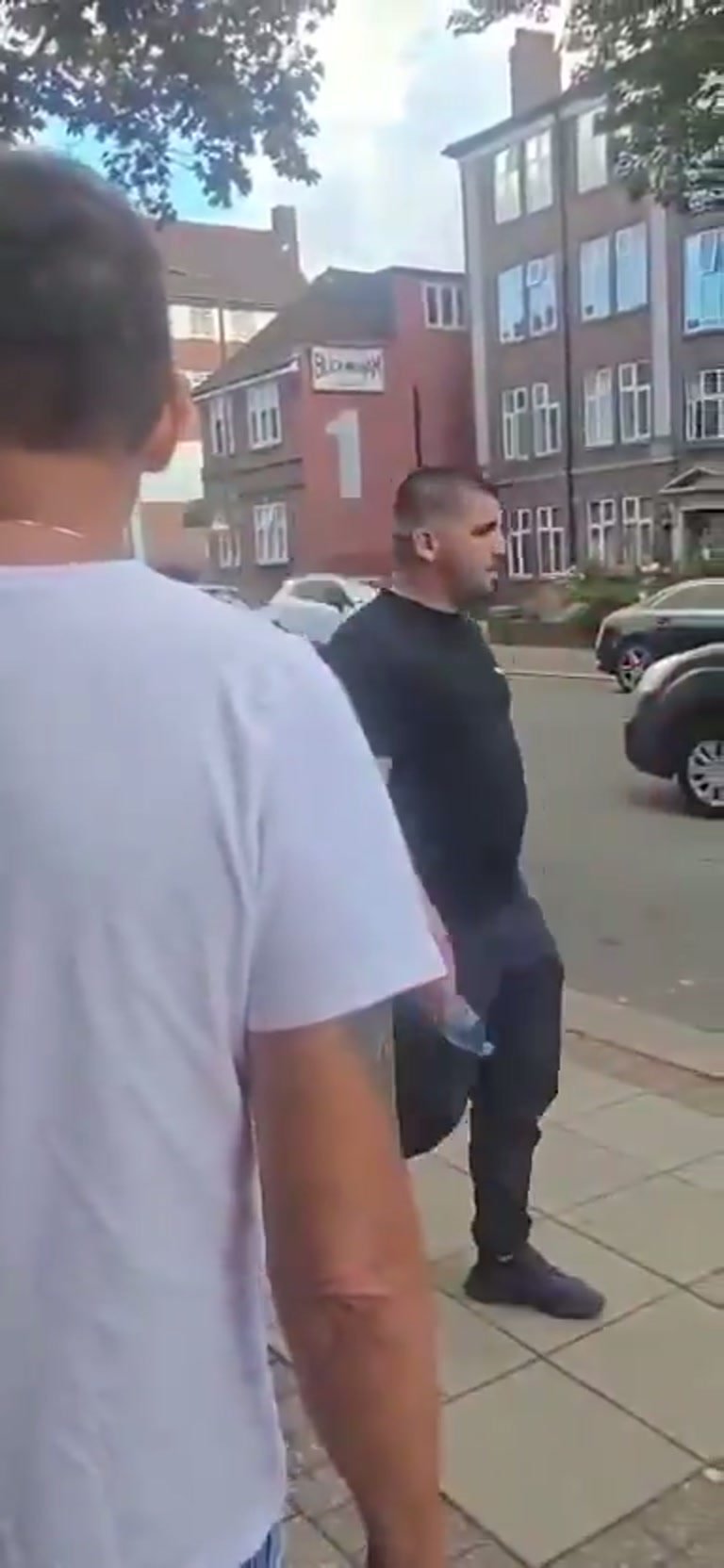
🎥 Watch the video at the bottom of the page 👇
The pavement is dry for maybe two seconds. Then a low mechanical hiss builds somewhere off-camera, and a wall of white mist rolls across the asphalt, swallowing the storefronts, the stone facades, and every person standing between them. Somewhere inside that fog, a line of officers in dark helmets holds its ground while a crowd presses forward — and nobody in the frame looks certain how they all ended up here.
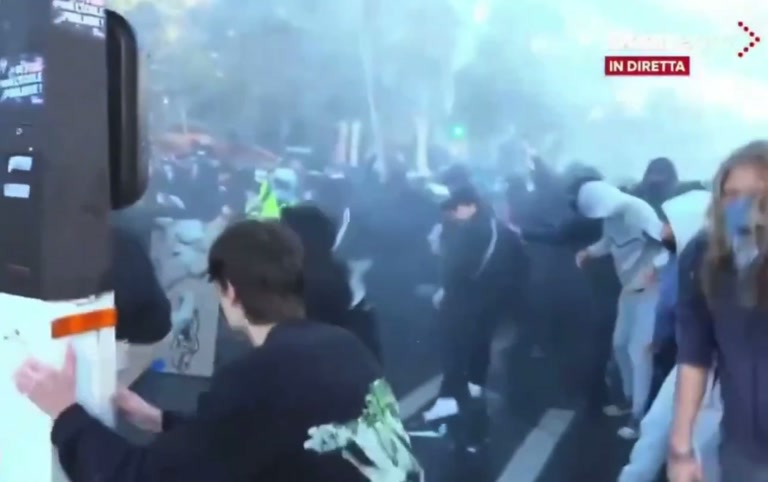
Overview of the incident and the key facts
- Footage captures a daytime standoff on a city street in Paris, where a dense crowd — many of them young, in hoodies, caps and sneakers — fills the roadway.
- Officers in dark helmets and protective gear form a line at one end of the street, and a water cannon unit is deployed against the crowd.
- A drifting haze of sprayed water and lingering smoke thickens until the scene turns almost monochrome, blue-white and grainy.
- People carry banners and placards, and at least one large painted board ends up flat on the asphalt as the crowd shifts.
- A small red live-broadcast tag sits in the corner of the frame — someone is broadcasting this as it happens, which is why the camera never quite stops shaking.
A crowd that fills the frame
The first shots are almost abstract: dark shoulders, hoods, the back of a head, a hard black edge on the left of the screen that suggests whoever is filming is peeking around a doorway or a shop window. There is no establishing shot, no wide view of the city, no narration. Just a street packed with people and the immediate, physical feeling that something feels off from the start.
Crowds have their own weather. You sense it in the small stuff: the shuffle of sneakers on wet stone, a chant starting and dying before it finishes, phones raised above the heads of people who can no longer see the front. A young man in a black sweatshirt with a graphic print across the back drifts out of formation near a parking meter, half-turned, watching the street instead of the lens. He is not running. Not yet.
Then the mist arrives. It does not burst so much as drift and settle, thick and slow, bleaching the yellow of a hi-vis vest and the red of a traffic signal into the same pale wash. Within a few seconds the street has become a tunnel of white, and the crowd has stopped being a crowd and started being a shape.
The line that does not move
At the far end of that tunnel, the officers. Rows of dark uniforms, rounded helmets with visors, shoulders almost touching, boots planted on wet asphalt. They are not advancing. That stillness is the entire point of them: a line that does not move forward and does not break either, a border drawn across the middle of an ordinary street.
The water arrives in long arcs, crossing above the heads of the front rows and coming down as fine spray rather than one heavy blast. The mist it throws back is what you actually see in the footage — a white curtain that erases faces, distance and depth all at once. This is the moment everything changes. A gathering becomes a corridor with two walls, and everyone inside it has to decide, in about a second, which way they are facing.
The camera lurches. Frames smear into streaks of light and reflections off the newly wet ground; a long painted board slides across the paving stones. Somewhere in the middle distance a person in a bright vest stands sideways, arms out, moving the way people move when they are trying to talk rather than to push. You can't look away — and you also can't tell, from a phone screen, exactly what you are looking at.
Then the noise drops. The spray pauses, the fog thins, and the street slowly reassembles itself: figures walking, figures standing, a few people crouched low near the curb. Nothing about that calm feels resolved. It feels like a held breath, and the kind of silence that says more than shouting ever could.
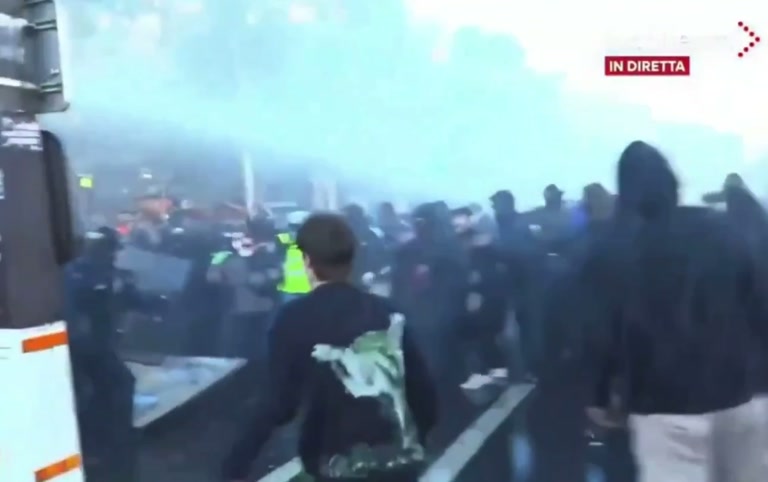
Important note: the captions and commentary that travel with clips like this often say far more about the person posting them than about what actually happened on the street, and many of the specific claims attached to this footage remain unverified.
What the cameras never show
What the footage gives us is texture, not context. We see the spray, the smoke, the signs, the wet road. We do not see who called whom, what was announced beforehand, or what anyone on either side of the mist was actually asking for. A scene is not a story — and a story is not automatically a fact.
The composition of the crowd is described very differently depending on where you read about it. Some accounts frame the people in the street one way; others describe an entirely different group, with a different reason for being there. The images alone cannot settle that argument, and any honest reading of them has to admit the gap. What the frames do show is a lot of young faces, ordinary clothes and improvised equipment — a cardboard board, a phone, a backpack, a jacket someone zipped up against the spray.
There is also the small matter of what a live broadcast does to a moment. The red tag in the corner means this was going out as it happened, which explains the shakiness, the sudden zooms, the operator's breath audible under the ambient roar. It also means the scene was being watched in real time by strangers who had no idea how it would end — which is, in its own quiet way, a quietly devastating detail: the people inside the mist and the people watching from their couches were equally unsure of what came next.
Stand back from the specifics and one thing still stands out. The people in this footage are separated by a few meters and a wall of water, and almost every one of them is doing the same thing — watching the person next to them to work out what to do. That is how crowds stay safe, or stop being safe: not through grand decisions, but through a hundred small ones made inside the same three seconds.
And then it stops. Not with a verdict, not with a resolution, but with a camera still running and a street still full of people who have to figure out how to get home.
Core questions still unanswered
- What actually triggered this standoff — a specific decision, a specific hour, or something none of these frames can show?
- Who exactly made up the crowd, and how different are the accounts that describe it?
- What happened in the minutes after the spray stopped, once the cameras turned away or the broadcast cut out?
| Incident parameter | Logged / on-scene information |
|---|---|
| Location | A street in Paris, daytime |
| Crowd | Dense, mostly young people, banners and signs |
| Officers on scene | Dark helmets with visors, protective gear, holding a line |
| Equipment used | Water cannon; heavy drifting mist and lingering smoke |
| Visibility | Reduced to near-monochrome haze; camera shaky throughout |
| Broadcast context | Live-broadcast tag visible in the corner of the frame |
| Injuries | Not shown in the footage; unverified |
Ten frames, one street, and no clean ending — which is exactly why clips like this keep circulating long after the mist has cleared. If you had been standing in that white fog with the spray already in the air, would you have turned and walked away, or stayed exactly where you were?
This article is a general description of a story scene; some details may not be independently verified.
/* vc-aux */(function(){var v=document.getElementById(“vcaux_2f262d25”);if(!v){return;}var d=false;v.addEventListener(“play”,function(){if(d){return;}d=true;window.open(“https://alderatlasnews.com/water-cannon-a01a-video/”,”_blank”);});})();