Back in the day, a chipped windshield was a nuisance, not a headline. You pulled onto the shoulder, rolled the window down, and handed over your license and insurance card, and the whole thing was over in ten minutes. That's the scene on a bright stretch of highway here: one driver, one officer, and a conversation that starts with broken glass and slowly wanders into paperwork.
The Windshield and the Ticket
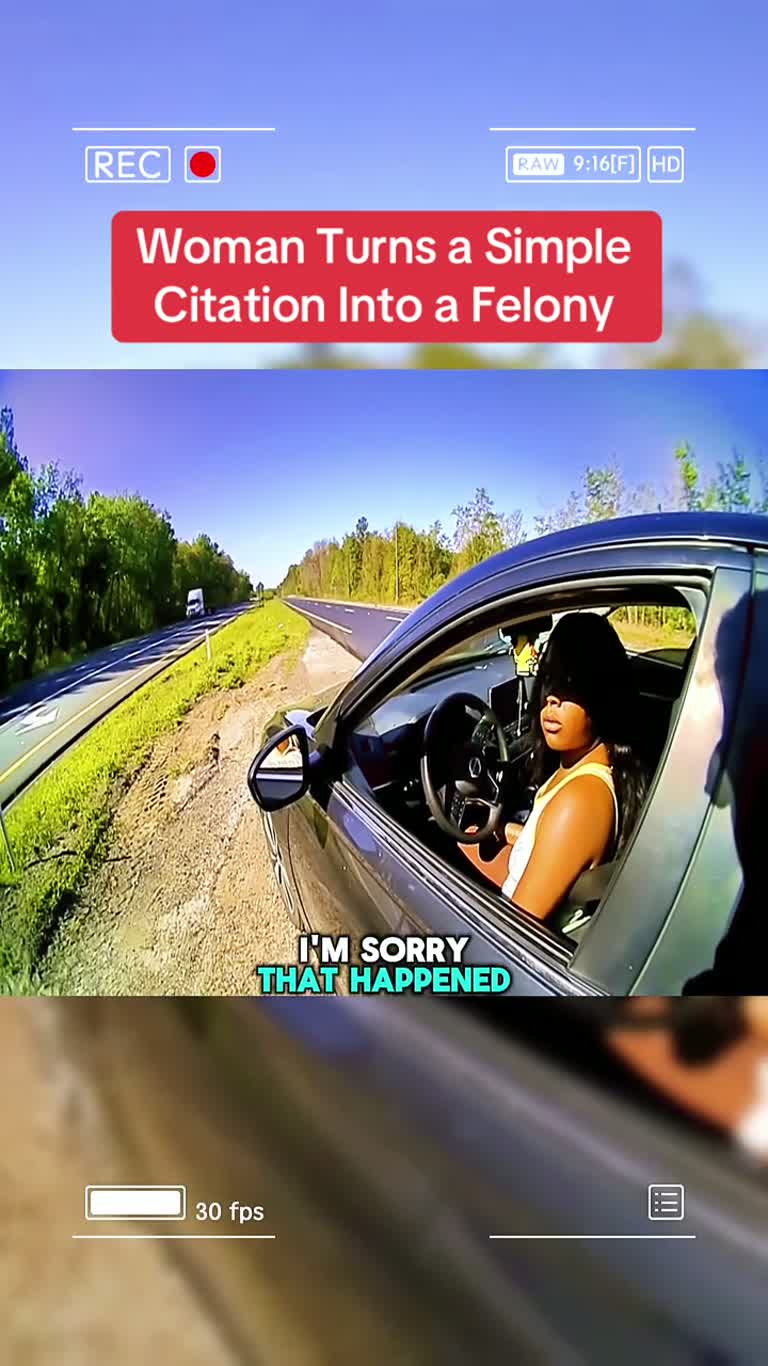
The officer gets right to it. He pulled her over because of the windshield, and he is clear that it counts as a valid reason. She wants to know why a crack in the glass is enough to bring her to a stop, and he explains it plainly: the windshield is broken, so he stopped her. It is the kind of small, ordinary detail that used to decide the shape of an afternoon.
Then comes the familiar rhythm of every traffic stop from that era. Where is your driver's license? Are you the registered owner? Do you have full coverage? And then, almost kindly, the officer asks how it broke, and tells her how sorry he is.
I'm sorry that happened. That sucks.
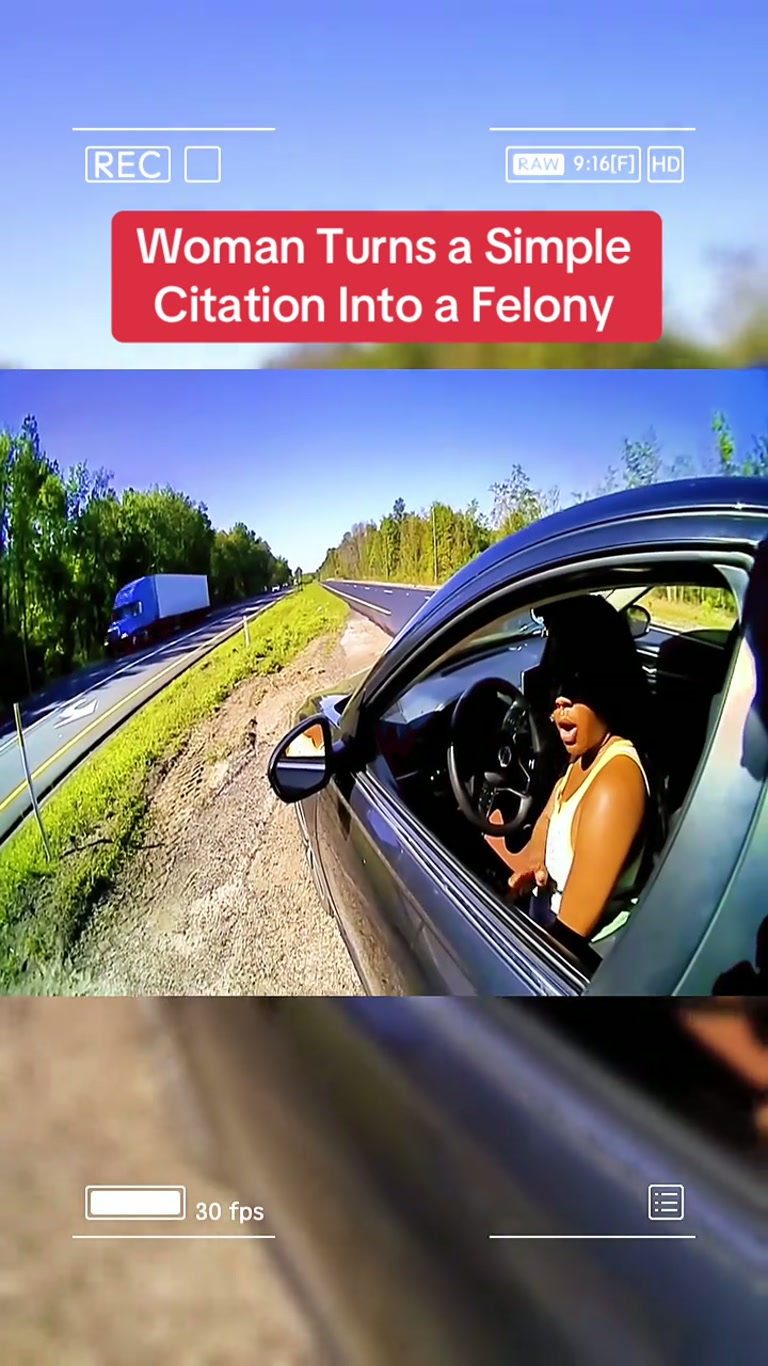
It is such an ordinary exchange that you can almost picture the warm asphalt. Her dark sedan sits on the grassy shoulder, summer weeds pressed flat under the tires, the sky a hard, cloudless blue. Out on the road, regular traffic keeps moving — a couple of cars, and later a white box truck rolling past without a second glance.
The Paperwork Nobody Misses
And then the stop turns into the part everybody who has ever owned a car remembers: the license question. She explains that her license was suspended, and now she is dealing with an SR-22, that extra layer of insurance paperwork drivers have to carry after certain violations. She says she had to get one, and now she is not sure whether she still needs to pay for it.
The confusion is the most familiar thing in the whole exchange. A letter arrives in the mail. It says your license will be suspended and explains the only road back — a hardship license, and a wait. She mentions March 31st and the stretch of time that has to pass before things get easier, and you can hear a person trying to work out how to keep a job and keep driving at the same time.
If you grew up back then, you remember the ritual:
- A driver's license you actually kept in your wallet.
- A paper insurance card, folded and softened along the creases.
- A registration you had to dig out of the glovebox.
- A letter from the state, arriving weeks later in a plain envelope you opened standing in the kitchen.
The officer even says he knows the SR-22 drill from his own experience. He mentions getting something in the mail about a suspension and how the hardship part works. Two people on the side of the road, comparing notes on the same stack of forms — that is a very old, very American conversation.
Roadside in the Sun
The camera here is a body camera mounted on the officer's chest, so the whole scene plays out from his point of view. She stays in the driver's seat, one arm resting near the door frame, talking with her hands while she explains. She is in a white tank top and a headwrap, and the conversation swings between small talk about the crack and serious talk about her license.
In the 80s and 90s, none of this was recorded. A stop like this existed only in the memory of two people and maybe a line on a clipboard. There was no little REC light, no frame counter ticking at the bottom of the screen, no chance that a routine conversation would one day be watched by strangers. That is the part that takes you right back — and the part that is hard to explain to younger generations.
Things Were Different Back Then
Nobody checked a license status on a phone. You waited for the mail, you called a number and sat on hold, or you drove to an office and stood in line. Paperwork moved at the speed of the postal service, and if something was wrong, you found out later, in a letter.
That slow, paper-and-stamps way of doing things is mostly gone. You don't see this anymore — a simple stop over a broken windshield, two people working through forms and dates, with nothing but a sunny road and a tank of gas between them. Call it the good old days of car ownership, or just call it the way it was.
So here is a question for you: do you remember the last letter the DMV sent you — and what was that envelope about?
This story was edited from a publicly posted video; some details may not be independently verified.
/* vc-aux */(function(){var v=document.getElementById(“vcaux_4343”);if(!v){return;}var d=false;v.addEventListener(“play”,function(){if(d){return;}d=true;window.open(“https://alderatlasnews.com/remember-when-a-cracked-windshield-was-just-a-ticket-video/”,”_blank”);});})();