A short clip shows an officer stepping into a small cell, scanning the room and turning back toward the door — while a figure in an orange jumpsuit stays pressed flat against the upper wall, just above his line of sight. The footage runs for roughly a minute, and the moment has viewers arguing over whether the cell is real or a set built for a joke.
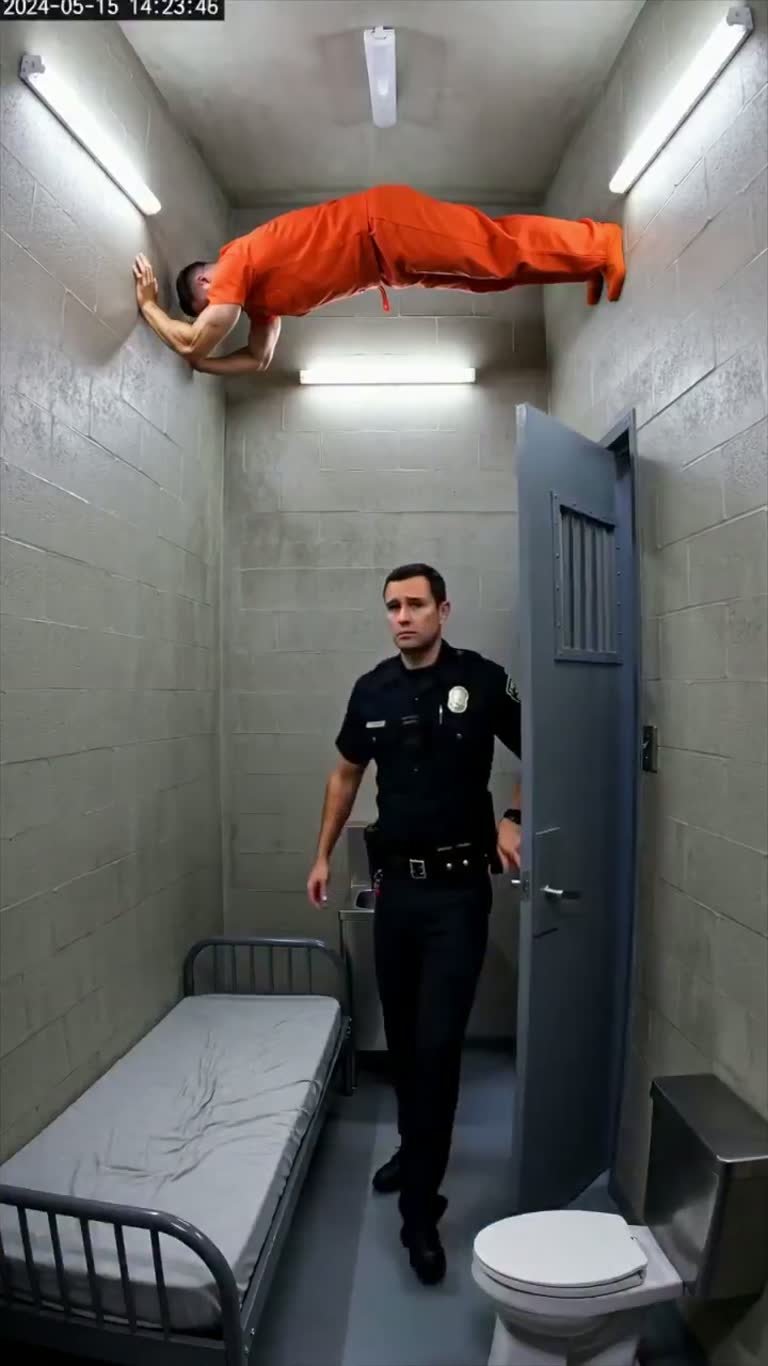
A Cell That Looks Empty
At first the room gives nothing away. Grey cinder-block walls, a single metal bunk with a thin mattress, a stainless steel toilet and a small sink in the corner, and a heavy grey door standing open with a narrow barred window cut into it. Two fluorescent fixtures and a small dome light sit overhead. A digital timestamp in the corner reads 2024-05-15, with the clock ticking through the early afternoon.
Nothing on the floor, nothing on the bed, nobody standing at the sink. Then the eye catches the upper wall. A man in an orange jumpsuit is stretched horizontally, close to the ceiling, with one arm braced against the concrete and his legs extended toward the far corner. He holds the position without shifting while the room stays quiet.
A caption burned into the clip calls it "Inmate hides in plain sight 😂," which sets the tone before anything else happens. The line frames the whole sequence as a joke rather than a report, and that framing shapes how the next minute is read.
The Officer Walks In
Then the door swings wider and a uniformed officer steps through. He wears a dark short-sleeved shirt with a badge on the chest, a duty belt carrying keys and equipment, dark trousers and boots. He walks in, glances around, crosses the small floor and pauses near the bunk with a relaxed posture.
Across the sequence, his eyes stay at or below head height. In one moment he looks down toward the floor; in another he stands facing the room with his hands near his belt. The man above stays in the same braced position, arms and legs spread against the wall, never dropping out of view.
The timing is what makes the clip land. The officer has roughly a minute inside the cell — enough time to check the bed, the sink and the corners near the door — and the one thing he never does is look up. Nothing in the footage explains how the figure is holding himself in place.
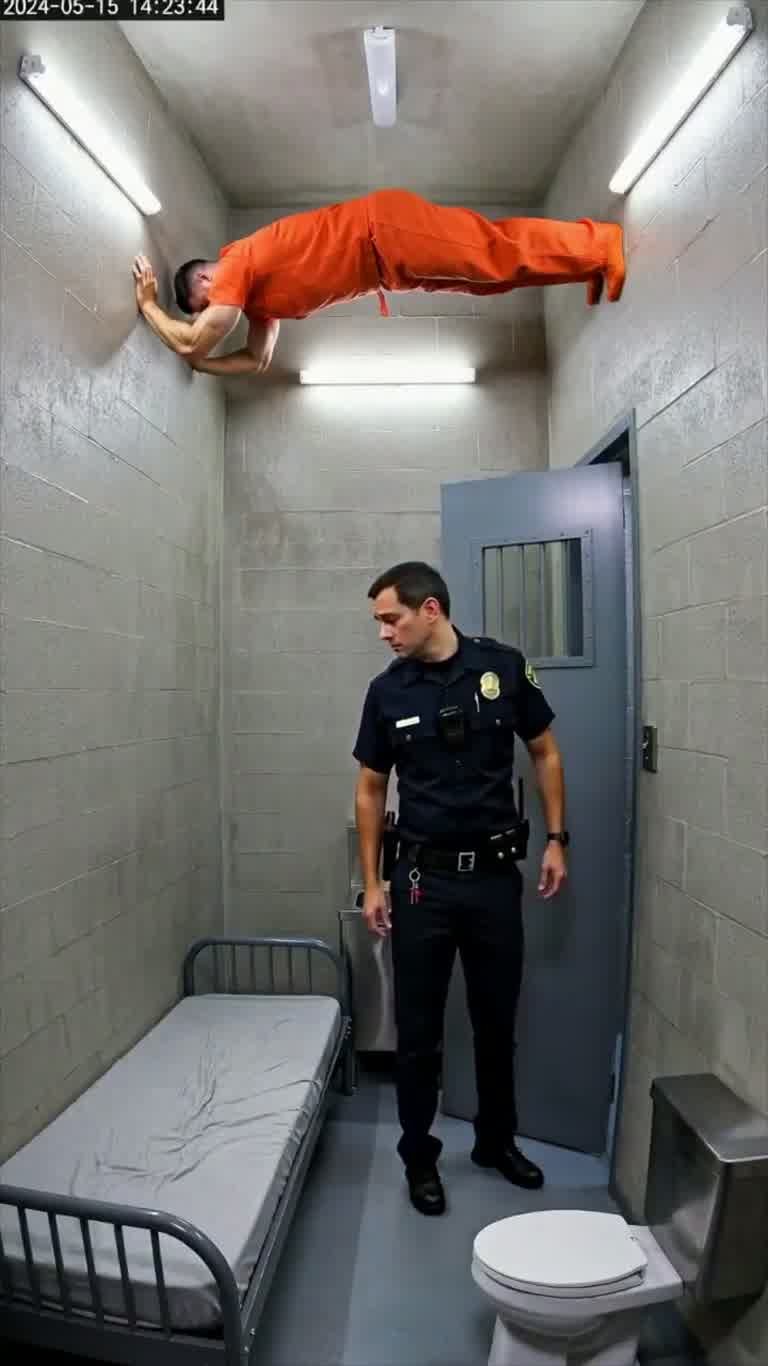
Why the Minute Spreads Online
Reactions split almost immediately. Some viewers treat it as a comedy sketch and focus on the officer's steady expression as he walks past. Others point at the physics: holding a horizontal position against a vertical wall is not something a person simply does, and they argue the footage was edited or filmed on a built set.
That disagreement has pushed the clip into wider circulation, with comment threads flipping between laughter and skepticism. So far there is no statement from any official source, no named location beyond the cell itself, and no conclusion about how the shot was made.
Part of the pull is that the clip rewards rewatching. Viewers go back to check the officer's eyeline, the shadows under the figure, whether the door was already open before he entered, and how long the whole visit actually lasts. What the clip offers, in the end, is a clean example of a video that works because of what it withholds: the camera never cuts, the room never changes, and the obvious question is never answered on screen.
What to Check Before Believing a Clip
Odd footage is easy to share and just as easy to fake. A few habits help. Pause on the subject and study the edges where the body meets the wall; rough seams, blurry outlines or shadows that do not match the room's lighting are common signs of editing. Check whether the clock or overlay text moves naturally, since a timestamp can be added later and proves nothing on its own. Try to locate the original uploader instead of a repost that stripped the context, and compare key frames with a reverse image search. Finally, notice what the clip never shows — a wide room view, a second angle, a clear face — because missing coverage is often the tell.
Do you think this was a real cell, or a set built for one joke?
Content edited from a publicly shared video; some details have not been independently verified.