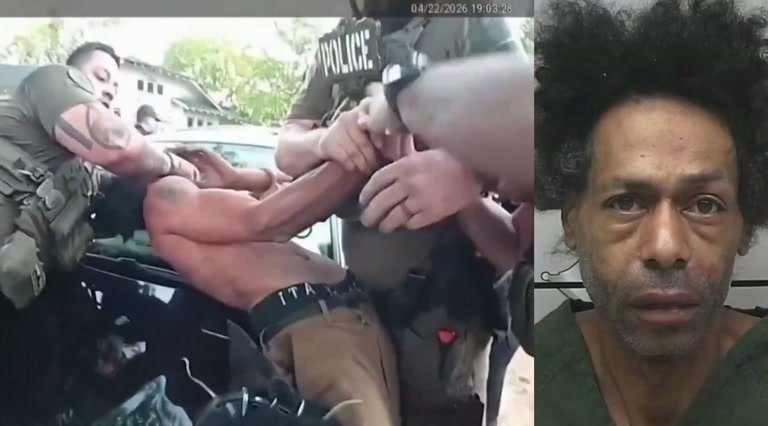
A late-night incident in Daytona Beach, Florida, has drawn intense public attention after footage emerged showing a young woman being arrested following a collision involving a black Ford Bronco. What began as a traffic stop quickly escalated when the driver declined to participate in a sobriety exercise, leading to a dramatic sequence of events that has since raised difficult questions about liability, insurance, and the legal limits of refusal.
Overview of the incident and the key facts
- A black Ford Bronco, described in reports as a high-value SUV, was involved in a collision in the Daytona Beach area.
- The driver was asked by officers to complete a sobriety exercise to determine impairment, which she declined.
- During the encounter, an altercation involving a bystander occurred, leading to a request to press charges.
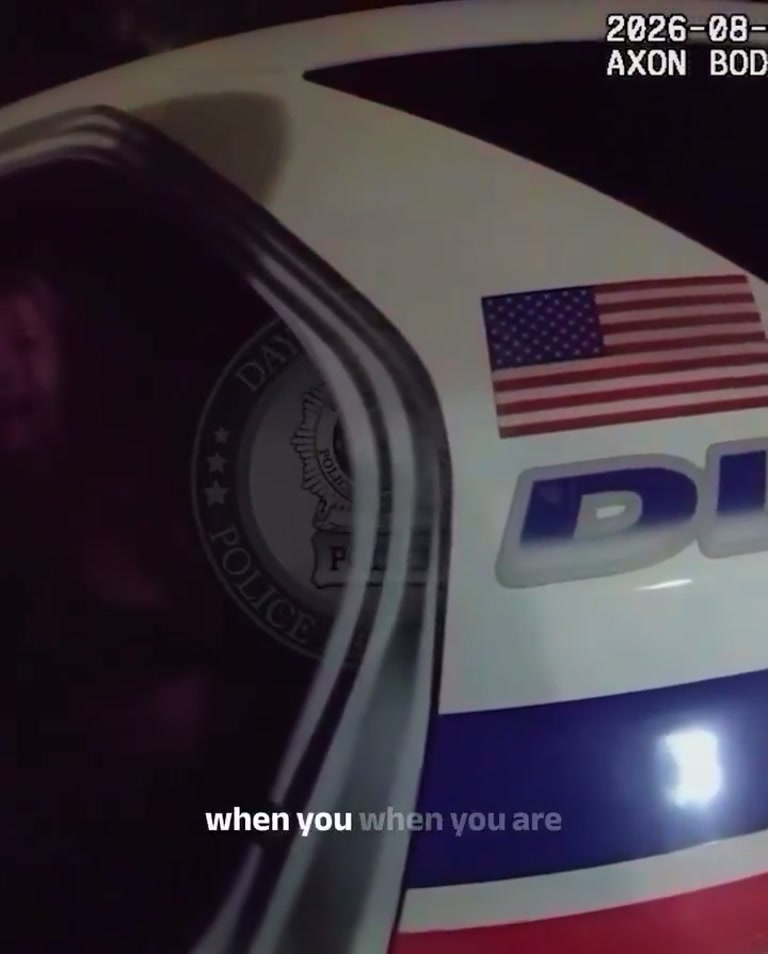
- The incident was captured on police body camera footage, showing the moments leading to the arrest.
- The driver repeatedly expressed fear of being taken to jail and asked why she was being left alone.
- Questions remain about the exact sequence of events, the identity of the bystander, and the final legal outcome.
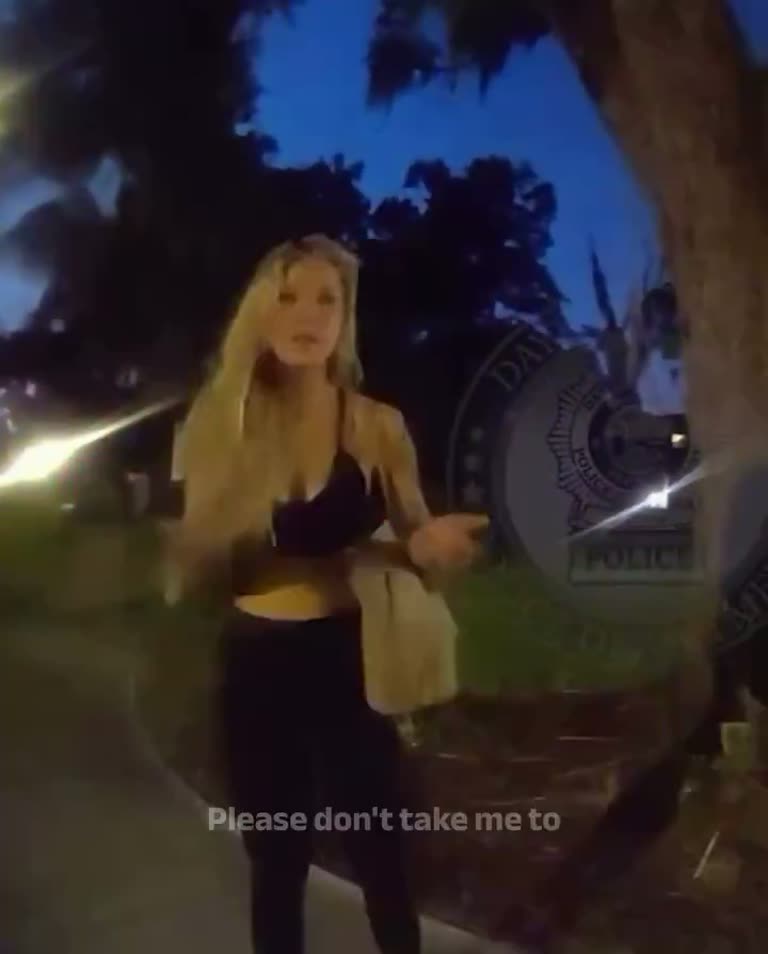
The footage, which has circulated widely online, places viewers directly in the middle of a tense roadside scene in Daytona Beach. Officers are heard questioning a woman about a collision involving a black Ford Bronco, an SUV that reports suggest carries a price tag in the region of fifty thousand dollars. The driver initially seems uncertain about the damage, stating that she thought she had only hit the front light of another car. An officer immediately corrects her, pointing out that the vehicle had been taken completely off the road.
The conversation shifts quickly when the officer asks for a driving licence. The woman hands over what appears to be a passport, prompting the officer to clarify that he needs a licence, not a passport. The exchange becomes increasingly fraught as she pleads, "Please don't take me to jail for this." The officer then asks whether she would be willing to submit to a sobriety exercise to determine if she is impaired. Her answer is brief and firm: "Nope. No exercise."
That refusal becomes the pivotal moment of the encounter. Under Florida law, drivers are deemed to have consented to certain chemical tests upon obtaining a licence, but field sobriety exercises are a different matter, and refusing them can have consequences. The footage then cuts to a chaotic scene where a second person, described by the officer as the one he has "got," becomes involved. A voice is heard shouting, "Why are you doing that? We're real friends." The woman insists she is not resisting arrest, saying she only wants to make sure her daughter gets what she needs.
The situation escalates further when an officer asks whether she was touched at any point. She replies that she was smacked. When asked if she wants to press charges, she says yes, absolutely. The scene ends with her questioning why she is sitting alone while nothing is happening, to which the officer responds that this is normally what happens when someone is arrested.
The collision, the vehicle, and the financial fallout
While the legal drama plays out in real time, the financial implications of the collision are already beginning to take shape. A black Ford Bronco, depending on its specification and year, is a substantial vehicle. Reports describe it as a fifty-thousand-dollar SUV, though that figure should be treated with caution as it may reflect a market estimate rather than a verified valuation. What matters for insurance purposes is not the sticker price but the actual cash value or replacement cost, depending on the policy in force.
When a vehicle leaves the road entirely, as the officer suggests happened here, the damage is rarely confined to a single panel. Front-end impacts can affect the bumper, grille, headlights, radiator, air conditioning condenser, and even the structural frame. If the vehicle is deemed a total loss, the insurer will typically pay out the actual cash value, minus any deductible, rather than the original purchase price. For a driver who has only recently acquired the vehicle, this can create a significant gap between what is owed on finance and what the insurer pays out.
There is also the question of the other vehicle. If the driver is found to be at fault, her liability coverage would respond to the damage caused to the other party's car and any property. In Florida, the minimum liability requirements are relatively low, and drivers who carry only the state minimum may find themselves personally exposed to costs that exceed their cover. That exposure can follow them for years, affecting credit, employment prospects, and future insurance premiums.
Beyond the vehicles, there is the possibility of third-party injury claims. The transcript includes a reference to someone being smacked, and a request to press charges. If a bystander or passenger suffered an injury, even a minor one, that could trigger a bodily injury liability claim. In Florida, which operates under a comparative fault system, the allocation of blame can be contested, and insurers may spend months negotiating who pays what.
Legal refusal, sobriety exercises, and the insurance consequences
The decision to decline a sobriety exercise is a legal right in many circumstances, but it is not without consequence. In Florida, while you can refuse field sobriety exercises, doing so may be used as evidence in a subsequent prosecution. More importantly for the insurance world, a refusal can influence how an insurer views the risk. If a driver is ultimately charged with driving under the influence, most policies include an exclusion that allows the insurer to deny coverage for the incident entirely.
That exclusion is not automatic, and it depends on the specific wording of the policy and the outcome of any criminal proceedings. But it is a real risk. If coverage is denied, the driver becomes personally responsible for the damage caused. For a collision involving two vehicles, one of which is a high-value SUV, the numbers can climb quickly. A single front-end repair on a modern vehicle can run into thousands of pounds or dollars, and a full replacement can exceed the value of many people's annual income.
There is also the matter of the arrest itself. Being taken into custody does not automatically mean a conviction, and it does not automatically mean the insurer will refuse to pay. But it does trigger a review. The insurer will want to see the police report, the body camera footage, and any toxicology results. Until that process is complete, the claim may be placed on hold, leaving the policyholder without a payout and without a vehicle.
For the other driver involved, the path is different. If they have comprehensive cover, their own insurer may pay for repairs and then pursue recovery from the at-fault party's insurer. That process, known as subrogation, can take months. In the meantime, the innocent party may be left dealing with a courtesy car, a hire vehicle, or simply going without transport. In the UK, the Motor Insurers' Bureau provides a safety net for victims of uninsured drivers, but that route is slower and less generous than a standard claim.
The human cost and the questions that linger
Beyond the metal and the money, there is a human story here that is difficult to ignore. A young woman, identified in reports as twenty-four-year-old Elizabeth Boucher, is heard pleading not to be taken to jail. She mentions her daughter. She says she is not resisting. She asks why she is sitting alone. These are not the words of someone who set out to cause chaos. They are the words of someone who has found themselves at the centre of a situation that has spiralled beyond their control.
The officer's response is calm and procedural. He asks about the damage, requests a licence, offers a sobriety exercise, and ultimately makes an arrest. That is the job. But the footage captures the raw emotion of the moment, the raised voices, the confusion, the sudden shift from a traffic stop to a criminal matter. It is a reminder that behind every insurance claim, every court date, and every premium rise, there is a person having one of the worst nights of their life.
The bystander who was allegedly smacked adds another layer. Their decision to press charges transforms the incident from a traffic matter into something more serious. Whether that decision was justified, and whether the charges will stick, is a matter for the courts. But it ensures that this story will not end at the roadside.
What remains unclear is the exact sequence of events leading up to the collision. The driver herself says she does not know what really happened. The officer's account is partial. The footage is fragmented. Until a full investigation is complete, any conclusion about fault or liability is premature.
Insurance and who pays
When a collision involves an arrest and a refusal to submit to a sobriety exercise, the insurance picture becomes complicated very quickly. The first question is which policy responds. If the driver is found to be at fault, her liability coverage would normally pay for the damage to the other vehicle and any property. But if the insurer determines that the driver was impaired, or that the incident falls within an exclusion, that cover may be denied. In that case, the driver becomes personally liable for the full cost of the damage.
The second question is whether the driver's own vehicle is covered. If she has comprehensive insurance, her insurer may pay for the repair or replacement of the Bronco, minus the deductible. But if the claim is denied due to a policy exclusion, she would have to cover the cost herself. For a vehicle valued at around fifty thousand dollars, that is a significant sum. If the vehicle is on finance, the lender will still expect to be paid, regardless of whether the insurer pays out.
Third, there is the question of excess or deductible. In the US, this is typically a fixed amount that the policyholder agrees to pay before the insurer covers the rest. In the UK, the excess works in a similar way. The amount varies widely, but even a modest excess can be a struggle for someone facing an unexpected repair bill. If the driver is found to have been driving without a valid licence, which is another possibility raised by the footage, the insurer may treat the policy as void, leaving the driver fully exposed.
The steps for making a claim are relatively standard on both sides of the Atlantic. The policyholder should notify their insurer as soon as possible, provide the police report number, and cooperate with the investigation. They should keep receipts for any emergency repairs, hire cars, or alternative transport. If the claim is disputed, they may need to escalate it to the insurer's complaints department or, in the UK, the Financial Ombudsman Service. In the US, state insurance departments can provide guidance and, in some cases, intervene.
What is clear is that the financial consequences of this incident will outlast the news cycle. Even if the charges are dropped, the insurance claim will take time. Even if the insurer pays, the premiums will rise. And even if the driver walks away without a conviction, the cost of the collision will be felt for months, perhaps years, to come.
The footage ends with the driver asking why she is sitting alone while nothing is happening. The officer tells her that this is what happens when you are arrested. But for everyone watching, the real question is not what happens in the next five minutes. It is what happens in the months that follow, when the insurance letters arrive, the legal bills mount, and the true cost of one bad decision becomes clear.
What do you think should happen next — should the insurer pay out, or should the driver bear the full cost herself? Let us know in the comments.
| Incident parameter | Logged / on-scene information |
|---|---|
| Location | Daytona Beach, Florida |
| Time of day | Night |
| Vehicle | Black Ford Bronco |
| Reported value | Approximately $50,000 (unverified) |
| Driver | 24-year-old woman, per published reports |
| Sobriety test | Declined |
| Arrest | Driver taken into custody |
Important note: Some details, including the exact cause of the collision and the identity of the bystander, remain unverified pending official investigation.
Core questions still unanswered
- What was the exact cause of the collision?
- Will the driver face formal charges?
- How will the insurance claim be resolved?
Learn more: Masked ICE Agents Shove Suspect Into Van In Chicago Street
🎥 Watch the video at the bottom of the page 👇
This story was edited from a publicly posted video; some details may not be independently verified.