Igla Missile Downs Kamikaze Drone Near Moscow Oil Site (video)
ADVERTISEMENT
A man in camouflage braces a shoulder-fired launcher on a grassy bank beside a long panel fence, aiming at something above the rooftops. Seconds later, a burning object drags smoke as it falls toward a grey horizon. According to the description attached to the clip, the weapon was a 9K38 Igla man-portable air-defense system and the target was a Ukrainian kamikaze drone, brought down in the Moscow region just before it could reach an oil facility.
A Launcher Above the Road
The first frames place the man on a narrow strip of grass between a concrete wall and a metal railing, with the yellow-and-grey paneled fence rising behind him. He wears a helmet and camouflage fatigues, and gear hangs at his side. He steadies the tube on his shoulder and tracks a point beyond the fence line. Behind him, the concrete carries faded paint marks, and street lamps curve over the pavement.
ADVERTISEMENT
Only one short line of speech is audible on the recording, in Russian:
"Видишь?"
It translates as "Do you see?" — a brief prompt to whoever was standing nearby, with no further explanation offered on the clip. The person at the center of it is not named.
ADVERTISEMENT
The description says the shot came from a 9K38 Igla, a shoulder-launched system built to engage low-flying aircraft and drones. The same description identifies the target as a Ukrainian kamikaze drone, the location as the Moscow region, and the timing as just before the drone could hit an oil facility. Those claims come from the account that posted the material.
ADVERTISEMENT
What the Sky Showed
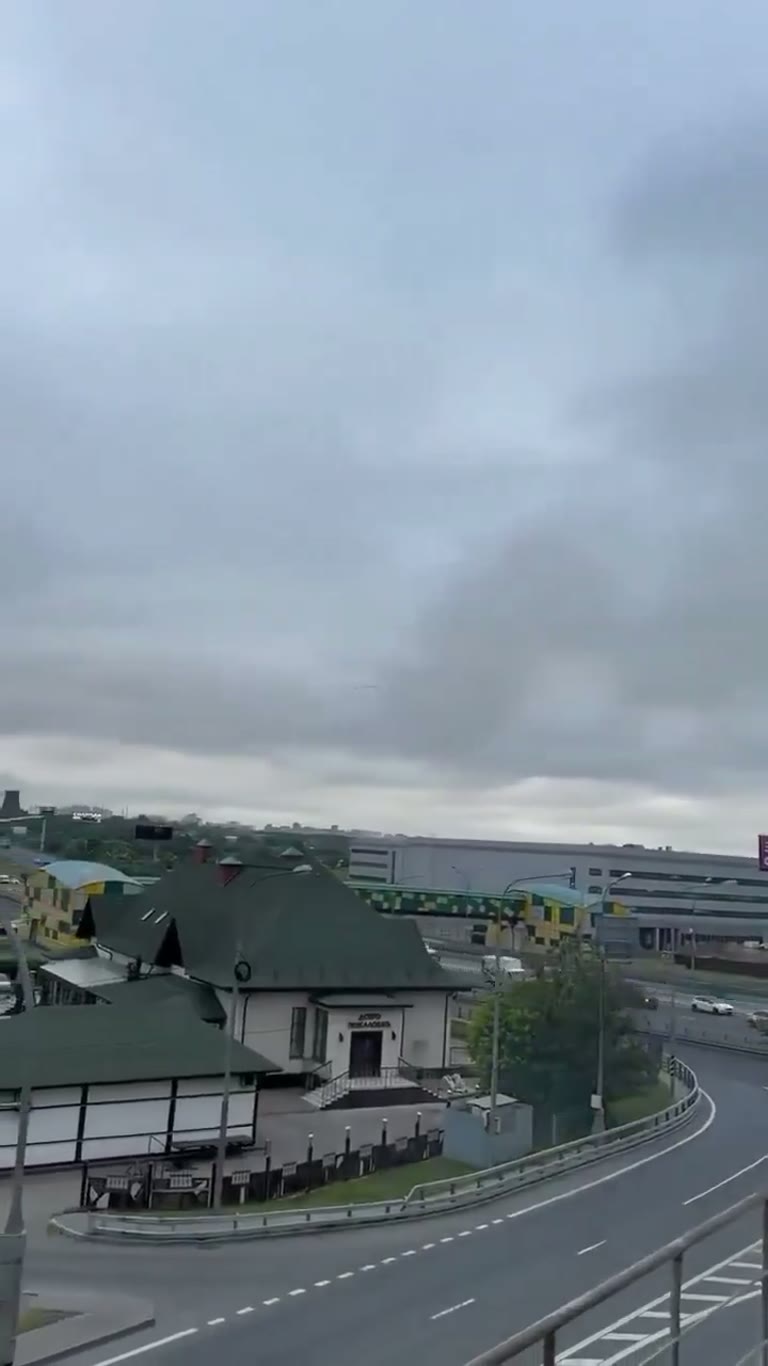
The camera later swings away from the launcher and settles on the area below: a curving multi-lane road, a white building with a dark green roof and a sign above its entrance, parked vehicles and a low commercial block in the middle distance. A billboard stands further out. The weather stays grey and overcast throughout.
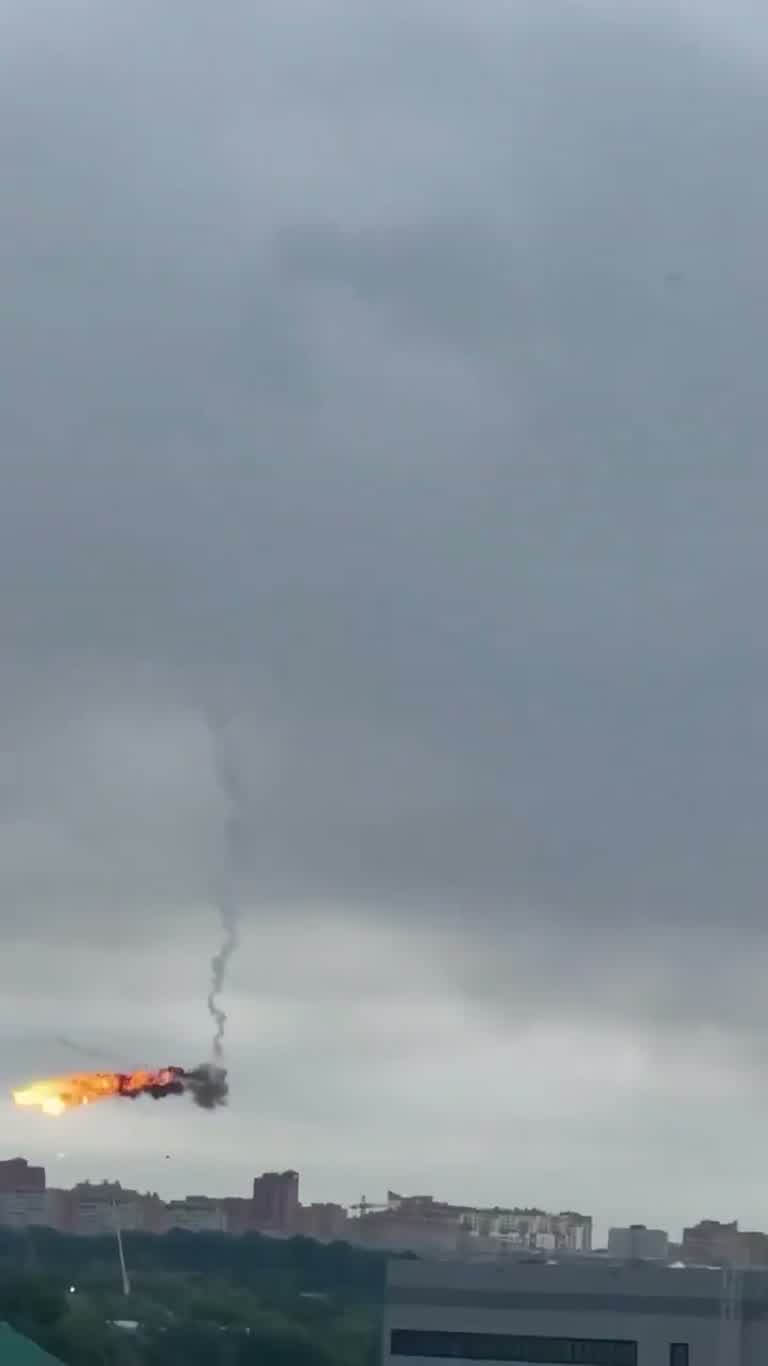
Then a small bright object appears against the clouds, trailing a thin line of smoke. In the next frames it becomes a fireball, glowing orange as it drops past the rooftops. No ground impact, no fire at street level and no people are visible in that stretch of footage.
ADVERTISEMENT
- The man on the slope: unnamed, in camouflage, carrying a shoulder-fired launcher
- The weapon named in the description: a 9K38 Igla
- The target: a kamikaze drone, per the description
- The stated location: the Moscow region
Why It Matters
Shoulder-fired air-defense crews have become part of how drone raids are answered, and this clip shows the exchange from the ground up — the operator's position first, the intercepted target second. The footage drew massive attention online, and clips like this travel fast because they capture both ends of the encounter in under a minute.
What the material does not show is who the man is, what unit he belongs to, or what became of the debris after it fell. It also does not establish the date, the precise location, or whether the object was struck by the missile or failed in flight on its own. For viewers, it left many questions: whose drone it was, what it was aimed at, and how close it came to the site named in the description.
ADVERTISEMENT
There is no official conclusion yet on this specific incident in the material available, so the details of the engagement rest on the description attached to the post. That gap is part of what makes the sequence worth watching closely rather than scanning past: the claim and the visible outcome sit side by side, and readers can weigh one against the other.
ADVERTISEMENT
The wider context is a war in which small drones and shoulder-fired missiles meet in ordinary places — above roads, warehouses and rooftops. A launcher on a grassy verge a few metres from passing traffic is a reminder of how close those encounters can land to daily life.
What do you make of the operator's position so close to a main road during an intercept?
ADVERTISEMENT
This story was edited from a publicly posted video; some details may not be independently verified. According to Visegrád 24.