Charlotte 911 Call: Road Rage Caught on Camera at Night (video)
ADVERTISEMENT
🎥 Watch the video at the bottom of the page 👇
The dispatcher's questions come one after another — calm, clipped, procedural — the way emergency lines sound when the person on the other end is still standing in the middle of it. Somewhere near Brookshire and Interstate 485 in Charlotte, North Carolina, brake lights push red across dark asphalt, a car sits angled where traffic should be rolling, and a woman's voice keeps answering. Her vehicle, she says, is a 2025 pearl white 4Runner. The person who hit her is still outside.
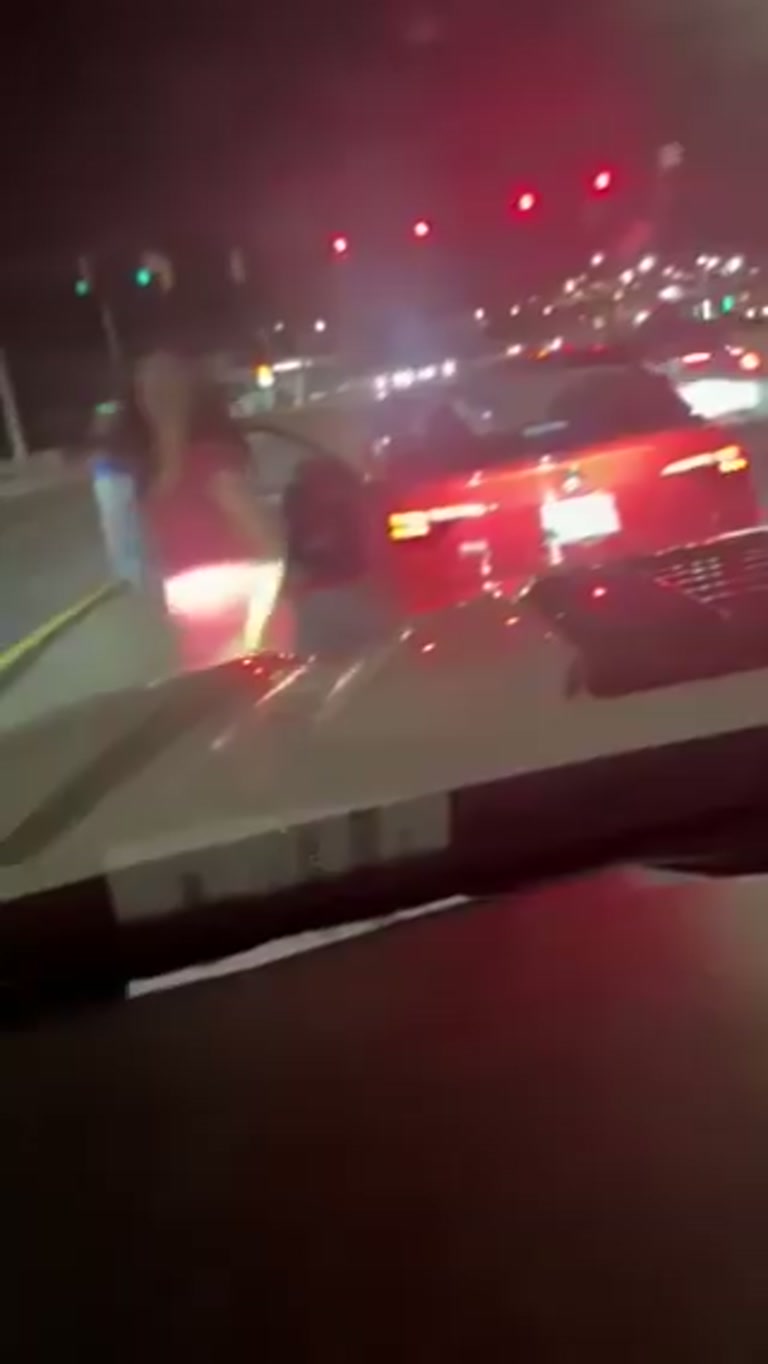
What the phone records over the next few minutes is not a chase, not a crash scene ringed with sirens. It is smaller and stranger than that: a fight over a few feet of roadway, unfolding under streetlights, with a line of ordinary drivers waiting behind it and a 911 dispatcher trying to keep one voice steady.
ADVERTISEMENT
Overview of the incident and the key facts
- A nighttime traffic confrontation on a highway stretch near Brookshire and I-485 in Charlotte, North Carolina, filmed by a phone inside a stopped vehicle.
- The caller tells a dispatcher that another driver struck her car in traffic, then pulled in front of her and blocked her vehicle.
- While she is on the line, she reports that the other person is using keys on her car and kicking it repeatedly, and says the person is cursing at them and spitting on the vehicle.
- The car involved is described on the call as a 2025 pearl white 4Runner.
- A chaotic scene unfolded in traffic; no charge, arrest or official finding appears in the material reviewed, and the account comes from one side only.
A Stop Line, and a Night That Will Not Move
The first thing the camera catches is darkness — but crowded darkness. A wide highway at night, the pale flank of a truck trailer sliding past at the edge of the frame, a scrawl of tail lights stretching toward a green signal far down the road, a diamond-shaped sign catching the glare. Everything in the shot is in motion except the car the camera is sitting inside.
Then the red car. It rests at an odd angle ahead, brake lamps glowing, close enough that the phone picks up their reflection smearing across the hood of the vehicle doing the filming. A figure moves beside it, dress bright against all that grey and glass and concrete. Behind, traffic is still, or crawling. Whatever noise is in the air — engines, a horn somewhere down the line, the click of a turn signal nobody switched off — the microphone does not really hold it.
Nighttime collisions are almost always a study in confusion before they are anything else. Headlights blind; lanes blur; the difference between a bumper tap and something worse takes seconds to establish, and in those seconds people make decisions they will describe very differently later. On a highway shoulder or at a stop line, that confusion has a soundtrack: an engine idling, a phone held steady by someone who has decided — correctly — that a recording is the one thing nobody can argue with afterward.
ADVERTISEMENT
What the footage shows is not cinematic. It is small, close and mechanical: a car out of place, a person on foot where pedestrians should never be, and a phone pointed out a windshield at both of them.
Voices on the Line While the Car Takes a Beating
The call is the spine of the story. A dispatcher works down the checklist — color, make, model, a callback number, the nearest cross street — while the caller narrates what is happening outside her window in real time. She says the other driver hit her car in traffic and then came out of her own vehicle and started working on hers. She describes keys. She describes kicking, again and again, the same motion repeated while the line stays open. She says the person is cursing at them and spitting on the car.
ADVERTISEMENT
"Now she's kicking my car over and over and over again."
There is no panic in the voice so much as momentum — the flat, focused tone of someone who has decided that describing is the only part of this she controls. Her husband is filming, she tells the dispatcher. The dispatcher keeps her talking, keeps asking where exactly they are, keeps the record running. They are stopped at the line at the intersection, she says. Behind them, presumably, drivers wait for a light that no longer matters to anyone in this conversation.
Dispatchers hear variations of this every night: two people who will never meet again, each certain of their own version, one of them holding a phone. What the recording preserves is the sequence — the questions asked, the answers given, the crossroad named, the callback number written down. What it cannot preserve is the tone inside the other car, or whatever had already been said before anyone thought to press record.
This is the part of such videos that viewers replay: the mismatch between the ordinary setting — a traffic light, an interstate exit, an unremarkable night — and the disproportionate thing happening inside it. Nobody plans to be here. Both drivers left home with somewhere to be. Somewhere along the way, a few seconds of impatience, a misread lane, a horn, and suddenly a person is standing in live traffic, and another person is dialing 911 while her husband films through the windshield. The escalation is not gradual in the retelling. It is instant, and then it is endless.
ADVERTISEMENT
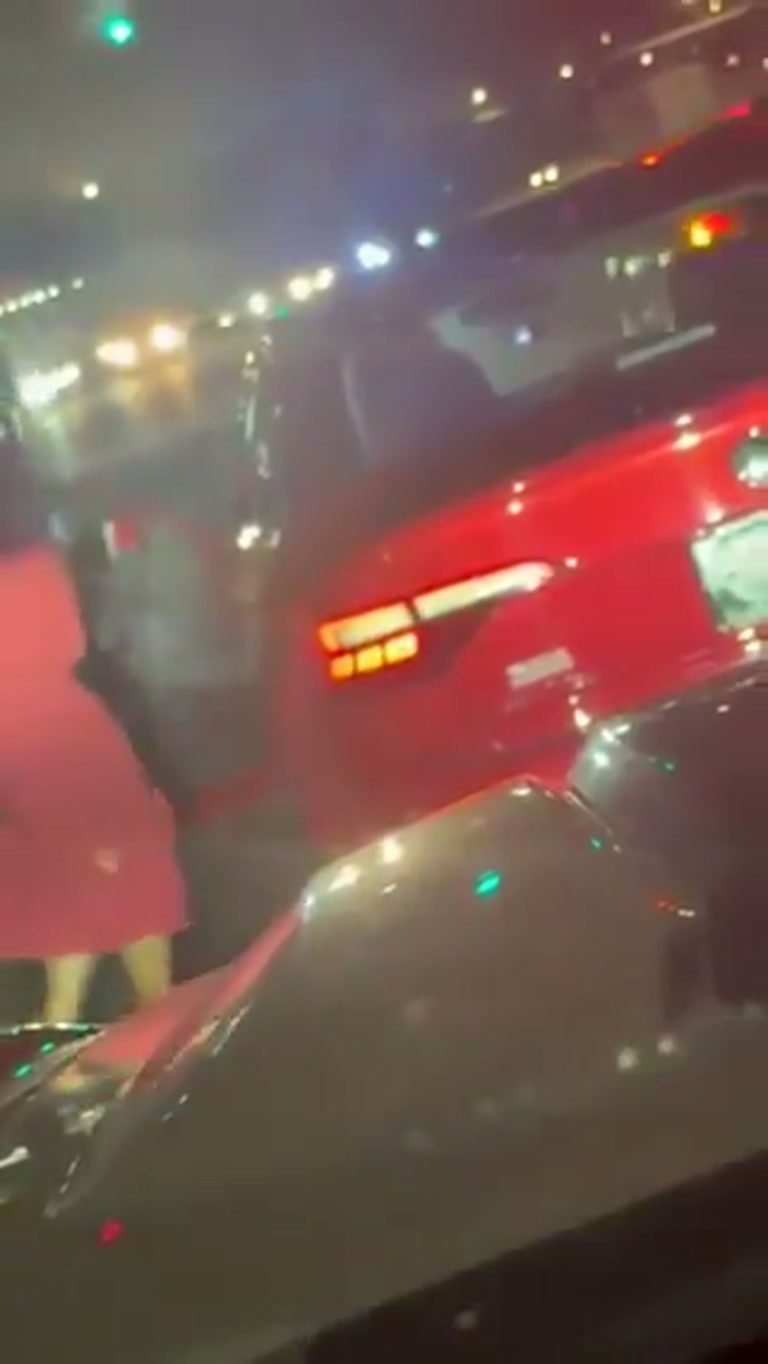
It is worth saying plainly: this is one side of a story. The other driver's version is not in the material reviewed here, and no official finding has been attached to it. That gap — between what a phone records and what actually happened in the seconds before — is where almost every one of these clips quietly lives.
Why a Blocked Lane Is Never Just Two People
A stopped car on a highway is a physics problem disguised as a personal one. Traffic behind it compresses; drivers brake late; the shoulder fills with people who have nowhere to go. In the dark, with headlights stacking up and tempers already short, the risk of a second and worse collision climbs with every second the first one stays unresolved.
Then there is the human arithmetic. Passers-by slow down. Some film. Most do not step out, and it is easy to understand why: an argument between strangers on a roadway is unpredictable, and the safest thing an untrained bystander can do is keep distance, keep the line open, keep the record. That instinct is not cowardice. It is the reason a 911 call exists at all.
ADVERTISEMENT
The situation kept developing while the call was still in progress, and the drivers around it became accidental witnesses to something they never agreed to watch. A truck rolls past. A signal cycles from green to amber. Somebody's dinner goes cold in a bag on the passenger seat. These are the textures that make a clip like this feel uncomfortably familiar, because the set is a road most viewers have driven and the people in it could be anyone at all — and because, sooner or later, the internet will argue about it.
Important note: This account rests on a 911 call and phone video; no independent confirmation of charges, injuries, or the other driver's version has been published.
Core questions still unanswered
- What happened in the moments before the call — a rear-end collision, a merge gone wrong, or something neither driver saw coming?
- Did anyone else at the stop line intervene, film, or speak with officers afterward?
- What did responding officers find when they arrived, and did the matter move forward?
| Incident parameter | Logged / on-scene information |
|---|---|
| Location | Near Brookshire and I-485, Charlotte, North Carolina |
| Conditions | Night; dark highway, brake lights, streetlights, stopped traffic |
| Caller's vehicle | 2025 pearl white 4Runner |
| Caller's account | Hit in traffic, then blocked by the other driver |
| Observed activity | Keys used on the car; repeated kicking; spitting reported |
| Emergency line | Caller stayed on with a dispatcher, describing cross streets |
| Official outcome | No official conclusion present in the source material |
Road-rage footage has a way of flattening into a joke — a caption, a punchline, a scolding comment thread. With the sound on, it stops being one. It is a person standing in a live traffic lane at night with cars still moving around her, and another person inside a nearly new SUV telling a stranger on the phone exactly what is happening, in order, because someone has to.
ADVERTISEMENT
The ending is not in the video. It ends where most of them end: mid-sentence, mid-motion, with the light still red and everyone still waiting — including, unavoidably, a driver who is now going to be late for whatever came next.
If you had been sitting in that stop line — engine idling, phone in hand, someone hammering on the car in front of you — what would you have done, and which single detail would you want investigators to hear first?
Some details of the incident, including what led up to it and any official outcome, remain unverified in the material reviewed; the video also appears to have been posted under an account whose page name does not match the location described.
ADVERTISEMENT
This story was edited from a publicly posted video; some details may not be independently verified.
