Bodycam Footage: A Miniature Donkey and a Midnight Call (video)
ADVERTISEMENT
🎥 Watch the video at the bottom of the page 👇
The body camera clock reads past midnight, and a flashlight beam is sweeping across wet Georgia grass. Somewhere in that beam is a miniature donkey, small enough to pass for a shadow — and within minutes, a quiet night becomes the kind of story a community argues about for months. The footage and the official report describe the same few minutes, but they don't quite tell the same tale.
Overview of the incident and the key facts
- A police officer's body camera recorded a late-night encounter on rural ground in Georgia.
- At the center of the footage is a miniature donkey that locals knew by name: HeeHaw.
- In the officer's official report, the officer stated that the donkey "charged" at him.
- A K-9 handler on scene deployed a Taser at the animal, and a firearm was discharged.
- The footage was later released publicly, and the questions around it have only multiplied since.
A Beam Sweeping the Dark
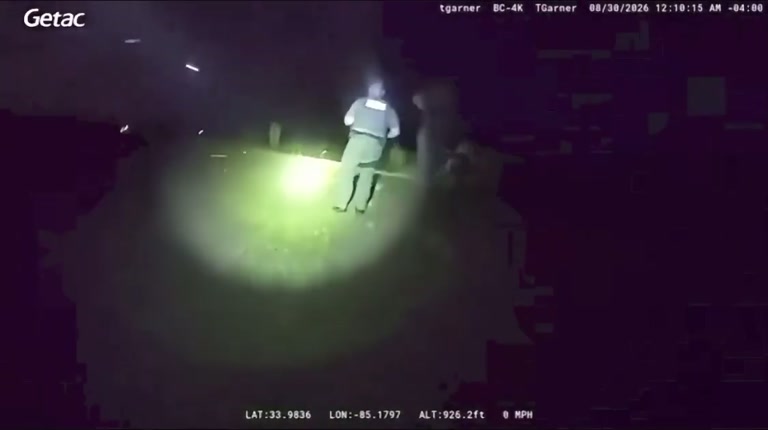
The first thing the footage gives you is darkness, and the plain, unglamorous point of view of a body-worn camera. A clock in the corner ticks past midnight; coordinates sit stacked in a neat line beneath it; the altitude reads a little over 900 feet and the speed reading barely moves at all. For a long stretch there is nothing but grass, gravel, the edge of a flashlight beam, and the sound of someone breathing against a radio mic.
ADVERTISEMENT
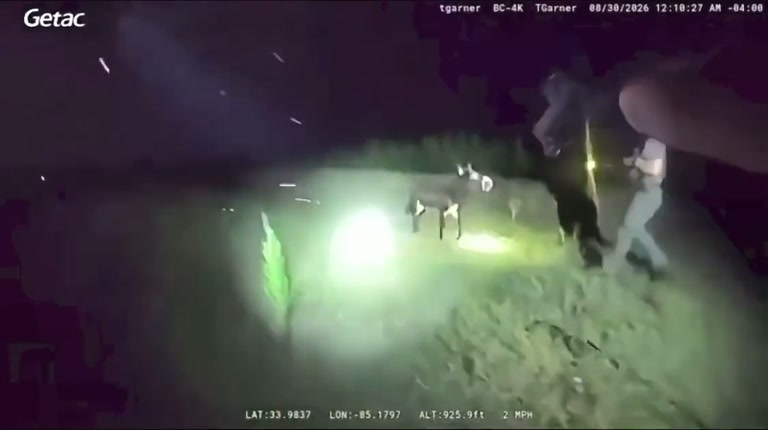
Then the beam catches something small and still: a miniature donkey, the kind of animal that stands knee-high, the kind people keep as pets and name and photograph at county fairs. For a beat, the scene looks almost gentle. The light holds on it, and the animal does what animals do when a bright beam finds them in the dark — it stands there, blinking, waiting for the moment to pass.
What follows is not cinematic. It is muddy, sideways, lit in harsh bursts, the camera swinging as people move and talk over each other. Boots squelch in wet grass; a radio squawks; a voice tries to sound procedural and mostly manages it. It's the ordinariness that's hard to shake — no score, no slow motion, just a few people and a very small animal in the middle of a field at midnight.
By the time the clip ends, one detail changes everything about how you read the minutes that came before it. And once you've noticed it, you can't look away from the quiet that settles over the rest of the recording.
ADVERTISEMENT
The Report Says Charged
The written record tells a far shorter story. In the officer's official report, the encounter is compressed into a single loaded word: the donkey "charged" at him. That one verb does an enormous amount of work. It converts a small animal standing in grass into a threat, and it converts a decision into something closer to a necessity — the kind of sentence that exists to be defended later.
The footage, though, refuses to be that tidy. The camera's speed reading never climbs; the animal stays low in the grass; the beam holds on it for what feels like an uncomfortably long time. Nothing in the frame moves like a charge. But a body camera is not a truth machine. It is one pair of eyes, mounted on a chest, breathing hard, seeing whatever the person wearing it sees — and no more.
ADVERTISEMENT
That gap is what keeps viewers rewinding. It's the distance between how fast a moment actually happens and how fast it feels when you're the one holding the light and the decision. Reports compress events into defensible language. Footage stretches them out and leaves everything in. Neither is exactly lying. They were simply built for different jobs.
For anyone watching at home, it only gets worse on the second or third pass, because each replay adds doubt and takes away certainty.
What the Radio Captured
The radio traffic is the strangest element of the whole episode. Over the air, the voice is flat and professional, the same tone you'd use to report a fender bender or a downed tree. Calm words, heavy content. A request goes out; a notification comes back; the language stays clipped and procedural from start to finish, as if the speakers were reading from a form and not describing a living thing.
ADVERTISEMENT
Emergency speech is designed to flatten events. It exists so that frightening things can be transmitted without stopping anyone from doing their job, which is why the most serious calls often sound the most routine. The gap between that tone and what the words actually mean is where the unease lives, long after the transmission ends.
"Be advised, I have to shoot a donkey."
Hear that line once and it sounds like a task on a checklist. Hear it twice and it sounds like something else entirely, something heavier than the flat delivery suggests. Per the source description, a K-9 handler then stepped in and deployed a Taser at the animal — a tool meant to interrupt, not to end — which makes the sequence of choices feel far less like a script and a lot more like a decision made in the time it takes to exhale.
A Town Starts Asking
By morning, the field was just a field again. But miniature donkeys aren't anonymous livestock to the people who keep them. They get names — this one had one — and they get attached to the families who feed them, which is what makes this particular story so hard to file away under the heading of procedure.
ADVERTISEMENT
Rural ground comes with its own specific friction: animals that are beloved to one neighbor and loose to another, a dark road, a call that arrives at midnight with almost no context attached. Add a body camera and a private moment becomes public record, and public record becomes an argument that nobody signed up for. You can feel the collision coming long before anyone picks up the flashlight.
Once the footage was released, reactions split in a familiar way. Some people watched a small animal holding still and saw something closer to an execution. Others watched an officer alone in the dark and saw a person who believed, in that instant, that he was protecting himself. Both readings are about the same thirty seconds, and neither is likely to move the other by much.
ADVERTISEMENT
That's the trouble with footage: it doesn't end debates, it feeds them. Watch how it plays out in the weeks ahead, because the clip is now the loudest piece of evidence anyone has. Everything else — policy, training, the rules about livestock and threat assessment — has to argue with it.
Important note: This account follows the released footage and the officer's stated report; it does not settle what any investigating body, agency or court may ultimately conclude.
Core questions still unanswered
- What exactly did the officer believe he saw in the seconds before the shot?
- Why was a Taser deployed first, and did it change the animal's behavior at all?
- How will the release of this footage shape what happens next for the people who kept the animal?
| Incident parameter | Logged / on-scene information |
|---|---|
| Recording time | Camera clock reads just past midnight; the clip spans several minutes |
| Location | Rural ground in Georgia, with logged coordinates near 33.98 north, 85.18 west |
| Subject | A miniature donkey known locally as HeeHaw |
| Officer's stated account | The donkey "charged" at him, per the official report |
| Force described on scene | A K-9 handler deployed a Taser; a firearm was discharged |
| Camera context | Body-worn camera, altitude around 924 feet, speed reading 0-2 mph |
| Outcome | The animal died; the footage was later released to the public |
Some elements of the timeline remain unverified outside the released material, including how the original call was dispatched and what any investigators have concluded.
So here's the question worth sitting with: when a camera records everything and still leaves the most important part unexplained, what should a community trust more — the clip or the report? Tell us what you see in the comments.
ADVERTISEMENT
This article is a general description of a story scene; some details may not be independently verified.