Bodycam Clip: Officer’s ID Demand Sparks Debate Online (video)
ADVERTISEMENT
A brief bodycam clip recorded inside what appears to be a restaurant is drawing steady attention online, showing a uniformed officer telling a person to either hand over identification or step aside. Text layered on the video describes officers harassing a homeless person, a claim the spoken exchange does not confirm. The moment lasts seconds; the reaction has not cooled.
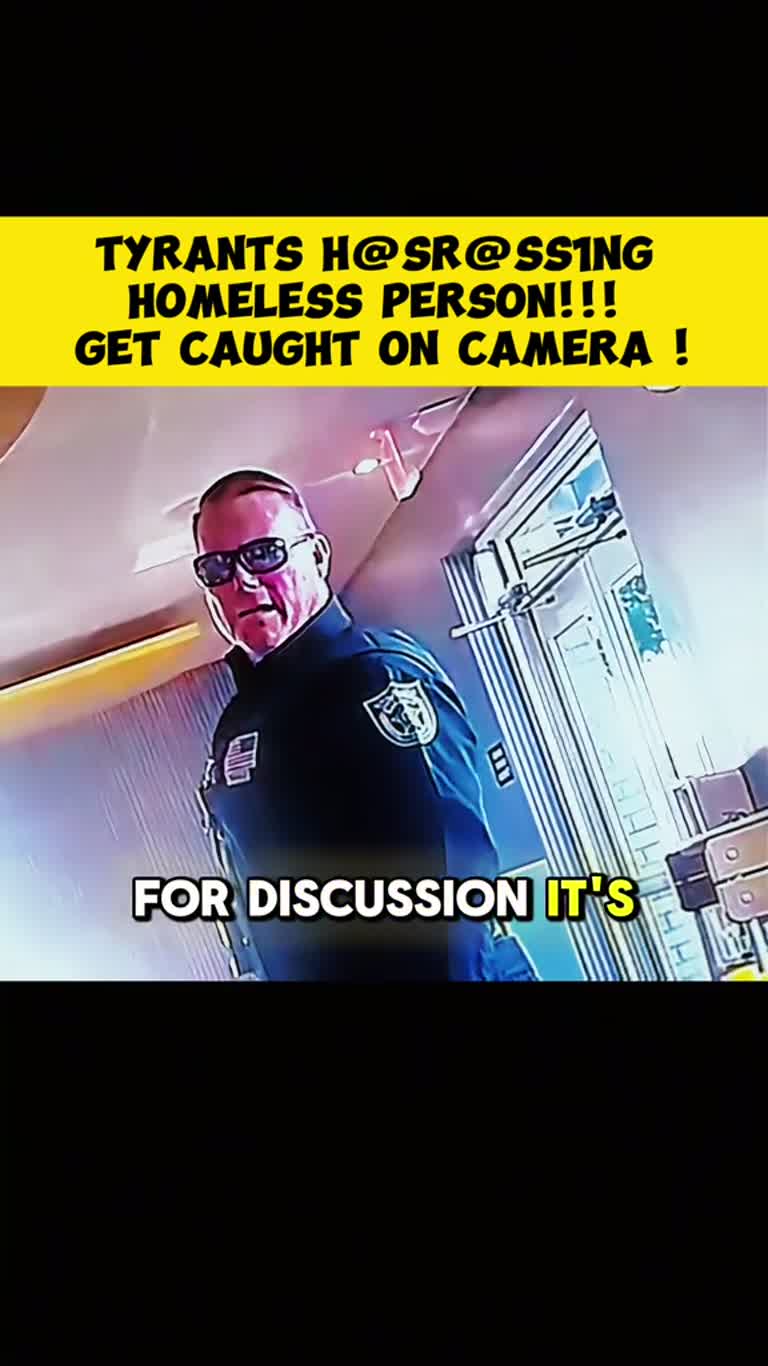
Inside the Room
The footage opens on an officer in a dark uniform with a visible badge and shoulder patch, sunglasses resting on his face. He stands in a room with tall windows on one side, wooden chairs and tables, and small pendant lamps overhead. Large yellow text runs across the top of the frame, while shorter captions flash at the bottom and cut the conversation into pieces. Later frames show a second uniformed officer nearby.
ADVERTISEMENT
The audio begins like a welfare check. "Can I help you, sir? You okay?" the officer asks, then repeats himself. He soon turns to whoever is standing close to him: "Would you like to be part of this too? Do you want to be part of this too?"
What follows is no longer a question. The officer asks the person to move out of his space, saying he has to focus on two people at the same time. He tells the person they are repeating his investigation. The second officer appears in several frames standing a few steps away, saying nothing that is captured.
ADVERTISEMENT
The ID-or-Move Instruction
The officer then narrows the choice to two options: provide identification, or step away. He says the matter is not up for discussion, calls the instruction a lawful command, and repeats the word "move." Frames from later in the clip show him moving through the room, badge and a small flag patch on his sleeve visible as he turns.
He also points out that the recording device is working, telling the person the camera "gets a good picture of you too."
ADVERTISEMENT
It's either ID or move. It's a lawful command.
Only the officer's side of the exchange is clearly audible, so the other person's account does not appear in the clip. The video does not clearly show a department name or city, and no date is visible.
A Caption That Traveled Further
The most forceful claim in the video is written, not spoken. A bold banner across the top calls the officers tyrants and says they were harassing a homeless person and were caught on camera. That caption shapes how many viewers read the seconds that follow. The banner stays on screen for the entire clip, so the framing arrives before any words do.
ADVERTISEMENT
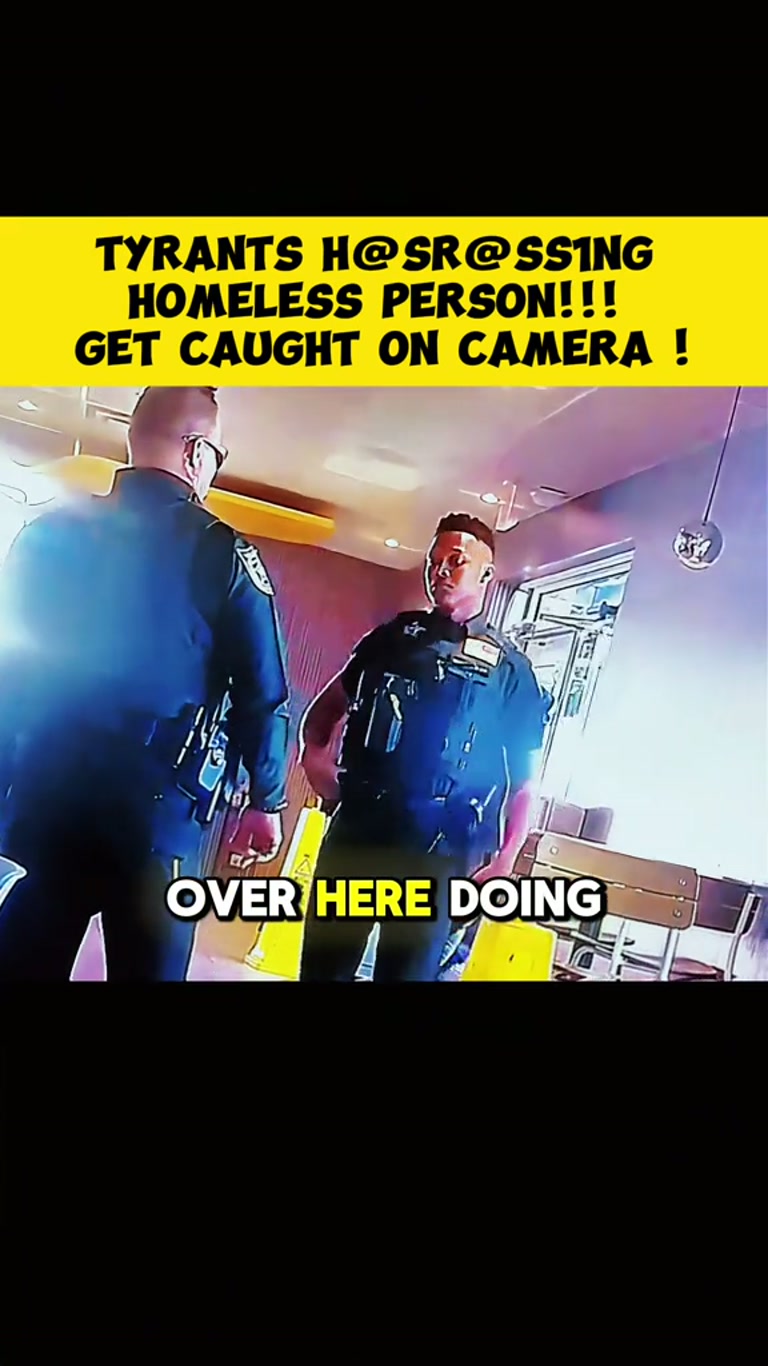
Opinions were split. Some viewers describe the moment as an officer overstepping during a routine check; others read it as an ordinary request to clear space while two people are being handled. Clips like this often travel as edited highlights rather than full recordings, and this one offers no look at what came before the officer's first question or what happened after his last instruction.
The people at the center of it are not named in the clip. Nothing in the available material shows an official conclusion, a charge, or a finding about who was in the right.
ADVERTISEMENT
What Remains Unclear
Basic details are still missing. There is no clear indication of what the officer was investigating, what the person was doing before the recording started, or how the encounter ended, since the clip stops shortly after the exchange.
Viewers cannot hear the other person's voice, cannot see what prompted the first question, and cannot tell whether the recording is complete. That gap is part of why the video keeps drawing attention: viewers are asked to judge a few seconds without the context before or after them. No official conclusion yet, and some details in the caption may not be independently verified.
ADVERTISEMENT
The scene itself is straightforward — a small room, a uniformed officer, an instruction repeated until it lands. What surrounds it, in text and in the comments, is doing much of the work.
What should happen when someone standing nearby declines to identify themselves during an active police investigation?
ADVERTISEMENT
This story was edited from a publicly posted video; some details may not be independently verified.