A Father’s Quiet 500-Mile Walk After One Phone Call (video)
ADVERTISEMENT
🎥 Watch the video at the bottom of the page 👇
The river runs fast and gray, and the backpack is already turning in the current by the time anyone on the bank understands what is happening. A man of sixty, gray-haired, not built for this kind of fight, does not stop to weigh the odds — he steps off the bank and into water cold enough to steal the breath out of his chest. Whatever was inside that bag mattered more to him than his own body, and that single, reckless moment is where this story cracks open.
Overview of the incident and the key facts
- A 60-year-old man — called Tom in the narration — loses his travel backpack to a river and dives into freezing water to get it back.
- He pulls the pack into his arms, but only reaches safety by grabbing a branch on the riverbank; at his age, the narration notes, his body cannot take that kind of punishment.
- The story then rewinds: a phone call from more than 4,000 miles away, in France, informing him that his son Daniel has been killed.
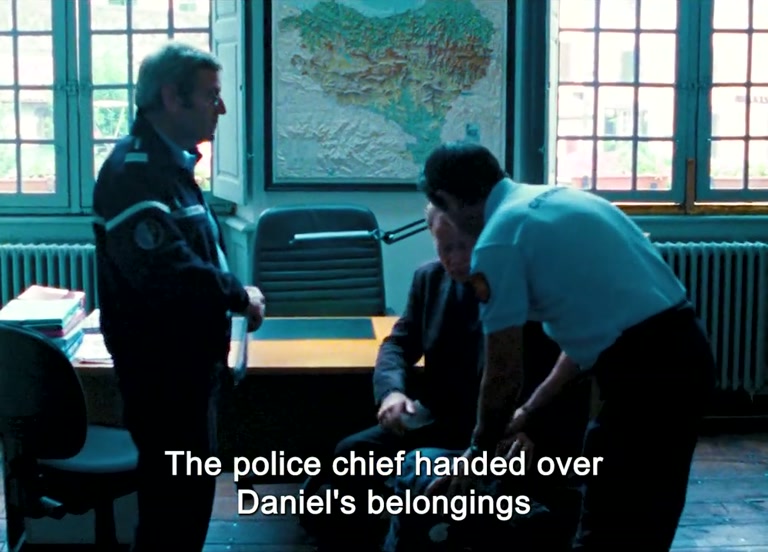
- In a bare-bones morgue he confirms the identity of the body, and the police chief hands over a single travel backpack — his son's only belonging.
- That backpack turns out to be the starting point of a pilgrimage route of nearly 500 miles, stamped at every stop along the way.
A phone call that fits inside one sentence
The day begins in ordinary light — a golf course, a pale blue sweater, one glove still on his hand, a cart parked at the edge of the fairway with the clubs already loaded. Nothing about that afternoon suggests it will be the last ordinary hour of the man's life. Then the phone rings, and the voice on the other end is measured and official, careful in the way people are trained to be when they have to say something unbearable.
ADVERTISEMENT
"I'm sorry to inform you that your son has been killed, sir."
The answer he gives is a single word, and it is not really an answer at all: "What?" The story does not slow down for the grief; it does what grief does, and keeps moving. He rushes to catch a train. He crosses into a country that holds nothing for him now except a cold room and a name he has to say out loud to strangers.
Somewhere along those miles, the arithmetic of his life changes. The narration describes a man who had been on his own for most of his life — and now, standing in a foreign city, he is not simply alone, he is truly alone, the last person left in a line that used to have at least two names on it. A father walking toward a room he already knows he cannot avoid.
ADVERTISEMENT
A pale sheet, one backpack, and a question with no answer
The room is what he will remember: bare, coldly lit, stripped of anything that might make it easier to stand in. A hand — his hand — reaches for the edge of a pale sheet and folds it back. The scene never has to show us everything, because it doesn't. What it shows is a father making himself look, and then confirming what he already knew the second the phone rang: that familiar face would never open its eyes again.
His heart sinks in a way the narration insists on spelling out, and the detail that lands hardest is not the room at all. It is the comparison. A man who had spent most of his adult years handling his own problems now stands there like a helpless child, with no next move and nobody to make it for him. From that point on, in the plainest sense of the phrase, he is on his own.
ADVERTISEMENT
Afterward, the police chief hands him his son's belongings, and the pile is almost insultingly small: one travel backpack, nothing more. Everything a grown man carried across a continent fits into a bag he can lift with one hand. He takes it the way you take something that has stopped belonging to anyone.
The chief is kind about it. He explains that the body can be cremated, which would make it far easier to bring his son home. Tom does not respond. He steps outside instead, into the air, the way people do when a sentence has been handed to them that they are not ready to hold yet. And that is exactly where the scene refuses to help us — his silence is doing all the talking.
Nearly 500 miles, one stamp at a time
The chief fills in the rest. The backpack was meant to be carried, not packed away. It is the starting point of a pilgrimage route that runs close to 500 miles on foot, and every person who walks it carries a credential — a small document that gets stamped at each stop along the way, until the paper is full and the walk is officially finished. Daniel had begun that document. He had the first of it, at least.
ADVERTISEMENT
Sit with that for a moment. A man of sixty, whose body will later fail him in a freezing river, is being told that his son died somewhere on a road built for reflection — a road people walk for reasons they rarely say out loud. Weight. Guilt. Gratitude. A marriage. A diagnosis. A prayer they cannot phrase. Whatever pulled Daniel toward it, the story does not say, and neither does the man holding his bag.
And then the cold water arrives, exactly the way the narration opened: a backpack slipping into the current, and a man going after it without calculating anything at all. Not his age, not the temperature, not how fast the river is moving. He gets the pack against his chest and does not find solid ground again until a branch happens to be there for him. Whatever is inside that bag, he is willing to drown for it — and the story is in no hurry to tell us what it is.
ADVERTISEMENT
The stranger outside with a story of his own
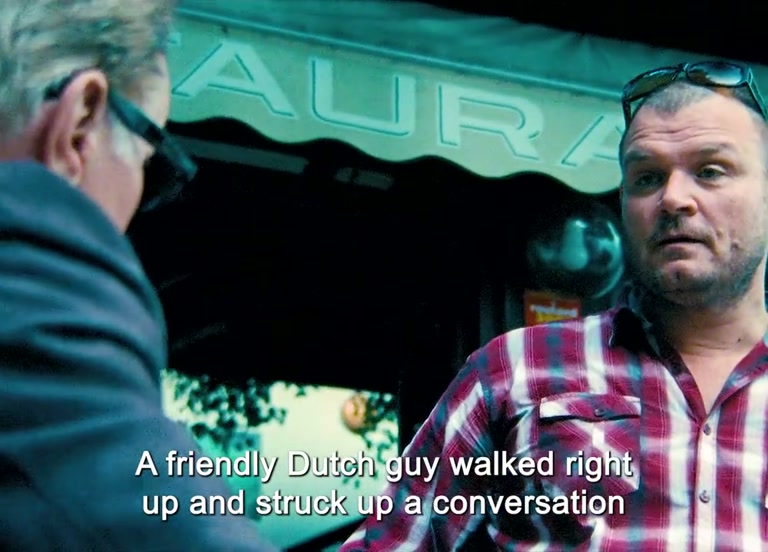
Outside, someone walks up to him. A Dutch man, friendly, entirely unaware of what he has just wandered into, and he talks the way travelers do — easily, about himself. He says he is there to lose weight. There is something almost comically ordinary about the exchange, and that ordinariness is what makes it hurt. The world keeps making small talk while a man's life is standing still.
Then the stranger mentions, almost in passing, that a young man died just two days earlier — right at the very end of the route. He says it the way you mention weather. He has no idea who he is standing next to, or that the man beside him is holding the dead boy's bag in his hands.
ADVERTISEMENT
The scene cuts there. The narration leaves us with a father, a backpack, a river downstream, and a road of nearly 500 miles he has not yet agreed to walk.
Important note: this article follows the narration's own order, which jumps between the river and the phone call — and it deliberately stops at the threshold, while the father's decision is still hanging in the air.
Core questions still unanswered
- What was inside a single backpack that made a 60-year-old man jump into freezing water to save it?
- Did Tom ever answer the chief about cremation — or was his silence itself the answer?
- Why was Daniel in France at all, and how far along the nearly 500-mile route had he actually gotten before it ended?
| Incident parameter | Logged / on-scene information |
|---|---|
| Age of the man at the river | 60 |
| Origin of the phone call | France, more than 4,000 miles away |
| Belongings handed over by officials | One travel backpack |
| Approximate length of the route | Nearly 500 miles |
| Proof of progress along the route | A credential stamped at every stop |
| Condition of the river water | Freezing |
| Detail offered by the Dutch walker | A young man had died two days earlier, right at the very end |
That is where the scene leaves us: a man with his son's bag in his hands, standing outside a building in a country he does not belong to, with a long road waiting to be either walked or abandoned. So here is what I keep coming back to — if someone handed you that backpack and told you your child had taken the very first stamp, would you carry it all the way to the end, or catch the next train home? Tell me in the comments.
ADVERTISEMENT
This article is a general description of a story scene; some details may not be independently verified.
