Steel Wall Standoff: Activist Arrests in a Desert Valley (video)
ADVERTISEMENT
🎥 Watch the video at the bottom of the page 👇
On a grey afternoon in a valley most of the country will never see, a handful of people walked into waist-high grass, folded themselves down, and refused to move — while panels of steel rose above their heads. Minutes later, uniformed officers in helmets were wading into the same grass. What happened next depends on who is telling it, and the audio captured on the ground tells a story all its own.
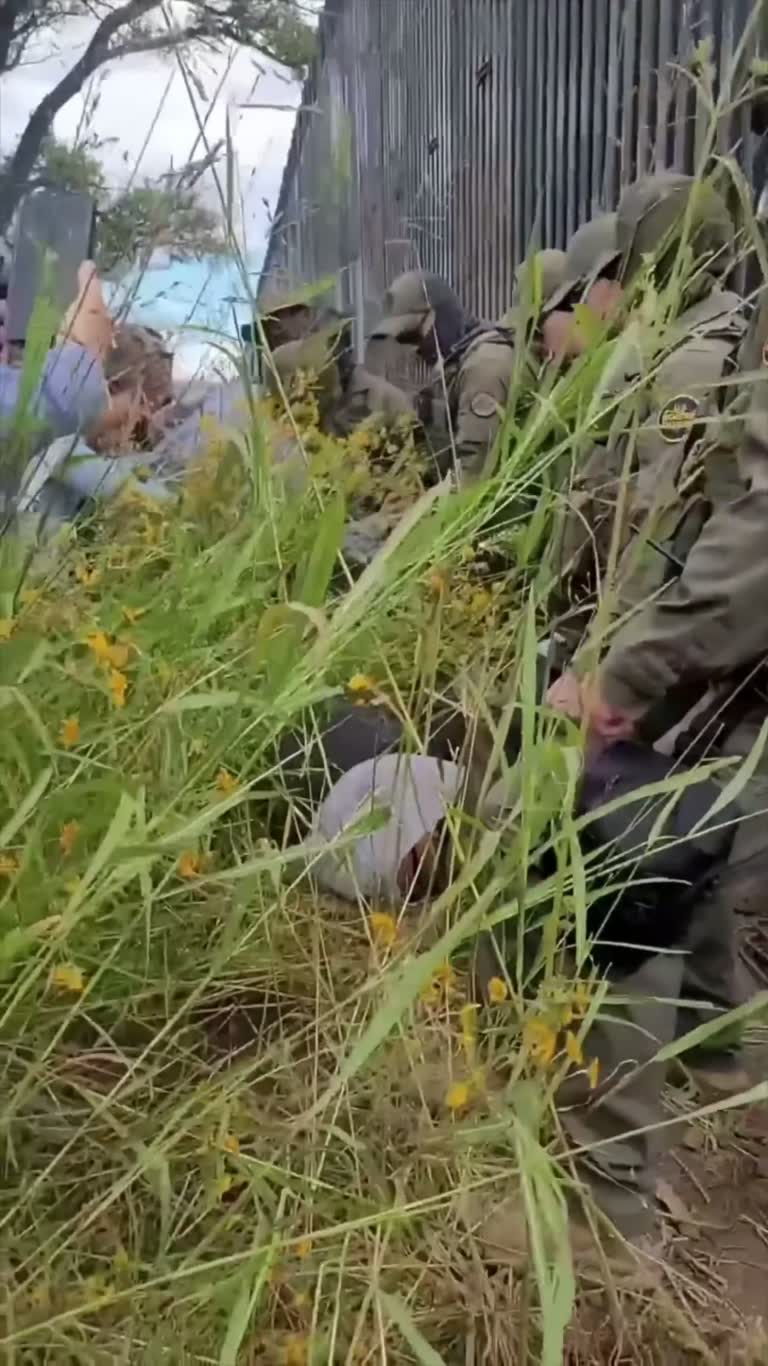
Overview of the incident and the key facts
- A self-described activist group had spent weeks calling on people to travel down into a remote valley on the Arizona side of a border barrier under construction, described in the source material as a $334 million project.
- On the day of the gathering, members of that group moved into the tall grass along the barrier and sat or lay down, insisting they were on private property and had found "the line of private property."
- Officers in camouflage, helmets and tactical gear moved through the same grass; people were physically moved and taken into custody, and the source description states that multiple members were arrested.
- Bystanders filmed and narrated, repeating that people were being "dragged away for being on private property," while at least one voice tried to soften the moment with encouragement.
- The accounts diverge: the written description frames the gathering as a riot, while the recorded audio from the same minutes describes only people lying down on private land.
A Valley That Was Never Meant to Be a Stage
The San Rafael Valley does not look like a place where anything gets settled. It is grass, open sky, and a horizon that flattens everything standing on it — a landscape that swallows sound. That is exactly why the organizers chose it. For weeks they had been urging people to come down into this corner of Arizona, near a small community called Lochiel, and put their bodies between the crews and a barrier rising one panel at a time.
ADVERTISEMENT
By the time anyone pressed record, the steel was already there. Vertical ridged panels bolted to heavy horizontal brackets, standing taller than the people clustered at the base of them. Organizers put the price of the project at $334 million, a number they repeated the way other people repeat a name. To them it was not infrastructure; it was a decision made far away and dropped into a valley they had come to love.
That afternoon was pale and flat, the kind of grey that makes every color jump — and the colors jumped. Orange hard shells. A high-visibility vest with reflective stripes. Small yellow wildflowers threading through the weeds like scattered coins. Seen from across the field, it could almost pass for a strange picnic. Then you notice who is standing at the edges, and something feels off from the start.
ADVERTISEMENT
The Line in the Dirt
The tactic was simple, and simple is hard to argue with. People walked into the tall grass, went down, and stayed down. One voice kept repeating it for the camera like a mantra: they are free to lay down on private property, that is the line of private property. The body became the argument. No banners, no slogan anyone can quote later — just weight, spread thin across a strip of dirt.
Then the officers came through the grass. Camouflage trousers, olive vests with patches, helmets strapped tight, goggles up or down. They did not arrive as a solid wall. They arrived as a slow, deliberate creep, a line of boots parting vegetation that reached their waists, radio static barely audible under the hiss of the wind.
ADVERTISEMENT
What followed is the part everyone argues about. People were lifted, guided, moved, and walked out of the vegetation. A thin white pole stood absurdly upright in the middle of one shot, marking nothing now. From one angle the moment reads as a routine operation; from another as a scene where nobody on either side was sure where the rules ended. The seconds blur, and the camera keeps rolling, because stopping feels like agreeing with something.
Voices Coming Through the Grass
The audio is the most human thing in the footage. A voice, cracking slightly, says the most disarming sentence available at a moment like this. It appears on screen as plain text, and it lands oddly against the helmets:
"We love you — don't act like animals. Be professional."
Then there is the running commentary, the kind that only exists because somebody is holding a phone steady. They're dragging people away for being on private property. The phrase comes back, again and again, a loop that turns observation into accusation. Another voice keeps asking why it has to happen this way at all. It is the sound of a crowd trying to narrate its way through something it cannot control — and you can't look away.
ADVERTISEMENT
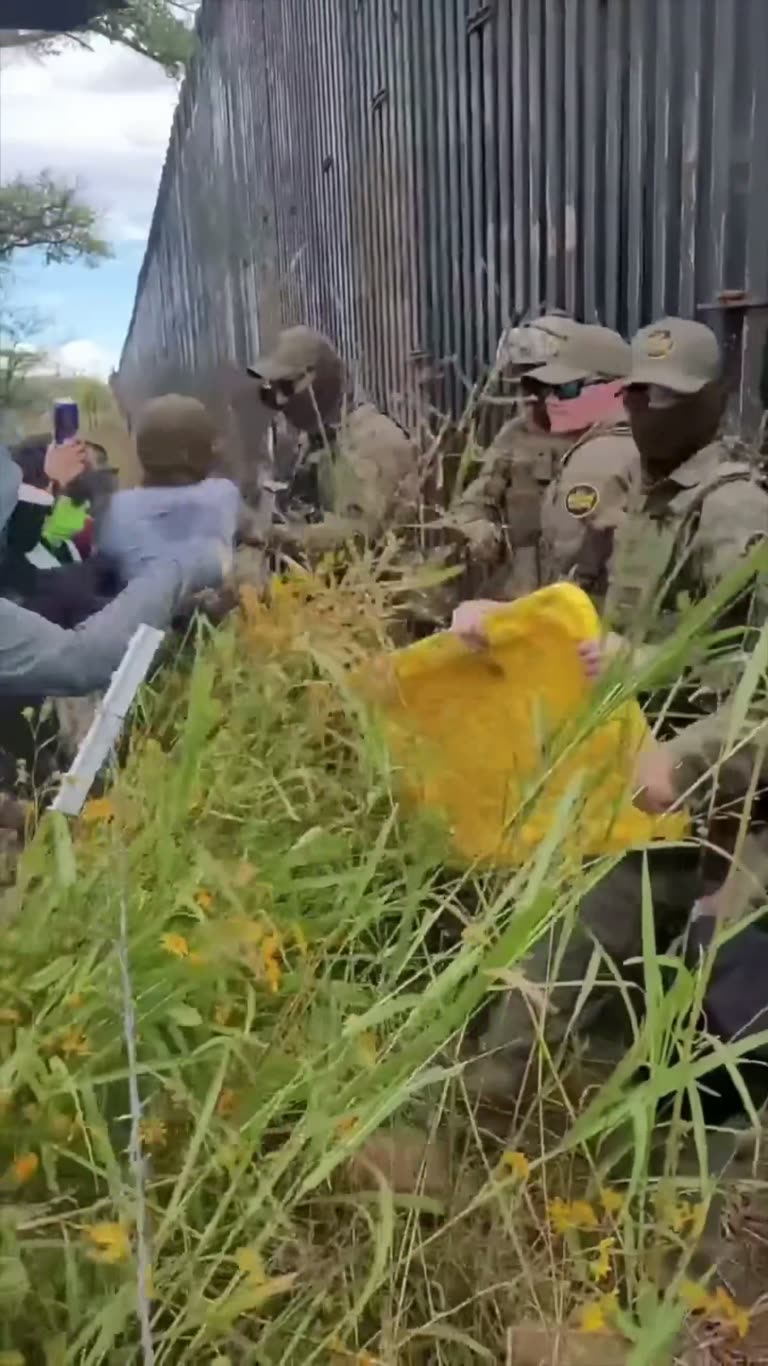
And in frame after frame, the phones stay up. Somebody in a grey hooded sweatshirt holds hers rock steady. Someone else hauls a bright yellow bundle of fabric through the weeds. For anyone watching from the edge of the screen, the phone is both shield and witness — proof that something happened, and a reason to stand one step farther back than the people on the ground.
The small details are the ones that stick. Weeds bending. Dust lifting off a boot. The way a crowd's encouragement and a stranger's question can sit inside the same ten seconds without ever answering each other.
ADVERTISEMENT
Why This Minute Keeps Circulating
Scenes like this travel for a reason that has little to do with who is right. They compress an enormous argument — about land, authority, distance, and who gets to stand where — into ninety seconds of grass and noise. Nobody has to read a policy document. They just watch a person go down and a boot come closer, and their gut files the moment somewhere permanent.
That compression cuts both ways. A clip can make a crowd look enormous when it is tiny, and make a quiet act look like chaos. On a phone screen, a person sitting in wildflowers and a person being led away occupy the same three inches of glass, and the eye does not slow down to sort them out.
ADVERTISEMENT
What is left, once the scrolling stops, is the arithmetic of the afternoon: weeks of planning, a handful of bodies, a short stretch of dirt, and a wall that will still be standing tomorrow morning no matter who wins the argument about it tonight. That imbalance is what gives the footage its weight — and what makes people keep passing it along long after everyone involved has gone home.
Important note: The description attached to this footage frames the gathering as a riot and states that multiple arrests followed, while the audio recorded on scene describes only people lying down on private land. Both appear in the source material, and no single clip captures the whole legal picture.
Core questions still unanswered
- Was the strip of grass where people lay genuinely private property — and who gets to decide that in the moment?
- At what point does lying down stop being a gesture and start being an offense?
- Was this the opening chapter of a longer standoff in the valley, or the day it quietly collapsed?
| Incident parameter | Logged / on-scene information |
|---|---|
| Location | Tall grass beside a steel barrier in a remote Arizona valley, near the community of Lochiel |
| Reported trigger | Weeks of organizing against a barrier project organizers valued at $334 million |
| Who was present | A self-described activist group, bystanders filming on phones, and uniformed officers in helmets and camouflage |
| Stated tactic | Sitting and lying down on what speakers called "the line of private property" |
| Documented action | Officers moving through the vegetation and physically moving people out of it |
| Reported outcome | The source description states that multiple members were arrested |
| Conflict in accounts | One framing calls it a riot; the on-scene audio describes people lying on private land |
Whatever you call it — a protest, a trespass, a standoff, or a grey afternoon in a valley that rarely makes the news — the footage leaves one image behind: people lying among wildflowers, and people in helmets walking toward them, with a wall standing over both. The last few seconds of the clip, and the aftermath that followed, say more than any caption can, which is why the full scene says more than we can. So the question worth asking out loud is the uncomfortable one: if you had been standing in that grass, phone in hand, boots getting closer, what would you have done?
ADVERTISEMENT
This article is a general description of a story scene; some details may not be independently verified.