Beach Optical Illusion: A ‘Glitch’ That Flips the Sea (video)
ADVERTISEMENT
A wide curve of pale sand meets calm water, and at first the picture looks like nothing special. The narrator of a short clip says the obvious reading is wrong: the ocean and the beach are not where most viewers place them. The video's own caption calls the scene a real-life glitch.
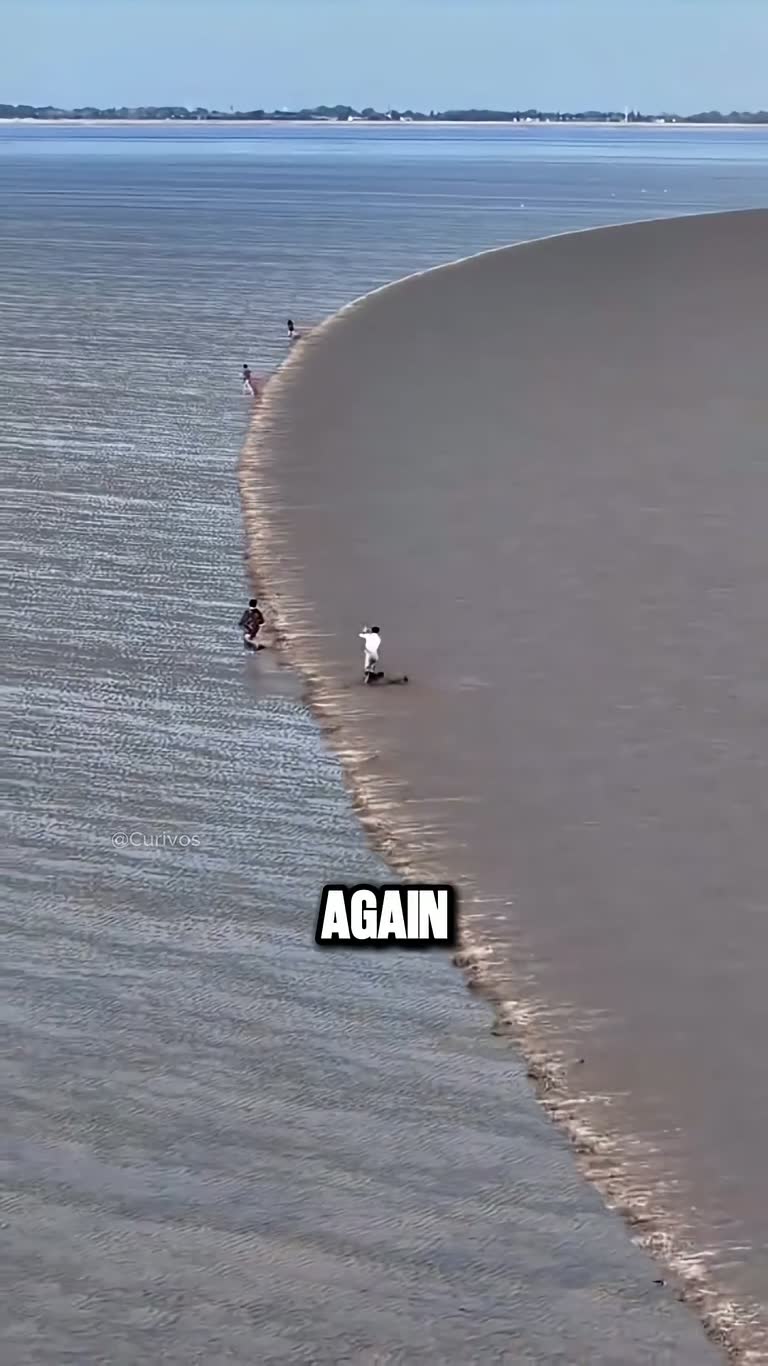
A View That Splits the Frame
Filmed from an elevated angle, the shot shows a broad band of pale sand curving through the middle of the image, with open water filling the left side and more sand running off to the right. A few small figures wade near the wet edge; one person in a light-colored top crouches where the shallow water laps the beach. Further along, other figures stand apart from one another on the flat sand.
ADVERTISEMENT
The scale is what strikes first. The people are tiny against the curve, and there is no pier, no building and no other landmark to anchor them — only a thin dark line of land along the far horizon and, above it, more water.
Because the shoreline bends, the wet sand edge works like a border. The eye has to decide for itself which side belongs to the sea and which to the land, and it usually decides fast. Nothing in the view rushes: the water stays flat and the sand stays smooth, so the only thing shifting from one beat to the next is the viewer's own understanding.
ADVERTISEMENT
The Word-by-Word Reveal
Instead of explaining straight away, the clip delivers its message one word at a time in the center of the frame: LEFT, then THE, IS, BUT, AGAIN, and later ACTUALLY, COMPLETE, OPPOSITE. The pacing turns a still view into a slow puzzle and keeps the viewer watching for the next word to land.
Only then does the narration state its conclusion:
ADVERTISEMENT
It's actually the complete opposite.
That line is the turning point of the clip. The assumption a viewer makes in the first second, the narrator says, is the one that has to be thrown out — and the words on screen have been counting down to that moment.
Why the Eye Gets Fooled
The video's own description credits perspective, noting that the angle "completely changes what you're seeing." Read one way, the pale curve looks like sunlit sand reaching toward open water; read another, the same shape looks like the far edge of a shallow flat. One frame, two coastlines.
ADVERTISEMENT
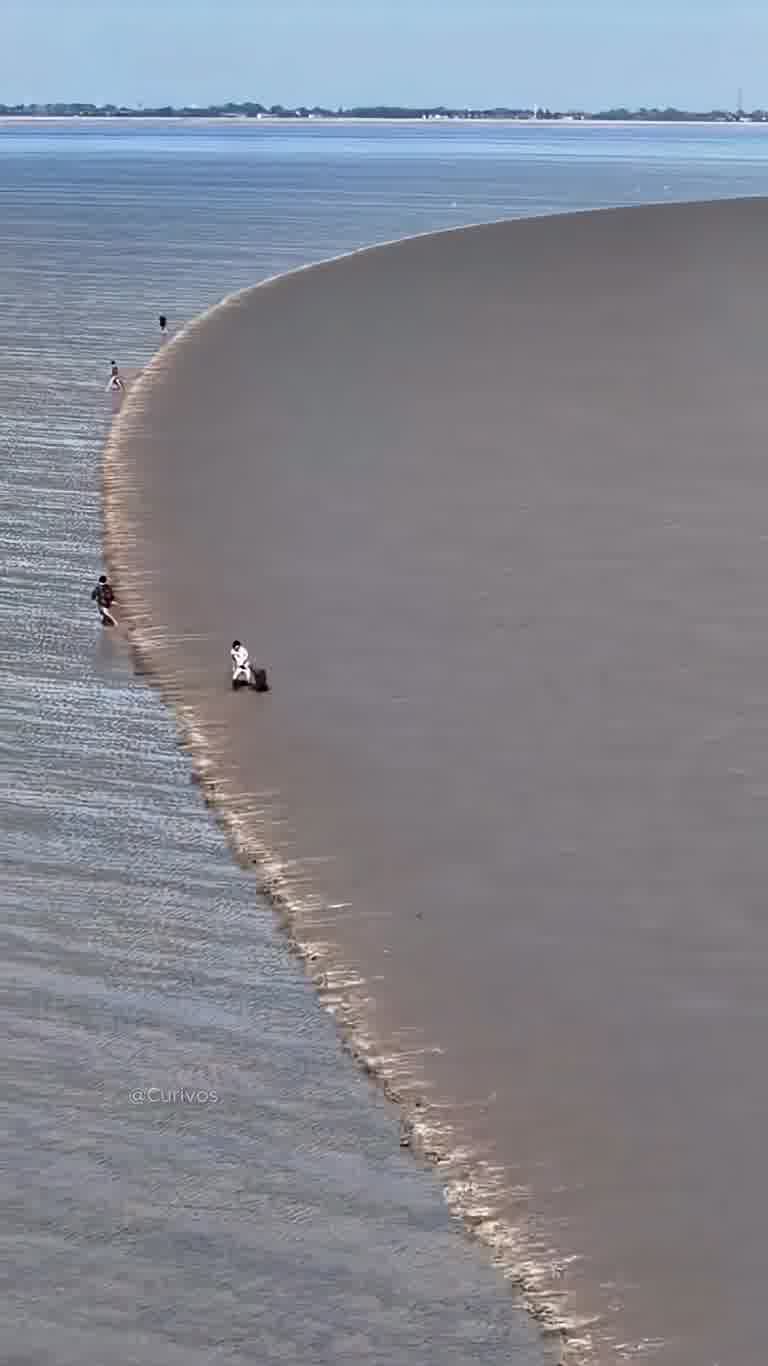
Nothing supernatural is claimed anywhere in the clip. The effect lives in the camera position and in the order the words arrive, and the video asks for a second look rather than offering an unsolved mystery. The clip does not argue that the beach itself is strange; it places the surprise on whoever is holding the screen.
For many watching, that is an unexpected turn — an ordinary shoreline that stops behaving like one.
ADVERTISEMENT
What the Clip Asks of Viewers
The narration closes with a direct challenge: "Did you notice it from the beginning?" It is the question the clip leaves with anyone who rewinds.
There is no incident here, no argument and no crowd — only shallow water, sand and a handful of people on a quiet afternoon. The entire video rests on one small shift inside the viewer's own eyes, and that single reveal is what drew massive attention from people who enjoy being fooled on purpose.
ADVERTISEMENT
So which side did your eye call the ocean on that first look — and did your answer survive a second one?
Some details, including the exact location and the original uploader, cannot be confirmed from the material available.
ADVERTISEMENT
This story was edited from a publicly posted video; some details may not be independently verified.