1950s Chicago Nostalgia: Downtown Before the Malls (video)
ADVERTISEMENT
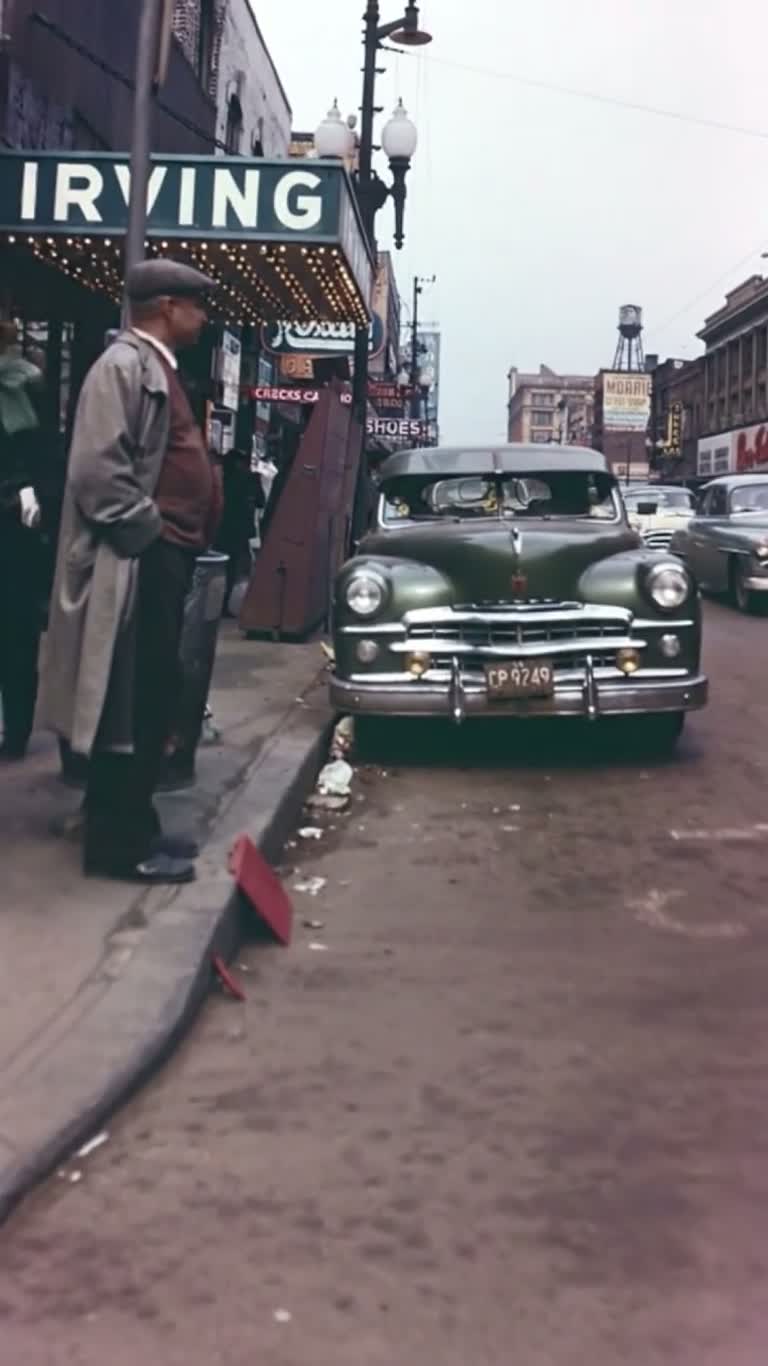
Long before malls and smartphones pulled everyone indoors, a Friday downtown was the main event. This slice of Chicago's Halsted Street in 1956 shows a corner that was busy for the most ordinary reasons — shoppers, storefronts and a slow line of traffic. One look at those marquee lights and it takes you right back.
A Street That Moved Slower
On the sidewalk, a man in a long coat and a flat cap stands with his hands in his pockets, watching the street instead of a screen. Beside him sits a plain metal trash can, tucked against the theater wall. Nobody is rushing, and nobody looks like they need to be somewhere else.
At the curb, a dark green sedan waits its turn in the line of cars. Its chrome grille and heavy bumper catch whatever light the overcast sky is offering, and its plate reads CP 9749. Behind it, more rounded cars stretch down the block toward a water tower standing over the rooftops.
ADVERTISEMENT
That is the whole scene, and somehow it is enough. On a Friday like this one, the sidewalk was the place to see and be seen, and a slow-moving line of cars was simply part of the entertainment.
The Marquee Was the Landmark
The Irving Theater sign hangs over the sidewalk, its name spelled out in big letters above rows of small bulbs. A marquee like that was how a neighborhood gave directions. You told a friend to meet you under the Irving, not at some street number.
ADVERTISEMENT
Across the street, smaller signs mark out shoe stores and shop windows — the everyday businesses that made a walk downtown worth the trip. There is no giant branding and no glowing screens, just lettering painted by hand, competing politely for a passerby's attention.
Look closely and you notice how much is packed into a few blocks: a theater, a shoe store, a handful of shop windows, all within a short walk of each other. A neighborhood once had everything it needed right there, and you did not have to drive across town to find it.
ADVERTISEMENT
Theaters like this one were the anchor of a commercial street. They gave a block a name and a reason to be there after dark, and the lights stayed on for the people walking past.
Cars With Weight and Presence
The vehicles parked along Halsted are shaped like something: tall hoods, round headlights, and bumpers built out of actual metal. They take up space and look solid doing it. They don't make them like this anymore, and one glance at that green sedan explains why people still stop to stare at cars from this era.
ADVERTISEMENT
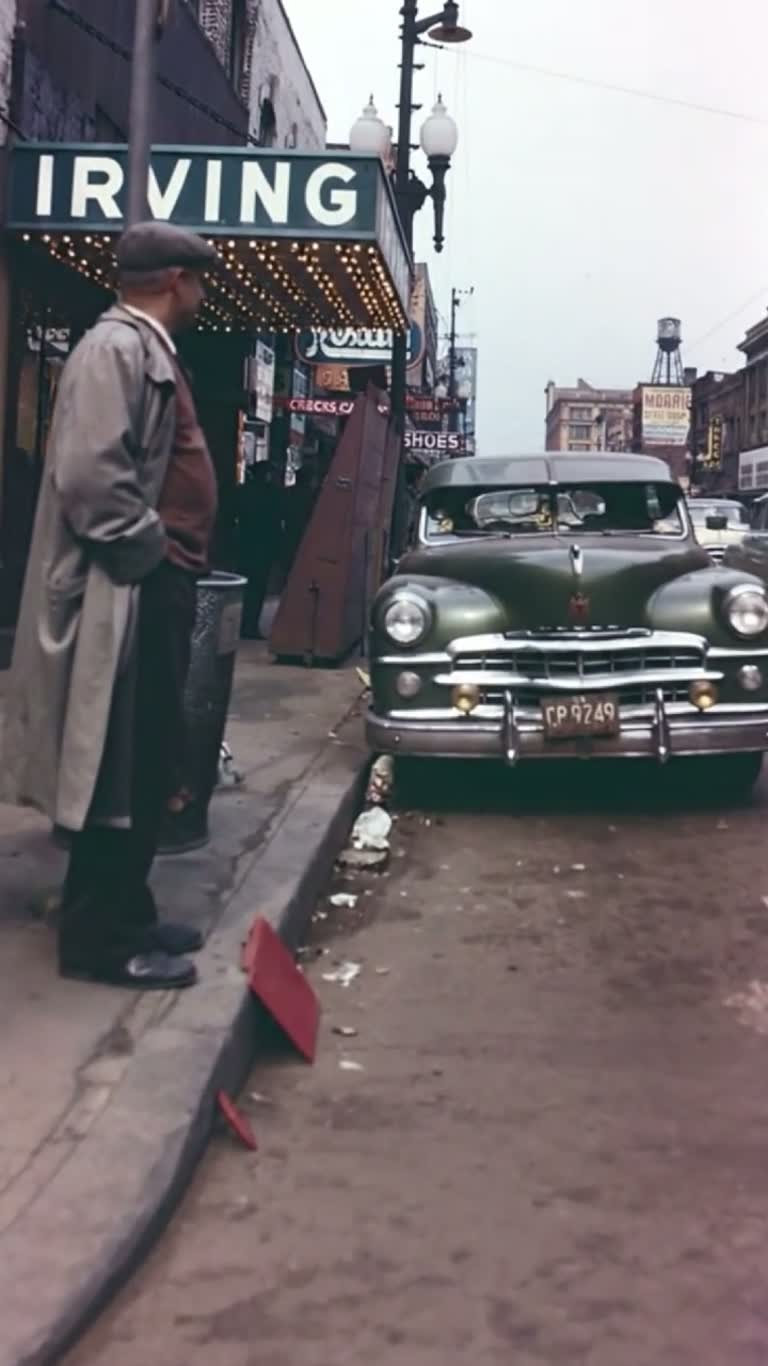
Traffic here is not a blur. It is a procession. Every car has a face, a color and a driver you can make out through the windshield.
You can see it in the way the sedan sits at the curb — squared up, unhurried, waiting for a driver who is not checking a phone. The street belonged to whoever happened to be on it that afternoon.
ADVERTISEMENT
Even the way people park tells a story. Cars sit tight against the curb in a neat row, as if the street itself had rules everyone quietly agreed on.
The Small Details We Lost
What stands out most now are the things that used to be invisible:
ADVERTISEMENT
- A theater marquee glowing with rows of individual bulbs.
- Storefronts with lettering you could read from across the street.
- A downtown block with no chain logos in sight.
Walking past all of it was an everyday trip down memory lane, and nobody filming a street corner back then would have called it special. The real charm is not the chrome or the marquee — it is the pace. People linger. Cars idle. The street does its own thing, and the afternoon stretches out with no appointments in it.
Some details in old footage like this one are hard to confirm, and a few of them stay a small mystery.
ADVERTISEMENT
So here is the question worth asking: what do you miss most about the downtown streets you grew up around — the marquees, the parked cars, or simply walking somewhere with no plan at all?
This story was edited from a publicly posted video; some details may not be independently verified.